What Is Bikram Yoga? 26&2, Benefits, Safety & History
By Ian Terry, E-RYT 500 · Updated
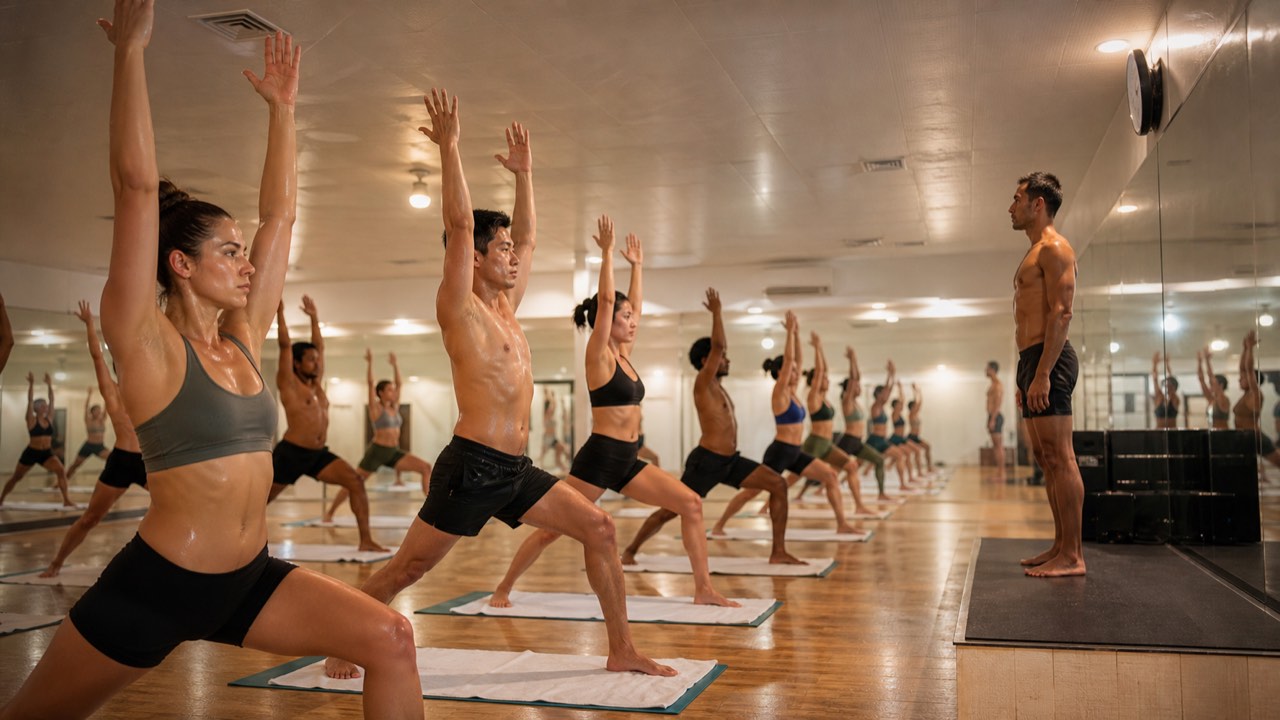
Bikram Yoga is a structured form of hot yoga popularized in the 1970s by Bikram Choudhury. A complete class follows the same 90-minute sequence of 26 postures and two breathing exercises in a room traditionally heated to about 105°F (40.6°C) with roughly 40% humidity.
What Is Bikram Yoga? The Short Answer
Bikram Yoga is one specific hot-yoga system, not a general name for every heated class. It combines a prescribed room environment, a fixed posture order, a standard 90-minute duration, and a recognizable verbal teaching structure.
The numerical labels 26&2, 26+2, 26/2, and Bikram 26 2 all point to the same basic structure: 26 Hatha yoga postures plus two breathing exercises. “Hot 26” is sometimes used informally, although the complete method includes the breathing work as well as the postures.
A 2025 systematic review of hot-yoga research describes traditional Bikram Yoga, also commonly called 26/2, as a 90-minute class developed in the early 1970s with 26 fixed postures, two breathing exercises, approximately 40°C heat, and about 40% relative humidity.
Core Rules of Traditional Bikram Yoga
The heated environment
The traditional target is approximately 105°F (40.6°C) with 40% humidity. Mirrored walls are common because students can study their own alignment while instructors observe the room. Studios should monitor actual conditions rather than assuming a thermostat setting guarantees a consistent experience.
The fixed sequence
Every complete class follows the same order. It begins with Standing Deep Breathing, moves through the standing and balancing series, continues into floor postures and spine strengthening, and closes with Kapalbhati in Vajrasana. Most active postures are performed twice.
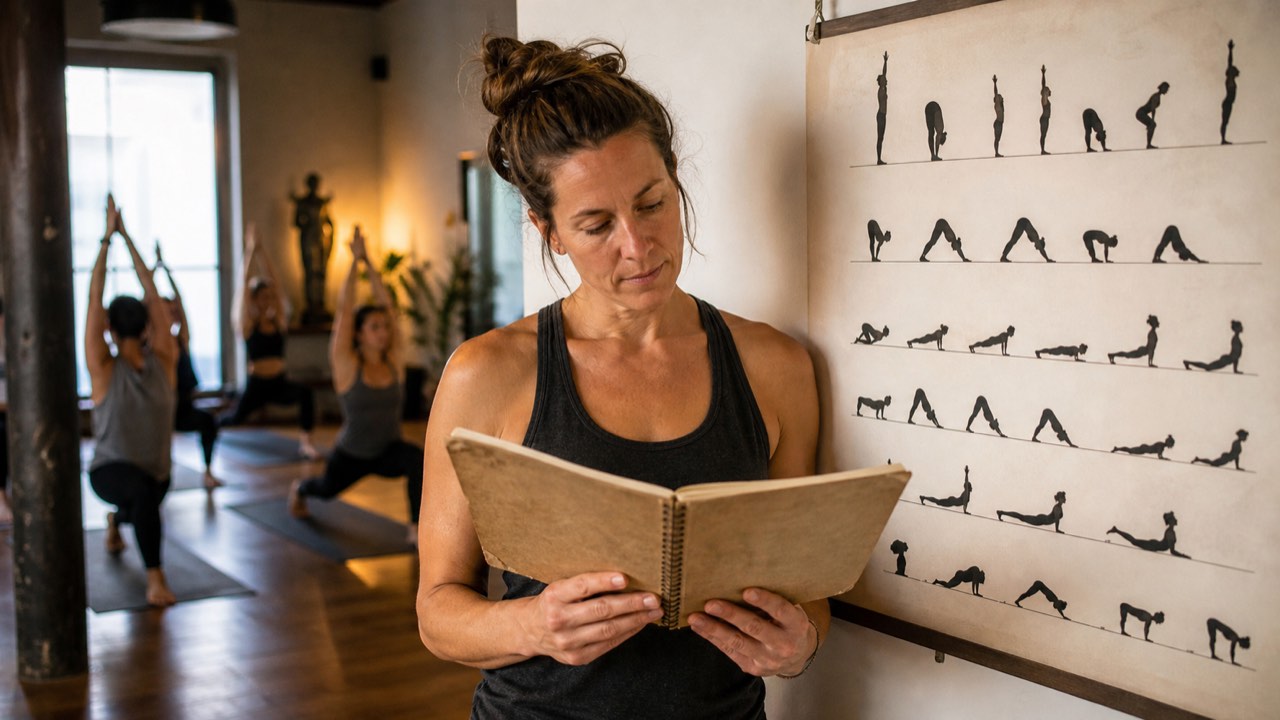
Explore the complete Bikram Hot Yoga pose list or use the interactive Bikram Yoga 26 Poses Sequence Guide to study each position in order.
Standardized verbal instruction
Traditional instructors use a consistent dialogue to guide entry, alignment, timing, holds, and exits. Strict schools generally do not change the sequence, add music, or replace verbal teaching with a teacher-led flow. The teacher watches students instead of spending the full class demonstrating.
Repetition creates a stable reference point. Students can compare how breath, balance, concentration, and control change from class to class without a new sequence becoming another variable.
What Is Bikram Yoga Called Now?
Bikram Yoga is still practiced, but many studios now call it Hot 26&2, Original Hot Yoga, 26+2 Yoga, or Hot 26. The modern labels help independent teachers describe the sequence without implying an official relationship with Bikram Choudhury or his organization.
The renaming is not perfectly standardized. One “Hot 26&2” studio may preserve the full 90-minute format, temperature, humidity, and dialogue. Another may offer a 60-minute adaptation, lower heat, music, or altered repetitions. Read the class description, review the Original Hot Yoga teacher training guide, and ask the studio what it actually teaches.
In practical search terms, “what is 26&2 Bikram Yoga,” “what is Hot 26 Bikram Yoga,” “what is yoga 26 2,” and “what is Bikram 26 2” are usually questions about the same fixed sequence. The name can change while the posture order remains recognizable.
Where Was Bikram Yoga Invented, and Who Is Bikram?
Bikram Choudhury is an Indian-born yoga teacher who developed and popularized the standardized hot-yoga format after moving to the United States in the early 1970s. The method drew from Hatha yoga postures associated with the teaching lineage of Bishnu Charan Ghosh, then organized them into a repeatable group class.
The phrase “invented in India” can oversimplify that history. The postures and breathing practices have older Indian roots, while the branded 90-minute studio system became widely known through Choudhury's work in the United States. A more accurate statement is that he assembled and popularized this particular fixed, heated class format during the 1970s.
The founder's controversial legacy
Modern discussion of Bikram Yoga must separate the practice from serious allegations and legal findings involving its founder. Multiple women filed lawsuits alleging sexual harassment or assault; Choudhury denied sexual-assault allegations. In a separate employment case, former legal adviser Minakshi Jafa-Bodden won a multimillion-dollar judgment. Contemporary reporting by the Los Angeles Times and TIME documents these disputes and outcomes.
Those events led many practitioners and studios to stop using the founder's name while continuing to teach the 26&2 sequence. This is why “Hot 26&2” has become an important modern term rather than a cosmetic rebrand.
Difference Between Bikram Yoga and Hot Yoga
All traditional Bikram Yoga is hot yoga, but not all hot yoga is Bikram Yoga. Hot yoga is an umbrella category defined mainly by the heated room. Bikram Yoga adds a specific sequence, duration, temperature, humidity target, and teaching convention.
| Feature | Bikram / Hot 26&2 | General hot yoga |
|---|---|---|
| Sequence | Fixed 26 postures and two breathing exercises | Can change by style, teacher, or class |
| Duration | Traditionally 90 minutes | Commonly 45–90 minutes |
| Temperature | About 105°F (40.6°C) | Often approximately 90–105°F |
| Humidity | Traditional target around 40% | Varies widely |
| Instruction | Standardized dialogue and fixed order | May include music, demonstration, and creative sequencing |
| Typical styles | Original Hot 26&2 | Hot Vinyasa, Power Yoga, heated Hatha, and others |
Read the broader What Is Hot Yoga guide and the Bikram vs Vinyasa comparison if you are choosing between predictable repetition and a changing flow-based practice.
What Are the Potential Benefits of Bikram Yoga?
Research suggests that regular Bikram Yoga can improve flexibility, lower-body strength, balance, and some measures of physical fitness. Evidence remains limited by small studies, differing participant groups, and the lack of long-term controlled trials. Benefits should be described as potential outcomes, not guarantees.
Flexibility
Heat can make movement feel easier, while repeated exposure to the same sequence provides regular range-of-motion practice. In an eight-week controlled trial, participants completing 24 Bikram sessions showed substantial gains in lower-back and hamstring flexibility and increased shoulder flexibility.
Strength and balance
The same 2012 controlled trial reported improved deadlift strength and balance-related fitness outcomes. Standing poses, controlled transitions, and sustained holds can challenge the legs, hips, trunk, and postural control.
Cardiovascular and mental demand
The heat elevates physiological strain, while the fixed sequence requires attention and persistence. Practitioners often describe discipline, focus, and stress relief. Reddit discussions contain both enthusiastic benefit reports and skeptical accounts, but those personal experiences are anecdotes—not clinical proof.
For a claim-by-claim evidence review, see Bikram Hot Yoga benefits. The heat should not be marketed as “detoxifying” the body; sweating primarily supports temperature regulation and fluid loss must be replaced.
Is Bikram Yoga Safe, Healthy, and Good for You?
Bikram Yoga can be an appropriate practice for some healthy adults, but the heated environment creates risks that do not disappear through willpower. Dehydration, dizziness, nausea, heat exhaustion, fainting, and overstretching are legitimate concerns.
Mayo Clinic Sports Medicine notes that the combination of exercise intensity and high temperature can cause heat-related illness and recommends hydration before, during, and after practice. The American Council on Exercise also emphasizes that instructors must recognize heat intolerance and respond appropriately.
Begin gradually: do not treat the hottest room or deepest posture as a test of character.
Hydrate normally: start before class and replace fluid afterward rather than rapidly overdrinking at the studio door.
Rest when needed: sit or lie down when you feel unwell and tell the instructor.
Do not chase range: warmth can reduce the sensation of resistance before strength and control have adapted.
Stop for warning signs: dizziness, confusion, nausea, unusual weakness, headache, or feeling unable to cool down require attention.
Seek individualized medical advice before heated exercise if you are pregnant, have cardiovascular disease, uncontrolled blood pressure, prior heat illness, impaired sweating, or take medication affecting hydration, heart rate, or temperature regulation. This article is educational and is not medical advice.
How Often Should You Do Bikram Yoga?
There is no medically universal Bikram schedule. Beginners can start with one or two classes per week, leaving enough time to evaluate sleep, soreness, hydration, energy, and heat response. Frequency can increase only when recovery remains normal and technique does not deteriorate.
Experienced practitioners may train three or more times weekly, but more is not automatically better. Strength training, walking, other mobility work, rest, and normal life demands all affect a sustainable schedule. Daily challenges can be motivating, yet they should not override pain, illness, dehydration, or medical guidance.
Use the Bikram Yoga Journey Tracker to record sessions, hydration, posture focus, and mindset. The Bikram Yoga 30-day challenge guide explains why before-and-after expectations should focus on consistent practice rather than dramatic short-term promises.
Bikram Yoga is still a living practice. Today, it often appears under the Hot 26&2 name: the same recognizable fixed sequence, taught by independent studios that may choose different branding and governance. Before joining, verify the room conditions, instructor qualifications, class length, safety procedure, and whether the studio teaches the complete traditional format or an adaptation.
Frequently Asked Questions
What is Bikram Yoga?
Bikram Yoga is a fixed 90-minute hot-yoga method with 26 postures and two breathing exercises, traditionally practiced at about 105°F (40.6°C) and 40% humidity.
What is Bikram Yoga called now?
Many independent studios call the same or closely related sequence Hot 26&2, Original Hot Yoga, Hot 26, or 26+2 Yoga. Naming and exact teaching standards vary by studio.
What is 26&2 Bikram Yoga?
The 26 refers to the fixed postures and the 2 refers to the opening and closing breathing exercises. The complete traditional format lasts 90 minutes in a heated room.
What is the difference between Bikram Yoga and hot yoga?
Bikram Yoga is one standardized form of hot yoga. Hot yoga is an umbrella term that also includes heated Vinyasa, Power Yoga, and other classes with variable sequences and conditions.
Is Bikram Yoga safe, healthy, and good for you?
It can improve strength, flexibility, and balance for some healthy adults, but the heat adds dehydration and heat-illness risks. Begin gradually and seek medical advice when health conditions apply.
How often should you do Bikram Yoga?
There is no universal prescription. Beginners commonly start with one or two classes weekly, then increase only when hydration, sleep, recovery, and heat tolerance remain normal.
Is Bikram Yoga still a thing?
Yes. The sequence remains widely practiced, although many studios now use Hot 26&2 or Original Hot Yoga terminology to distance the practice from controversies surrounding Bikram Choudhury.