How to Memorize Bikram Yoga Dialogue: Script Study Guide
By Ian Terry, E-RYT 500 · Updated

To memorize the Bikram yoga dialogue, break the 90-minute script into small posture units and practise active vocal recall every day. Learn one reliable version, retrieve it without looking, record your delivery, and connect the sections gradually. This method is more useful than repeatedly reading a long Bikram yoga dialogue PDF from beginning to end.
Step-by-Step Bikram Dialogue Memorization Method
The dialogue feels overwhelming when it is treated as one 90-minute speech. It becomes manageable when the sequence is divided into posture-sized units and each unit is rehearsed through active recall. Research on learning consistently distinguishes retrieval from passive rereading: trying to produce information from memory is a powerful part of durable learning. A widely cited Science study by Karpicke and Roediger found that repeated retrieval improved long-term retention more than repeated study alone.
Chunk by posture: begin with opening Pranayama, then treat every posture and transition as its own study unit.
Deconstruct the posture: identify the entry cue, primary alignment, hold instruction, relevant explanation, and exit cue.
Recite aloud: close the source and speak. Silent reading builds recognition; teaching requires verbal retrieval.
Correct immediately: check the authorized source, mark the missing idea, and repeat that short section accurately.
Master before connecting: do not add a new unit until the current one can be recalled without looking.
Review across days: revisit older postures while adding new ones so early material remains available.
Start with accuracy at a calm pace. Speed is a later training variable, not proof of memory. If you rush before the sequence is stable, you may automate omissions and unclear pronunciation.
Deconstruct Every Posture into Five Functional Parts
A long paragraph is hard to retrieve because it offers few mental landmarks. A functional structure gives every line a job. Write five headings for each posture:
Entry: where the feet, hands, gaze, and body begin.
Primary alignment: the actions that establish the pose safely and clearly.
Hold: the cue that maintains effort, breath, balance, or direction.
Explanation: only the approved purpose or anatomical context required by your course.
Exit: how students leave the posture with control and prepare for what follows.
This structure is also a diagnostic tool. When a rehearsal breaks down, you can identify whether you forgot the setup, action, hold, explanation, or exit instead of concluding that the whole posture is lost.

How to Use Bikram Yoga Dialogue Flashcards
Bikram yoga dialogue flashcards work best as prompts, not miniature pages of script. Put the English and Sanskrit posture names on the front. On the back, use a short sequence of functional cue prompts approved by your training provider. Look at the front, speak the full section from memory, and then flip the card to check your recall.
Use the free interactive Bikram yoga dialogue flashcards to study the complete standing and floor sequence. The tool includes all 26 sequence cards, filters, shuffle, progress tracking, posture benefits, and concise study cues. It deliberately does not reproduce a complete copyrighted training script.
Shuffle is useful after the sequence is familiar because it proves that each posture can be retrieved independently. During early study, keep the cards in order. Sequence knowledge reduces the mental effort needed to remember what begins next. The Bikram Yoga 26 poses guide can reinforce English names, Sanskrit names, and sequence position before dialogue practice begins.
A Two-to-Three-Week Practice Timeline
Expect approximately two to three weeks of consistent daily practice for a stable first run-through, not instant performance mastery. Some trainees need longer. The aim is dependable recall that survives movement, observation, noise, and feedback.
Days 1–5: Build small units
Learn Pranayama and a small number of standing postures. Use short sessions of 20–30 minutes. Begin each session by retrieving yesterday's material before opening the source. Add new material only after the older unit remains stable.
Days 6–10: Connect standing and floor sections
Join two or three adjacent postures. Practise the transition from the exit of one pose to the setup of the next. Add the early floor series while continuing a daily standing-series review.
Days 11–16: Complete the sequence
Add the remaining floor postures and final breathing. Alternate full sequential runs with random-card retrieval. Mark only the cues that repeatedly fail rather than rewriting everything.
Days 17–21: Teach, time, and refine
Rehearse with one or more people, then complete longer timed rounds. Ask a trainer to evaluate accuracy, timing, clarity, observation, and safety. The traditional format is explained in our guide to why Bikram yoga lasts 90 minutes.
Spacing study over multiple days is more effective than one exhausting cram session. A major Psychological Bulletin review of distributed practice found strong evidence that the timing between learning sessions affects retention.
Delivery and Pacing Tips
Knowing the words is only one layer of teaching. Students need time to hear, interpret, and act. A memorized script delivered too late or too quickly can be less useful than a slightly slower rehearsal with clear priorities.
Give pre-action cues: deliver an instruction just before the physical action is expected, not after students have already moved.
Insert purposeful pauses: silence after an important alignment cue gives students time to execute it.
Use a steady voice: project clearly without turning volume into aggression.
Keep observing: memory should free attention for students, not pull your eyes toward an internal script.
Record and review within 24 hours: note missing cues, filler words, unclear pronunciation, and uneven pacing while the rehearsal is still fresh.
Bikram Yoga Dialogue PDF and Script: Use the Authorized Version
Searches for Bikram yoga dialogue PDF, Bikram dialogue PDF, or Bikram yoga script often produce several versions. They may differ in posture names, sequence language, timing, spelling, anatomical claims, or studio-specific changes. Some copies may also be shared without authorization.
Use the version supplied or approved by your training provider. Confirm whether assessment requires exact wording, functional accuracy, or a studio-specific adaptation. Do not merge lines from several downloads. Every correction made after memorization costs more effort than learning one reliable source from the start.
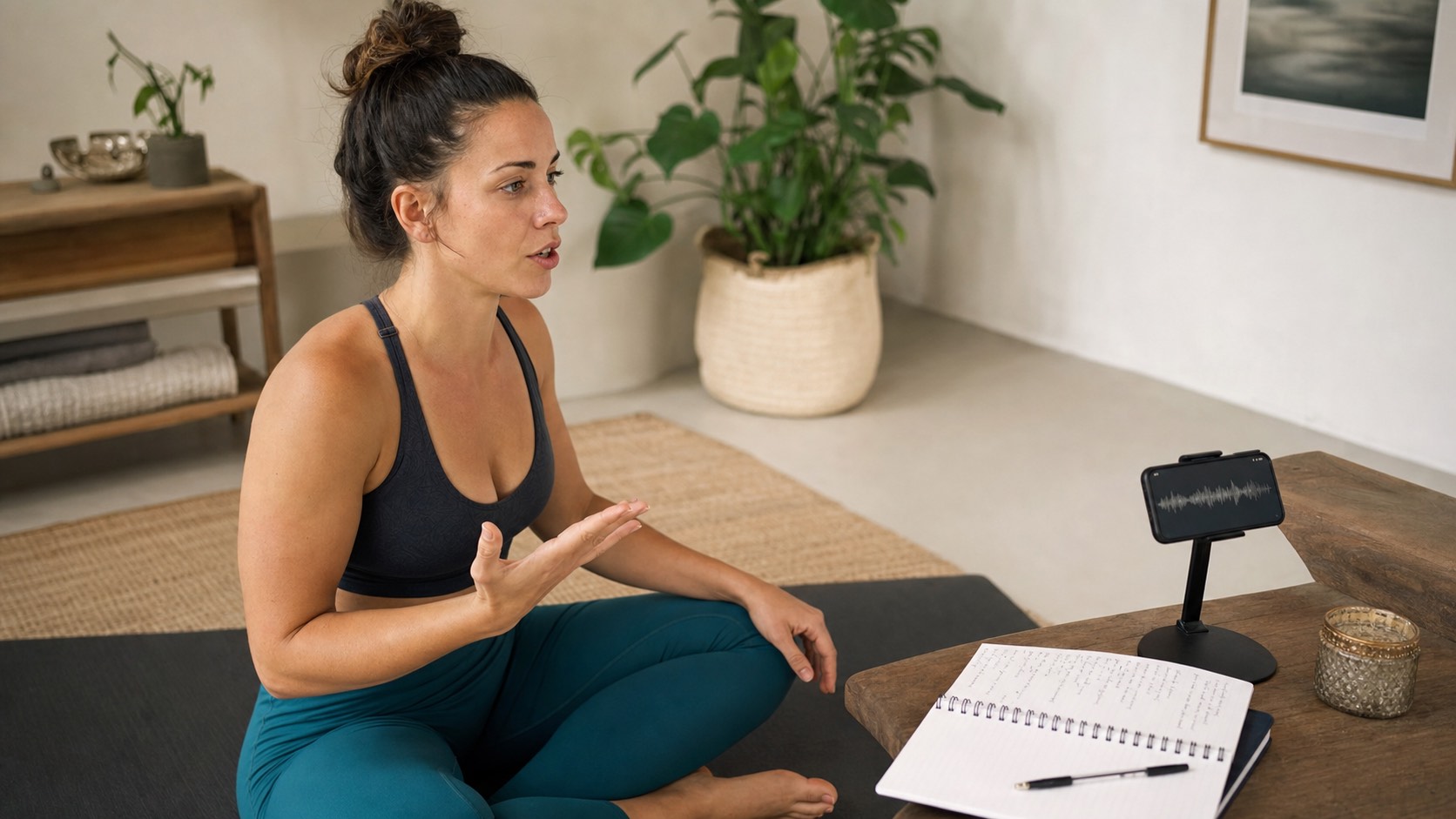
A PDF is a reference, not a learning method by itself. Print or display only the posture currently being studied, cover the text, retrieve it aloud, and then check. If your course provides audio, use it to confirm pronunciation and rhythm—but continue producing the material without playback.
Common Memorization Mistakes
Rereading without retrieval: familiarity with a page can feel like memory until the page is removed.
Learning too much in one sitting: fatigue reduces accuracy and encourages skipped details.
Starting from the beginning after every error: this overtrains early postures and neglects later ones.
Practising only in perfect order: random retrieval reveals whether each posture is independently accessible.
Ignoring transitions: teachers often know isolated poses but lose flow between exit and entry cues.
Confusing memorization with competence: a script cannot replace anatomy, scope of practice, heat safety, observation, adaptation, or supervised teaching.
Move from Script Memory to Live Teaching
The standalone YogaFX Online Teacher Training supports this process with downloadable Standing and Floor Series dialogue workbooks, MP3 audio files, and full posture demonstrations by Ivara Candra Kartika. Pause, rewind, or mute a demonstration, then practise delivering the cues aloud before replaying the model.
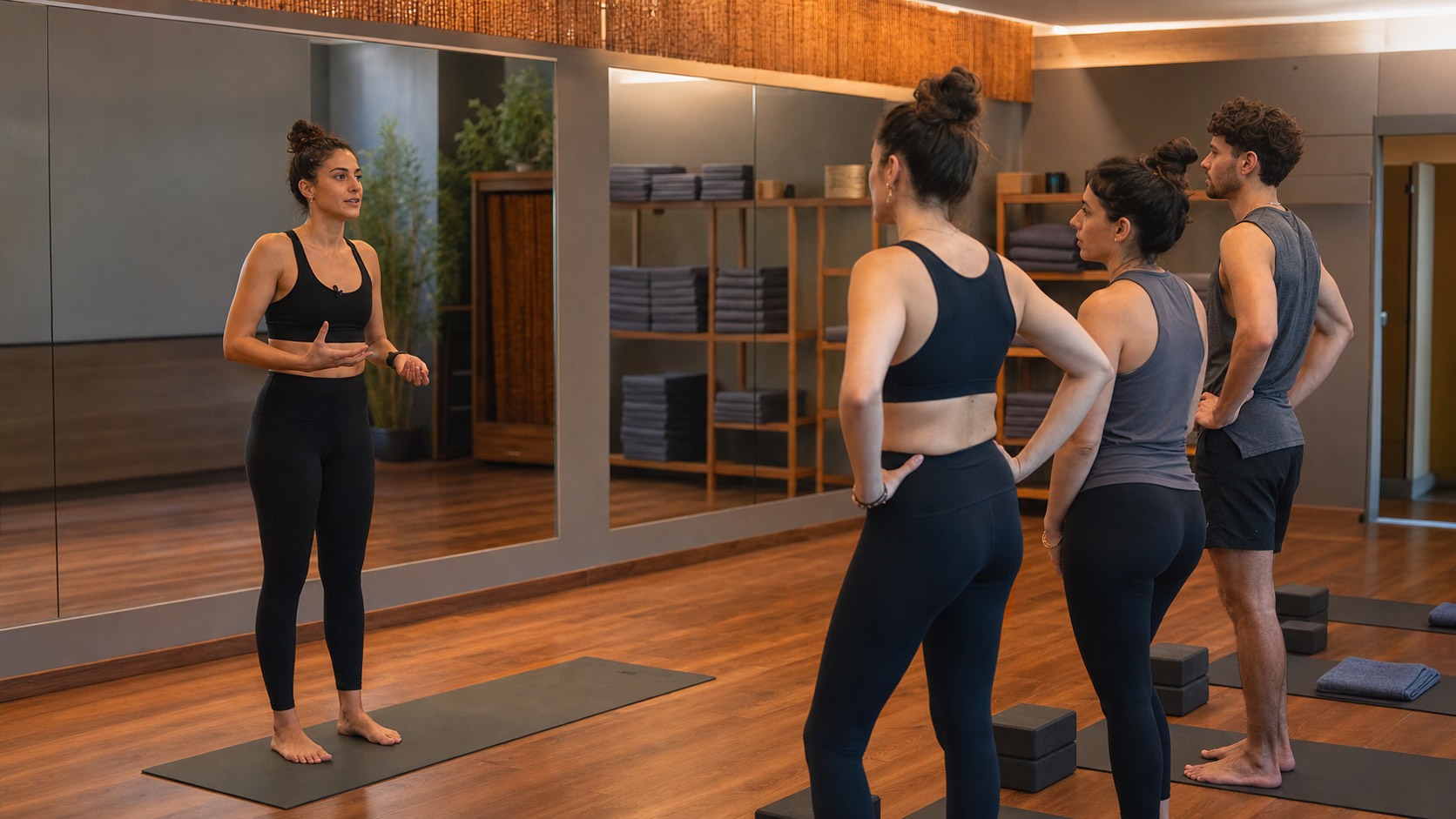
The final test is not reciting alone. It is delivering accurate cues while watching real bodies and maintaining the room's pace. Begin with one posture, progress to short linked rounds, and then teach longer segments. Receive feedback after each stage.
The YogaFX hybrid RYT 200 teacher training program uses online preparation before a six-day practical MasterClass in Bali. The direct stage includes dialogue practice, posture clinics, observation, repeated teaching, trainer feedback, and assessment. Read the complete pathway in how to become a Bikram yoga teacher and the broader Original Hot Yoga teacher training guide.
“Mr. Ian gave me a voice to get my dialogue out and the skills and confidence to teach.”
For further program context, review the specialist resources at Bikram Yoga Teacher Training and the Bali training information at Bikram YogaFX Bali.
Frequently Asked Questions
How do you memorize the Bikram yoga dialogue?
Divide the sequence by posture, split each posture into entry, alignment, hold, purpose, and exit cues, then use active recall and spoken recitation every day. Add spaced review, recordings, and timed teaching rounds instead of repeatedly rereading the whole script.
How long does it take to memorize the Bikram yoga dialogue?
Two to three weeks can produce a stable first run-through for some trainees who practise consistently, but fluent delivery under observation often takes longer. Prior sequence knowledge, daily study time, feedback quality, and the exact script version all affect the timeline.
Where can I find a Bikram yoga dialogue PDF?
Use only a dialogue PDF supplied or authorized by your teacher-training provider or studio. Search results may contain outdated, altered, or unauthorized copies. Confirm the version you are expected to learn before memorizing it.
Are Bikram yoga dialogue flashcards enough for teacher training?
No. Flashcards are useful for posture order, Sanskrit names, benefits, and cue recall, but they do not replace a complete authorized script, posture clinics, anatomy, heat safety, observation, practicum, or feedback from a qualified trainer.
Should I memorize the Bikram yoga script word for word?
Follow the standard required by your training provider and future studio. Exact wording may be assessed in some programs, while others emphasize accurate actions, timing, safety, and teaching competence. Do not silently combine different script versions.
What should I do when I forget a line while rehearsing?
Pause, identify the missing functional cue, check the source, and restart from the beginning of that small section. Avoid rereading the entire posture immediately; retrieving the sequence after a short delay strengthens recall more effectively.