Why Is Bikram Yoga 90 Minutes? Full 26&2 Class Explained
By Ian Terry, E-RYT 500 · Updated
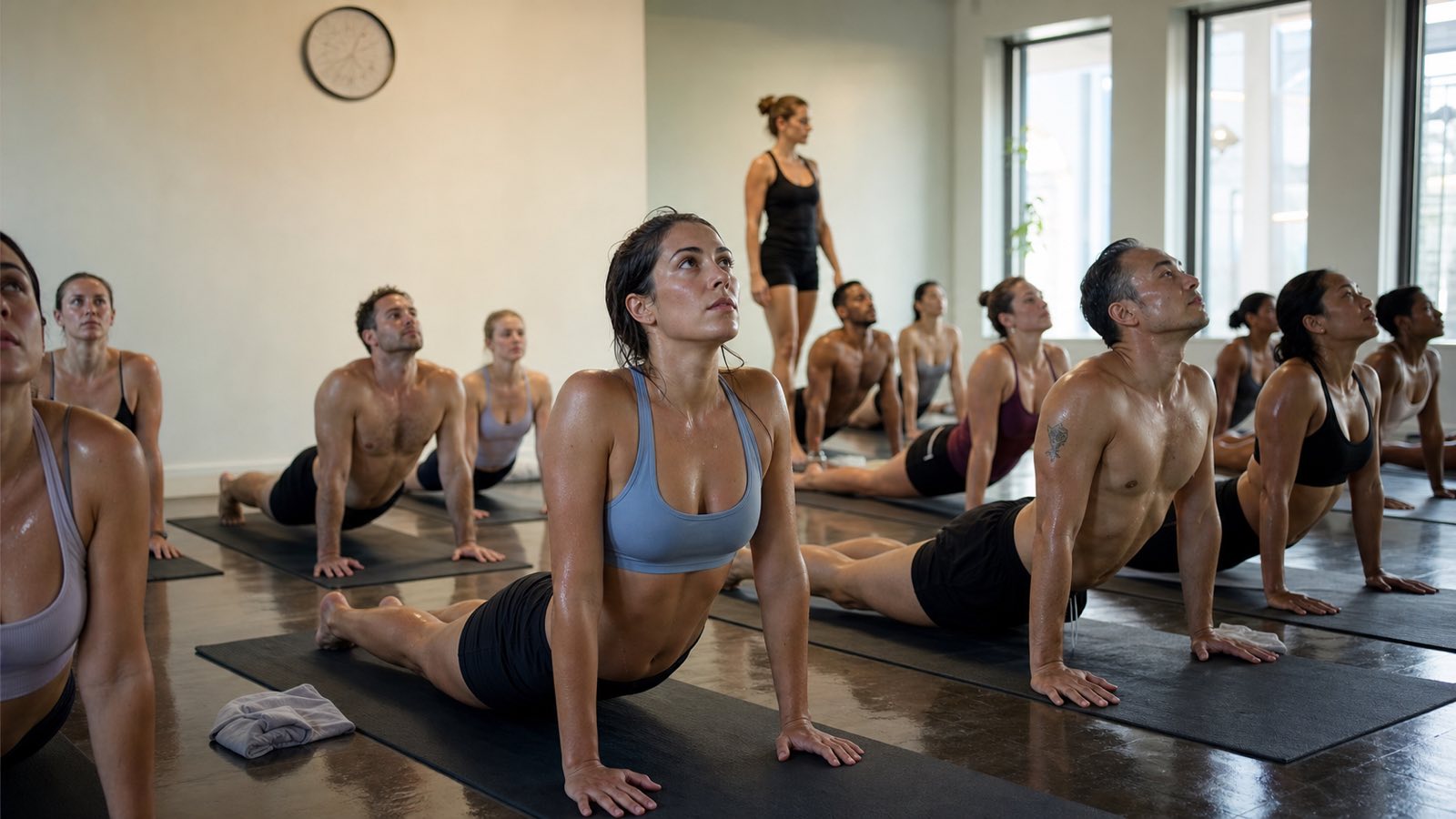
Bikram yoga classes last 90 minutes because the traditional format includes 26 fixed postures and two breathing exercises, with most postures performed twice. The schedule also reserves time for transitions, the standing and floor series, and short savasana periods. Ninety minutes is part of the standardized method, not proof that a longer class automatically creates greater medical benefit.
How a Bikram 90-Minute Class Is Structured
A traditional class begins with Standing Deep Breathing, continues through the standing sequence, transitions into a short savasana, then moves through floor postures and finishes with Kapalbhati in Vajrasana. Published research descriptions commonly place opening breathing and standing work in the first 45 to 50 minutes, with about 35 to 40 minutes devoted to the floor sequence.
A critical review of Bikram yoga research describes the standing sequence, a two-minute savasana, the floor series, and brief savasana between floor asanas. A newer systematic review of hot yoga research likewise identifies the traditional method as a 90-minute class containing 26 fixed postures and two breathing exercises, usually repeated twice in hot conditions.
This explains the duration more accurately than saying the body needs exactly 90 minutes to detox or heal. The time is a consequence of the standardized teaching format and its pacing.

Why Most Bikram Postures Use Two Sets
The first set gives students an initial attempt under the current conditions of balance, breath, concentration, and range of motion. It can reveal where the setup or timing needs attention. The second set provides an immediate opportunity to apply that information.
Teachers sometimes call the first set a warm-up and the second set a deeper or healing set. That language should not become a medical guarantee. Muscles may feel warmer and some people may move farther, but going deeper is not always safer or more useful. Fatigue, dizziness, pain, and loss of control are reasons to reduce effort or stop.
A better goal for the second set is improved quality: a steadier breath, clearer alignment, less unnecessary tension, or an earlier decision to modify. Repetition supports learning because the task stays constant while the practitioner notices changing responses.
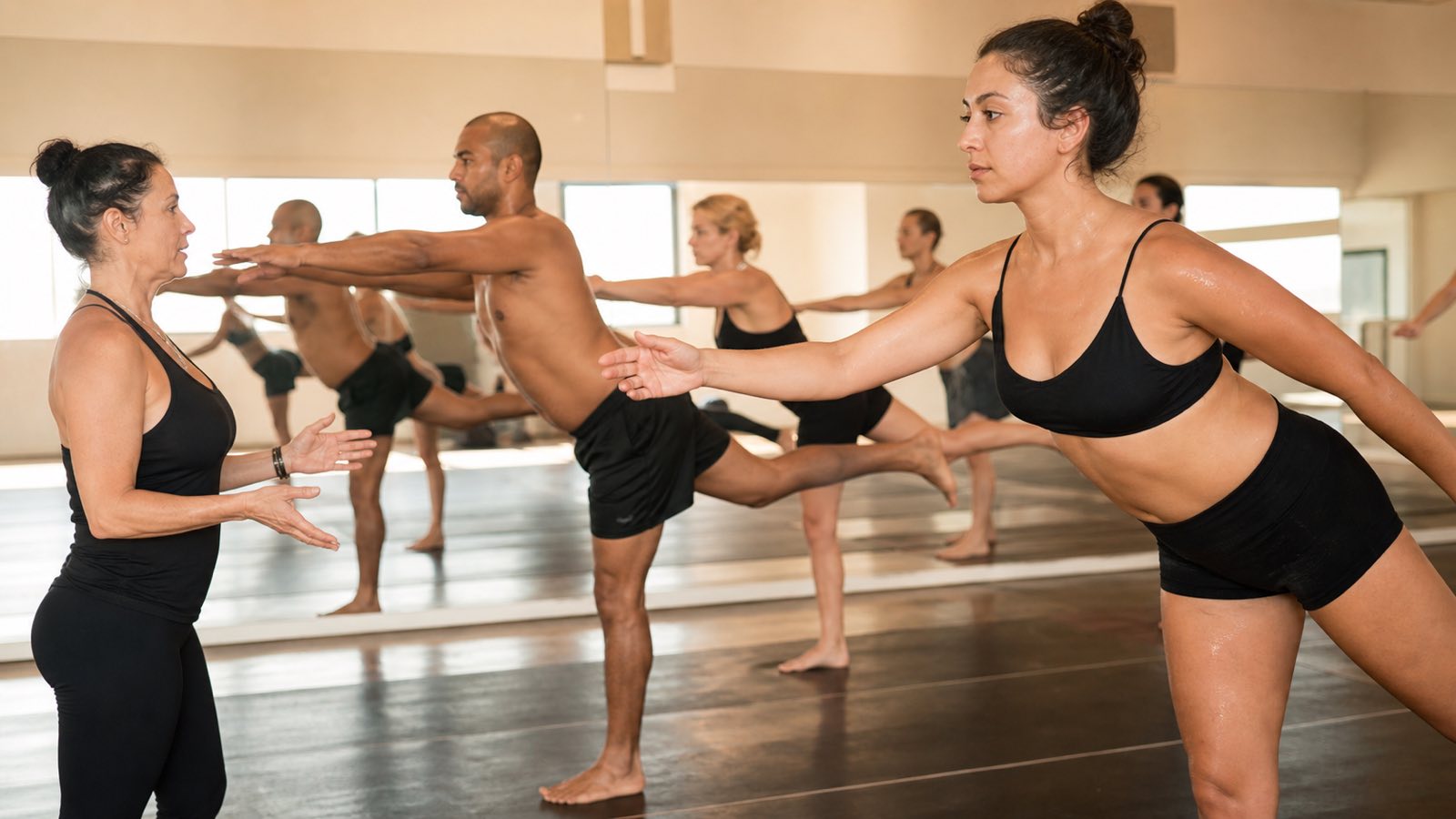
The Standing Series Builds the First Half of Class
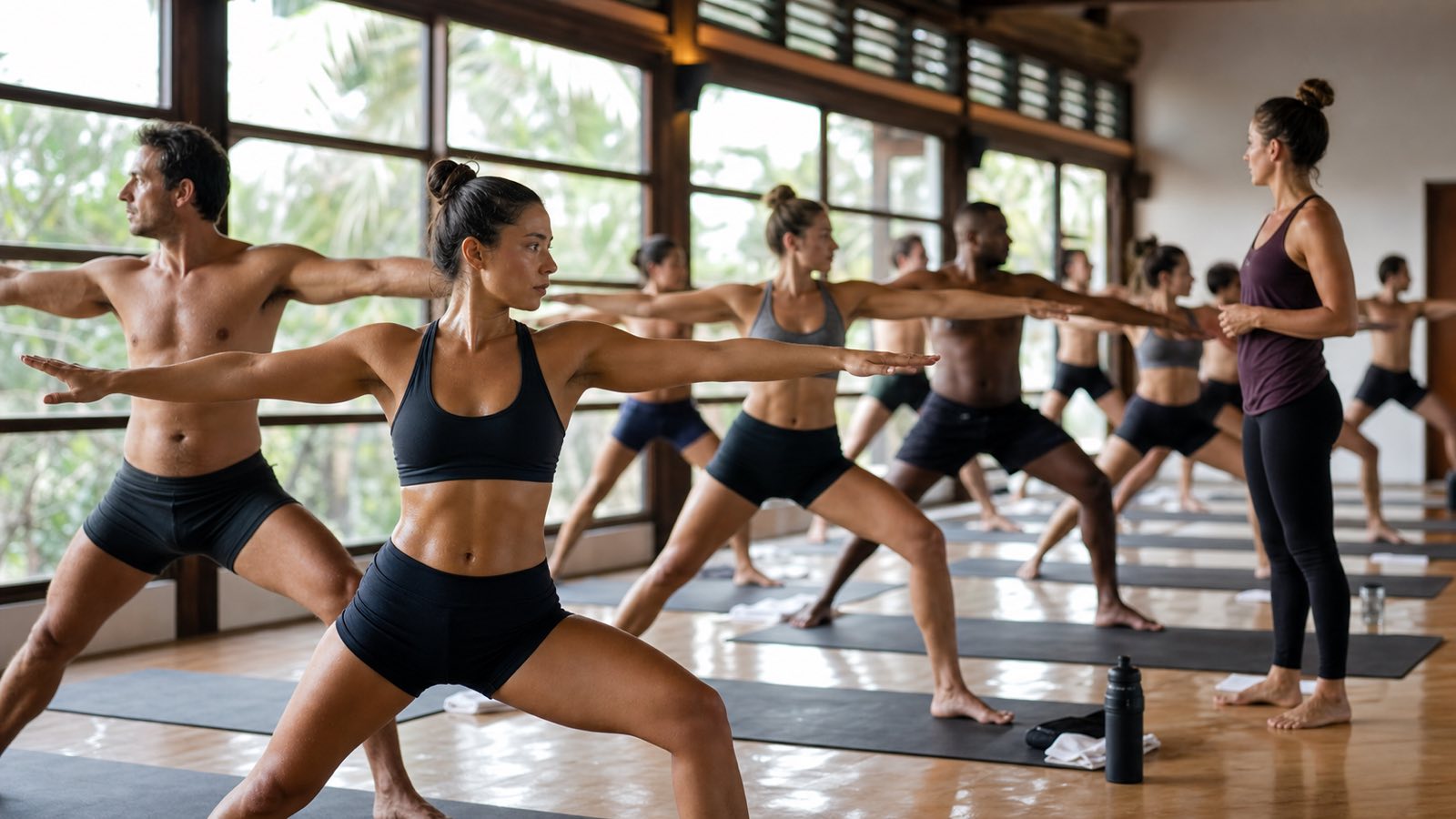
The first half combines deep breathing, lateral and forward movement, leg strength, single-leg balance, and standing stretches. Larger muscle groups are active, and the room is already hot. Together these conditions increase thermal and cardiovascular demand before students reach the floor.
Research has measured greater oxygen use and higher heart rate during standing postures than floor postures. That does not mean every student's temperature or heart rate follows the same pattern. Fitness, hydration, medication, illness, sleep, acclimatization, and room conditions all matter.
The sequence order also avoids constant switching between standing and lying down. Students complete one organized standing block before the class transitions to the floor, preserving consistent timing and reducing unnecessary movement around a crowded room.
Why Savasana and Short Rest Periods Matter
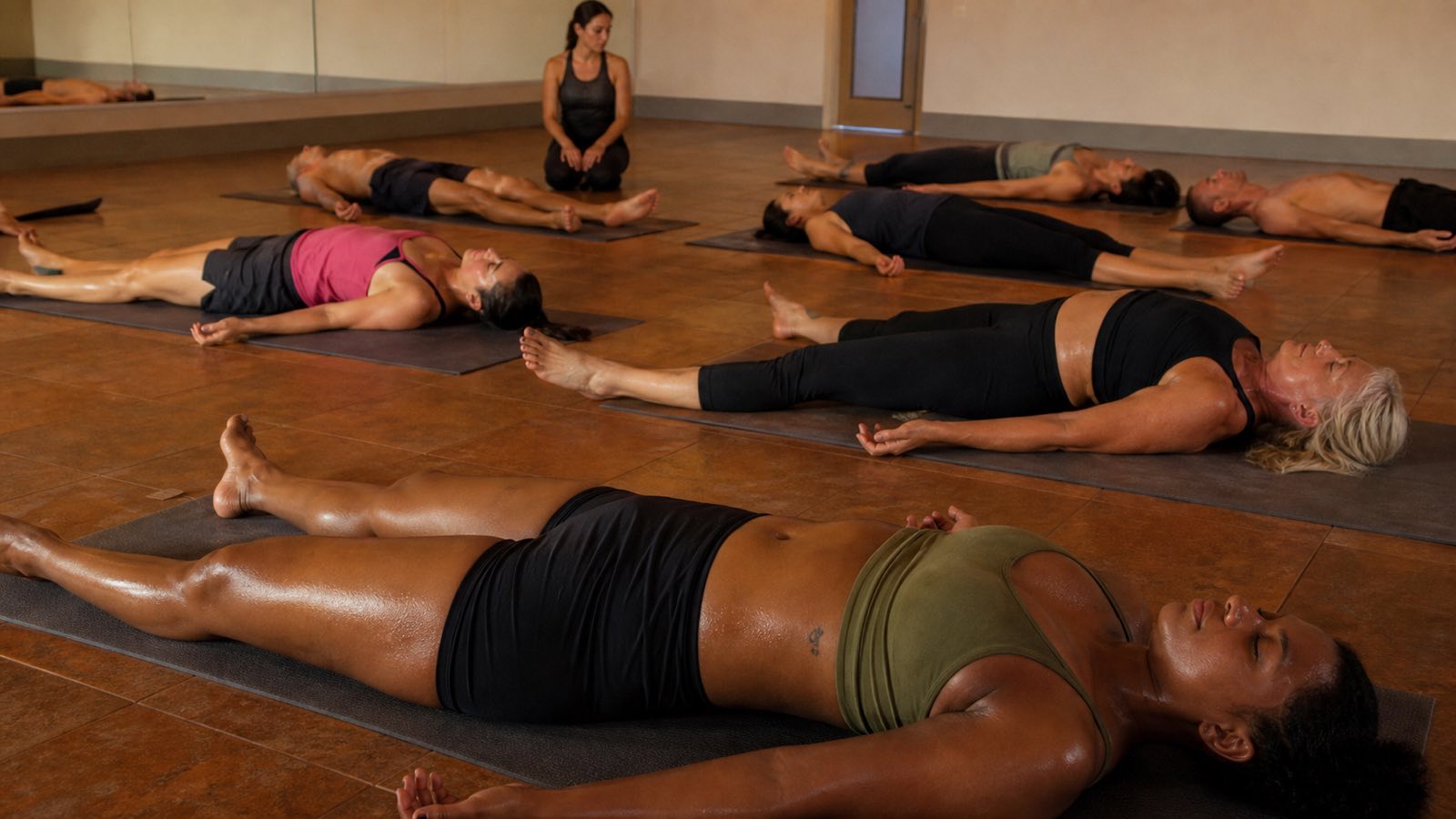
Savasana is part of the method, not empty time. A longer transition savasana separates the standing and floor sections. Brief savasana periods between floor postures create a repeatable rhythm of effort, release, and preparation for the next instruction.
These pauses may allow breathing and heart rate to settle, but teachers should not promise that a fixed interval makes intense heat safe for everyone. A student with warning symptoms needs appropriate action, not pressure to remain still until the next scripted cue.
Restorative moments do not turn the entire class into restorative yoga. A search for “hot yoga restorative poses for 90 minutes” describes a different intention and pacing from the demanding fixed Bikram sequence.
Does the Longer Format Build Focus or Meditation?
The unchanging order reduces decisions about what comes next. Students can direct attention toward breath, sensation, balance, and response to discomfort. Repetition may create a concentrated or meditative experience because the structure remains familiar while internal conditions change.
Ninety minutes also asks for patience. Concentration can weaken as heat and fatigue increase, making the later floor series a different mental task from the opening poses. This can develop self-observation when the class culture values informed choice rather than endurance at any cost.
Not everyone experiences meditation. Some beginners spend much of class managing heat or confusion. Focus develops through familiarity, responsible pacing, and continued practice; it should not be forced by preventing students from resting or leaving.
Can a Bikram or Hot 26&2 Class Be 60 Minutes?
Many studios offer 60- or 75-minute express versions for scheduling and accessibility. These classes can retain the fixed order while shortening holds, transitions, dialogue, rests, or second sets. They are adaptations rather than the complete traditional 90-minute Beginning Series.
Shorter is not automatically inferior, and longer is not automatically safer or more effective. The useful question is whether the class is labeled honestly, taught competently, and suitable for the student. Read what 26 and 2 yoga means and review the full Bikram Hot 26&2 posture sequence before comparing formats.
Using a Bikram Yoga Video for a 90-Minute Practice
A full-length video can preserve sequence and timing for experienced practitioners. It cannot see your posture, assess symptoms, adjust room conditions, or call for help. New students should first learn the sequence with a qualified teacher in an environment where leaving, resting, and asking questions are accepted.
The YogaFX class below demonstrates the complete format. Treat it as guided practice, not individual medical advice. Use a normal-temperature room unless you already understand heated practice and can manage the environment safely.
Full 90-Minute Bikram Hot 26&2 Yoga Class
The Best Online Bikram Hot 26&2 Yoga Class Ever - Find Out Why - RYT200-YogaFX The World's No.1 YTT
A full-length YogaFX Bikram Hot 26&2 class showing how breathing exercises, standing postures, floor work, repeated sets, and rest fit into the traditional 90-minute format.
Do you have what it takes to become a great Bikram Hot Yoga teacher? Complete the short YogaFX readiness quiz to understand where you are on your teaching path and receive more personalized guidance.
Preparing Safely for a 90-Minute Heated Class
Hydrate consistently before class rather than consuming a large amount immediately beforehand.
Avoid practising when feverish, acutely ill, intoxicated, or already dehydrated.
Ask a qualified healthcare professional about heat exposure if you are pregnant or have cardiovascular, blood-pressure, heat-regulation, or medication concerns.
Choose an effort you can control. Sharp pain, confusion, faintness, chest pain, severe nausea, or loss of coordination are not milestones.
Rest or leave the heated room when needed. A responsible teacher prioritizes safety over completing every repetition.
Use the Bikram yoga calorie calculator only as an estimate. Sweat and class length do not measure fat loss, fitness, or the medical value of a session.
Frequently Asked Questions
Why is Bikram yoga 90 minutes?
The traditional format needs enough time for 26 fixed postures and two breathing exercises, with most postures performed in two sets. It also includes transitions, a standing sequence, a floor sequence, and planned savasana periods rather than 90 minutes of continuous intense movement.
Is every Bikram yoga class exactly 90 minutes?
The traditional Beginning Series is 90 minutes. Some studios offer shortened 60- or 75-minute Hot 26&2 classes, but these adapt timing, repetitions, or rest and should be labeled clearly rather than presented as the complete traditional format.
Are all 26 Bikram postures performed twice?
Most postures traditionally use two sets, but class structure is more nuanced than simply multiplying every pose by two. Breathing exercises, transitions, savasana, sit-ups, and some linked postures have their own timing and organization.
Is the second set medically healing?
A second set can let a practitioner reassess balance, range, breathing, and technique after the first attempt. Research does not establish that a second set guarantees healing or maximum therapeutic benefit. Yoga teachers should not promise treatment for an injury or medical condition.
How long are the standing and floor sections?
Published descriptions generally allocate about 45 to 50 minutes to opening breathing and standing postures, followed by a transition savasana and roughly 35 to 40 minutes of floor postures, brief rests, and final breathing.
Can beginners take a 90-minute Bikram class?
Yes, when medically appropriate and supported by a responsible studio. Beginners should arrive hydrated, avoid competing for depth, rest when needed, and leave the heated room if symptoms such as confusion, faintness, chest pain, or severe nausea occur.
Is a 90-minute Bikram yoga video the same as a studio class?
A video can reproduce timing and sequence, but it cannot observe your condition, correct technique, manage the room, or respond to heat-related symptoms. Practise in a safe environment and seek qualified guidance, especially when new to heated exercise.
Does 90 minutes make Bikram yoga restorative?
The class contains restorative pauses, especially savasana, but the full heated sequence is physically demanding rather than a 90-minute restorative yoga class. Hot yoga restorative poses for 90 minutes describe a different format.