What Is 26 and 2 Yoga? Hot 26&2 Sequence Explained
By Ian Terry, E-RYT 500 · Updated
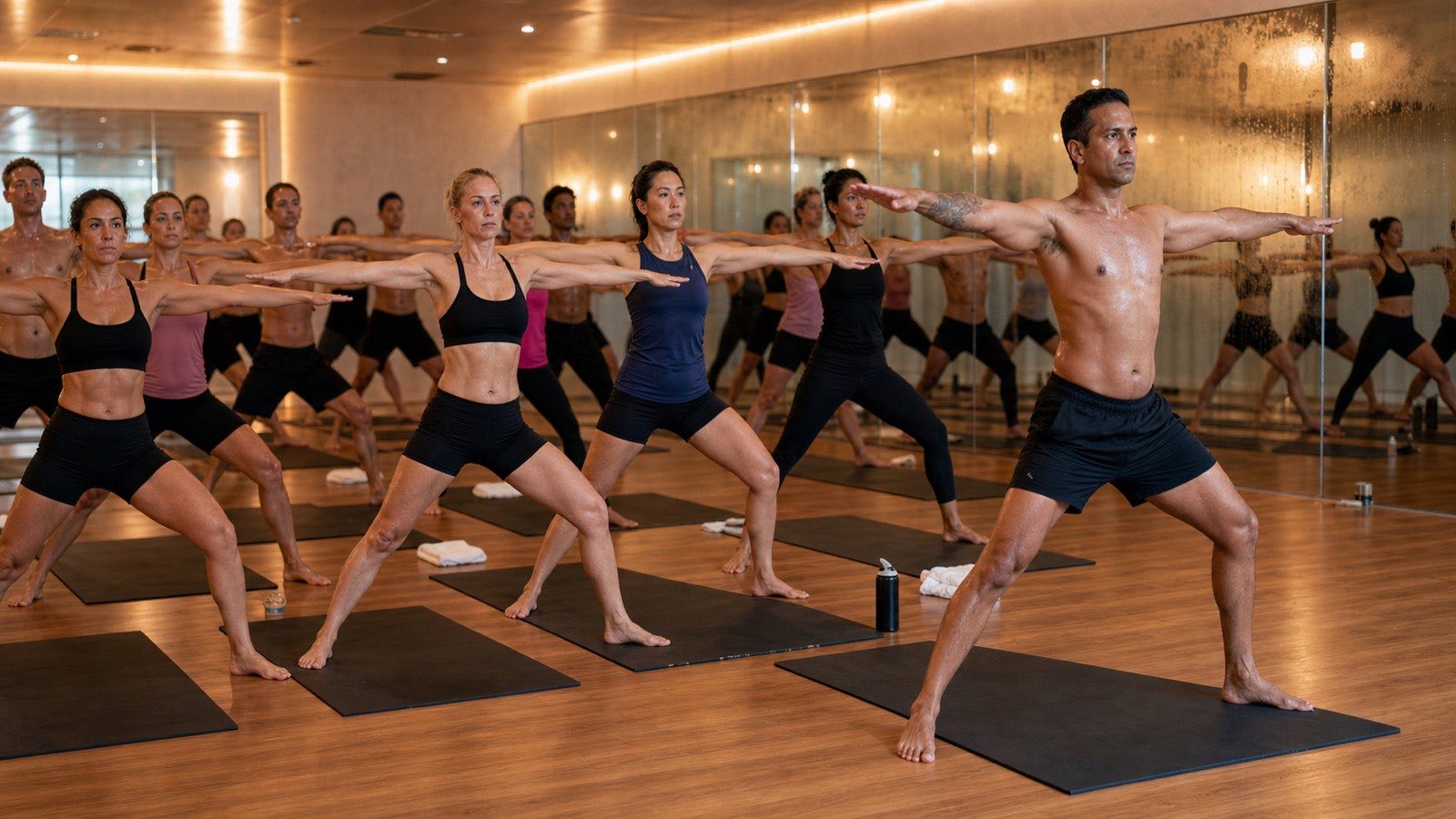
26 and 2 yoga is a fixed sequence of 26 postures and two breathing exercises, traditionally practised for 90 minutes in a room near 105°F (40°C) with about 40% humidity. Also written as 26+2 yoga, 26/2 yoga, 26&2, or Hot 26 and 2, it is the standardized sequence associated with Bikram yoga.
For the broader history, modern naming, research-backed benefits, and safety context behind this sequence, read the guide explaining what Bikram Yoga is and why many studios now call it Hot 26&2.
Key Features of 26 and 2 Yoga
26 and 2 Yoga is a set sequence of 26 Hatha yoga postures and two breathing exercises typically practised in a heated room. It is also widely known as Bikram Yoga, Original Hot Yoga, or traditional hot yoga.
The sequence: the number “26” refers to 26 specific asanas, while the “2” refers to Standing Deep Breathing and Blowing in Firm, the two pranayama exercises.
Fixed order: the postures follow the same sequence in every complete class. This differs from a flow class in which the teacher may design a new order around a theme.
The environment: traditional classes use a room near 105°F (40.5°C) with about 40% humidity. Actual room conditions can vary by studio.
Class duration: a standard class lasts 90 minutes. Learn why Bikram yoga uses a 90-minute format, how repeated sets fit, and where the standing, floor, and rest periods occur. Shorter 60- and 75-minute adaptations also exist.
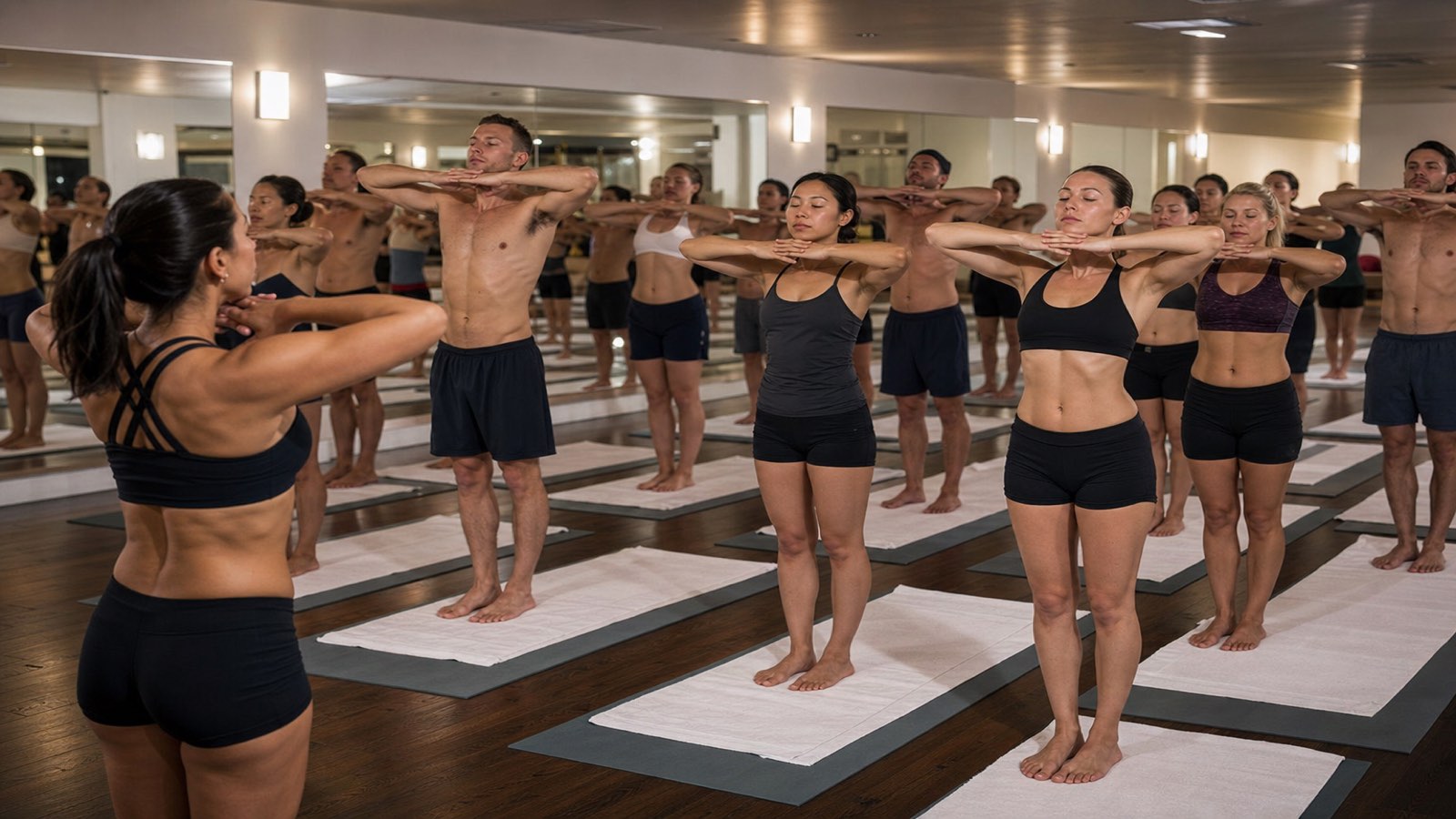
The predictable structure lets students learn the names, observe changes over time, and spend less attention guessing what comes next. Standing Deep Breathing begins the practice, Savasana marks the transition to the floor, and Blowing in Firm completes the active sequence.
Why the Practice Has Several Names
26+2 yoga, 26/2 yoga, 26 2 yoga, 26&2 yoga, 26-2 yoga, and 26 + 2 yoga usually describe the same structure. “Hot 26&2” and “Original Hot Yoga” are common class names. “Bikram 26/2” identifies the historical method more directly.
The notation is addition, not repetition. “26x2 yoga” is an informal search spelling; the class does not simply perform every pose twice. Some postures have two sets, others have combined phases, and the floor series uses repeated Sit-Up transitions.
Studios may avoid the Bikram brand name while preserving the order. Compare the stated temperature, 90-minute duration, repetitions, dialogue, and instructor preparation rather than judging from one label. The Bikram versus hot yoga guide explains the naming and training distinction.
How the Fixed Sequence Is Structured
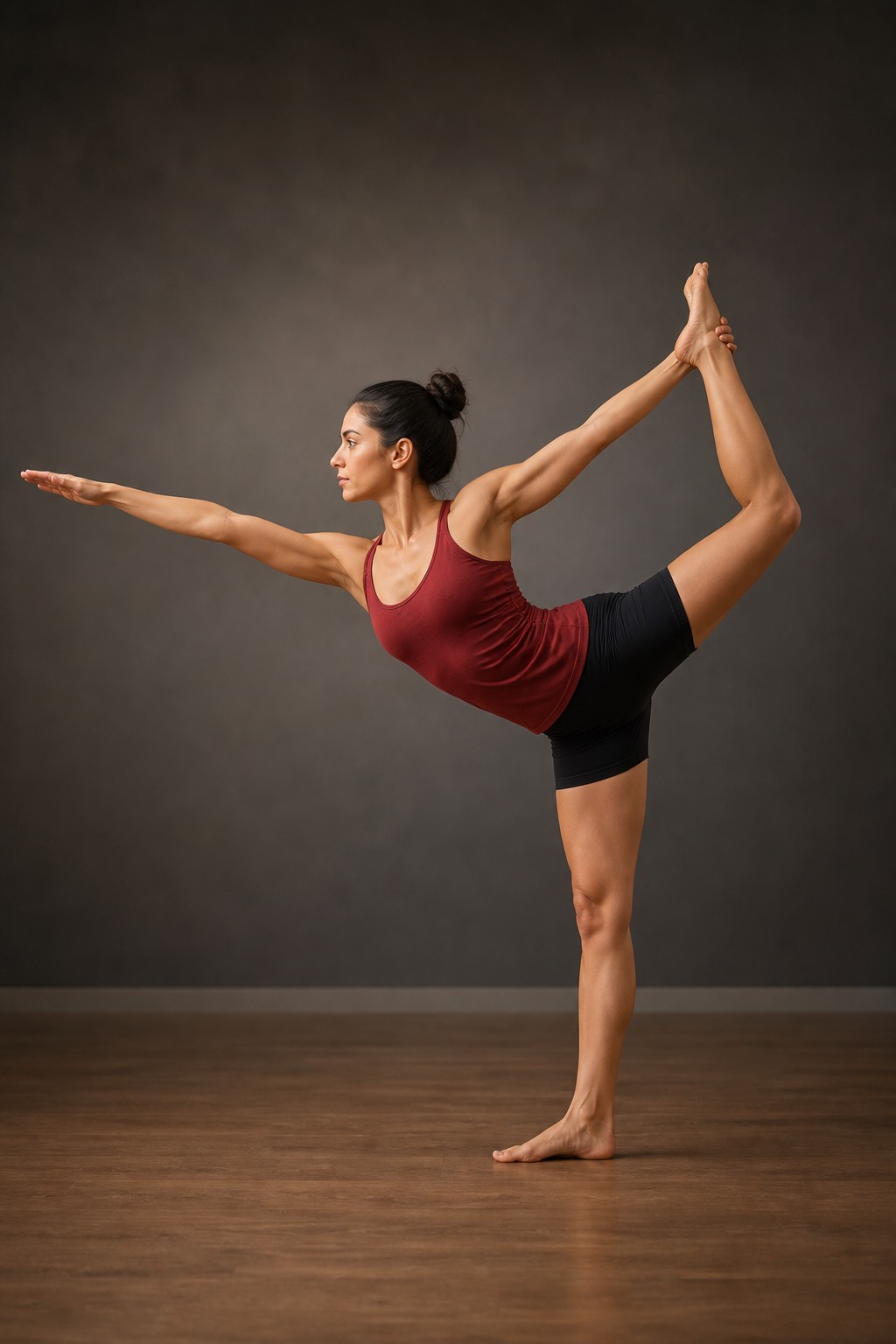
The standing half includes Half Moon with Hands-to-Feet, Awkward, Eagle, four demanding balances, wide-leg stretching, Triangle, Standing Separate-Leg Head-to-Knee, Tree, and Toe Stand. It builds from large bilateral movements toward balance and concentration.
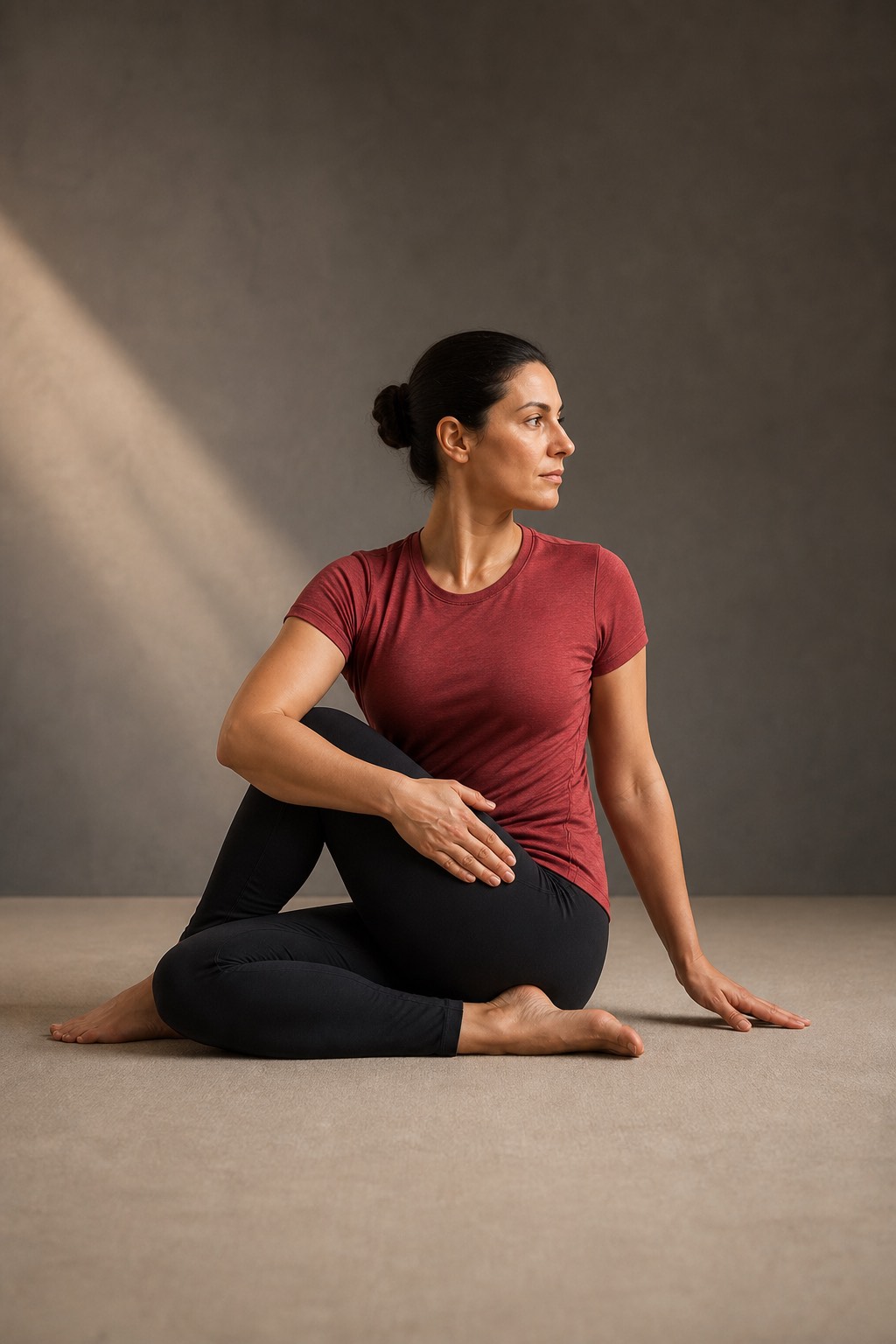
The floor half begins with Savasana and Wind-Removing Pose. Cobra, Locust, Full Locust, and Bow strengthen the back body. Fixed Firm and Half Tortoise lead into Camel and Rabbit. Seated Head-to-Knee with Stretching and Spine-Twisting close the postures before final breathing.
For every English and Sanskrit name in order, use the complete 26 Bikram poses chart. The interactive 26&2 yoga guide adds photographs, filters, details, and a pose timer.
Why the Practice Uses a Heated Room
The traditional target is about 105°F (40°C) with roughly 40% humidity. Heat creates a consistent environment, increases sweating, and adds cardiovascular and thermoregulatory demand. It can make tissues feel more mobile, but that sensation is not permission to force range.
Heat does not “detox” the body by sweating out toxins, and early weight change after class is mainly fluid. The heat yoga temperature guide explains temperature, humidity, adaptation, and warning signs.
What a Standard Class Feels Like
Expect a quiet room, mirrors, teacher-led verbal cues, limited music in traditional settings, and the same sequence from beginning to end. Bring a mat, large towel, water, and breathable clothes. Arrive early enough to explain injuries or health concerns.
A complete class lasts 90 minutes. Express versions may last 60 or 75 minutes by changing sets or timing. That can be useful, but it is not identical to the traditional dose. Confirm the format when booking a Bikram yoga studio.
Physical and Mental Benefits
Flexibility: the heated environment can make muscles feel more mobile and support a wider comfortable range. Students still need controlled movement because heat does not make forced stretching automatically safe.
Strength and balance: steady, repeated postures train the core, legs, muscular endurance, and single-leg stability.
Focus: the predictable sequence, fixed gaze, and breathing techniques can calm mental noise and develop concentration.
Consistent practice can also train mobility, trunk control, breathing attention, and tolerance of a predictable challenge. Research has reported improvements in selected strength, flexibility, and balance outcomes, but studies are often small and do not prove every traditional health claim.
Read the evidence and limitations in our Bikram hot yoga benefits guide. Benefits depend on frequency, starting condition, recovery, and safe effort—not merely room temperature.
How to Practise Safely as a Beginner
Begin with hydration and normal meals rather than extreme water loading or fasting. Use the first stable version of a posture. Never chase another person's depth. Stop for sharp pain, faintness, nausea, confusion, chills, unusual weakness, poor coordination, chest pain, or inability to cool down.
People who are pregnant or who have cardiovascular, blood-pressure, heat-regulation, kidney, or medication concerns should obtain individual medical guidance before heated practice. Review the CDC/NIOSH guidance on heat stress and warning signs, and use the beginner preparation guide for a practical first-class checklist.
Frequently Asked Questions
What is 26/2 yoga?
26/2 yoga is shorthand for a fixed class containing 26 postures and two breathing exercises. It normally follows the traditional Bikram 26&2 order for 90 minutes in a room near 105°F (40°C), although some studios offer shorter express adaptations.
Is 26+2 yoga the same as Bikram yoga?
The pose order comes from the Bikram method. Many studios use names such as Original Hot Yoga, Hot 26&2, or 26+2 yoga when teaching the sequence without using Bikram as the studio brand. Ask about class length, heat, repetitions, and teacher training.
Why is it called 26 and 2 yoga?
The numbers refer to 26 yoga postures plus two breathing exercises: Standing Deep Breathing at the beginning and Blowing in Firm at the end. The plus, slash, ampersand, hyphen, and x are informal ways of expressing the same 26-and-two structure.
What is hot 26 and 2 yoga?
Hot 26 and 2 yoga is the fixed 26-posture and two-breathing sequence taught in a heated room. Traditional classes target roughly 105°F (40°C) and about 40% humidity, but actual studios and express formats vary.
How long is a 26&2 yoga class?
A traditional complete class lasts 90 minutes. A 60- or 75-minute Hot 26&2 class may preserve the order while reducing repetitions, hold times, or rest periods. The studio should clearly identify an express adaptation.
What does 26x2 yoga mean?
26x2 is sometimes used online as another spelling of 26+2 or 26&2 yoga. It does not normally mean that every posture is performed exactly twice, because repetitions vary across the traditional sequence.
What is 26 squared?
In mathematics, 26 squared or 26^2 equals 676. In yoga searches, people sometimes type 26x2 or 26 2 when they mean the 26-posture, two-breathing Hot 26&2 sequence.
Are all 26 and 2 yoga poses safe for beginners?
Beginners can attend a well-supervised class, but should not force the maximum expression of every pose. Hydrate, disclose relevant conditions, use stable starting positions, rest when needed, and stop for pain or heat-illness symptoms.