Heat Yoga for Beginners: Your First-Class Preparation Guide
By Ian Terry, E-RYT 500 · Updated

The best approach to heat yoga for beginners is preparation without pressure. Your first goal is not to copy the deepest posture or remain in the room at any cost. It is to learn how your body responds to the class, the teacher, and the heated environment.
Before Your First Heat Yoga Class
First confirm what you booked. A 60-minute warm flow class is different from a 90-minute Bikram Hot 26&2 class at about 105°F (40°C) and 40% humidity. Ask about temperature, humidity, duration, sequence, beginner policy, and whether you may rest or leave.
Arrive 15-20 minutes early. Tell the instructor that you are new and mention injuries or relevant health limitations. Choose a position where you can see and hear without feeling trapped. Learn the exits and place water where it will not become a trip hazard.
Begin normally hydrated over the day. Do not try to compensate by drinking several litres immediately before class. The systematic review of hot yoga research and safety recommends arriving hydrated and replacing sweat losses after practice, while warning against excessive rapid fluid intake.
If you are pregnant, read the pregnancy and hot yoga safety guide and seek individualized medical guidance before attending. The same need for personal advice applies if you have cardiovascular or blood-pressure concerns, have experienced heat illness, or use medicine that affects temperature or heart rate.
What to Bring and What to Wear
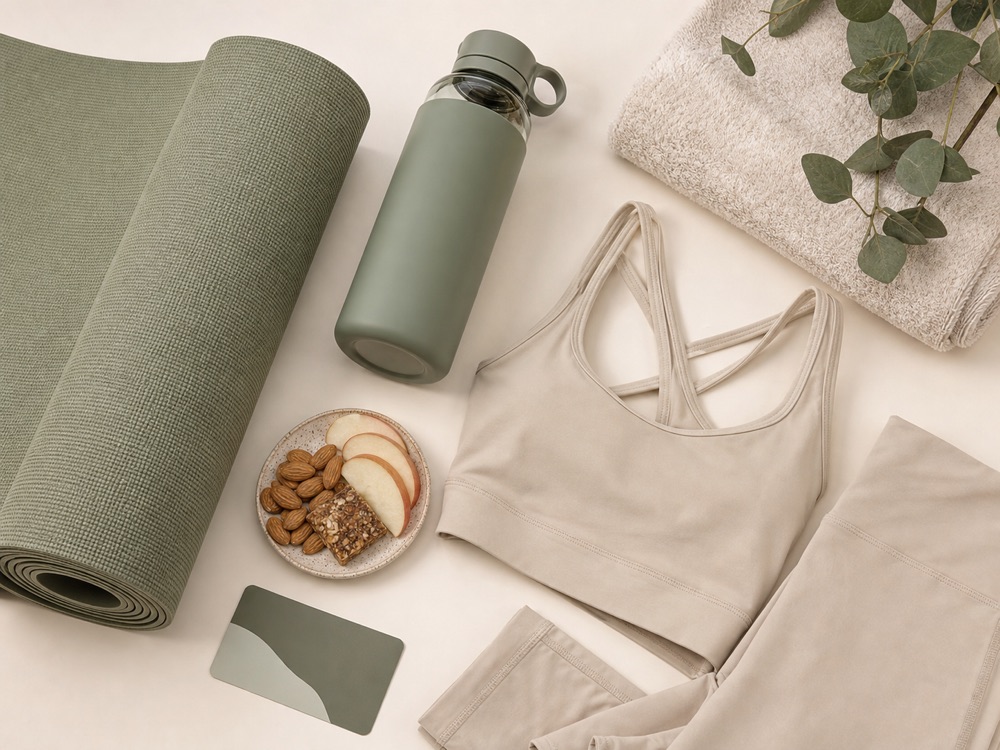
- Non-slip mat: use a stable surface that still grips when damp.
- Absorbent towel: place it securely and avoid loose edges.
- Water bottle: bring enough for your normal needs without treating drinking as a contest.
- Breathable clothing: select light clothing that remains comfortable and secure when wet.
- Dry layer: change or cover up after class when you enter air conditioning.
Leave perfume, heavy lotion, and complicated equipment at home. Heat yoga preparation should reduce friction. Your mat, towel, water, and attention are enough.
How to Pace Heat Yoga as a Beginner
Start below your maximum. Heat can make muscles feel temporarily more mobile, but that sensation does not grant instant control at a larger range. Move smoothly, avoid bouncing, and exit a posture before technique collapses.
Use breathing as information. A class may feel challenging, but you should still be able to follow instructions and make decisions. If breathing becomes panicked or attention becomes cloudy, reduce effort or rest.
Do not compare sweat, flexibility, or stillness with the person next to you. Experience, acclimatization, body size, clothing, and studio position all change what is visible. A useful first class teaches you a baseline.
In a fixed class, previewing the Bikram yoga 26 poses in sequence can reduce uncertainty. If you prefer to track a gradual routine, the 30, 60, and 90-day Bikram journey tracker stores your practice notes locally.
Heat Yoga Warning Signs You Should Not Ignore
Stop if you feel confused, dizzy, nauseous, faint, uncoordinated, unusually weak, or unable to cool down. Tell the instructor and move to a cooler environment. Symptoms that are severe, worsening, or persistent require medical care.
A responsible teacher does not shame water, rest, modifications, or leaving. The classroom culture matters because students are more likely to act safely when practical choices are openly supported. A study of hydration encouragement and behavior in hot yoga underlines the instructor's role in safety communication.
Sweat is cooling, not proof of detoxification. A large short-term drop on the scale is mostly water loss. Do not chase it by adding clothes, avoiding water, or extending the session.
After-Class Cooling and Recovery

Leave the heated space gradually, sit if necessary, and rehydrate over time. Eat your normal balanced meal when comfortable. If your clothes are soaked, change before sitting under strong air conditioning. Notice headache, unusual fatigue, sleep, appetite, and hydration over the rest of the day.
Do not schedule another intense workout simply because the post-class mood feels energetic. Your first session is data. Give recovery enough space to show whether the dose was appropriate.
A Simple Heat Yoga Beginner Practice Plan
Start with one class, then allow enough recovery to assess it. One or two weekly classes may suit a new practitioner while adaptation and technique develop. Increase only when hydration, sleep, and normal daily energy remain stable. Older beginners usually need a slower ramp, and our guide to teaching hot yoga to men over 50 explains the pacing and modifications a good teacher should offer.
- Class one: learn the room and rest before you need to.
- Classes two to four: observe breathing and choose one posture focus.
- After several weeks: add frequency only if recovery is predictable.
Use the practical first hot yoga class checklist for a detailed packing, food, hydration, studio-arrival, and warning-sign plan. Compare clothing, footwear, towels, and post-class layers in the hot yoga clothing guide. Read the complete heat yoga temperature guide to compare environments. If repeated practice leads you toward teaching, use the heat yoga teacher training checklist before paying a deposit.
Frequently Asked Questions
Can a complete beginner do heat yoga?
Yes, many studios welcome complete beginners. Tell the instructor it is your first class, choose an appropriate format, arrive early, and treat rest or an early exit as valid decisions. Medical concerns require individual professional advice.
What should I wear to a heat yoga class?
Wear light, breathable clothing that stays secure when wet. Avoid heavy cotton and unnecessary layers. Bring a non-slip mat, absorbent towel, water bottle, and dry clothes for after class.
How much water should I drink before heat yoga?
Begin class normally hydrated rather than drinking a large amount at the last minute. Fluid needs differ by body size, climate, diet, and sweat rate. Sip according to comfort and replace losses gradually after class.
What should I eat before heat yoga?
Avoid a heavy meal immediately before class. Many people tolerate a familiar light meal or snack one to three hours beforehand, but timing is personal. Do not experiment with unfamiliar food on your first day.
When should I stop a heat yoga class?
Stop and move to a cooler area if you become confused, dizzy, nauseous, unusually weak, uncoordinated, or unable to cool down. Tell the teacher. Severe or persistent symptoms need medical attention.