Heat Yoga Teacher Training: How to Choose a Credible Program
By Ian Terry, E-RYT 500 · Updated

A heat yoga teacher training should teach more than poses in a warm room. Future instructors need a recognized yoga foundation, method-specific knowledge, live teaching practice, heat-safety judgment, and assessment. This commercial comparison guide shows what to verify before you invest.
Start with Credentials and Teaching Scope
Ask two separate questions: what broad credential will you earn, and what heated method will you be prepared to teach? A general 200-hour education and a Bikram Hot 26&2 specialization serve related but different purposes. Marketing that merges them into one vague certificate makes comparison harder.
Check the school and trainer independently. Read the current Yoga Alliance standards for Registered Yoga Schools, then verify what applies to the specific intake. A logo alone does not explain curriculum, supervised hours, or graduate scope.
Ask for the exact certificate names, awarding organizations, completion requirements, assessment method, retake policy, and whether registration fees are included. Get important answers in writing before paying a deposit.
What a Heat-Specific Curriculum Should Cover
A solid curriculum connects anatomy, posture mechanics, verbal cueing, ethics, observation, and class planning with the heated environment. It should explain temperature and humidity monitoring, acclimatization, hydration communication, warning signs, emergency procedures, and when a student needs medical guidance.
The current systematic review of hot yoga research emphasizes teacher responsibility for recognizing heat-related risk and supporting hydration. A program should convert that principle into rehearsed classroom decisions, not leave it as a paragraph in a manual.
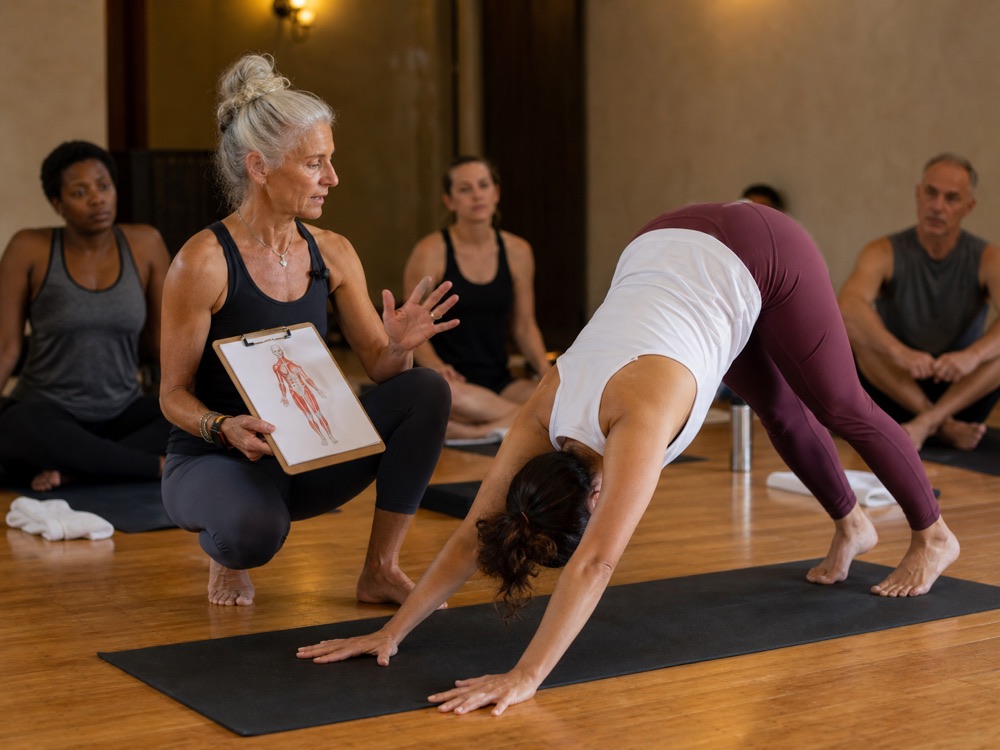
Method-specific training also matters. Fixed Hot 26&2 education requires sequence order, timing, dialogue, gaze direction, room observation, and safe ways to serve different bodies without rewriting the method into generic flow.
Practicum, Feedback, and Assessment
Ask how many times you will stand up and teach. Watching lectures and memorizing words do not show whether you can observe a room, speak clearly, pace a class, and respond when a student struggles. A strong practicum uses a cycle: prepare, teach, receive specific feedback, revise, and teach again.
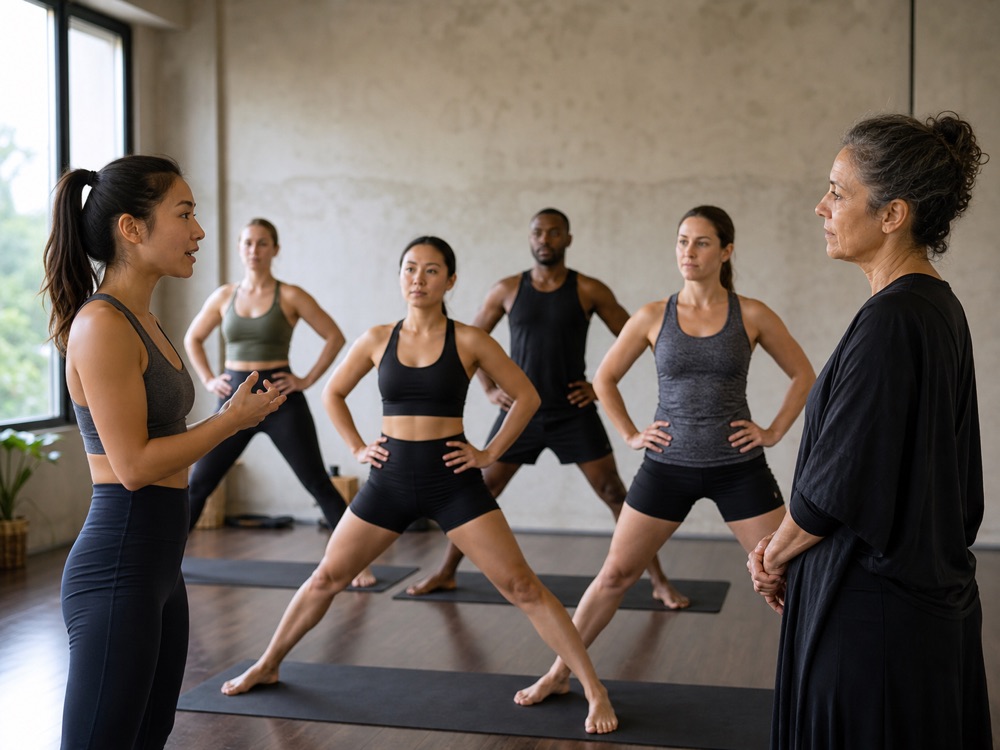
Small cohorts can increase meaningful teaching turns and trainer access, but only if the timetable protects practicum. Request a sample schedule. Look for posture clinics, dialogue delivery, peer teaching, real-student teaching where appropriate, and an observed final assessment.
Assessment criteria should be visible before the test. They may cover accuracy, timing, voice, observation, safety judgment, professionalism, and the ability to keep instruction coherent. Certification should represent demonstrated readiness rather than attendance alone.

Online, Hybrid, or Fully In-Person Heat Yoga Training?
Online preparation can work well for theory, anatomy, history, ethics, vocabulary, and dialogue rehearsal. It lets trainees repeat material and arrive at live training ready to practise. A credible hybrid program uses online study to protect in-person time for work that needs bodies, observation, heat, and feedback.
A fully online heat yoga certificate has an obvious limitation: the provider cannot directly observe how you manage a heated room. Before choosing it, ask how live teaching competence is evaluated and whether studios you hope to work for accept the result.
Read the detailed comparison of online and hybrid hot yoga teacher training, then compare it with the expected 200-hour hot yoga curriculum. If you are specifically comparing course products, use the Bikram hot yoga course guide to audit outcomes, formats, and total cost.
Heat Yoga Teacher Training Comparison Checklist
- Defined outcome: exact credential and method scope.
- Verified educators: trainer credentials plus substantial real heated-class experience.
- Heat curriculum: temperature, humidity, hydration, symptom recognition, and emergency planning.
- Supervised practicum: multiple teaching turns with actionable feedback.
- Fair assessment: published criteria and a clear retake process.
- Transparent total cost: tuition, travel, lodging, fees, materials, and exclusions.
- Graduate evidence: independently checkable reviews and realistic career information.
Use the hot yoga teacher training cost breakdown to compare the full investment. If you are still deciding whether the environment suits you, start with the heat yoga first-class guide.
How the YogaFX Hybrid Model Fits the Checklist
YogaFX combines online preparation with six days of practical teacher training in Bali. The program awards Yoga Alliance RYT 200 and Bikram Hot 26&2 certification after completion. The live MasterClass focuses on posture clinics, dialogue, observation, and supervised teaching rather than repeating material that can be studied before arrival.
Mr. Ian Terry, E-RYT 500, leads cohorts capped at 19 students. The listed tuition is US$1,699. Verify current dates, inclusions, travel needs, and eligibility on the teacher training program page, then review the YogaFX teacher training reviews and Bali training location.
Experience YogaFX Online Hot 26&2 Preparation
The Best Online Bikram Hot 26&2 Yoga Class Ever - Find Out Why - RYT200-YogaFX The World's No.1 YTT
Watch a YogaFX online Bikram Hot 26&2 class to understand how guided remote practice can support sequence familiarity before supervised, in-person teacher training in Bali.
Do you have what it takes to become a great Bikram Hot Yoga teacher? Complete the short YogaFX readiness quiz to understand where you are on your teaching path and receive more personalized guidance.
This guide helps you compare rather than promise that one format fits everyone. Your best choice depends on the method you plan to teach, the evidence you need for studios, the amount of supervised practice you require, and the total investment you can support.
Frequently Asked Questions
What is heat yoga teacher training?
Heat yoga teacher training prepares instructors to teach yoga in a warm or hot environment. A complete program should combine foundational yoga education with heat-specific safety, room management, supervised teaching, assessment, and a clearly defined method.
Is a 200-hour credential enough to teach heat yoga?
A recognized 200-hour foundation may satisfy a studio's general credential requirement, but it does not automatically prove competence in a heated room or a fixed 26&2 sequence. Ask what heat-specific practicum and assessment the program includes.
Can heat yoga teacher training be fully online?
Online study can effectively cover anatomy, history, ethics, dialogue preparation, and written work. Live supervised practicum is still important for observing students, managing a heated room, responding to safety issues, and receiving immediate feedback.
What should a heat yoga practicum include?
Look for repeated cueing practice, posture clinics, observation, full or partial class teaching, feedback, room-condition monitoring, symptom recognition, emergency procedures, and a final practical assessment.
How do I compare heat yoga training prices?
Compare the total cost, not tuition alone. Include travel, lodging, meals, insurance, registration fees, study materials, retakes, and lost work. Then compare supervised hours, cohort size, trainer access, credentials, and what graduates are qualified to teach.