YogaFX Online Hot Yoga Course and Hybrid MasterClass Explained
By Ian Terry, E-RYT 500 · Updated

YogaFX offers two distinct Bikram Hot 26&2 teacher-training pathways. The Online Teacher Training is completed remotely through its own curriculum and assessment. The Hybrid MasterClass combines a separate online pre-course with six days of supervised practical training and assessment in Bali.
This article is the format-focused companion to the complete hot yoga teacher training guide. It separates the standalone digital course from the complete hybrid teacher-certification pathway so you can choose the product that matches your goal.
Both pathways use online learning, but for different purposes. In the Online Teacher Training, the remote curriculum and its assessment form the complete program. In the Hybrid MasterClass, online study prepares the trainee for a separate practical stage in Bali where teaching is observed in person.
Two YogaFX Options, Two Different Outcomes
| Option | Best for | Format | Outcome |
|---|---|---|---|
| YogaFX Online Teacher Training | Students who need a fully remote teacher-training route | Standalone online curriculum and remote assessment | Online RYT 200 pathway after completing its stated requirements |
| YogaFX Hybrid MasterClass | Students pursuing professional teacher certification | Required online pre-course plus six practical days in Bali | RYT 200 and Bikram Hot 26&2 certification after completing the full pathway and passing assessment |
The Online Teacher Training can be purchased independently for USD 329. If you later choose the Hybrid MasterClass, the online-program payment is credited toward that pathway under the academy's current published arrangement. Confirm current pricing, certification requirements, and credit terms before paying.
Explore the standalone YogaFX Online Teacher Training and its current tuition, or review the complete Hybrid MasterClass certification pathway.
How Online and In-Person Assessment Differ
Original Bikram Hot 26&2 Yoga contains 26 postures and two breathing exercises in a fixed 90-minute order, commonly practised at 35-40°C (95-104°F). The Online Teacher Training teaches the method through digital demonstrations, dialogue study, manuals, lectures, and its published remote requirements. It is designed for students who need to complete the pathway from home.
The Hybrid MasterClass evaluates a different learning environment. Its Bali stage lets the trainer observe how a trainee projects their voice, manages timing, reads multiple students, and responds inside a shared heated room. This practical contact is the principal reason a student may choose the hybrid pathway instead of the separate online program.
The physical demand is not theoretical. A 2014 study led by Porcari measured an average expenditure of 333 calories for women and 460 calories for men during a 90-minute Bikram session, with heart rate reaching about 80% of maximum. These results do not predict every student's response. They do show why supervision in the actual room matters.
The two formats therefore suit different constraints. Online study offers access, replay, and scheduling flexibility. In-person training adds immediate observation, room-management experience, live posture clinics, and real-time feedback. Students should compare these differences rather than assuming that the word “online” refers to the pre-course included with the Bali program.
Students following the online route should never recreate unsafe heat in a small home room. Follow the program's stated practice and assessment instructions and obtain appropriate health guidance before attempting heated exercise.
The YogaFX Online Teacher Training has its own remote curriculum and assessment route. It is not the practical Bali stage and it is not the same product as the online pre-course bundled with the Hybrid MasterClass. Applicants should review the assessment method, required submissions, contact hours, and exact final credential for the pathway they select.
Individual results vary, and yoga is not a substitute for medical care. Anyone who is pregnant, has cardiovascular concerns, is sensitive to heat, or has a condition affected by exercise should seek individualized advice from a qualified healthcare professional before beginning heated practice.
How the YogaFX Hybrid Format Actually Works
The YogaFX program separates training into two purposeful phases. Phase 1 is Online Pre-Course Preparation. Phase 2 is a six-day practical MasterClass in Seminyak, Bali. Online work carries the material that benefits from pause, replay, reading, and repetition. Bali carries the work that requires a heated room, other people, direct observation, correction, and assessment.
Enrollment opens immediate access to the self-paced preparation. It includes a 250-page Yoga Lifetime Manual covering mudras, the seven chakras, acupressure, and yoga foundations. Trainees also receive the full Head to Toe Standing Series Workbook, more than 50 yoga teacher training lecture talks, 15 premium video lessons, and a guide to dialogue preparation and memory techniques.
A separate YogaFX Online Teacher Training Program is available at USD 329. Buying it does not enroll you in a Bali cohort because its curriculum and assessment are delivered remotely. If you later enter the Hybrid MasterClass pathway, the fee is credited toward MasterClass tuition under the current published arrangement.
The platform also covers yoga anatomy, the 8 Limbs of Yoga, and philosophy. This is substantive preparation, not a preview page for the practical course. A trainee can replay difficult sections, annotate the workbook, practise dialogue aloud, and return to anatomy material without using expensive travel days for first exposure.
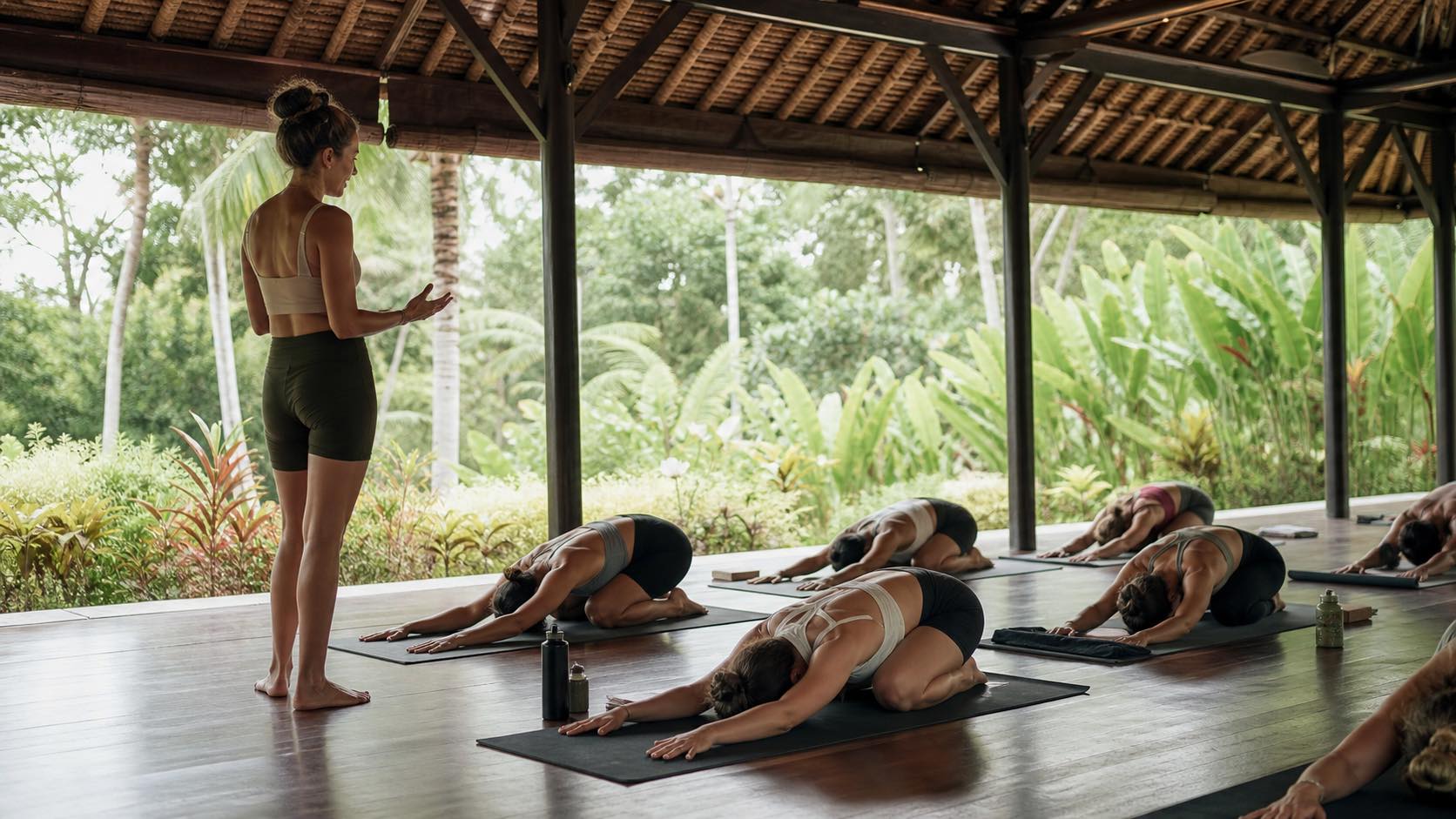
Phase 2 moves the work into a 35-40°C room. The six-day MasterClass focuses on practical teaching, posture clinics, voice, timing, observation, correction, heat awareness, and feedback. Students teach real people rather than submitting only a controlled recording. The cohort is limited to 19 so each trainee can be seen, heard, corrected, and asked to try again.
Mr. Ian Terry, E-RYT 500, developed and leads this pathway. He has more than 12,000 teaching hours, completed five direct training events under Bikram Choudhury between 2012 and 2019, and is Master Trainer of the Republic of Indonesia Yogasana Sports Federation. 1,500+ graduates from over 80 countries have trained through the academy.
A 2025 systematic review by Willmott and colleagues examined 43 heated-yoga studies involving 942 participants. The evidence covered physical and psychological outcomes across varied study designs. It supports continued research into structured heated practice, while also reinforcing why actual practice conditions and supervision cannot be reduced to theory lessons.
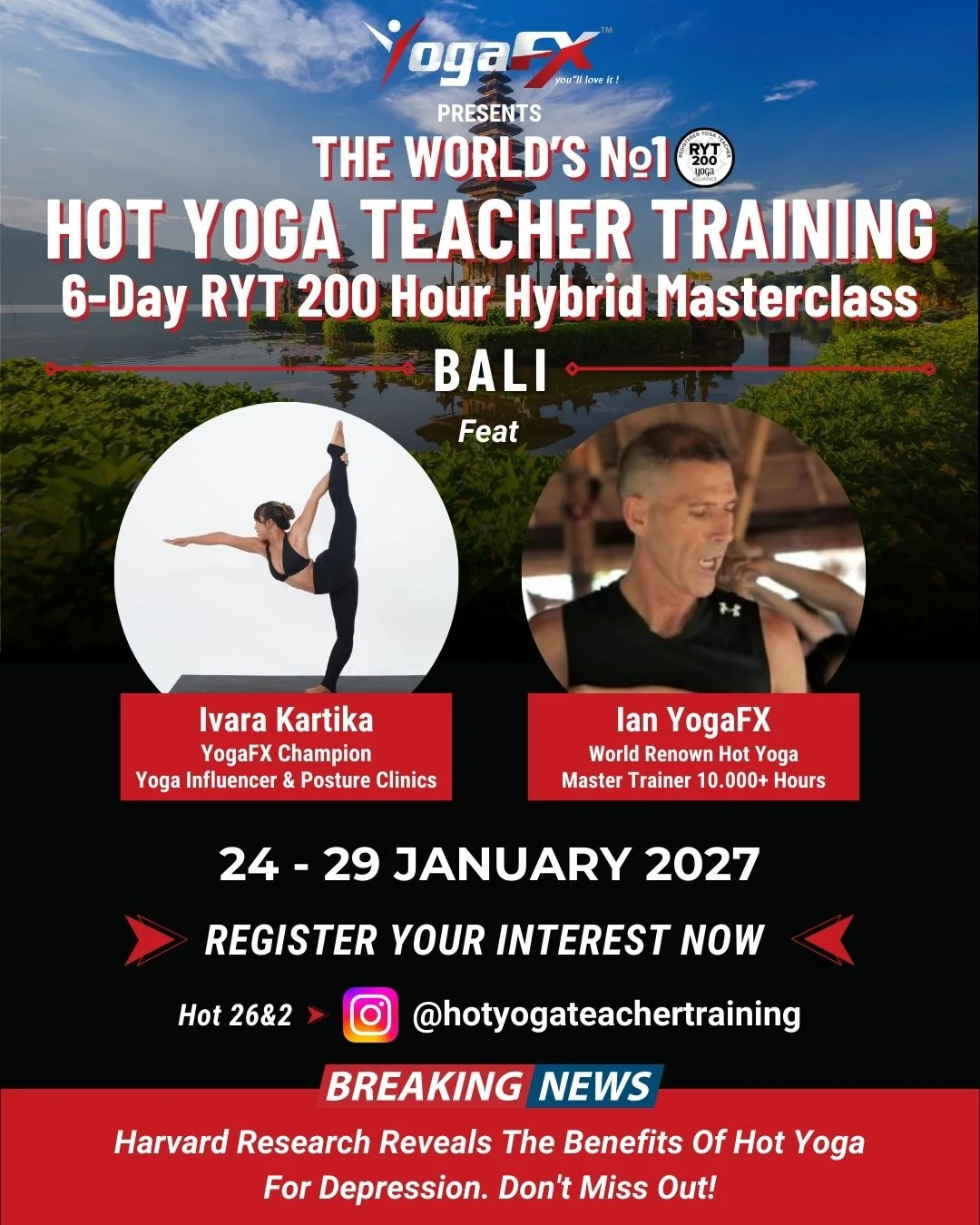
After successful completion, graduates receive dual certification: Yoga Alliance RYT 200 and Bikram Hot Yoga certification. Tuition is USD 1,699. The next listed intake is January 24-29, 2027. Readers planning the practical stage can review the dedicated guide to hot yoga teacher training in Bali.
The program reports 700+ reviews across Google, Yoga Alliance, and YouTube. Review volume is useful context, but applicants should still examine comments about teaching practice, direct trainer contact, assessment, and preparation. Social proof should support due diligence rather than replace it.
For a method-specific breakdown of study stages, credentials, time commitments, and costs, read the hybrid Bikram yoga teacher training guide. For the full timetable, outcomes, and current intake information, see the YogaFX hybrid teacher training program. The wider academy curriculum and other teacher-training pathways are also available from the YogaFX International Yoga Teacher Training Academy. Dates, terms, and entry requirements should be confirmed in writing before travel is booked.
Watch the YogaFX Online Bikram Hot 26&2 Class
The Best Online Bikram Hot 26&2 Yoga Class Ever - Find Out Why - RYT200-YogaFX The World's No.1 YTT
Watch a YogaFX online Bikram Hot 26&2 class and see how guided practice supports the online preparation stage of the academy's hybrid RYT 200 teacher training pathway.
Do you have what it takes to become a great Bikram Hot Yoga teacher? Complete the short YogaFX readiness quiz to understand where you are on your teaching path and receive more personalized guidance.
What You Learn in the Online Course
The Online Teacher Training includes full Standing and Floor Series demonstrations by Ivara Candra Kartika, a YogaFX graduate and World Yogasana medalist. Students can pause, rewind, mute, or cover the on-screen dialogue and practise teaching the demonstration in their own voice.
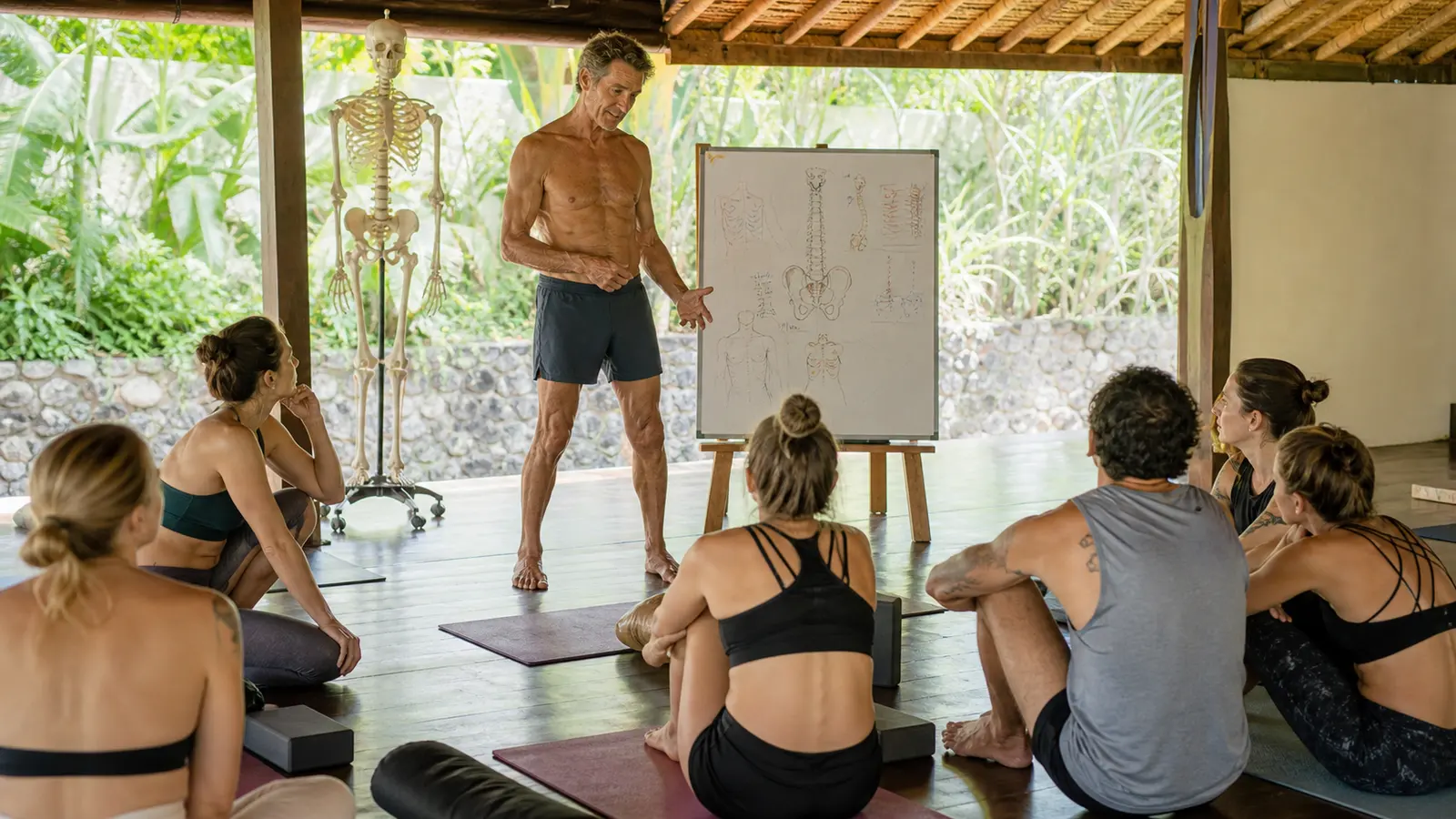
Downloadable Standing and Floor dialogue workbooks and MP3 audio support repeated vocal practice away from the screen. The short-format lecture library covers anatomical planes of movement, the muscular and skeletal systems, the Eight Limbs of Yoga, philosophy, and teaching methodology, supported by workbooks and knowledge checks.
The online phase begins with sequence literacy. The Standing Series Workbook maps the postures from head to toe so trainees can recognize the order, purpose, and main teaching points before entering the intensive. This prevents the first practical day from becoming an attempt to memorize what happens next.
Dialogue preparation is active work. Trainees read, speak, record, listen, and repeat. Memory techniques help organize long verbal passages into usable patterns. The goal is not robotic recitation. It is enough familiarity that the trainee can lift their attention from the page, observe the room, and respond while maintaining a stable class structure.
Anatomy provides a language for discussing joints, muscles, movement, and safe scope. It does not turn a yoga teacher into a clinician. A competent trainee learns what belongs inside yoga instruction and when a student's question needs referral to a healthcare professional.
The 8 Limbs and philosophy modules place physical practice inside a wider tradition. They ask trainees to consider conduct, self-study, concentration, breath, and the responsibilities that accompany authority in a teaching room. These topics need time for reading and reflection, which makes self-paced preparation more suitable than compressing every discussion into six travel days.
The manual's material on mudras, chakras, acupressure, and yoga basics broadens the study context. Trainees should understand the difference between traditional frameworks, teaching language, and medical evidence. A responsible teacher does not convert a philosophical concept into an unsupported health promise.
More than 50 lecture talks and 15 premium video lessons let trainees revisit concepts until they can explain them in their own words. Replay is one of the genuine advantages of online yoga teacher training. A live lecture moves forward. A recorded explanation can be paused, tested against the workbook, and reviewed before an assignment.
The current Online Teacher Training package also publishes lifetime access, the 250-page Yoga Lifetime Manual, and ten additional premium lectures as promotional inclusions. Review the current Online Program page for price, offer dates, and written enrollment terms.
Preparation also reveals where help is needed. A trainee who repeatedly loses a sequence transition or struggles to project dialogue can arrive with a precise question. That makes trainer time more productive. The online stage does not prove practical competence, but it creates the foundation on which practical coaching can work quickly.
Why Some Students Choose the Hybrid Pathway
A fully remote course maximizes flexibility, but it cannot reproduce a shared hot room or provide the same real-time view of teaching. A fully in-person course provides immersion, but it can spend costly travel days delivering lectures, reading assignments, and basic sequence memorization that students could complete effectively at home.
Hybrid yoga teacher training uses each environment for the work it does best. Home is suited to reading, replay, written reflection, anatomy study, and repeated dialogue practice. Seminyak is suited to posture clinics, heat experience, voice projection, room observation, real students, feedback, and assessment.
This division matters for career changers. People often need to keep working while they prepare. Self-paced study can fit around existing commitments without removing the expectation of practical competence. The six-day block then creates a defined period for full attention rather than stretching occasional practice across many months.
Preparation may also change how the first live day feels. A 2022 study by Hui and colleagues reported reduced state anxiety following a hot yoga intervention. That research did not test teacher training preparation, so it cannot prove that online study reduces trainee anxiety. It does support careful discussion of hot yoga and anxiety while individual results vary.
The practical educational point is simpler: familiarity reduces avoidable uncertainty. A trainee who knows the posture order and dialogue basics has fewer new variables to manage at once. Attention can move toward students, room awareness, and trainer feedback. Confidence then comes from preparation and repeated practice, not from a promise that nervousness will disappear.
The cohort limit of 19 supports this model. Small groups make it possible to hear each trainee, identify recurring habits, and assign another attempt. Correction becomes specific: slow this phrase, scan before continuing, make the posture direction clearer, or allow the student time to respond.
Hybrid does not mean easier. It requires self-direction before Bali and stamina during the intensive. A student who postpones every online task may arrive without the foundation the schedule assumes. A serious program should explain required preparation, check progress, and make clear that the pre-course cannot simply be skipped.
It also does not mean that six days alone equal 200 hours. The credential rests on the complete hybrid program, combining online education and the practical MasterClass. Applicants should compare the entire workload, assessment, certification, and costs rather than judging the course by the in-person calendar alone.
How to Choose the Right YogaFX Option
When asking what is the best online yoga teacher training, first decide whether you need a general course such as Vinyasa yoga teacher training online or a specialist heated method. For Hot 26&2, online theory should lead into supervised in-person practice rather than replace it.
Start with a curriculum map. Ask which subjects are recorded, which involve live contact, how assignments are reviewed, how many times you teach, and who conducts the final assessment. The phrase "200 hour online yoga teacher training" says little unless the provider explains how those hours produce observable teaching skill.
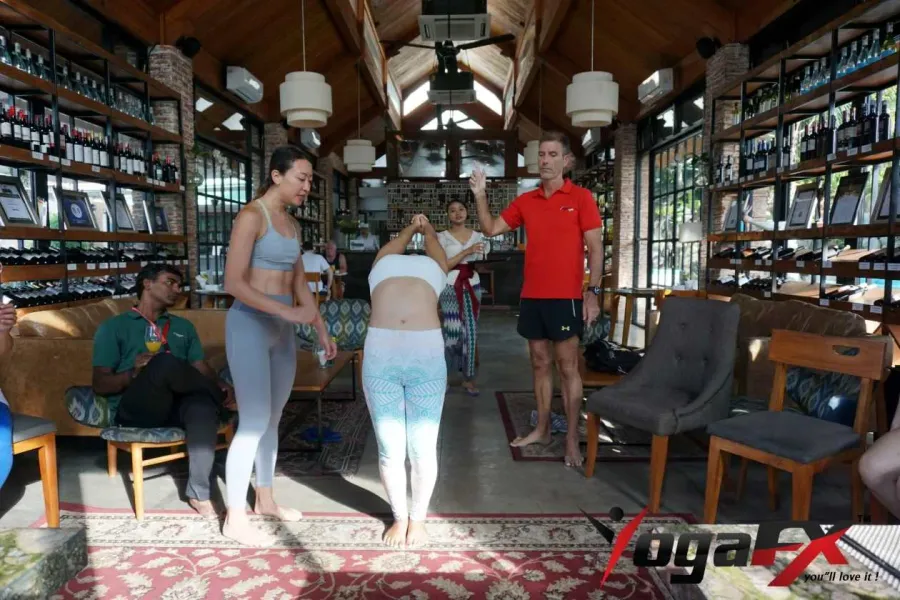
Confirm the trainer, not just the brand. Read the biography and ask who will actually correct your dialogue, watch your practical teaching, and decide whether you meet the standard. Verify whether the featured trainer leads the course or appears only in recorded material.
Review the credential wording carefully. Yoga Alliance RYT 200 and a method-specific Bikram Hot Yoga certificate serve related but different purposes. Ask which organization issues each document, what successful completion requires, and whether studios in your intended employment market recognize it.
Calculate the complete price. Add tuition, flights, accommodation, food, visa costs, insurance, local transport, and time away from work. The guide to hot yoga teacher training costs provides a detailed framework for comparing the USD 1,699 program with other formats.
Read graduate reviews for evidence of function. Look for comments about dialogue improvement, posture correction, actual teaching turns, and access to the trainer. A statement that training was transformative may be sincere, but a description of what changed gives you more useful information.
Finally, test your schedule before enrolling. Protect several study periods in one week, complete a recorded dialogue practice, attend your normal heated classes, and see whether the routine is realistic. Flexible learning succeeds when flexibility becomes a reliable plan rather than permanent postponement.
Choose the Online Teacher Training if remote delivery is essential. Choose the Hybrid MasterClass if you want the online foundation followed by supervised teaching, posture clinics, and assessment in Bali.
Questions beyond this guide are covered on the full teacher training FAQ page. When you are ready, register your interest by taking the readiness quiz. Use the result as the beginning of a direct conversation about your background, timeline, and goals.
Frequently Asked Questions
Are the YogaFX Online Teacher Training and Hybrid MasterClass the same program?
No. Both are teacher-training pathways, but they have separate enrollment and assessment requirements. The Online Teacher Training is completed remotely; the Hybrid MasterClass combines its own online pre-course with six practical training days in Bali.
Can the YogaFX Online Teacher Training lead to RYT 200 certification?
Yes. The Online Teacher Training is a separate fully online RYT 200 pathway with its own curriculum and assessment requirements. It should not be confused with the online pre-course included in the Hybrid MasterClass.
How does YogaFX's hybrid format actually work?
The program has two phases. Phase 1 is self-paced online preparation you start immediately upon enrollment, covering the standing sequence, dialogue, anatomy, and philosophy. Phase 2 is a 6-day in-person intensive MasterClass in Seminyak, Bali, where you teach real students and receive direct feedback from Mr. Ian Terry.
What is included in the YogaFX Online Course?
The self-paced course includes a 250-page Yoga Lifetime Manual, posture workbooks, dialogue study, more than 50 training talks, and 15 premium video lessons covering memory, anatomy, teaching skills, and yoga philosophy.
Why not just do the whole training in person instead?
You can, but the online phase means your six days in Bali go entirely toward live teaching practice, posture clinics, and feedback instead of memorizing sequence order from a standing start. Students who complete the online prep typically arrive noticeably more confident and ready for the intensive pace.
How long does the online preparation take before I go to Bali?
There's no fixed timeline. It's self-paced, and most students spread it across the weeks between enrolling and their MasterClass date. What matters is arriving familiar with the standing series and dialogue basics, not hitting a specific number of study hours. Individual results vary, and yoga is not a substitute for medical care.
Can I skip the online prep and just do the 6-day intensive?
No. The online pre-course preparation is required for all MasterClass students and begins immediately upon enrollment. It's built into the program because the six days in Bali assume you already know the sequence and dialogue basics well enough to start teaching practice on day one.