How Much Does Hot Yoga Teacher Training Cost? Full Breakdown
By Ian Terry, E-RYT 500 · Updated

Yoga teacher training cost varies from hundreds to several thousand dollars because the same course label can describe very different education. Location affects rent and travel, but the larger differences often come from live trainer access, program length, cohort size, supervised teaching, assessment, accommodation, and the certificate awarded. To answer "how much does yoga teacher training cost?" honestly, compare the complete cost of graduating rather than the tuition headline alone. A 200-hour yoga teacher training cost comparison should also separate a general Hatha yoga teacher training cost from specialist hot-yoga expenses such as heated studio access, dialogue coaching, and method-specific assessment.
What Affects the Price?
Start with format. A self-paced online course can serve many students without maintaining a studio or providing daily live feedback. A local weekend program carries venue and faculty costs across several months. A destination intensive concentrates those expenses into a shorter period and may add accommodation, meals, transfers, or retreat services. All three can display "200 hour" on a sales page while delivering very different contact and practice.
Location matters, but not in the simple way people expect. A course in a lower-cost country can still be expensive if it includes private rooms and senior faculty. A city course with modest tuition may create months of commuting, parking, childcare, and lost weekends. Convert every option into the same currency, on the same date, and calculate the cost required to finish rather than the price required to enrol.
Trainer experience changes the economics. An educator with thousands of classroom hours, a documented lineage, and the ability to assess individual teaching cannot supervise unlimited students at once. Ask who delivers the course, how much time the lead trainer spends with your cohort, and whether that person observes your practicum. A respected name on the brochure has little budget value if junior staff conduct most of the work.
Class size affects how often you are seen. Large groups spread venue and faculty costs across more people, which may lower tuition. Smaller cohorts can create more teaching turns, direct corrections, and useful assessment. Do not assume small is automatically good. Ask for the maximum intake, the number of assessed teaching sessions, and how feedback is recorded.
Inclusions complete the picture. Accommodation, meals, manuals, platform access, required classes, examinations, resits, and certificates may be bundled or separate. Use the complete hot yoga teacher training selection guide to check educational quality beside the numbers. Price only becomes meaningful when you know what the course trains you to do.
Typical Price Ranges
The ranges below are practical planning estimates for 200-hour programs, not a formal industry survey and not quotations from named schools. Actual prices move with country, currency, season, format, faculty, and inclusions. Use the table to organise your shortlist, then replace every estimate with a written figure from the provider.
| Program Tier | Typical Price Range (USD) | What's Usually Included |
|---|---|---|
| Budget or online-heavy | USD 500-1,000 | Self-paced modules, digital materials, and limited live instruction or practicum |
| Mid-range intensive | USD 1,000-3,500 | Live instruction, in-person intensive, basic materials, feedback, and assessment |
| Premium or residential | USD 3,500-7,000+ | Intensive training plus housing, meals, retreat facilities, senior faculty, or added services |
A 200 hour yoga teacher training cost near the bottom of a range is not automatically suspicious. Online scale, a simple venue, a regional price advantage, or tuition-only packaging can lower the amount. Likewise, a premium price does not prove strong teaching. It may pay for a private room, resort facilities, meals, or branding rather than more observed practicum.
If you are asking, "how much does a 200 hour yoga teacher training cost for me?" build three totals. Tuition is the advertised course fee. Completion cost adds every required material, assessment, and certificate charge. Total personal cost adds travel, living expenses, equipment, care responsibilities, and income you will not earn while studying. Only the third figure shows whether two differently packaged programs genuinely fit the same budget.
Ask for a curriculum that maps the fee to live hours, trainer access, assignments, teaching practice, feedback, and assessment. Our 200-hour yoga teacher training breakdown shows what those categories should mean in practice. If a provider cannot explain how its hours lead to demonstrated teaching skill, the price comparison is not ready.
Currency can distort a close decision. Record the exchange rate and likely payment fees on the day you compare courses. For an independent reference, use Bank Indonesia's published transaction exchange rates when planning Bali payments, then confirm the actual conversion and charges with your bank or card provider.
Hidden Costs to Watch For
Flights are the obvious extra, but the cheapest fare may create expensive problems. Check baggage, date changes, airport transfers, and arrival timing. Landing immediately before the first intensive session can leave you exhausted. Budget the nights needed to arrive rested and leave without rushing, not only the dates printed on the course calendar.
Visa requirements depend on nationality, length of stay, and activity, and rules can change. Use the official Indonesian Immigration eVisa portal rather than an old blog or social post. Add the correct application fee only after checking your own circumstances. If anything is unclear, seek qualified immigration guidance before buying non-refundable travel.
Accommodation deserves a full calculation. Include taxes, deposits, the night before training, the night after, laundry, and daily transport. A cheaper room far from the studio may cost more once travel time and ride fees are added. For Bali-specific booking questions, use our 200-hour Bali training guide and ask the school which neighbourhoods make the timetable realistic.
Meals, water, insurance, and equipment are easy to underestimate. Intensive days leave less time to shop and cook. Insurance should fit your trip and planned activity, not simply be the cheapest policy. Required equipment may include a mat, towels, practice clothes, notebooks, and a device for online study. Buy from the official packing list rather than from generic influencer recommendations.
Education can also create less visible charges. Ask whether manuals, platform access, examinations, resits, deadline extensions, replacement certificates, and post-course mentoring are included. External registration, such as joining Yoga Alliance after graduation, is normally a separate decision and may carry its own current fee. Confirm that fee with the organisation when you are ready to register.
Finally, count lost income, childcare, pet care, and work you decline while studying. These are not school fees, but they affect whether the plan is sustainable. Keep a contingency fund instead of assuming each estimate will be exact. Financial strain competes with learning, so a complete budget is part of course readiness, not an admission that you lack commitment.

The YogaFX Price Breakdown
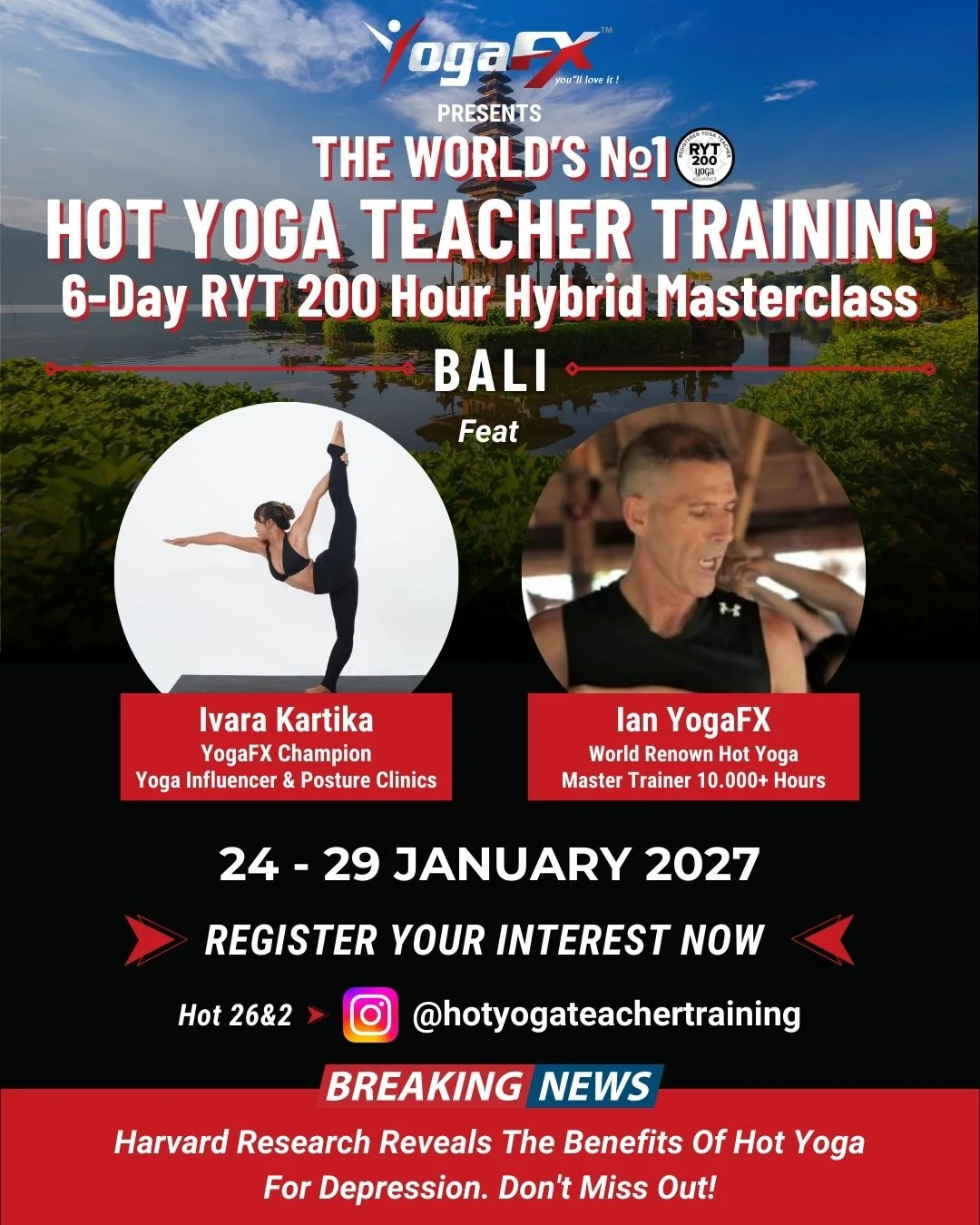
After comparing the market first, USD 1,699 becomes a useful concrete reference. YogaFX charges that flat tuition for online pre-course preparation followed by a six-day practical intensive in Bali. The school has used its hybrid format since 2017. Each cohort is capped at 19 participants, so trainer access and observed teaching remain part of the design rather than an optional upgrade.
Applicants who prefer to divide tuition can review the Bikram yoga teacher training payment plan guide. It explains the YogaFX deposit structure, remaining-balance questions, written terms, and how to compare installments without losing sight of total cost.
If you have already paid BookYogaRetreats or BookYogaTeacherTraining and your booking may be affected by the Tripaneer bankruptcy, follow the paid-deposit evidence and support checklist before adding a replacement course to your budget.
| Item | Included in USD 1,699? |
|---|---|
| Six-day in-person intensive in Seminyak and Canggu | Yes |
| Online pre-course preparation | Yes |
| Practical teaching, feedback, and assessment | Yes |
| Dual certification: RYT 200 eligibility plus Bikram Hot 26&2 | Yes |
| Flights to Bali | No |
| Accommodation and meals | No, arranged and paid separately |
| Visa, insurance, and local transport | No |
Mr. Ian Terry leads the training. He is an E-RYT 500 with more than 12,000 teaching hours, completed five direct training sessions under Bikram Choudhury between 2012 and 2019, and is Master Trainer of the Republic of Indonesia Yogasana Sports Federation. 1,500+ graduates from over 80 countries have completed YogaFX education.
The method is Original Hot 26&2 Yoga: 26 postures, two breathing exercises, a fixed 90-minute class, and scripted verbal instruction without demonstrations or music. The Seminyak and Canggu studios are open from 06:00 to 22:00 daily. They use Bali's natural tropical heat at around 40°C and 40% humidity, never electric heaters.
Successful graduates receive eligibility for RYT 200 plus a Bikram Hot 26&2 method certificate. The published social proof includes 700+ reviews across Google, Yoga Alliance, and YouTube. Reviews can help you form questions, but they should sit beside the written curriculum, assessment, inclusions, refund terms, and your own method fit.
Read why Bali suits Original Hot 26&2 teacher training, then review the complete YogaFX training program. Ask for the current dates and terms in writing. Add flights, accommodation, meals, visa, insurance, and transport to USD 1,699 before comparing this option with a local or residential course.

Is It Worth the Investment?
Teacher training may be worth the investment when the method fits your goal, the course develops observable skill, and the full cost does not destabilise your finances. Value can be professional, educational, or personal. Be clear which result matters to you. A career changer needs a different return than a serious practitioner who wants disciplined study without planning to teach immediately.
Certification may help you qualify for auditions or insurance, but it does not guarantee employment or a particular income. New teachers often build schedules gradually. Class availability, local pay, transport, preparation time, retention, insurance, tax, private clients, and studio relationships all affect the financial return. Model a slow start rather than making tuition depend on instant work.
Compare what you will be able to demonstrate after training. Can you lead a complete class, observe students, use the required dialogue, manage time, respond safely, and explain the scope of your certificate? If those skills are assessed and corrected, the fee is buying more than access to videos. If they are not, include the likely cost of later mentoring in your comparison.
Before paying, write down tuition, completion cost, total personal cost, payment dates, cancellation exposure, and a contingency. Then write one sentence explaining why the preferred program is worth that total. If the sentence depends on urgency, prestige, guaranteed earnings, or an unclear discount, pause. A sound investment should survive a slower timeline and a careful reading of the terms.
Frequently Asked Questions
How much does yoga teacher training cost?
A 200-hour yoga teacher training may cost from about USD 500 for an online-heavy budget format to USD 7,000 or more for a premium residential package. These are planning estimates, not fixed market prices. Compare tuition, live teaching, practicum, accommodation, travel, assessment, and certification before judging value.
Does yoga teacher training cost include accommodation?
Some residential programs bundle a shared room and meals, while local, hybrid, and non-residential intensives often quote tuition only. Never infer inclusions from the price. Request a written list covering accommodation dates, room type, meals, transfers, materials, assessment, taxes, and any charges required to receive the certificate.
What is included in the USD 1,699 YogaFX tuition?
The USD 1,699 YogaFX tuition includes online pre-course preparation, a six-day practical Bali intensive, direct training in a cohort capped at 19, assessment, and dual certification for RYT 200 eligibility and Bikram Hot 26&2. Flights, accommodation, meals, visas, insurance, and personal transport are separate.
Are there extra fees after yoga teacher training?
Possible post-course costs include Yoga Alliance registration, professional insurance, first-aid training, background checks, business registration, venue rental, travel to auditions, continuing education, and certificate replacement. Requirements vary by country and employer. Ask which fees are compulsory, then budget only for credentials you genuinely plan to use.
Does a cheaper yoga teacher training mean lower quality?
Not automatically. Online delivery, regional costs, promotions, and larger cohorts can reduce tuition. Judge a lower-priced program by trainer experience, live contact, observed teaching, feedback, assessment, curriculum, and graduate support. A cheap course becomes poor value only when missing education forces you to pay for substantial retraining later.