200 Hour Hot Yoga Teacher Training: What It Actually Covers
By Ian Terry, E-RYT 500 · Updated
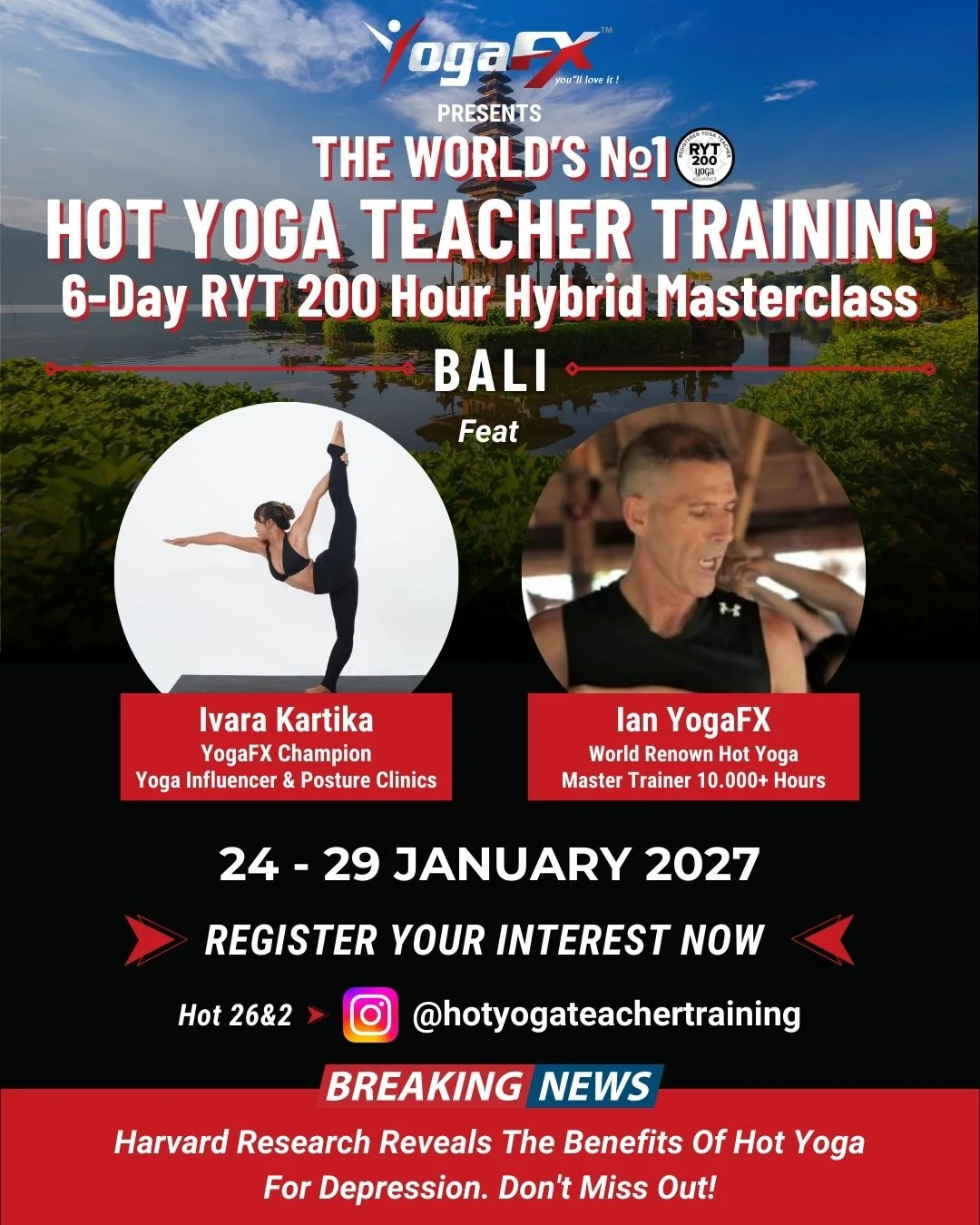
If you are asking what is 200 hour yoga teacher training, it is the entry-level teaching standard used for Yoga Alliance RYT 200 registration. A 200-hour hot yoga teacher training adds heat management and method-specific teaching practice. YogaFX makes that foundation specific to Bikram Hot 26&2 and delivers its practical stage as a six-day Bali intensive supported by online pre-course preparation.
What Makes a Hot Yoga 200-Hour Curriculum Different
A standard 200-hour course builds a broad teaching foundation. Students usually study asana, anatomy, philosophy, ethics, teaching methodology, sequencing, and practicum. A genuine hot yoga curriculum must cover those areas while also teaching skills that only become visible when the class takes place in sustained heat.
Heat acclimatization is taught, not assumed
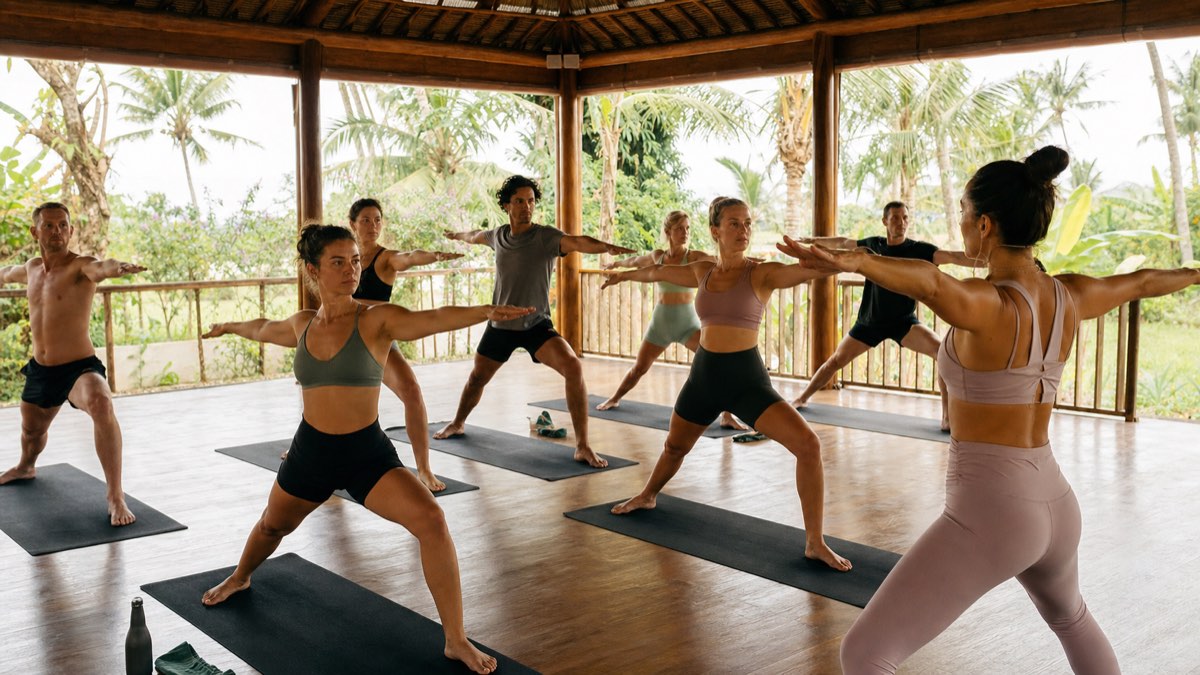
YogaFX practical training takes place in Bali's natural tropical heat at approximately 40°C and 40% humidity. There are no electric heaters creating the training environment. Trainees learn how their breathing, pace, concentration, hydration needs, and recovery change during repeated 90-minute classes across six consecutive days.
Acclimatization is not a test of who can tolerate the most discomfort. It is the process of learning to work steadily, recognize personal limits, and make sound decisions while the environment adds physiological load. Trainees discuss preparation, hydration, appropriate rest, and signs that require a student to stop. The goal is a teacher who respects the method without treating heat tolerance as a measure of character.
Research offers context rather than a guarantee. In a controlled eight-week study, Tracy and Hart reported improved flexibility and a 20% increase in posterior-chain strength in healthy young adults practising Bikram yoga. The published study record describes one group and cannot predict an individual outcome. This is not medical advice - consult a healthcare professional before starting an intensive physical program.
Dialogue must work under physical stress
Original Hot 26&2 uses scripted verbal dialogue through a fixed sequence of 26 postures and two breathing exercises. The teacher does not demonstrate and does not use music. That means the voice must carry the class. Instructions need to be precise, correctly timed, easy to follow, and delivered while the teacher is also watching students.
Speaking clearly in a comfortable room is only the beginning. In tropical heat, trainees must control breath, volume, pace, and attention without rushing the words. They practise dialogue in sections, receive corrections, repeat the same passage, and eventually connect it to full posture timing. Memorization creates a base, but live delivery reveals whether the language actually guides the room.
Teachers learn to read a room in genuine heat
Most general curricula discuss observation, yet they do not always place trainees inside a real 40°C practice environment. Hot yoga teachers need to distinguish ordinary exertion from warning signs. They must notice when a student becomes unusually confused, unsteady, unresponsive, or unable to recover. They also need a clear studio procedure for rest, water, leaving the room, and emergency escalation.
A teacher is not a doctor. Training does not qualify graduates to diagnose illness, prescribe treatment, or tell someone to ignore symptoms. It does teach them to scan the room, communicate without shame, keep exits accessible, and respond promptly when a student's behavior changes. Those are practical classroom responsibilities, not optional theory.
The fixed sequence also changes observation. Because posture order and timing remain consistent, the teacher can learn where effort usually rises, which transitions need more attention, and how students respond across repeated classes. Read the difference between Bikram and hot yoga styles to compare this method with heated flow formats.
What the Separate Online Teacher Training Covers
The YogaFX Online Teacher Training is a separate remote pathway, not merely the online pre-course described in the Hybrid MasterClass. Its digital curriculum combines complete Standing and Floor Series demonstrations by Ivara Candra Kartika with downloadable dialogue workbooks and MP3 audio for repeated vocal practice.
Short-format premium lectures and supporting workbooks cover anatomical planes of movement, the muscular system, the skeletal system, the Eight Limbs of Yoga, philosophy, and teaching methodology. Students can pause, rewind, mute, and repeat demonstrations, then complete the program's published knowledge checks and remote assessment requirements at their own pace.
The Hybrid MasterClass uses online preparation differently: it establishes shared knowledge before six days of live classes, posture clinics, dialogue delivery, observation, feedback, and assessment in Bali. Compare the two pathways before enrolling rather than assuming that every YogaFX online component has the same format or outcome.
How Long It Takes: 6-Day Intensive vs. the Typical Format
Most 200-hour programs spread study across three to four full-time weeks or a longer series of evening and weekend blocks. That schedule can suit students who want time between meetings and can maintain attendance for several months. It also asks them to keep training active alongside work, family, and travel over a longer calendar.
The YogaFX pathway uses a different division. Self-paced online pre-course study covers material that can be prepared before travel, including philosophy, anatomy foundations, method study, manual work, and early dialogue rehearsal. Students do not arrive in Bali and attempt to begin all 200 hours from zero.
The six practical days are consecutive and full-time. They focus on work that needs a shared room: natural-heat practice, posture clinics, live dialogue, voice, timing, observation, supervised teaching, correction, and assessment. The complete 200-hour pathway includes both online preparation and the Bali intensive. It does not claim that 200 clock hours fit inside six days.
This structure replaces a month away with less than a week of full-time practical attendance, but it is still intense. Trainees describe days that require concentration beyond the morning class. Dialogue must be rehearsed after feedback, physical practice accumulates, and the next teaching turn arrives quickly. A correction given today needs to appear in tomorrow's delivery.
The pace can work well for a career changer who prepares steadily and protects the six days from other commitments. It is a poor fit for someone planning to complete online assignments at the last minute or combine the intensive with remote work. Ask for the current preparation schedule, start early, and allow recovery time after long-distance travel.
Cohorts are capped at 19 students. The limit protects time for each trainee to speak, teach, be observed, and try again. A small group does not make the course easy. It makes feedback harder to avoid and easier to apply. That is useful when the practical window is deliberately concentrated.
What's Actually Covered, Day by Day
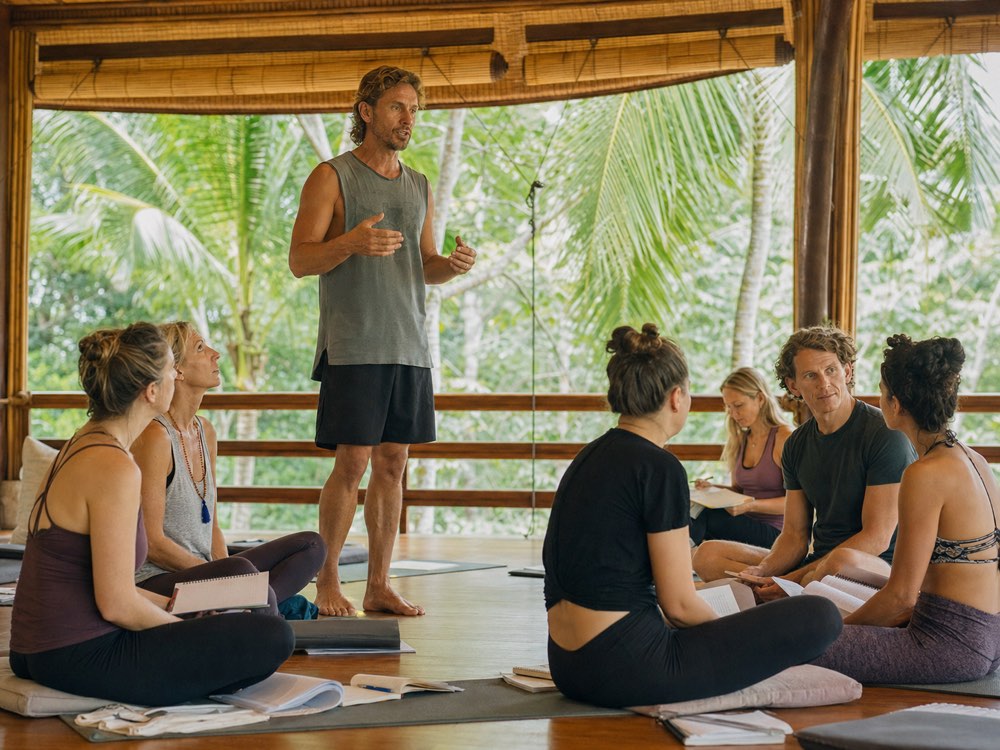
The exact daily timetable can change between intakes, but the learning progression remains practical. Skills begin in manageable parts and then combine under realistic teaching conditions. The following breakdown shows how the six-day stage develops after online preparation.
| Day | Primary curriculum focus | What the trainee practises |
|---|---|---|
| Day 1 | Orientation, natural heat, and dialogue foundations | Studio procedures, heat response, breathing, voice placement, sequence structure, and short scripted passages. |
| Day 2 | Anatomy and posture clinic | How joint actions, common variations, and alignment principles apply to specific postures in the 26&2 sequence. |
| Day 3 | Dialogue memorization and delivery | Precise cues, timing, projection, scanning the room, and repeating instructions after direct correction. |
| Day 4 | Supervised teaching practicum | Longer teaching turns in front of peers, with feedback on clarity, observation, pace, and classroom decisions. |
| Day 5 | Class integration and professional practice | Connecting postures, responding to realistic student scenarios, ethics, scope, studio expectations, and career basics. |
| Day 6 | Assessment and next-step planning | Demonstrating dialogue and teaching competence, applying final feedback, and understanding graduate responsibilities. |
Dialogue memorization and delivery
Students learn the sequence as spoken instruction, not merely as posture names on a page. They rehearse wording, order, timing, and breath. Trainers listen for language that is accurate but also usable by a real student. The aim is not a robotic recital. It is a stable teaching structure that leaves mental space for observation.
Anatomy specific to the 26&2 sequence
Anatomy is connected directly to the postures trainees will teach. Joint movement, muscular action, breathing mechanics, individual variation, and common limitations are discussed in context. Graduates should understand what they can observe and cue while staying inside a yoga teacher's professional scope.
Posture clinics, alignment, and adjustments
Posture clinics slow the sequence down. Trainees examine setup, action, timing, common errors, and safer options. They learn why two bodies may express the same instruction differently. Correction is primarily verbal and observational, consistent with a method that does not depend on the teacher demonstrating at the front.
Supervised live teaching
Practicum is where separate subjects become one skill. A trainee must remember the dialogue, speak clearly, maintain time, watch peers, and respond to what happens. Feedback should be specific enough to use immediately. "Be more confident" is vague. "Finish the breathing instruction before adding the alignment cue" gives the trainee a repeatable task.
Business and career basics
Certification does not create a full teaching schedule automatically. Training covers realistic next steps such as studio auditions, substitute classes, mentorship, insurance, professional boundaries, punctuality, and continued practice. New teachers need a plan for accumulating classroom experience rather than assuming the certificate guarantees employment.
A 2025 systematic review by Willmott and colleagues examined 43 studies involving 942 participants and found research across physical and psychological outcomes, while also identifying limitations in the evidence base. Read the systematic review of Bikram yoga research. The curriculum uses research to support responsible discussion, not to promise results.
Led by Mr. Ian Terry, E-RYT 500
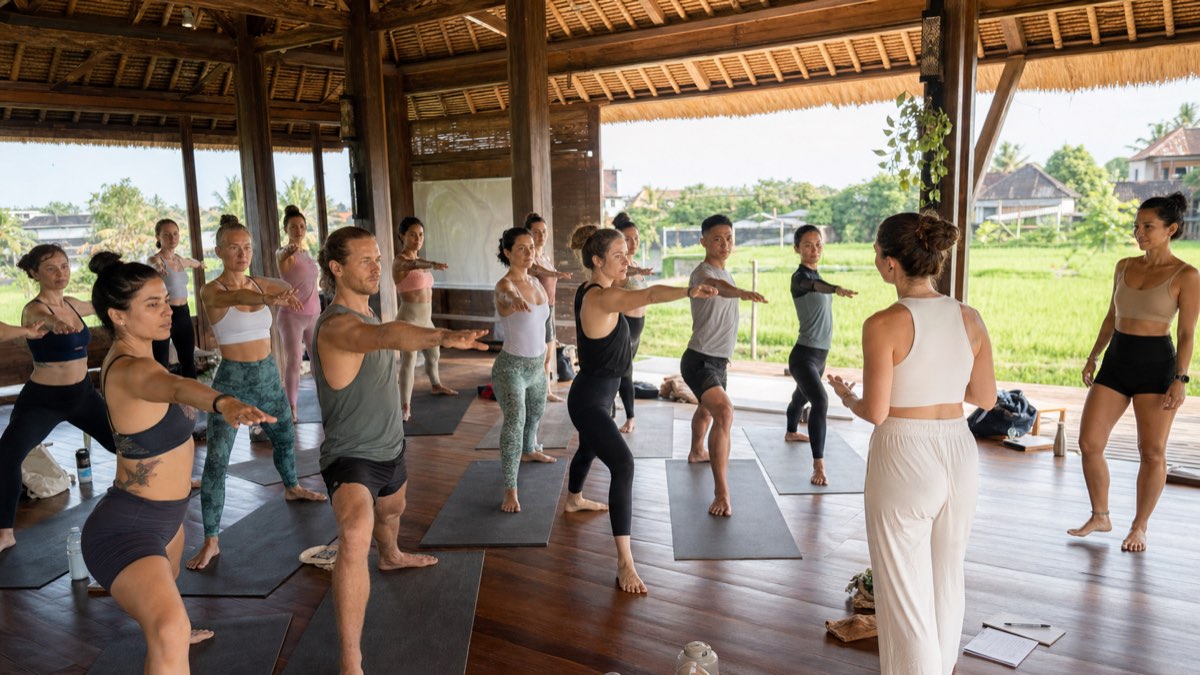
Mr. Ian Terry leads the practical pathway as an E-RYT 500 with more than 12,000 teaching hours. He completed five direct training events under Bikram Choudhury between 2012 and 2019. His experience is method-specific and classroom-based, which matters when trainees need correction on timing, observation, dialogue, and heat-room decisions.
Mr. Ian Terry has trained 1,500+ graduates from over 80 countries and serves as Master Trainer of the Republic of Indonesia Yogasana Sports Federation. The academy has operated its teacher training pathway since 2017 and reports 700+ reviews across Google, Yoga Alliance, and YouTube.
Numbers and credentials should lead to better questions, not automatic trust. Ask how much of the course Mr. Ian Terry teaches directly, how feedback works, what assessment requires, and what happens when a trainee needs another attempt. A lead trainer's value is measured in access and correction, not only biography.
The practical community operates through Seminyak and Canggu, Bali, with studio hours from 06:00 to 22:00 daily. These locations provide the natural tropical environment used by the method. For travel, studio context, and preparation, read the complete guide to hot yoga teacher training in Bali.
Graduates who successfully meet the requirements receive dual certification: Yoga Alliance RYT 200 plus a Bikram Hot 26&2 certificate. RYT 200 is the student-facing foundation. E-RYT 500 is Mr. Ian Terry's instructor credential and reflects a different level of education and documented teaching experience.
Behind the Scenes of the Practical Curriculum — Part 1
Bikram Hot 26&2 Yoga Teacher Training Part 1 | Exclusive Behind The Scenes Look | RYT 200 | Bali
This earlier YogaFX cohort video gives prospective trainees a visual reference for group practice and practical Hot 26&2 teacher development in Bali.
Do you have what it takes to become a great Bikram Hot Yoga teacher? Complete the short YogaFX readiness quiz to understand where you are on your teaching path and receive more personalized guidance.
Video context: this footage refers to an earlier five-day cohort. The current pathway includes online preparation and a six-day practical MasterClass; verify the current curriculum and dates before enrolling.
What It Costs
Standard 200-hour programs often cost roughly USD 2,000-3,500 before travel and living expenses. YogaFX tuition is USD 1,699 flat for the hybrid pathway, including the online pre-course, six-day in-person Bali intensive, practical teaching and assessment, and dual certificate outcome after successful completion. Flights, accommodation, meals, visas, insurance, and local transport remain separate. Use the full cost breakdown to compare complete expenses rather than repeating that calculation here.
To compare this curriculum with the full program selection process, read the complete hot yoga teacher training guide. Then message Mr. Ian Terry with any question that remains specific to your experience or teaching goal.
Frequently Asked Questions
Is 200-hour yoga teacher training worth it?
For most graduates, yes - a 200-hour certification is the entry standard recognized by Yoga Alliance and most studios worldwide. Whether it's "worth it" depends on your goal: teaching income, deepening your own practice, or both. A hot yoga-specific 200-hour also builds heat-teaching skills a standard program doesn't cover.
How long does 200-hour yoga teacher training take?
Most 200-hour programs run 3-4 weeks part-time or in weekly evening/weekend blocks. YogaFX's Bali program compresses the same 200 hours into a 6-day full-time intensive, so you finish certified in under a week rather than a month.
What does 200-hour yoga teacher training cost?
Standard 200-hour programs typically cost $2,000-3,500 USD. YogaFX's dual-certified Bikram Hot 26&2 program is USD 1,699, delivered in-person in Bali with a maximum cohort of 19 students.
How difficult is 200-hour yoga teacher training?
It's physically and mentally demanding, especially in a heat-based format - you're memorizing scripted dialogue, learning to teach under 40°C conditions, and practicing live in front of peers. Most graduates describe it as intense but doable regardless of starting flexibility or experience level.
Is this an official Bikram Yoga teacher training?
No. This is an independent training program, not an official Bikram Choudhury Teacher Training. Following a 2015 US federal appeals court ruling, yoga sequences and dialogue of this type are not subject to copyright restriction, which is why independently-run trainings in this style exist.