Hybrid Bikram Yoga Teacher Training: Format & Costs
By Ian Terry, E-RYT 500 · Updated
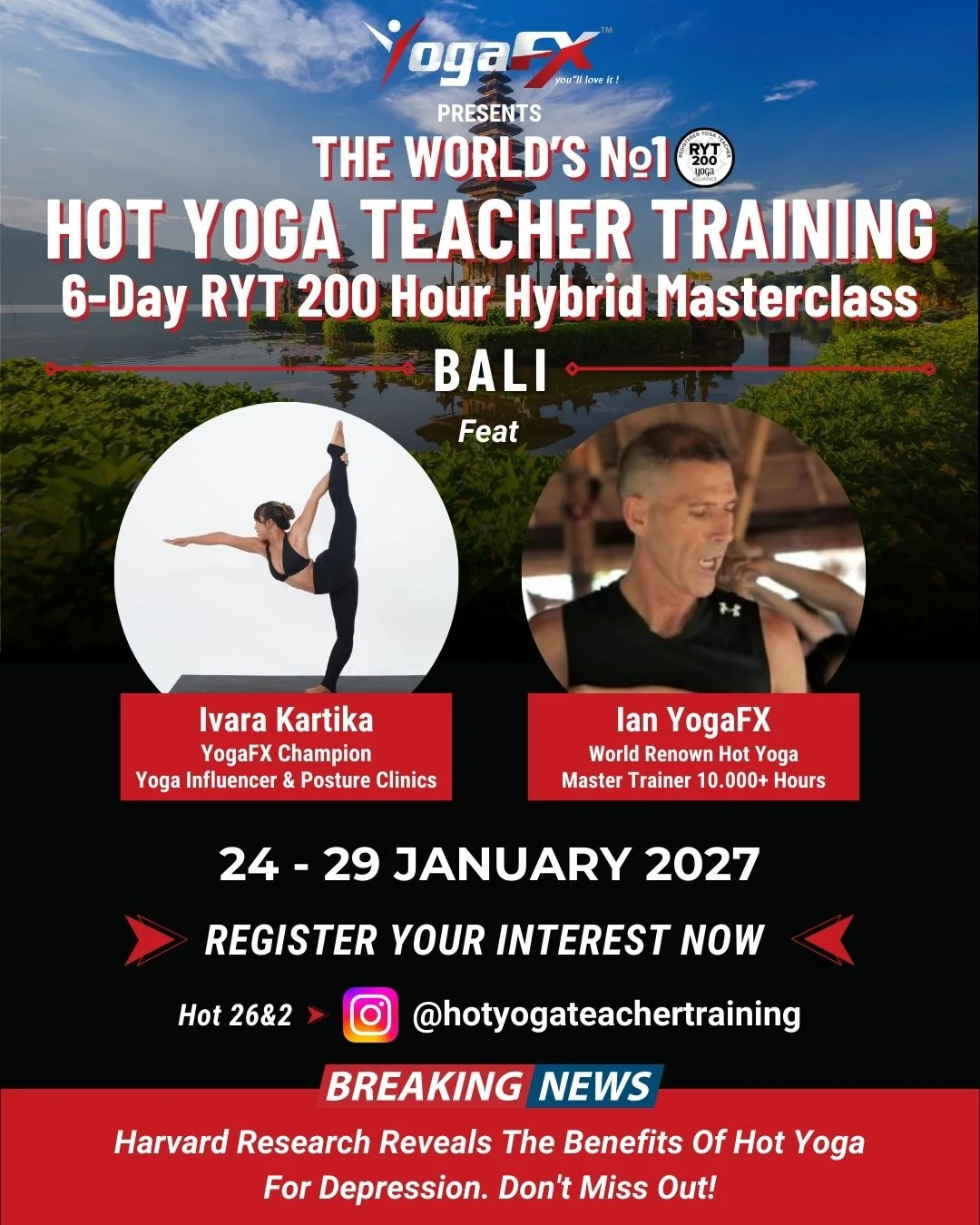
A hybrid Bikram yoga teacher training combines self-paced online theory and dialogue preparation with a condensed, supervised in-person immersion. A well-designed pathway can lead toward Yoga Alliance RYT 200 eligibility and a method-specific Hot 26&2 certificate, but the format itself does not replace required hours, assessment, or live teaching competence.
What Is Hybrid Bikram Yoga Teacher Training?
Hybrid Bikram yoga teacher training separates preparation from practical immersion. You study foundational material at home, then travel for a concentrated six-to-seven-day stage where educators can observe your movement, dialogue delivery, teaching decisions, and ability to manage a heated room.
The strongest model does not treat online study as a shortcut to certification. Instead, it uses remote learning for material that can be prepared independently and protects face-to-face time for skills that require real students, immediate feedback, and practical assessment.
This distinction matters when comparing online Bikram yoga teacher training offers. A video library may teach information, but it cannot by itself demonstrate that a graduate can see unsafe alignment, respond to heat stress, pace a class, or communicate effectively under pressure.
How the Hybrid Bikram Yoga Teacher Training Format Works
| Stage | Typical work | Purpose |
|---|---|---|
| Online pre-course | Anatomy, philosophy, sequence study, dialogue, and written preparation | Build knowledge before travel |
| In-person immersion | Heated practice, posture clinics, live teaching, voice work, feedback, and assessment | Develop and verify practical competence |
| Graduate support | Mentoring, audition preparation, continued dialogue review, and teaching questions | Support the transition into real classes |
A legitimate Bikram yoga teacher training hybrid pathway should publish how each stage contributes to the total curriculum. Ask which work is guided, how participation is tracked, what must be submitted, how many hours involve an educator, and what happens if a trainee has not met the practical standard by the final day.
Bikram Yoga Teacher Training Online Preparation
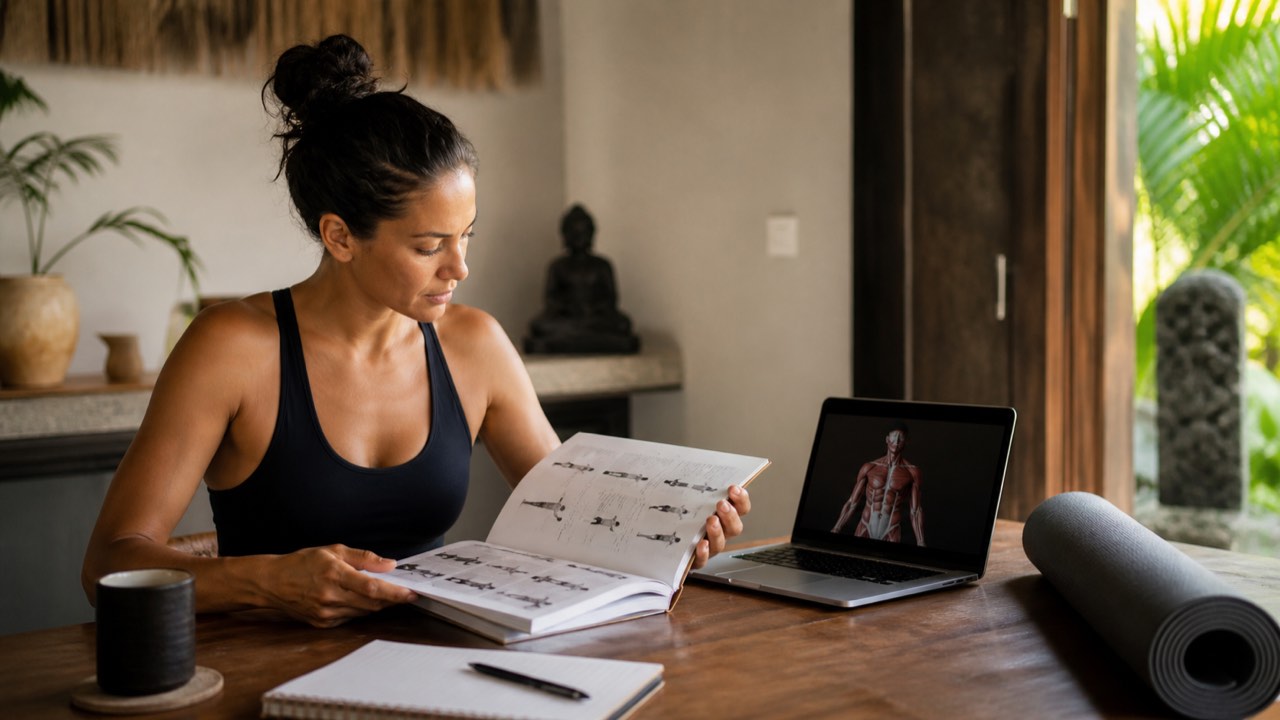
The pre-course stage commonly includes 30 or more hours of structured study. Trainees work through anatomy, yoga philosophy, class structure, teaching principles, and the classic 26&2 dialogue at home. This makes the live phase more useful because students arrive with shared vocabulary and familiarity with the sequence.
YogaFX also operates a separate Online Teacher Training Program with its own remote curriculum and assessment. It is not the same as the online pre-course included in Hybrid MasterClass enrollment. Its Early Bird price is USD 329 through October 9, 2026, and that payment is currently credited toward MasterClass tuition for students who later move into the six-day hybrid pathway.
Within the Hybrid MasterClass pathway, certification depends on completing both its required online pre-course and the Bali practical assessment. The standalone Online Teacher Training follows its own published remote requirements. Applicants should select and enroll in the pathway that matches their intended format.
Anatomy and safety: learn the joints, muscle actions, contraindications, and observable warning signs relevant to heated practice.
Yoga philosophy: establish the ethical and historical context expected within a broader 200-hour education.
Fixed sequence study: learn the order and purpose of 26 postures and two breathing exercises.
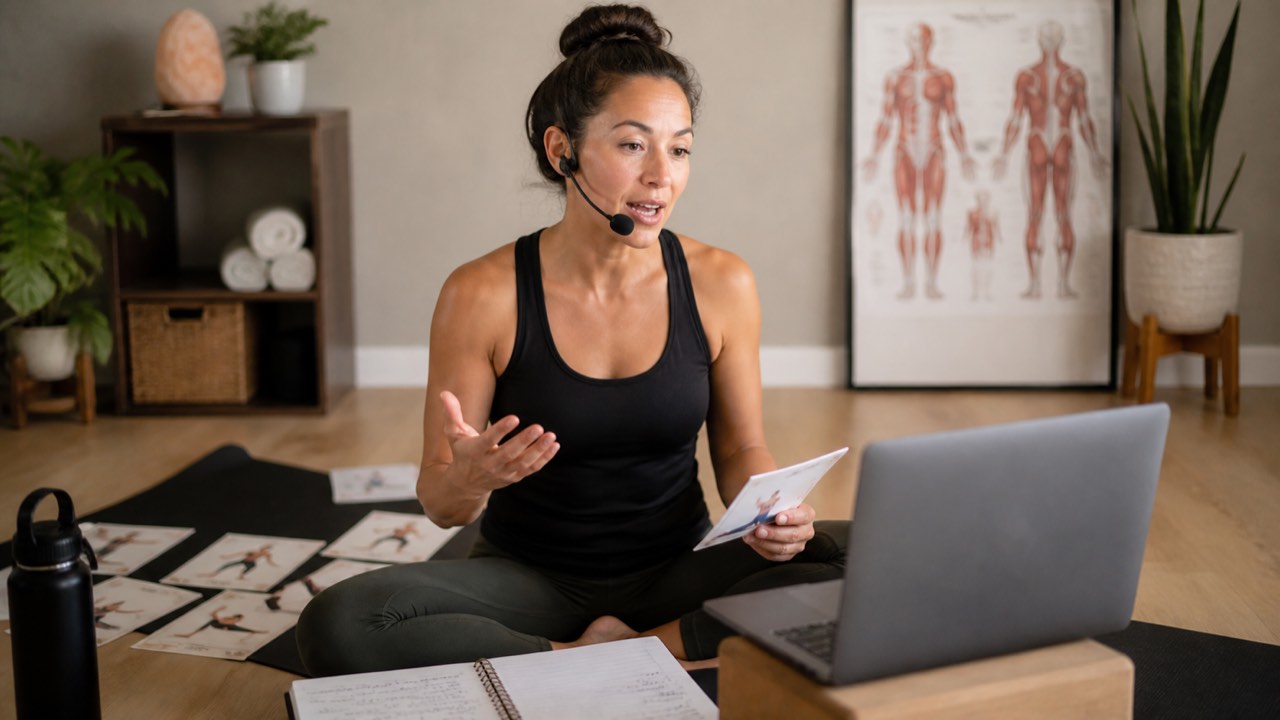
Dialogue preparation: rehearse entries, alignment cues, holds, exits, timing, and transitions aloud.
Readiness tasks: complete assignments or checkpoints that reveal gaps before the practical stage begins.
Use the Bikram yoga dialogue memorization guide and the interactive Bikram Yoga Dialogue Flashcards to support active recall. For a wider comparison, read the guide to online and hybrid hot yoga teacher training.
What Happens During the Six-Day In-Person Immersion?
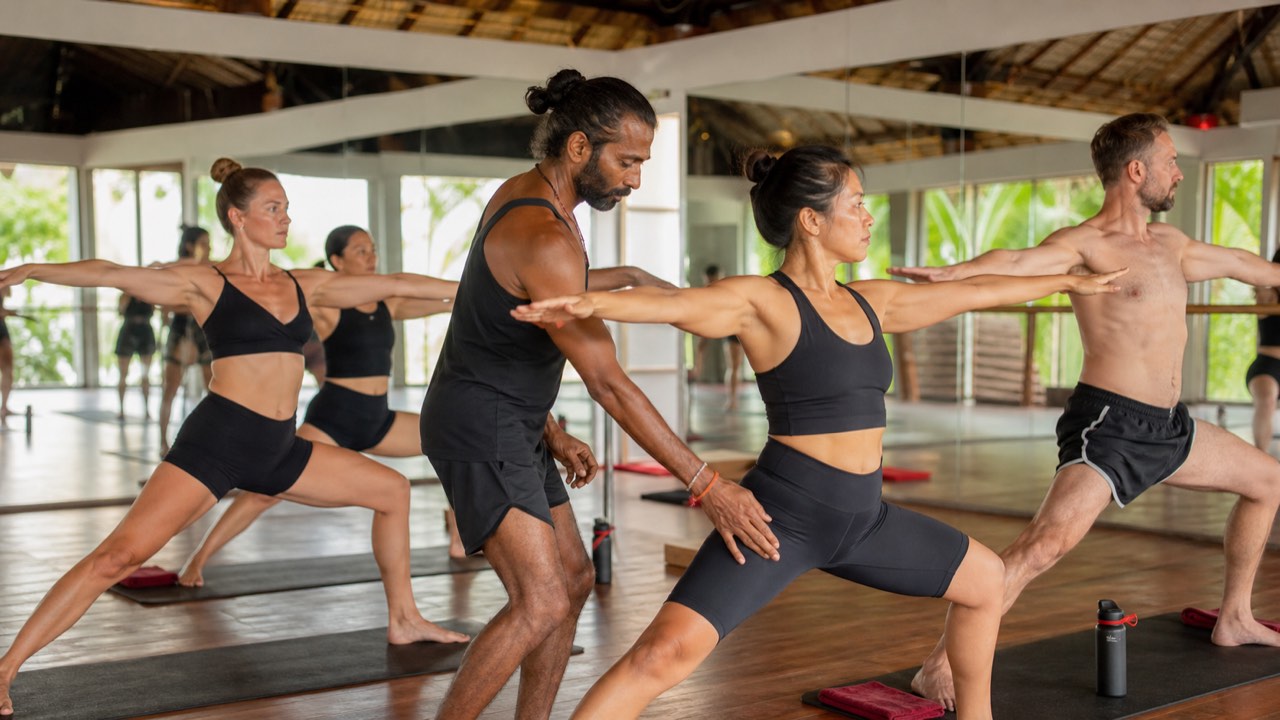
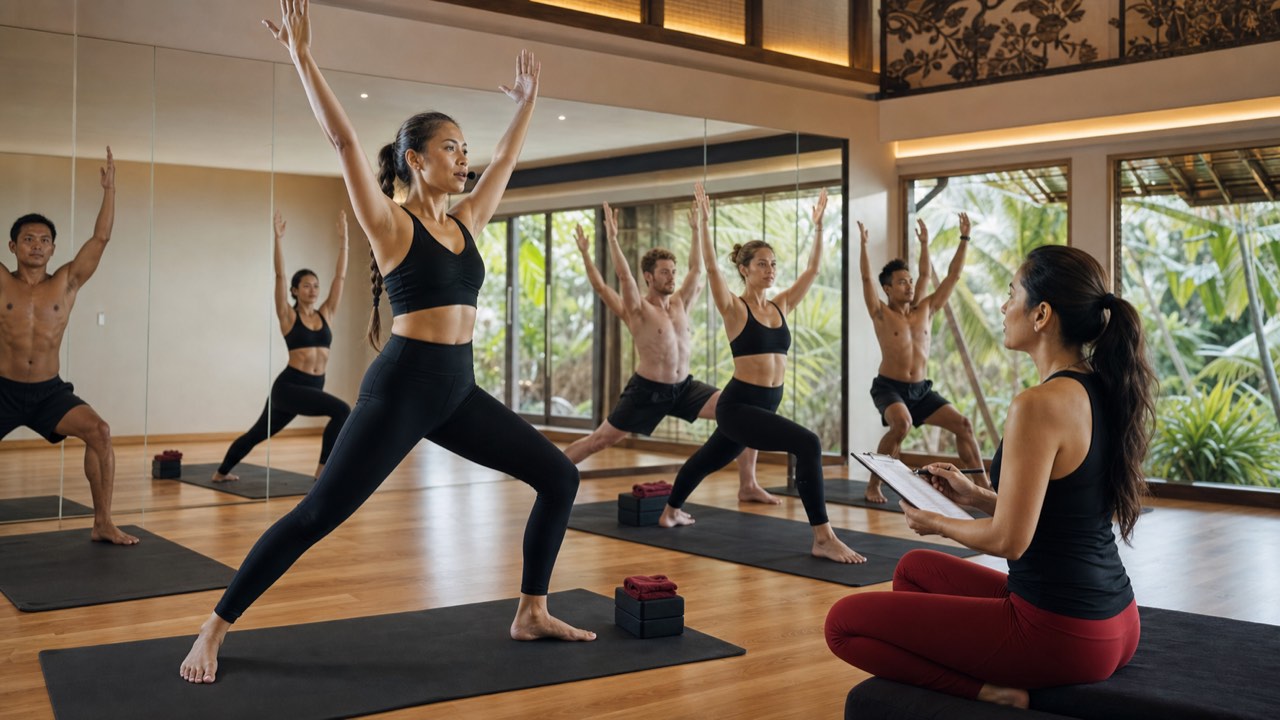
The in-person stage is not a ceremonial finish. It is where theory becomes observable teaching. In a Bali training hub, trainees can complete heated classes, posture clinics, demonstrations, dialogue rounds, practice teaching, peer observation, corrections, and final evaluations within a concentrated schedule.
YogaFX uses a six-day practical teacher training MasterClass in Bali after online preparation. Its live stage emphasizes posture mechanics, clear verbal delivery, classroom confidence, and supervised teaching. Cohorts are kept small to preserve practical access and feedback.
Selected graduate outcomes also show how practical development can continue beyond certification. Ivara Candra Kartika, a 2023 YogaFX graduate, later earned medals at Indonesian, Asian, and World Yogasana competitions. Arkan Fauzan Riyanto, a 2022 graduate, became a multiple FORNAS Indonesia and World Yogasana medalist. These are exceptional individual achievements—not guaranteed course outcomes—but they demonstrate the posture precision, discipline, and performance potential achieved by two graduates.
The live component should challenge trainees without confusing exhaustion with educational quality. Responsible programs schedule hydration, recovery, meal, and sleep planning alongside intensive practice. Students with cardiovascular conditions, uncontrolled blood pressure, pregnancy, heat-sensitive medication, or other relevant concerns should seek individualized medical advice before entering heated training.
Explore the current YogaFX six-day MasterClass and Bali training environment before deciding whether the schedule and climate suit you.
Curriculum, Credentials, and Prerequisites
Focused Bikram Hot 26&2 curriculum
A specialist program focuses on the original fixed sequence of 26 postures and two breathing exercises rather than using the practical stage as a broad survey of unrelated styles. The curriculum should still include the anatomy, philosophy, teaching methodology, professional ethics, safety, and practicum required within the full educational pathway.
Dual credential pathway
Programs may advertise Yoga Alliance RYT 200 eligibility alongside a style-specific Hot 26&2 certificate. These credentials serve different purposes: one identifies a broad professional registration pathway, while the other documents method study. Verify the school and current requirements through the Yoga Alliance public profile and review the official standards for Registered Yoga Schools.
Recommended preparation
Most entry-level programs do not require teaching experience. However, six to twelve months of consistent personal hot-yoga practice is a sensible recommendation. Familiarity with the sequence and your response to heat lets the training focus on teaching rather than basic class survival.
The 200-hour hot yoga curriculum guide explains how broader professional education supports method-specific training.
Time Savings Without Removing Practical Training
A hybrid model can replace a traditional three-to-four-week residential stay with a much shorter travel commitment. That makes it practical for working professionals, parents, international students, and people who cannot relocate for a month.
The trade-off is self-management. Online preparation must be completed before arrival, and a six-day immersion can be demanding. Flexible study does not mean reduced responsibility; it shifts part of the workload into the weeks before travel.
Choose hybrid when: you can study consistently at home and want to preserve live assessment while reducing travel time.
Choose a longer residential format when: you learn best through daily face-to-face structure and can support the extra time and destination costs.
Avoid online-only promises when: no qualified educator observes your teaching, alignment decisions, or management of real students.
Hybrid Bikram Yoga Teacher Training Pricing
Specialist hybrid programs are commonly advertised in the US$1,799–US$1,999 range before flights, accommodation, meals, insurance, and registration expenses. Prices change, so the written offer on the booking date should always take priority over a guide.
YogaFX currently publishes tuition of US$1,699 for its online preparation and six-day practical Bali MasterClass. Confirm inclusions, deposit terms, balance deadlines, cancellation rules, assessment requirements, and any third-party costs directly with the academy before paying.
Compare the complete hot yoga teacher training cost breakdown and the Bikram yoga teacher training payment-plan guide. A lower headline price is not automatically better if it excludes practical instruction, accommodation, assessment, or required learning resources.
How to Choose a Credible Hybrid Program
Verify the provider: confirm the legal school name, registration, lead educators, physical location, and dates.
Request the hour breakdown: distinguish self-paced content, guided learning, live practicum, and assessment.
Inspect practical standards: ask how often you teach, who observes you, and how corrections are applied.
Confirm the exact credential: understand the difference between course completion, school certification, and RYT registration.
Read graduate evidence: seek detailed comments about dialogue, posture clinics, feedback, and first teaching experiences.
Calculate the complete cost: include travel, accommodation, meals, insurance, lost work time, and registration fees.
Read every policy: deposits, refunds, transfers, attendance, retakes, and medical expectations should be written clearly.
A credible hybrid Bikram yoga teacher training saves travel time without deleting the practical work that makes a teacher safe and employable. If that balance matches your needs, compare the YogaFX Hot 26&2 certification program, read named graduate reviews, and ask the academy for the current curriculum and enrollment terms.
Frequently Asked Questions
What is hybrid Bikram yoga teacher training?
Hybrid Bikram yoga teacher training combines structured online preparation with an in-person practical immersion focused on the fixed Hot 26&2 sequence, live teaching, feedback, and assessment.
Can I complete Bikram hot yoga teacher training entirely online?
Online study can cover theory and dialogue preparation, but credible teacher preparation should retain supervised in-person posture clinics, observation, live teaching practice, and practical assessment.
How long is the in-person stage of a hybrid course?
Condensed hybrid programs commonly use a six-to-seven-day practical immersion after substantial pre-course study. Always compare total workload, practical hours, assessment, and credential requirements—not duration alone.
Does a hybrid course automatically grant RYT 200 status?
No. Format alone grants nothing. Students must complete an eligible registered-school curriculum and its assessments, then follow current Yoga Alliance registration requirements if they want the RYT 200 designation.
How much does hybrid Bikram yoga teacher training cost?
Specialist hybrid programs are often advertised around US$1,799–US$1,999 before travel. YogaFX currently publishes US$1,699 tuition, so applicants should verify the live offer and all inclusions before paying.
Do I need teaching experience before enrolling?
Most entry-level 200-hour pathways do not require prior teaching. Regular Hot 26&2 practice for roughly six to twelve months is recommended so the sequence and heated environment are familiar.