Bikram Hot Yoga Course: Curriculum, Cost, and Certification
By Ian Terry, E-RYT 500 · Updated

A Bikram hot yoga course can describe anything from a short practice workshop to a complete instructor-certification pathway. Before enrolling, identify the exact outcome, curriculum, delivery format, practical teaching, assessment, and total cost. This buyer's guide separates those elements so you can compare courses on evidence rather than labels.
What Does “Bikram Hot Yoga Course” Mean?
The phrase has no single guaranteed outcome. One provider may use it for a beginner practice series. Another may sell a weekend posture workshop. A third may offer a full Bikram hot yoga teacher training course that prepares graduates to lead the fixed Hot 26&2 sequence professionally.
Start by identifying whether the course is designed for personal practice, continuing education, or initial teacher certification. The distinction affects prerequisites, teaching hours, assessment, price, and what you can truthfully claim afterward.
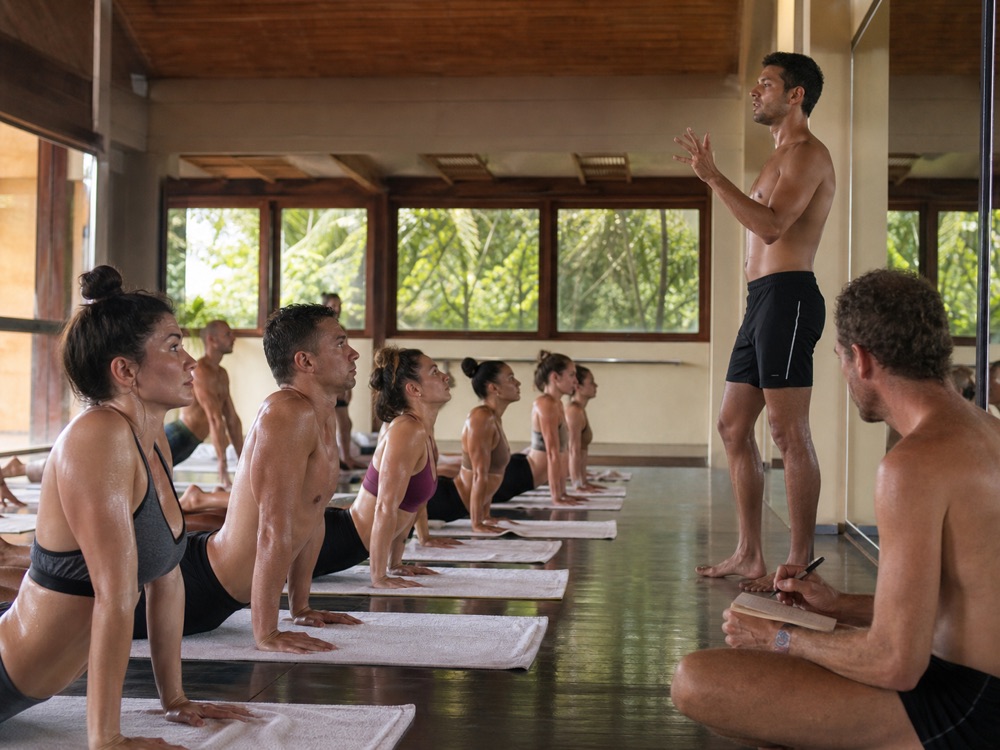
The method itself uses 26 postures and two breathing exercises in a fixed order. A traditional class runs for 90 minutes at about 105°F (40°C) and 40% humidity. It is normally taught through structured verbal dialogue rather than a teacher demonstrating every posture. Review the complete Bikram 26 poses sequence before comparing course promises.
The word “Bikram” also requires precise communication. A 2015 Ninth Circuit decision held that the sequence itself was not protected by copyright. The court opinion did not make every independent course an official affiliate or decide all trademark and credential questions. Providers should state their issuing organization and independence clearly.
Three Types of Bikram Hot Yoga Courses
Student practice course
A student course may introduce the sequence over several classes, focus on selected postures, or support a 30-day challenge. Its goal is personal understanding, not professional qualification. It should never imply that attendance alone authorizes a participant to teach.
Specialist course for existing teachers
An instructor who already holds foundational yoga education may choose method-specific continuing education. This format can focus on sequence order, dialogue, room management, or posture clinics. Ask whether it includes observed teaching and whether the certificate is accepted by the studios where you plan to work.
Complete teacher-certification course
A new teacher needs a broader foundation. A comprehensive route combines techniques, anatomy, philosophy, ethics, professional development, and practicum with Bikram Hot 26&2 specialization. The advertised “200 hour” label should correspond to a documented curriculum and completion process.
If you are still separating these pathways, read what Bikram yoga teacher training means today. That guide focuses on legitimacy and the current certification landscape, while this page focuses on comparing course products.
What a Bikram Hot Yoga Course Should Teach
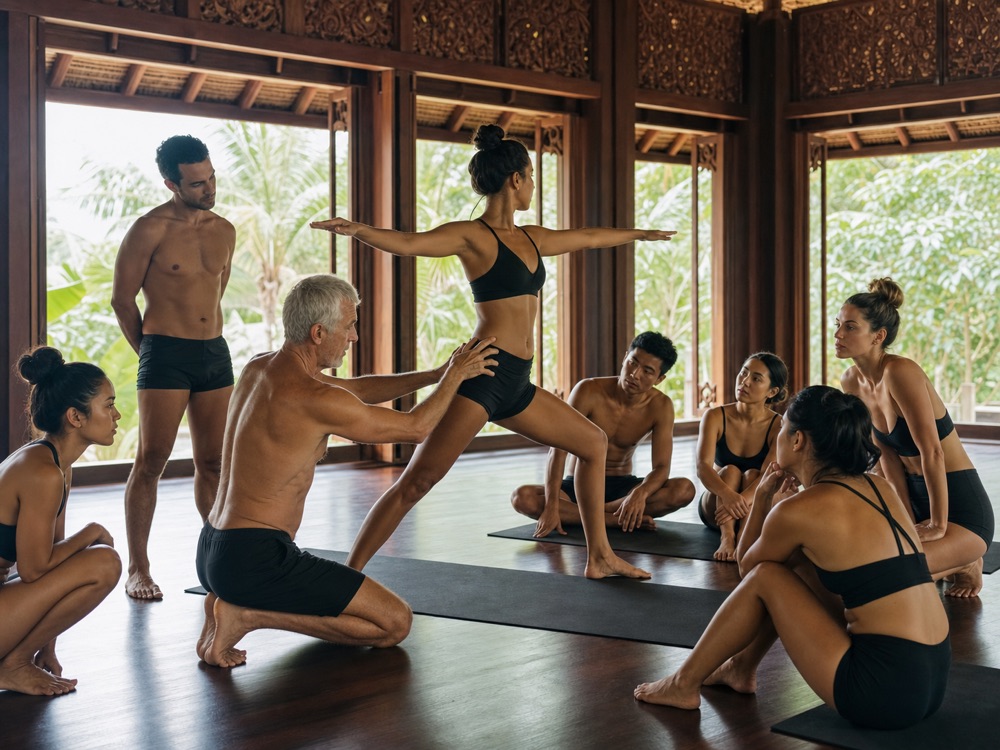
A teacher-level course should make the relationship between knowledge and live performance visible. Trainees need to know the fixed order, timing, posture purpose, transitions, and dialogue. They must also learn to observe students instead of becoming absorbed in their own demonstration.
Look for these curriculum areas:
- Hot 26&2 techniques: all postures, both breathing exercises, fixed order, timing, and repetition.
- Dialogue and voice: precise verbal cues, pacing, audibility, and language that produces observable action.
- Anatomy and biomechanics: relevant joints, muscles, common limitations, and professional scope.
- Observation: reading a room while continuing coherent instruction.
- Heat safety: temperature, humidity, hydration communication, warning signs, emergency planning, and referral boundaries.
- Ethics and professionalism: consent, inclusion, student relationships, business basics, and responsible claims.
- Practicum: repeated teaching, specific feedback, correction, and another attempt.
- Assessment: published criteria for readiness and a clear process when more work is needed.
A 2025 systematic review of hot yoga research examined 43 studies and noted both promising outcomes and heat-related safety considerations. A professional course should teach trainees to communicate evidence without guaranteeing health results or presenting sweating as detoxification.
For a deeper topic-by-topic audit, use the 200-hour hot yoga curriculum guide.
Online, Hybrid, or In-Person Bikram Hot Yoga Course?
An online Bikram hot yoga course can teach theory, sequence recognition, history, ethics, anatomy concepts, and dialogue preparation. Recorded material allows repetition, while live video can support questions and early verbal practice. Online access is useful when it prepares a trainee for deeper practical work.
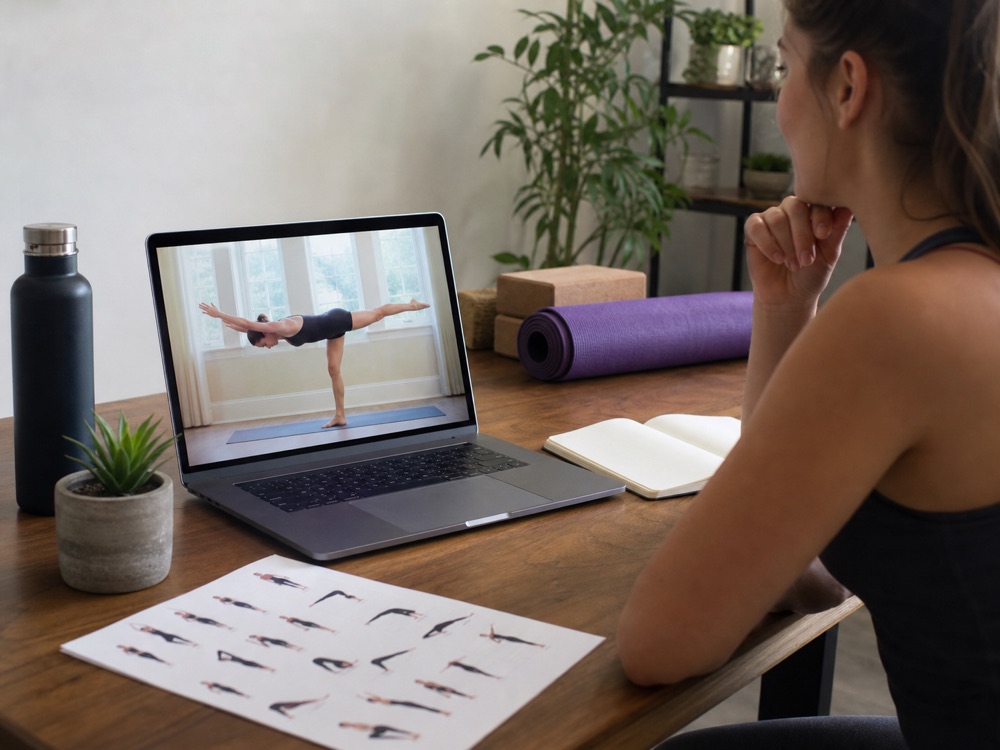
The limitation appears when a course claims full teaching competence without meaningful live observation. A screen cannot fully reproduce a heated room, multiple students, changing humidity, voice projection, mat spacing, or real-time safety decisions.
Fully in-person courses provide direct contact but may spend valuable destination time delivering lectures that students could study beforehand. Hybrid training can divide the work deliberately: online preparation for knowledge and live intensive days for posture clinics, dialogue, observation, practicum, feedback, and assessment.
Do not evaluate format by ideology. Ask which learning objective is delivered through each medium and how competence is verified. The online and hybrid hot yoga training guide provides a detailed comparison.
Course Credentials and Certification
Ask for exact names. “Internationally certified” is marketing language unless the provider identifies the credential, awarding body, standards, and eligibility process. A certificate of attendance is different from a practical teaching qualification.
For a new teacher, one route is a recognized RYT 200 educational foundation plus method-specific Bikram Hot 26&2 certification. For an existing teacher, a specialist certificate may be appropriate. Neither automatically guarantees employment because studios establish their own hiring and audition requirements.
Review the current Yoga Alliance Registered Yoga School standards. Then verify the school, not just a logo copied onto a sales page. Ask whether registration or application fees after graduation are included.
Also separate the lead educator's credential from the graduate outcome. An E-RYT 500 trainer does not make every graduate an E-RYT 500. Your certificate and registration pathway should be described independently.
Bikram Hot Yoga Course Duration and Total Cost
Short workshops may last a day or weekend. Specialist courses may run over several weekends. Comprehensive teacher education can use a multi-week residential, long part-time, online, or hybrid schedule. Count the complete workload rather than only the in-person dates.
Compare tuition with the cost of flights, accommodation, meals, local transport, travel documents, insurance, required classes, books, assessment resits, certificate charges, and time away from paid work. Request cancellation, transfer, and refund terms before paying.
A cheaper course is poor value when it provides little supervised teaching. A high price is not proof of quality either. Calculate cost per meaningful outcome: trainer access, observed teaching turns, usable feedback, assessment, and a credential aligned with your goal.
Use the complete hot yoga teacher training cost breakdown to create a realistic budget.
Bikram Hot Yoga Course Comparison Checklist
- Purpose: personal practice, continuing education, or initial teacher certification.
- Method: complete fixed Hot 26&2 sequence or a broader heated style.
- Outcome: exact certificate name, issuer, registration pathway, and teaching scope.
- Educator: named trainer with verifiable credentials and substantial heated-class experience.
- Practicum: number of observed teaching attempts and feedback cycles.
- Environment: where trainees learn room monitoring and heat-safety decisions.
- Assessment: criteria, assessor, pass standard, and retake process.
- Cohort: actual group cap and how it affects trainer contact.
- Evidence: independently checkable reviews describing the learning experience.
- Total investment: all fees, travel, lodging, exclusions, and refund terms.
Practise the method before buying a professional course. The Bikram yoga studio selection guide helps you find a credible local Hot 26&2 class and understand what the teaching environment requires.
The YogaFX Bikram Hot Yoga Course Format
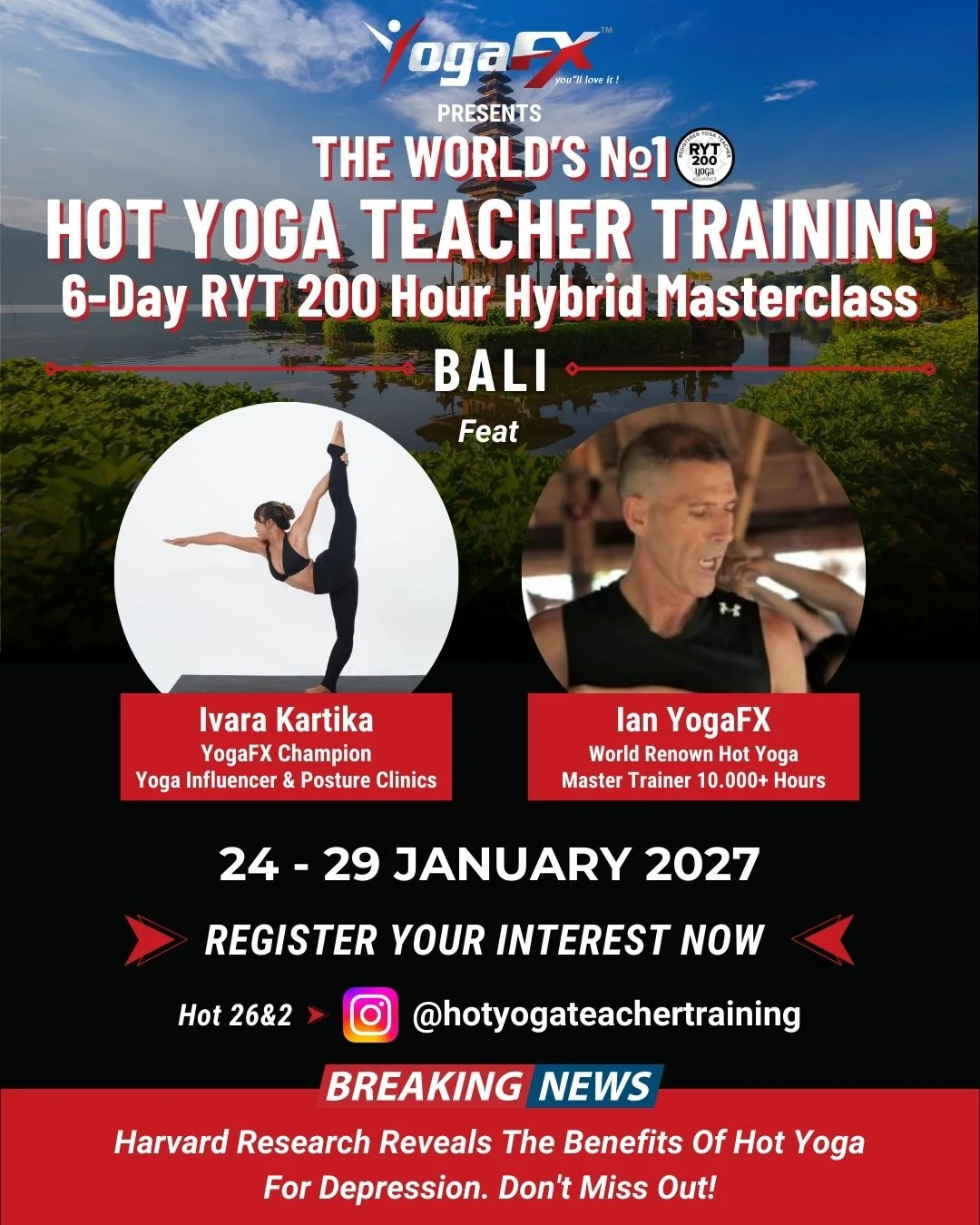
YogaFX combines online preparation with six days of practical training in Bali. The complete pathway leads to Yoga Alliance RYT 200 and Bikram Hot 26&2 certification after successful completion. The online phase prepares sequence knowledge and dialogue foundations so the Bali MasterClass can prioritize practical work.
Mr. Ian Terry, E-RYT 500, leads each cohort in person. The practical course uses posture clinics, repeated dialogue delivery, observation, real teaching practice, feedback, and assessment in Bali's naturally warm environment.
Early Bird tuition is US$1,899, and the normal and Twin Share price is US$1,999. Applicants should verify current dates, entry requirements, preparation deadlines, inclusions, accommodation, travel needs, and completion standards on the Bikram Hot 26&2 teacher training program page.
Students comparing Southeast Asian destinations can also review Bikram yoga teacher training in Thailand versus the YogaFX Bali alternative.
For a Central American option, compare Bikram yoga teacher training in Costa Rica with YogaFX Bali.
Read YogaFX teacher training reviews for graduate perspectives and check the Bali training location before budgeting. The right course is the one whose method, credential, practicum, schedule, and total cost support the teaching role you genuinely plan to pursue.
Watch the YogaFX Online Bikram Hot 26&2 Class
The Best Online Bikram Hot 26&2 Yoga Class Ever - Find Out Why - RYT200-YogaFX The World's No.1 YTT
Experience YogaFX's online Bikram Hot 26&2 instruction and understand how guided online study prepares trainees for practical teaching, dialogue, and assessment in Bali.
Do you have what it takes to become a great Bikram Hot Yoga teacher? Complete the short YogaFX readiness quiz to understand where you are on your teaching path and receive more personalized guidance.
Frequently Asked Questions
What is a Bikram hot yoga course?
A Bikram hot yoga course may mean a student practice course, a short professional workshop, or full teacher education. A teacher-certification course should cover the fixed 26 postures and two breathing exercises, dialogue, anatomy, heat safety, supervised teaching, feedback, and assessment.
Can I complete a Bikram hot yoga course online?
Online learning can cover theory, sequence study, ethics, anatomy, and dialogue preparation. If the course promises teaching competence, verify how you will teach under live observation and demonstrate that you can manage students and room conditions in practice.
How long is a Bikram hot yoga certification course?
Formats vary from short specialist workshops to comprehensive 200-hour programs. YogaFX uses online preparation followed by a six-day practical MasterClass in Bali. Compare the complete workload and assessment rather than judging a program only by its destination days.
How much does a Bikram hot yoga course cost?
Prices vary with course scope, credential, trainer access, location, accommodation, and assessment. YogaFX lists Early Bird tuition of US$1,899, with the normal and Twin Share price at US$1,999. Applicants should also calculate flights, lodging, meals, insurance, transport, and time away from work.
Which certification should a Bikram course provide?
The right outcome depends on your goal. A new teacher may want a recognized 200-hour foundation plus method-specific Hot 26&2 certification. An existing teacher may need focused continuing education. Ask for exact certificate names and verify studio requirements before enrolling.
Do I need Bikram yoga experience before taking the course?
Regular familiarity with the fixed sequence is valuable because teacher training is not designed as a first exposure to heated practice. Entry requirements differ, so ask the provider what practice history, health readiness, preparation work, and teaching experience are expected.