Bikram Yoga Studio Guide: How to Find and Choose the Right One
By Ian Terry, E-RYT 500 · Updated
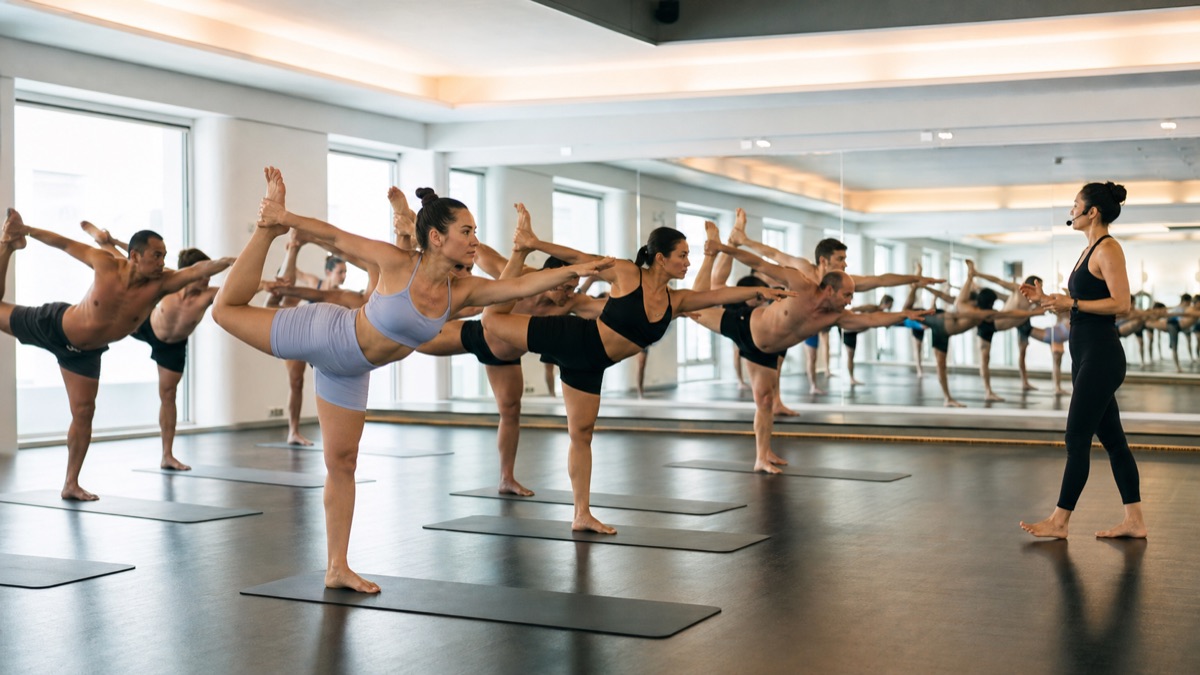
The right Bikram yoga studio offers more than a hot room. It delivers the fixed 26-posture and two-breathing-exercise sequence with consistent room conditions, qualified instruction, responsible safety practices, and a culture where students can learn without pressure. This guide helps you find and evaluate a studio before buying a membership.
What Defines a Bikram Yoga Studio?
A traditional Bikram class follows the same 26 postures and two breathing exercises in the same order. It lasts 90 minutes and is taught at approximately 105°F (40°C) with 40% relative humidity. Students begin with Standing Deep Breathing, move through a standing series and floor series, and finish with Blowing in Firm.
The fixed order is the central difference between a Bikram studio and a general hot yoga studio. Hot Vinyasa, Power Yoga, and heated fusion classes may change their poses, transitions, music, duration, and temperature. They can be worthwhile practices, but they are not interchangeable with the traditional Hot 26&2 method.
Names have also changed. Some businesses now use Original Hot Yoga studio, Hot 26&2 studio, or 26 and 2 yoga studio. The label alone cannot confirm authenticity. Ask about the complete sequence, class length, environmental targets, verbal instruction, and the teacher's method-specific education.
Use the interactive Bikram Yoga 26 poses sequence guide to explore individual postures, or read the complete textual list of Bikram hot yoga poses for the standing, floor, and breathing order. If you need a broader comparison first, read the guide to hot yoga types and safety.
How to Find a Bikram Yoga Studio Near You
Begin with several search variations: “Bikram yoga studio near me,” “Hot 26&2 near me,” “Original Hot Yoga,” and the name of your city or neighborhood. Search results may use old business categories or incomplete descriptions, so treat the map listing as a shortlist rather than final proof.
Open the studio's own schedule. Look for a class explicitly named Bikram, Original Hot Yoga, Classic 26&2, or 90-minute Hot 26. If the listing only says “hot yoga,” contact the studio and ask which sequence is taught. Confirm the class duration because many studios also offer 60-minute express formats.
Review recent comments for consistent patterns, not one emotional review. Useful details include cleanliness, teacher attention, crowding, ventilation, start-time reliability, beginner support, and whether room conditions are controlled. Photos can help you evaluate spacing and flooring, but they do not prove current practice.
Before buying a long membership, book a trial class or short introductory offer. Visit at the time you expect to practise because class size, parking, public transport, reception support, and room conditions may differ between early morning and evening sessions.
Bikram Yoga Studio Quality Checklist
1. A clearly defined 26&2 method
The schedule and teacher should be able to explain what is being taught without vague marketing. A complete traditional class uses the fixed sequence and expected timing. An express variation should be labelled as an adaptation rather than presented as identical to the full class.
2. Transparent temperature and humidity
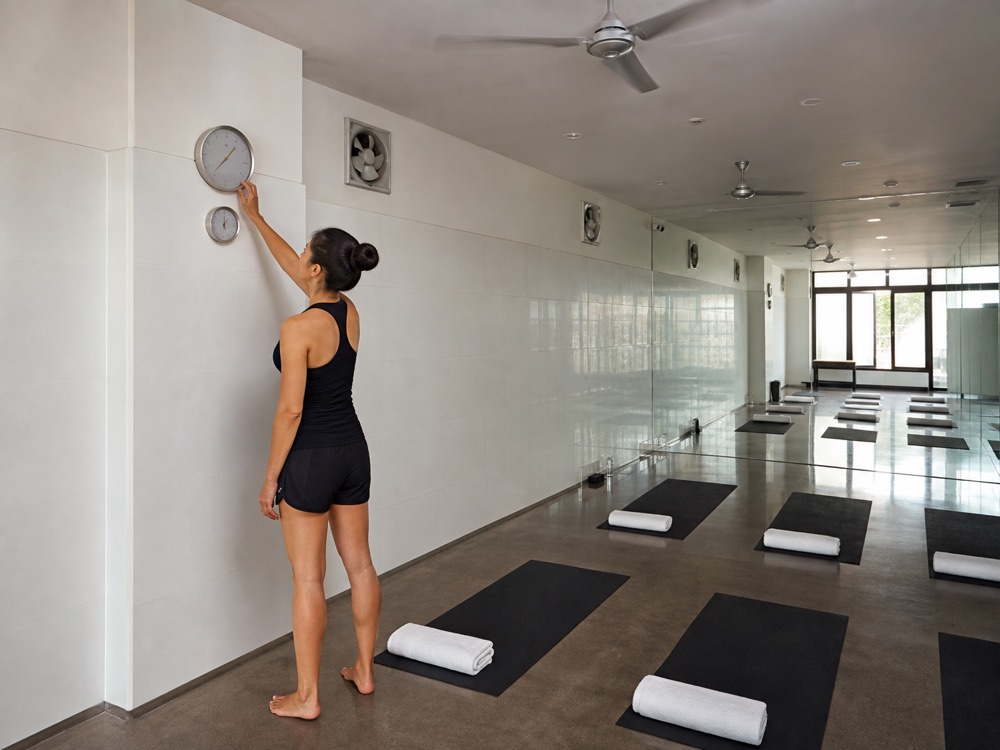
Ask how the room is monitored and where sensors are placed. Heat is not a competition. Raising the temperature above the stated target does not make a studio more authentic. Humidity, airflow, number of students, and outdoor conditions affect the real heat load.
3. Qualified, attentive instructors
A teacher needs more than a personal practice. Ask about foundational credentials, Hot 26&2 education, supervised practicum, teaching experience, first aid, and how instructors respond to heat-related symptoms. A skilled teacher observes the room while delivering clear verbal cues.
4. Clean, practical facilities
Look for clean floors and changing areas, non-slip surfaces, reliable ventilation, safe mat spacing, accessible drinking water, and uncluttered exits. Strong fragrance should not be used to disguise poor cleaning or ventilation.
5. A beginner and safety policy
A credible studio explains what beginners can expect and permits water, rest, modifications, or leaving the room when needed. Staff should ask about relevant limitations without pretending to provide medical diagnosis.
6. Prices and cancellation terms in writing
Compare drop-in prices, trial offers, passes, recurring memberships, booking windows, late-cancel fees, pauses, refunds, and expiry dates. The cheapest advertised class may become expensive if its schedule or conditions do not suit you.
What to Expect at Your First Bikram Studio Class
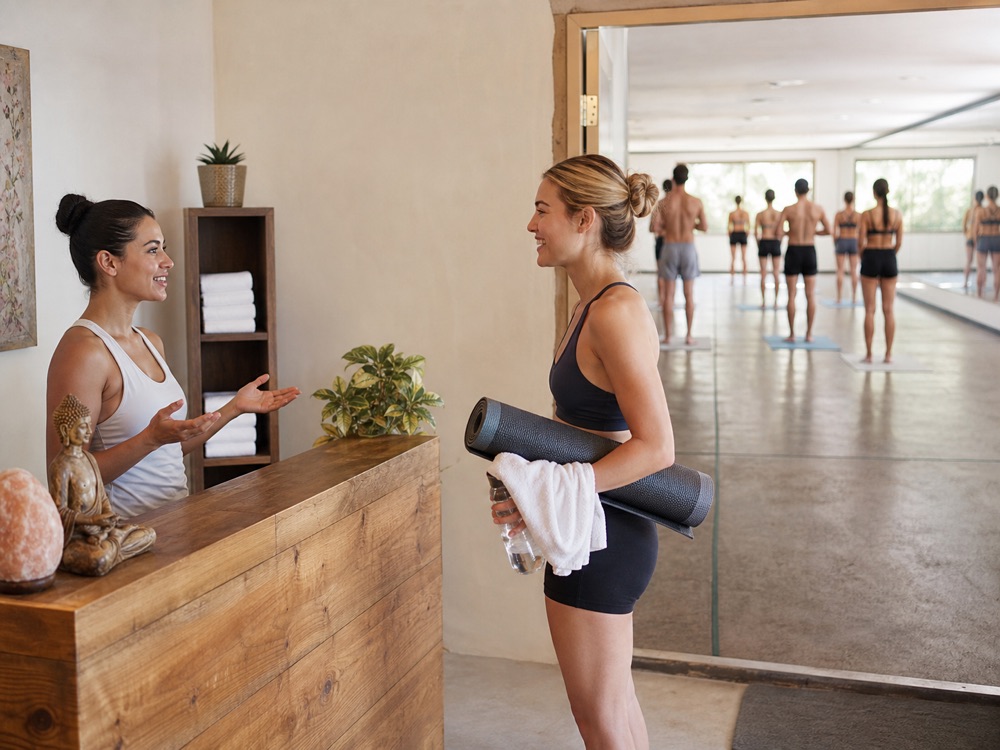
Arrive 15-20 minutes early with a mat, large towel, water, breathable clothing, and dry clothes for afterward. Tell the instructor that you are new. Ask where beginners should place their mats and whether the studio recommends staying still, sitting, or leaving when a break is necessary.
Your first goal is orientation. Learn the sequence, listen to the dialogue, and notice your response to the room. Do not force a deeper range because warmth makes movement feel easier. Controlled entry and exit matter more than the final shape.
Begin the day normally hydrated rather than drinking a large amount immediately before class. The 2025 systematic review of hot yoga research recommends arriving hydrated, replacing sweat losses afterward, and educating teachers and students about heat-related illness.
Stop for confusion, dizziness, nausea, unusual weakness, poor coordination, or inability to cool down. Move to a cooler space and tell staff. Pregnancy, cardiovascular conditions, previous heat illness, and medicines that affect heart rate or temperature require individual medical guidance.
For a printable mental checklist, use the heat yoga preparation guide for beginners. You can also use the Bikram Yoga Health Scorecard as an educational prompt, but it does not replace medical advice.
Bikram Yoga Studio Warning Signs and Red Flags
- Unclear class identity: staff cannot explain whether the class is full 26&2, express, flow, or another heated format.
- Heat as a contest: the studio promotes higher temperatures or heavier sweating as proof of a better workout.
- Pressure to stay: students are shamed for drinking, resting, modifying, or leaving when unwell.
- No room monitoring: temperature and humidity are guessed rather than measured.
- Crowded or blocked space: mats, bags, or equipment restrict movement and exits.
- Unverifiable teachers: instructor education and experience cannot be explained.
- Medical promises: staff guarantee detoxification, disease treatment, rapid weight loss, or other outcomes beyond their professional scope.
- Opaque contracts: recurring payments, cancellations, and expiry terms are difficult to obtain in writing.
Hot yoga research reports potential functional and psychological benefits, but it does not justify guaranteed outcomes. A critical review of Bikram yoga health studies explains why small samples and differing methods require careful interpretation.
Choosing a Bikram Yoga Studio in Bali
Bali offers a different environmental context from a sealed studio in a cold climate. Tropical heat and humidity may contribute to the room conditions, while design and ventilation influence the experience. Natural warmth is not automatically safer, and electric heating is not automatically more authentic. The studio must still monitor conditions and manage the class responsibly.
YogaFX operates in Seminyak and trains in Bali's naturally warm environment. Visitors can review the Bali training location, map, and local details before planning a visit. Students interested in the academy should distinguish regular studio practice from the six-day practical teacher-training MasterClass.
When comparing Bali studios, confirm the neighborhood, travel time, changing facilities, class language, booking requirements, and whether the timetable continues during holidays. In Seminyak and Canggu, a short map distance can still involve significant traffic time.
From Bikram Studio Practice to Teacher Training
Regular studio practice helps you understand the sequence from a student's perspective, but attendance alone does not qualify you to teach. Instructors need anatomy, ethics, observation, dialogue, heat safety, supervised teaching, feedback, and assessment.
If teaching is your goal, ask the studio whether it offers a complete credential or only workshops. Then compare the outcome with the heat yoga teacher training selection checklist and the 200-hour hot yoga curriculum guide.
A quality training relationship should improve your ability to serve students, not simply deepen your personal practice. Verify exact certificate names, trainer credentials, cohort size, practicum, assessment, total cost, and what local studios require before enrolling.

Frequently Asked Questions
How do I find a Bikram yoga studio near me?
Search for Bikram Yoga, Original Hot Yoga, or Hot 26&2 with your city name. Then verify the studio's own schedule and ask whether the class uses the complete 26 postures and two breathing exercises for 90 minutes at approximately 105°F (40°C) and 40% humidity.
What should a real Bikram yoga studio offer?
Expect a clearly identified fixed 26&2 sequence, trained instructors, transparent room conditions, a first-visit briefing, clean facilities, safe flooring, drinking-water access, and policies that allow students to rest or leave when necessary.
Is every Hot 26&2 studio a Bikram yoga studio?
Not necessarily. Many studios teach the same or a closely related fixed sequence under names such as Original Hot Yoga or Hot 26&2. Ask about sequence, duration, temperature, humidity, cueing, and teacher background instead of relying only on the business name.
How hot is a Bikram yoga studio?
The traditional target is about 105°F (40°C) with 40% relative humidity. Actual conditions can vary across the room and during class. A responsible studio monitors both temperature and humidity and does not treat extra heat as a badge of quality.
What should I bring to my first Bikram studio class?
Bring a non-slip yoga mat, large towel, water bottle, light breathable clothing, and dry clothes for afterward. Arrive hydrated and early enough to tell the instructor that it is your first class and discuss relevant health concerns.
Can I leave the room during a Bikram class?
A safety-conscious studio should allow you to rest or leave if you feel unwell. Confusion, dizziness, nausea, unusual weakness, poor coordination, or inability to cool down are reasons to stop and move to a cooler place rather than trying to finish at any cost.