What Is Hot Yoga? 5 Types, Real Benefits and Risks
By Ian Terry, E-RYT 500 · Updated
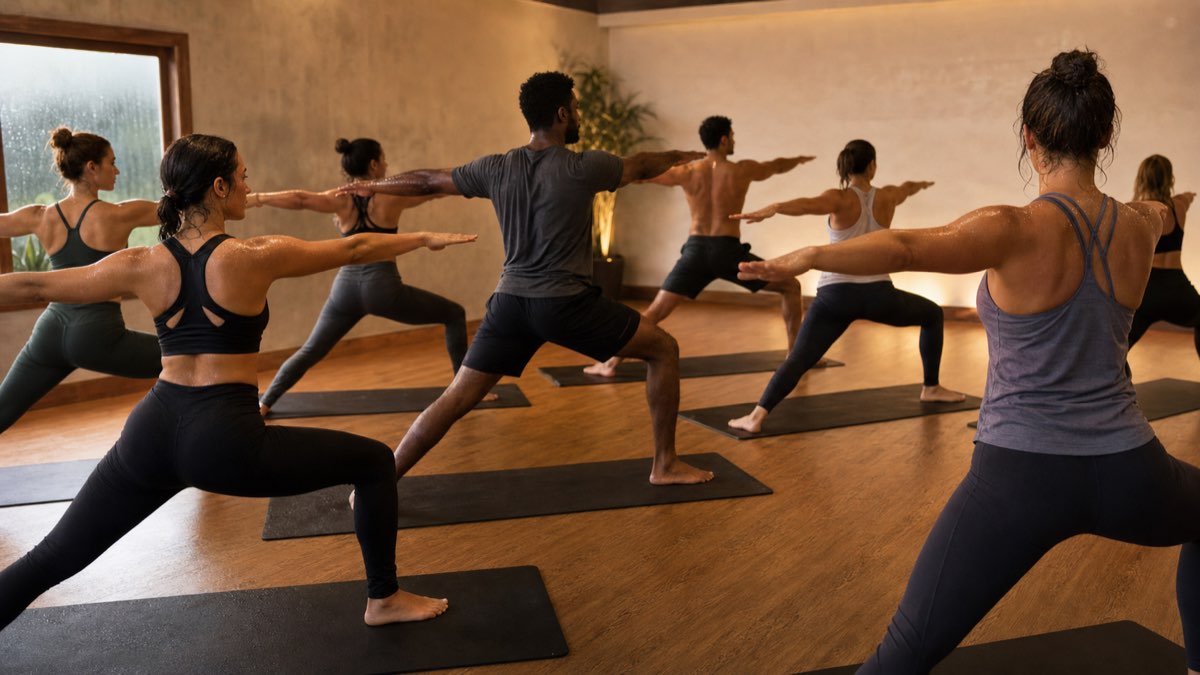
Hot yoga is yoga practised in a deliberately heated room, usually warm enough to make you sweat within minutes. It's a category, not one style. A heated class might be a fixed Bikram Hot 26&2 sequence, a flowing Hot Vinyasa, a Hot Power class or slower heated Hatha, each with its own pace and temperature.
What Is Hot Yoga, Exactly?
The short answer is that the heat is what defines it. Take almost any yoga style, move it into a warm and often humid studio, and you have a hot yoga class. That's why two studios can both say "hot yoga" and still run completely different sessions.
Three things decide what a class will feel like:
- The method: a fixed sequence or a new flow every class.
- The room: how hot it is, how humid it is, and how the heat is produced.
- The teaching: verbal cues only, or a teacher who demonstrates and plays music.
So before you book, ask the studio which style it teaches. "Hot yoga" on a timetable tells you about the room. It doesn't tell you much about the class.
Is hot yoga the same as Bikram yoga?
No, and this is the most common mix-up. Bikram Yoga is one specific heated method: 26 postures and two breathing exercises in a fixed order, taught for 90 minutes. Every Bikram class is hot yoga, but most hot yoga classes aren't Bikram. Our full guide to what Bikram Yoga is and why many studios now call it Hot 26&2 covers that method in depth.
The 5 Main Types of Hot Yoga
Most heated classes fall into one of five groups. The table gives you a quick comparison, and the notes below explain who each type suits.
| Type | Sequence | Pace | Typical feel |
|---|---|---|---|
| Bikram / Original Hot 26&2 | Fixed: 26 postures, 2 breathing exercises | Steady holds, 90 minutes | Hot and humid, scripted dialogue |
| Hot Vinyasa / Hot Flow | Changes every class | Continuous movement with breath | Warm, often with music |
| Hot Power Yoga | Changes, strength-focused | Fast and athletic | Warm, gym-style intensity |
| Heated Hatha | Simple held postures | Slow to moderate | Gentler entry point |
| Warm Yin or restorative | Long, passive holds | Very slow | Mild warmth for relaxation |
Bikram and Original Hot 26&2
This is the original fixed format. The same postures come in the same order every time, so you can track progress from one class to the next. Teachers guide the room with spoken dialogue instead of demonstrating, and there's no music.
The class opens with Standing Deep Breathing, a form of Pranayama, and closes with Kapalbhati, a sharp exhaling breath. In between come postures such as Standing Bow, or Dandayamana Dhanurasana, which you can see in the photo below. Because the order never changes, many students say the class starts to feel like moving meditation after a few weeks.

Hot Vinyasa and Hot Flow
Vinyasa links each movement to a breath, and the order changes with every teacher. It suits people who enjoy variety and transitions. Because you can't predict the next pose, you'll spend more attention following cues.
Hot Power Yoga
Power classes borrow from Vinyasa but push strength and pace. Expect repeated transitions, longer holds in lunges and planks, and a workout atmosphere. A harder class isn't automatically a better one, though. The right level is the one you can do with control.
Heated Hatha, Warm Yin and restorative classes
These sit at the gentler end. Hatha classes hold simple postures with rest in between. Warm Yin and restorative sessions use long, passive holds in a mildly heated room. They're a sensible first step if you're nervous about the heat.
How Hot Is a Hot Yoga Room?
Most hot yoga studios heat the room to roughly 90-105°F (32-40°C), but there's no universal setting. Mayo Clinic Sports Medicine describes a Bikram room as about 105°F (40°C) with around 40% humidity, while other styles simply use a very warm, humid studio.
Humidity matters as much as the number on the thermostat. Sweat cools you when it evaporates, and damp air slows that down. As a result, a humid 35°C room can feel harder than a dry 38°C room. That's why experienced students ask about both numbers before they book a new studio.
Studios also heat rooms in different ways:
- Forced-air heaters warm the air quickly and are common in cooler cities.
- Infrared panels warm bodies and surfaces more than the air itself.
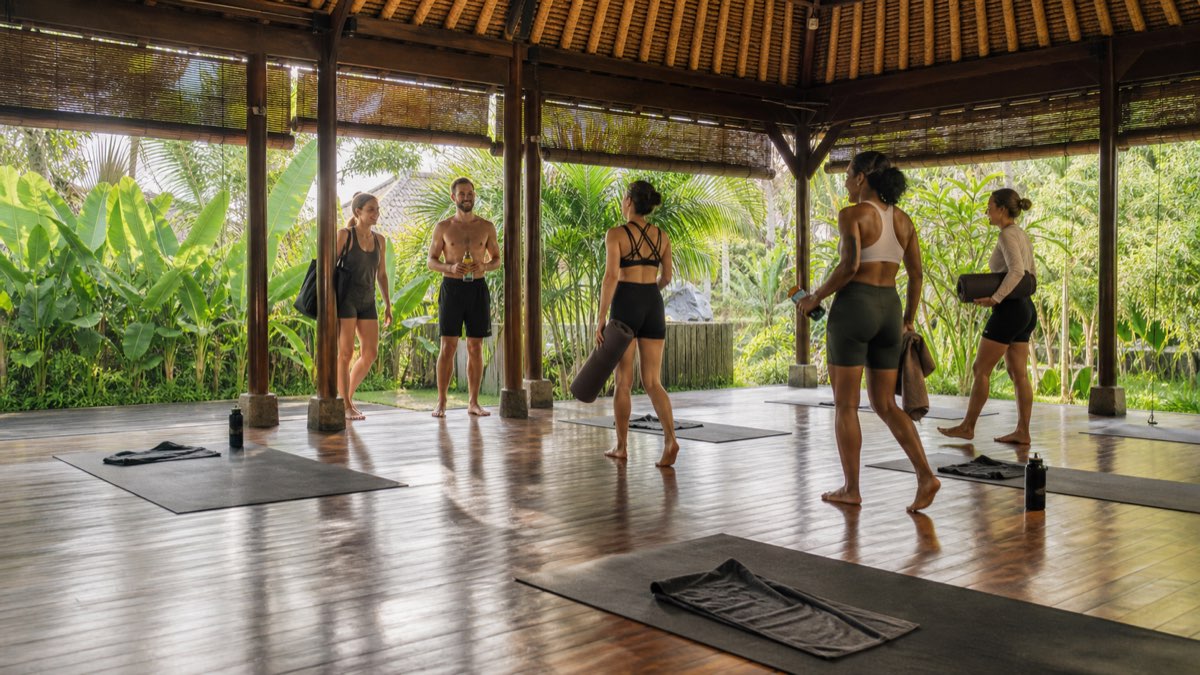
- Natural tropical heat is what we use in Bali, with open studios instead of electric heaters.
What Happens in a Hot Yoga Class
A typical class lasts 60 to 90 minutes. You'll arrive, lay a towel over your mat and wait in a room that already feels warm. Most beginners sweat within the first ten minutes, which is normal and expected.
From there the flow depends on the style. In Hot 26&2, you'll move through a standing series, a short rest, then a floor series and a final breathing exercise. In Hot Vinyasa, you'll move more continuously and the teacher may demonstrate.
Here's what to bring to your first session:
- A large towel that covers your whole mat, plus a small one for your face.
- A full water bottle, sipped through class rather than gulped at the end.
- Light, fitted clothing that won't get heavy when wet.
- A change of clothes, because you'll be soaked afterwards.

What does it actually feel like? Honestly, the first ten minutes are the hardest. Your heart rate climbs, your breathing gets louder and you may wonder why you came. Then, for most people, the body adjusts. By the final rest in Savasana, many beginners feel calm, tired and oddly pleased with themselves. That pattern is common enough that teachers often tell first-timers to simply stay in the room and breathe.
Our checklist for your first hot yoga class covers food timing, etiquette and recovery in more detail.
What the Research Says About Hot Yoga Benefits
Research on heated yoga is growing, but it's still limited. Studies tend to be small and use different methods, so treat results as signs of what's possible rather than promises. Even so, a few findings come up again and again.
Flexibility, strength and balance
A 2025 systematic review by Willmott and colleagues pooled 43 studies with 942 participants. It reported improvements across flexibility, physical fitness and general well-being. Heat can make movement feel easier, but control still matters more than depth.
Heart rate and calorie burn
In a 2014 university study of 90-minute Bikram classes, women burned about 333 calories and men about 460 on average. Heart rate reached roughly 80% of maximum. Those are averages, not a calculator, because body size and effort change the numbers.
Stress and mood
A 2022 study by Hui and colleagues found lower state anxiety after a hot yoga programme. Separately, a Massachusetts General Hospital trial published in 2023 reported that 59% of adults in the heated yoga group saw depression symptoms fall by half or more over eight weeks, compared with 6% on a waitlist.
These results suggest heated yoga may help some people feel better. They don't replace medical or mental health care. The Bikram hot yoga benefits evidence guide reviews each claim one by one, including the myths.
Watch: Hot Yoga Benefits and the Evidence
Joe Rogan & Charlie Sheen Talk Hot Yoga Benefits Backed by Harvard University Science
This YogaFX video connects public discussion about hot yoga with research into potential benefits. Celebrity accounts are personal experiences and should be separated from findings measured in controlled studies.
Do you have what it takes to become a great Bikram Hot Yoga teacher? Complete the short YogaFX readiness quiz to understand where you are on your teaching path and receive more personalized guidance.
One more point on sweat. Heavy sweating is how your body cools itself in a hot room. It isn't a way of removing toxins, and the weight you lose straight after class is mostly water that you need to replace.
Is Hot Yoga Safe? Risks and Who Should Be Careful
For many healthy adults, a heated class is safe when they start gradually and listen to their body. The heat does add real risks, though, and willpower doesn't cancel them. Dehydration, dizziness, nausea and heat exhaustion are the main ones.
Mayo Clinic suggests skipping hot yoga if you have heart disease, problems with dehydration, heat intolerance or a past heat illness such as heatstroke. It also advises checking with your doctor first if you're pregnant. Our guide to hot yoga while pregnant explains the specific concerns.
Hydration is the simplest protection you have. Drink normally through the day before class instead of forcing a litre down at the door. Sip during the session when the teacher allows breaks, and keep drinking afterwards. If you sweat heavily, an electrolyte drink after class can help you feel normal again sooner.
Stop and rest if you notice any of these warning signs:
- Dizziness, light-headedness or blurred vision.
- Nausea, headache or unusual weakness.
- Confusion, or feeling that you can't cool down.
Resting on your mat isn't failing the class. In fact, good teachers expect it from beginners. Consult a healthcare professional before starting hot yoga if you have a medical condition or take medication that affects heart rate, fluids or temperature. This article is for education and isn't medical advice.
How to Choose a Studio for Your First Heated Class
Studios vary more than most beginners expect. A five-minute phone call or message can save you a bad first experience. Ask these questions before you book:
- Which style do you teach? Fixed sequence, flow, power or a gentler heated class.
- What are the room settings? Ask for both temperature and humidity, not just "it's hot".
- How is the room heated and ventilated? Fresh air matters as much as warmth.
- Who teaches the beginner classes? Look for recognised training, such as an RYT 200 credential.
- Can I rest or leave if I need to? The answer should always be yes.
A good studio answers these questions happily. If the staff seem vague about the heat or discourage rest, choose another place. You're looking for a teacher who watches the room closely and gives clear instructions, not one who pushes everyone to the same depth.
Hot Yoga vs Regular Yoga
Is heated practice better than regular yoga? Not automatically. It's different, and the right choice depends on what you want from a class.
| Factor | Hot yoga | Regular yoga |
|---|---|---|
| Room | Heated, often humid | Normal room temperature |
| Sweat | Heavy, from the first minutes | Light to moderate |
| Heart rate | Higher, partly from the heat | Depends on the style |
| Feel of stretching | Muscles feel looser sooner | More resistance early on |
| Best for | People who like intensity and routine | Anyone, including heat-sensitive students |
If you love structure and a challenge, the heat can make practice feel focused and absorbing. If you're heat-sensitive or recovering from illness, a normal-temperature class is the smarter place to start. You can always add heat later.
Where Did Hot Yoga Come From?
The heated studio format took off in the United States in the 1970s. Bikram Choudhury popularised a fixed 90-minute class with 26 postures and two breathing exercises, drawn from Hatha yoga, in a room heated to around 40°C. That sequence became the template most people still picture when they hear the words.
Before that, heat had long been part of yoga's story in a looser sense. India's climate meant many traditional practices happened in warm conditions anyway. What changed in the 1970s was the deliberate, controlled heating of a studio as part of the method itself.
Over the following decades, other teachers began heating Vinyasa, Power and Hatha classes. Today many independent studios teach the original sequence under names such as Hot 26&2 or Original Hot Yoga, while separating the method from its founder's controversies.
Hot Yoga at YogaFX in Bali
At YogaFX we teach the Original Hot 26&2 sequence in Seminyak and Canggu. Classes run for 90 minutes at about 40°C and 40% humidity, and the heat comes from Bali's climate, not electric heaters. The studios open daily from 6am to 10pm.
Mr. Ian Terry, E-RYT 500, founded the academy in 2017. He trained for five years, from 2014 to 2019, with Bikram Choudhury, the founder of the method, and has more than 12,000 teaching hours. He's also Master Trainer of the Republic of Indonesia Yogasana Sports Federation.
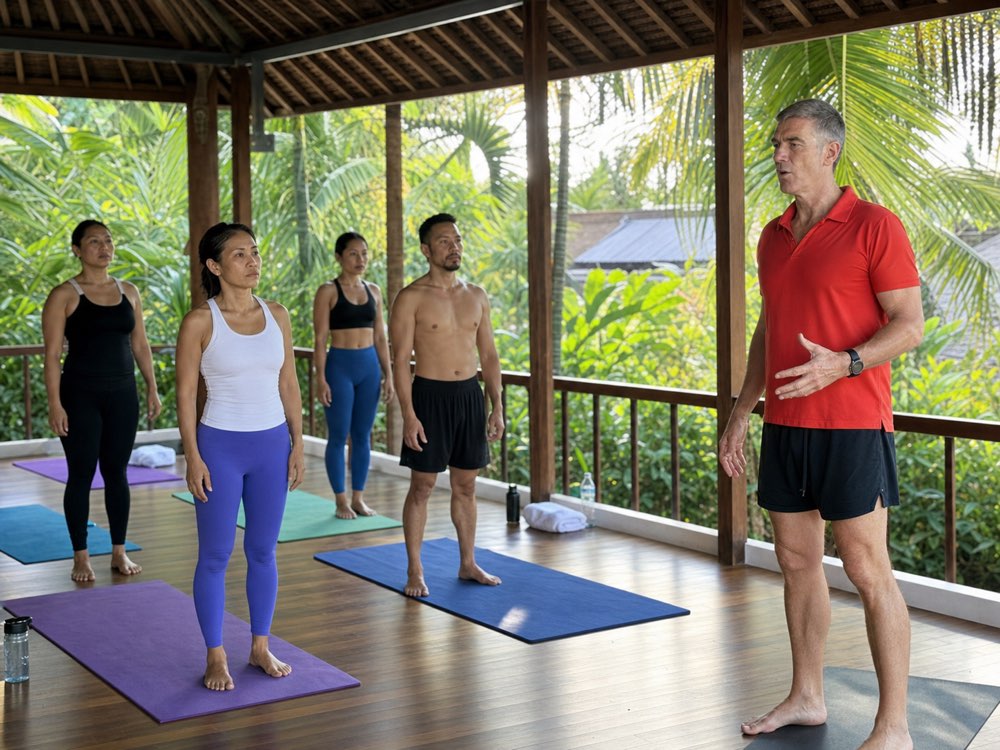
Plenty of students who start with a single class end up wanting to understand the sequence from the teacher's side. That's where the hybrid Bikram Hot 26&2 Yoga Teacher Training MasterClass comes in. You prepare online, then train for six practical days in Bali, and graduate with Yoga Alliance RYT 200 plus a Bikram Hot 26&2 200-hour certification. The next intake runs from 24 to 29 January 2027.
Over 1,500 graduates from more than 80 countries have trained with us, and they've left 550+ reviews across Google, Yoga Alliance and YouTube. To see whether teaching suits you, read how the hybrid Hot 26&2 teacher training program works.
Frequently Asked Questions
What is hot yoga good for?
Hot yoga may help flexibility, strength, balance and stress levels, according to small studies and a 2025 systematic review. Many people also enjoy the focus it demands. Results vary by person, and the heat adds risks, so start gradually and treat any benefit as possible rather than guaranteed.
Is hot yoga the same as Bikram yoga?
No. Hot yoga is any yoga practised in a heated room, so it includes Vinyasa, Power and Hatha classes. Bikram yoga is one specific method with 26 postures and two breathing exercises in a fixed 90-minute order, at about 40°C and 40% humidity. Many studios now call it Hot 26&2.
How hot is a hot yoga room?
Most hot yoga rooms sit between about 90 and 105°F, or 32 to 40°C, depending on the style and studio. A traditional Bikram or Hot 26&2 room is around 40°C with roughly 40% humidity. Always ask the studio for its actual settings, because the class name alone won't confirm them.
Is hot yoga ok for beginners?
Yes, many beginners do well in hot yoga if they hydrate, rest when they need to and choose a qualified teacher. Gentler heated Hatha or Hot 26&2 classes are good starting points. Stop if you feel dizzy, sick or overheated, and check with a doctor first if you have health concerns.
How many times a week should you do hot yoga?
Two or three classes a week is a common rhythm once you've adapted to the heat. Beginners often start with one or two and build up slowly. Watch your sleep, energy and hydration, and add classes only when you recover well. More sessions aren't better if your body hasn't caught up.
Who should not do hot yoga?
People with heart disease, dehydration problems, heat intolerance or a past heat illness such as heatstroke should usually avoid hot yoga, according to Mayo Clinic guidance. Pregnant people should speak to their doctor first. Anyone taking medication that affects heart rate or fluid balance should get medical advice before trying it.
Still have questions about hot yoga or teaching it? Message Mr. Ian and the YogaFX team on WhatsApp and we'll answer them personally.