Heat Yoga Temperature Guide: Benefits, Risks, and Class Types
By Ian Terry, E-RYT 500 · Updated
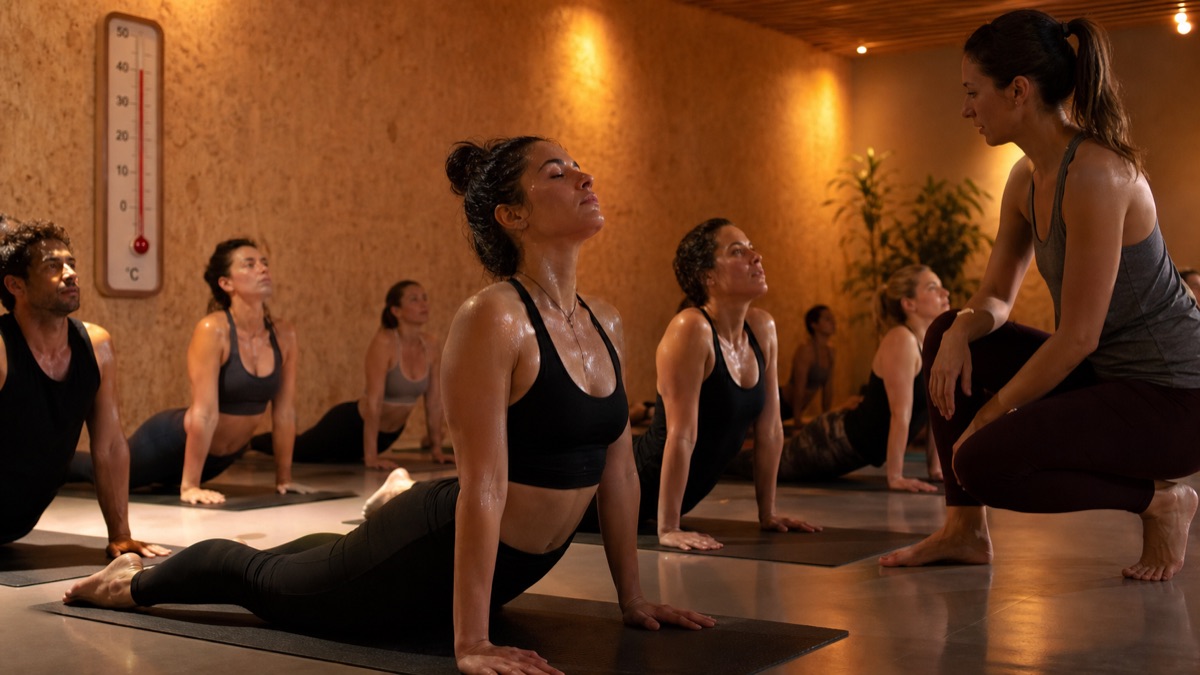
A heat yoga class combines yoga with controlled environmental heat. The useful question is not simply how hot the room is. Temperature, humidity, airflow, session length, sequence, and teaching method work together. This guide explains those variables so you can compare classes without treating every heated format as the same practice.
What Does Heat Yoga Mean?
Heat yoga is a language variation of hot yoga, not a separate registered style. It describes yoga practised in a deliberately warm or hot room. A studio may heat a fixed Hatha sequence, a flowing Vinyasa class, or an athletic Power Yoga session. The name therefore tells you about the environment, but it may tell you very little about the movement.
This distinction matters for searchers comparing heated yoga, Bikram yoga, hot yoga temperature, hot yoga benefits, and hot yoga for beginners. Bikram Hot 26&2 is one defined method inside the wider category. It uses 26 postures and two breathing exercises in a fixed order. Hot Flow changes its sequence. Warm restorative classes may use gentler movement at a lower temperature.
For the broader history and definitions, read what hot yoga is and how its main styles differ. The present guide focuses on what the room does, what research supports, and what you should ask before attending.
Heat Yoga Temperature and Humidity
Most heated studios operate somewhere around 90-105°F (32-40°C). A warm class at the low end is not equivalent to a 90-minute Bikram class at about 105°F (40°C) and 40% humidity. Duration and movement pace can make a lower-temperature flow class demanding, while humidity can slow sweat evaporation and make a room feel hotter.
Heat source also changes the experience. Studios may use forced-air heaters, infrared panels, or the naturally hot and humid climate found in Bali. None of these automatically makes a class safer or better. Reliable room monitoring, ventilation, teacher attention, and clear emergency procedures are more meaningful quality signals.
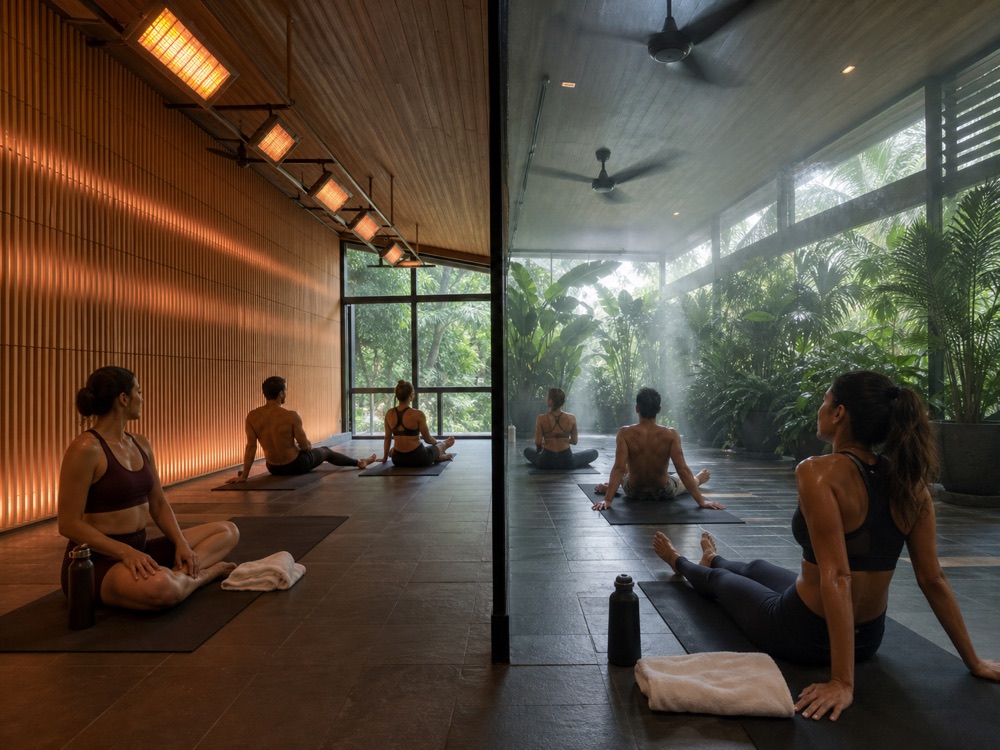
Do not use a dramatic thermometer reading as proof of quality. Ask the studio for its target temperature and humidity, whether measurements are taken where students practise, and whether beginners may leave or rest. A credible answer should be factual and calm. The Bikram yoga studio checklist turns these questions into a complete local selection process.
Main Heat Yoga Class Types
Bikram Hot 26&2
This method repeats a 90-minute sequence at approximately 105°F (40°C) and 40% humidity. Its consistent order makes progress easier to observe and gives teachers a shared dialogue and timing structure. Study the complete Bikram 26-pose sequence guide before comparing it with variable-sequence classes.
Hot Vinyasa and Hot Flow
These classes link movement to breath and usually change from teacher to teacher. Music, demonstrations, transitions, room temperature, and duration vary. Continuous movement can increase exercise demand even when the room is cooler than a Bikram studio.
Hot Power and warm yoga
Hot Power Yoga tends to be athletic and strength-oriented. Warm Hatha, Yin, or restorative classes generally use less heat and a slower pace. Because these labels are not standardized, the studio description and teacher briefing are essential.
Heat Yoga Benefits: What Research Supports
A 2025 systematic review of hot yoga research found promising evidence across flexibility, balance, strength, body composition, and psychological outcomes, while also noting that study quality and populations vary. That means benefits are possible, not guaranteed. The Bikram hot yoga benefits guide separates the stronger findings from popular claims about calories, skin, cortisol, and sleep.
Heat can raise heart rate, core temperature, and perceived effort. It does not necessarily raise oxygen consumption or calorie use compared with the same yoga in a neutral room. A randomized crossover study of heated and room-temperature yoga helps separate the effects of the postures from the effects of the environment.
The practical benefit may be adherence: some people enjoy the stable ritual, focused room, and strong sensory experience. Others perform better without heat. The best format is one you can practise consistently without ignoring symptoms or forcing range of motion.
Heat Yoga Risks and Safer Practice
Heat adds physiological demand. Warning signs include dizziness, confusion, nausea, headache, unusual weakness, loss of coordination, and feeling unable to cool down. Stop, leave the heat, and seek help rather than trying to complete the class for pride.
Start adequately hydrated and replace fluid after practice without forcing excessive volumes. Research on hydration behavior among hot yoga participants found associations between instructor encouragement, hydration habits, and reported outcomes. Teachers should normalize water and rest instead of treating them as failure.
Pregnancy, cardiovascular disease, uncontrolled blood pressure, previous heat illness, and medicines that affect temperature or heart rate require individual medical advice. This article is educational and is not medical clearance.

How to Choose the Right Heat Yoga Class
- Confirm the method: fixed 26&2, Vinyasa, Power, or warm Hatha.
- Ask for actual conditions: temperature, humidity, duration, airflow, and class size.
- Check teacher preparation: general credentials plus supervised experience teaching in heat.
- Look for safety language: water, rest, adaptation, and symptom recognition should be discussed openly.
- Choose the right first step: use the heat yoga beginner preparation guide before class.
If your goal is to teach, environment management is only one part of competence. Compare practicum, assessment, lineage, cohort size, and credentials in the heat yoga teacher training selection guide.
Frequently Asked Questions
What is heat yoga?
Heat yoga is a common search term for hot yoga: yoga practised in a room warmed above normal room temperature. It includes fixed-sequence Bikram Hot 26&2, Hot Vinyasa, Hot Power, and lower-temperature warm yoga classes.
What temperature is heat yoga?
Studios commonly use about 90-105°F (32-40°C), but the label does not guarantee one setting. Bikram Hot 26&2 is traditionally taught at about 105°F (40°C) with 40% humidity for 90 minutes.
Does more heat make yoga more effective?
No. More heat can increase thermal strain and perceived effort, but it does not automatically improve the yoga or increase energy expenditure. Teaching quality, appropriate technique, consistency, and recovery matter more than chasing the hottest room.
Is heat yoga safe for beginners?
Many healthy beginners can start gradually with a qualified instructor, but they should arrive hydrated, rest freely, and stop for dizziness, confusion, nausea, unusual weakness, or feeling overheated. People with health concerns should seek individual medical guidance first.
Is sweating in heat yoga a detox?
Sweating primarily helps regulate body temperature. It causes water and electrolyte loss, not a special toxin-removal process. Replace fluid after class and judge the practice by movement, breathing, attention, and recovery rather than sweat volume.