Bikram Hot Yoga Benefits: Physical and Mental Evidence Guide
By Ian Terry, E-RYT 500 · Updated
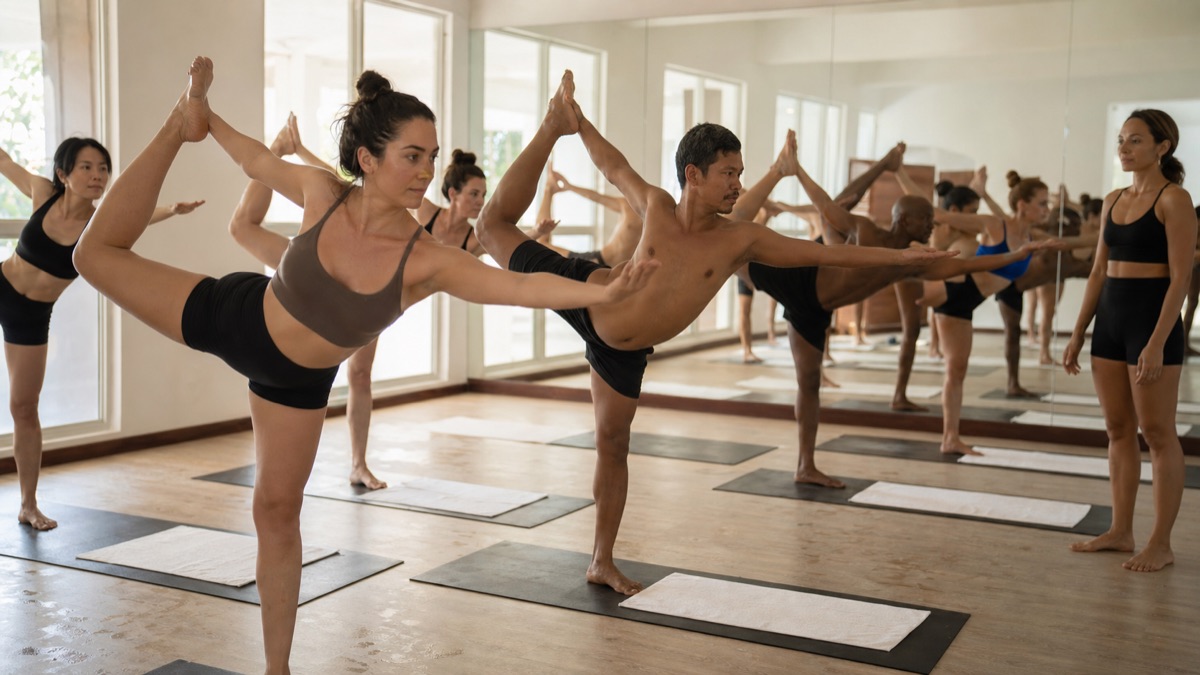
The potential Bikram hot yoga benefits come from repeated practice of a fixed series of 26 postures and two breathing exercises in a room heated to roughly 105°F (40.6°C) with about 40% humidity. Research most consistently supports improvements in flexibility, balance, strength, and some measures of psychological well-being. Other popular claims need more caution.
Bikram Hot Yoga Benefits: What the Evidence Actually Shows
Bikram Yoga is unusually useful for research because the posture order, class duration, and target environment remain stable. However, studies still differ in participant age, health, experience, attendance, comparison groups, and measurement. A reported group average is not a promise for an individual student.
The most complete current source is a 2025 systematic review of 43 hot-yoga studies involving 942 participants. Bikram was the most frequently studied method. The review found promising functional, physiological, and psychological outcomes, but concluded that claims of greater benefits than non-heated yoga or conventional exercise remain unsubstantiated.
That distinction frames this article. The fixed yoga practice may produce benefits with consistency. The heated room creates an additional thermal challenge, but more heat does not automatically create more benefit. Acute heat raises heart rate and core temperature without necessarily increasing energetic demand compared with the same yoga outside the heat.
For a general consumer overview, Healthline's medically reviewed hot yoga benefits guide discusses flexibility, strength, stress, and safety. The sections below use Bikram-specific research where possible and identify areas where the evidence is still limited.
Watch: Hot Yoga Benefits, Public Conversation, and Research
Joe Rogan & Charlie Sheen Talk Hot Yoga Benefits Backed by Harvard University Science
This YogaFX video discusses public comments from Joe Rogan and Charlie Sheen alongside research into potential hot-yoga benefits. Celebrity experiences are personal accounts; the evidence should be evaluated through the original studies and medical guidance.
Do you have what it takes to become a great Bikram Hot Yoga teacher? Complete the short YogaFX readiness quiz to understand where you are on your teaching path and receive more personalized guidance.
A Harvard Health summary reported that a small randomized controlled trial found reduced depression symptoms among adults assigned to hot yoga compared with a wait-list group. The study did not test whether heated yoga was better than non-heated yoga, and it does not establish every physical or mental claim discussed in a video.
Physical Benefits of Bikram Hot Yoga
The fixed sequence challenges movement in several planes while alternating standing postures, balances, spine movements, floor work, and rest. Repetition gives students a consistent reference point. Changes in control and range become easier to notice because the class does not reinvent itself each day. Our guide to how long hot yoga takes to show results sets out when those changes usually appear.
The strongest reported physical outcomes concern flexibility, lower-body strength, balance, and muscular endurance. Cardiovascular measures and body composition are less consistent. The heat itself is not a substitute for progressive technique, adequate recovery, or other forms of exercise. Compare the practical benefits of each Bikram yoga pose in the posture-by-posture companion guide.
1. Increased Flexibility and Range of Motion
Warm conditions can make muscles and joints feel less stiff, while repeated movement through the sequence provides regular mobility exposure. After eight weeks of Bikram practice, research has reported gains in lower-back, hamstring, and shoulder flexibility compared with a non-exercising control group.
It is important to separate greater available range from safer stretching. Heat may reduce the sensation of resistance before a student has control in the new range. A deeper posture is not automatically better or safer. Avoid bouncing, forcing, or using another student's shape as a target.
A useful flexibility benefit is the ability to enter, hold, and leave a posture with steadier control. Teachers should cue alignment and effort while allowing individual differences in bone structure, previous injury, strength, and experience.
2. Improved Strength, Endurance, and Balance
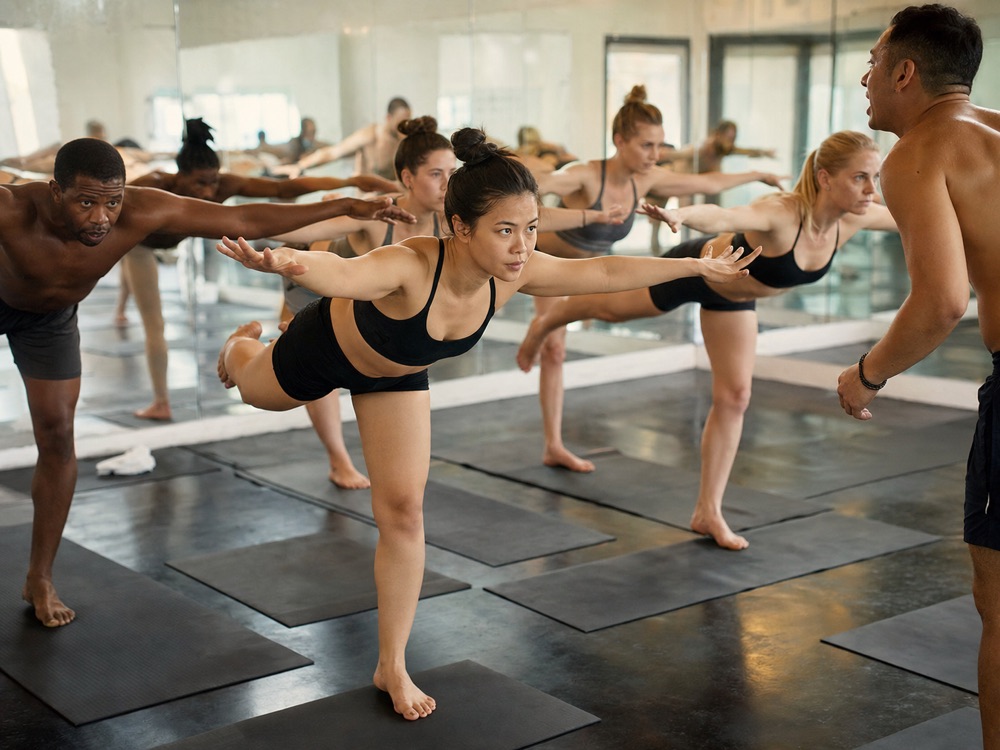
Long standing holds and repeated transitions load the legs, hips, and trunk. Balancing postures require coordinated attention across the feet, ankles, hips, core, and gaze. Over time, this can develop functional lower-body strength, local muscular endurance, and postural control.
The 2025 review summarized an eight-week intervention that reported improved isometric deadlift strength, maximal voluntary contraction, and single-leg balance. It did not find improvement across every upper-body strength measure. The responsible conclusion is specific: the sequence can improve selected strength and balance outcomes, not every component of fitness.
Progress may appear as less wobbling, more controlled breathing, or the ability to maintain form without gripping excessively. The interactive Bikram 26-pose sequence guide shows which postures emphasize legs, core, back, and balance, while the Bikram hot yoga poses reference explains the complete fixed order.
3. Cardiovascular Conditioning and Calories
Bikram hot yoga can raise heart rate substantially, and a 90-minute class is a meaningful bout of physical activity. The heat contributes to cardiovascular strain because the body must move blood toward the skin for cooling. A higher heart rate in heat, however, does not prove the same oxygen demand as running or continuous-flow exercise.
Current research generally places hot yoga within light-to-moderate exercise intensity. Reported calorie expenditure varies widely with body size, sex, effort, experience, measurement method, and class duration. The systematic review found that acute heat increased heart rate and core temperature but did not increase energetic demand compared with non-heated yoga.
Accordingly, “significant calories” should not be treated as one universal figure. Use the Bikram yoga calorie calculator for an estimate based on weight, duration, and intensity, then read the evidence-based guide to Bikram hot yoga weight loss, sweat, and fat loss. Do not confuse an estimate with laboratory measurement.
Students seeking cardiorespiratory fitness should follow broader physical-activity guidance and not assume Bikram alone replaces every aerobic or resistance-training need.
4. Skin Texture, Sweating, and What “Detox” Does Not Mean
Profuse sweating is the body's cooling response. It can temporarily change how the skin looks and feels. Limited hot-yoga research has reported changes in skin hydration, elasticity, or texture, but this evidence is not yet strong enough to guarantee “better skin” for everyone.
Sweating does not prove that a class removes toxins. The liver and kidneys perform the body's main waste-processing roles. Sweat also brings practical downsides: salt, friction, occlusive clothing, shared surfaces, and delayed showering can irritate some skin.
Use a clean towel and mat, avoid heavy fragranced products before class, shower after practice, change out of damp clothing, and follow a dermatologist's advice for acne, eczema, rosacea, or other conditions. Treat improved skin texture as a possible secondary observation, not a core medical benefit.
Mental Benefits of Bikram Hot Yoga
The mental experience combines predictable structure with continuous sensory demand. Students know which posture comes next but must repeatedly return attention to breathing, gaze, alignment, and the teacher's words. That can support concentration and a clear break from daily distractions.
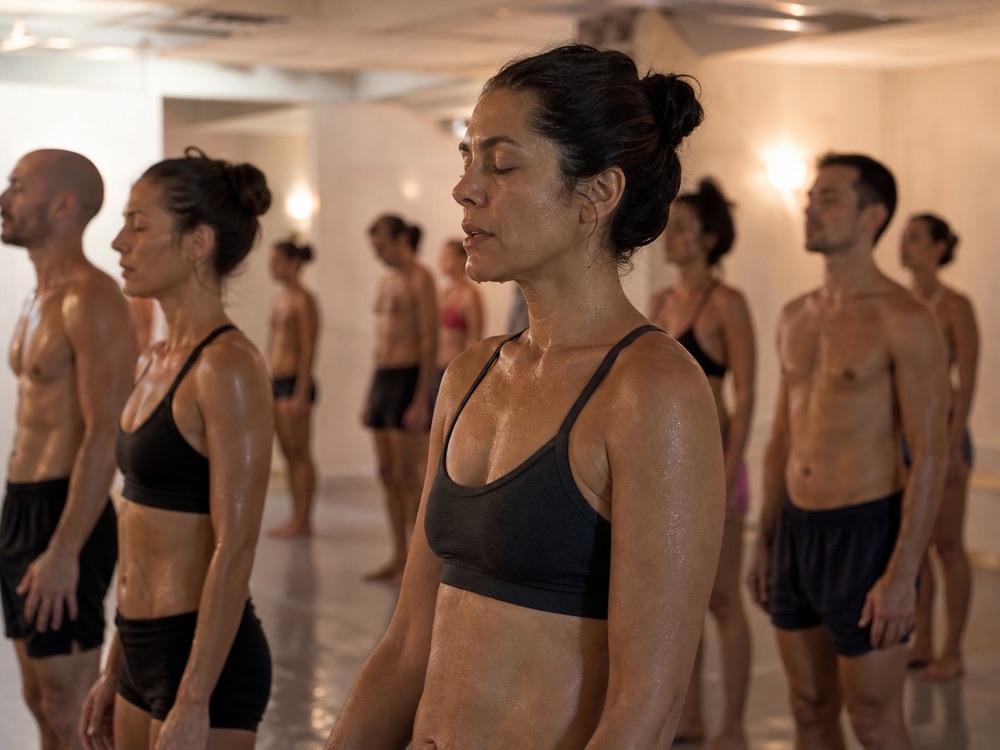
Mental benefits should still be described carefully. A yoga class can support well-being, but it does not replace professional treatment for anxiety, depression, trauma, or sleep disorders. Individual responses to mirrors, heat, group instruction, and strict dialogue vary.
5. Stress Reduction and Enhanced Mindfulness
Deep breathing, physical focus, and the repeatable 90-minute structure may help students shift attention away from rumination. A 16-week randomized controlled trial in stressed, sedentary adults found improvements in perceived stress, general self-efficacy, and selected quality-of-life measures among participants assigned to Bikram yoga.
That study supports a perceived-stress benefit in the population tested. It does not prove that each class lowers the stress hormone cortisol. Research across yoga styles shows that subjective stress can improve even when diurnal cortisol does not change. The most accurate claim is that regular Bikram practice may support stress management, not that it reliably suppresses a particular hormone.
Mindfulness in Bikram practice is practical: notice breathing, listen to one instruction at a time, observe sensation without immediately reacting, and choose effort with judgment. Memorizing the sequence can free attention from wondering what happens next, but automatic memory should not replace present awareness.
6. Sleep and Recovery
Many practitioners report feeling relaxed or physically ready for rest after class, and broader yoga research includes potential sleep benefits. Bikram-specific evidence is less convincing. The current systematic review reports that total sleep time, sleep latency, and sleep stages were unaffected in the available study.
That means improved sleep is possible as an individual experience, but it should not be advertised as a proven universal Bikram benefit. Class timing, hydration, room temperature after practice, nutrition, stress, training load, and existing sleep disorders can all influence the night that follows.
If late classes leave you alert, move practice earlier. If dehydration, headache, or overheating disrupts sleep, reduce intensity and review recovery. Persistent sleep problems deserve appropriate medical evaluation rather than a larger dose of hot yoga.
Hydration, Heat Safety, and Listening to Your Body
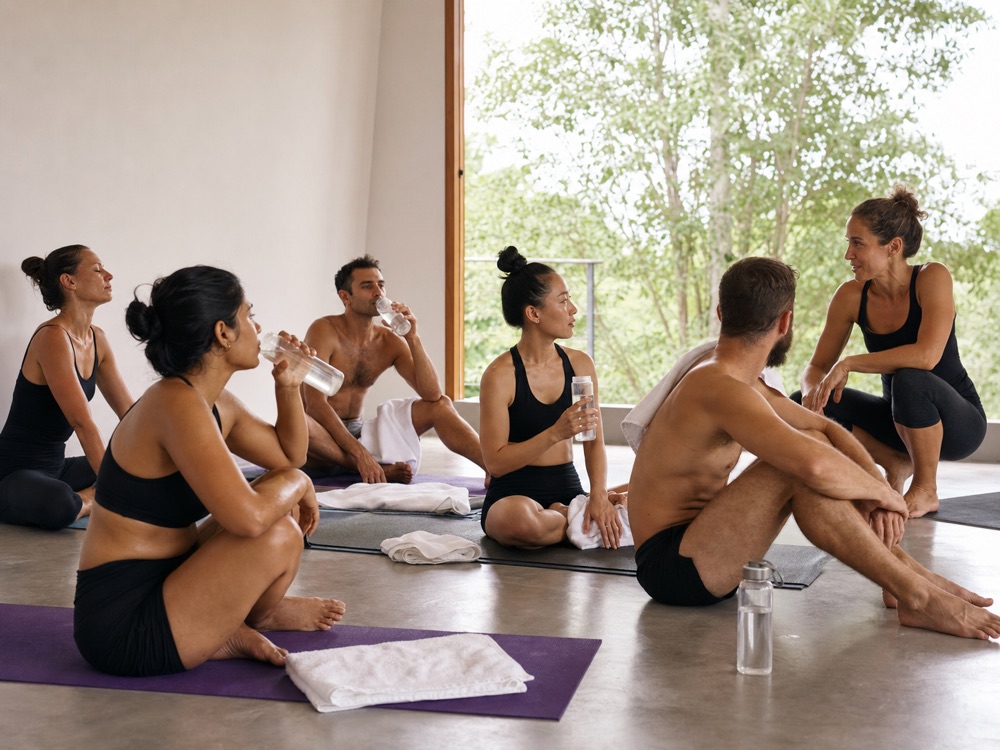
Potential benefits do not cancel the physiological load of a 105°F room. Arrive normally hydrated, learn your tolerance gradually, and replace sweat losses over time. Do not force several litres of water immediately before or after class, since excessive rapid intake also carries risk.
Stop for confusion, dizziness, nausea, unusual weakness, headache, poor coordination, faintness, or inability to cool down. Move to a cooler place and tell the instructor. Severe, worsening, or persistent symptoms require medical attention.
Pregnancy, cardiovascular disease, uncontrolled blood pressure, prior heat illness, and medications that affect heart rate or temperature regulation require individual medical guidance. The heat yoga beginner preparation guide provides a complete first-class checklist. Teachers working with older students can use our guide to teaching Hot 26&2 to men over 50 for pacing and posture modifications.
Choose a studio that monitors room conditions and treats rest, water, modifications, and an early exit as normal safety decisions. Use the Bikram yoga studio quality checklist before committing to a membership.
Frequently Asked Questions
What are the main Bikram hot yoga benefits?
The clearest potential benefits from repeated practice include improved flexibility, balance, lower-body strength, muscular endurance, perceived stress, self-efficacy, and mindful attention. Evidence quality varies, and results are not guaranteed for every person.
Does Bikram hot yoga improve flexibility?
Research has reported improved lower-back, hamstring, and shoulder range of motion after repeated Bikram practice. Heat can make movement feel easier, but it does not make every deeper stretch safe. Progress should remain controlled and pain-free.
Is Bikram hot yoga a cardiovascular workout?
A class can raise heart rate substantially, partly because of heat, but research often classifies its energy demand as light to moderate. Heat does not necessarily increase oxygen use or calories compared with the same yoga in a neutral room.
Does sweating in Bikram yoga improve skin or remove toxins?
Sweating primarily regulates body temperature. A small study reported changes in skin hydration and texture after repeated hot yoga, but this evidence is limited and does not prove detoxification. Sweat can also irritate skin, so shower and change into clean clothing after class.
Can Bikram hot yoga reduce stress?
A randomized controlled trial in stressed, sedentary adults found improvements in perceived stress and self-efficacy after a 16-week Bikram program. That does not prove that Bikram yoga lowers cortisol or treats anxiety disorders in every participant.
Does Bikram hot yoga improve sleep?
General yoga research includes potential sleep benefits, but Bikram-specific evidence is limited. The latest systematic review reported that measured sleep time, latency, and stages were unaffected in the available hot-yoga study. Individual experiences may differ.