Is Hot Yoga Good for Your Heart? What Teachers Monitor in the Room
By Ian Terry, E-RYT 500 · Updated

Is hot yoga good for your heart? For most healthy adults, probably yes, in the same way other regular exercise is. A 90-minute class is real cardio work. But the heat adds strain, so teachers watch for warning signs, and anyone with a heart condition needs a doctor's go-ahead first.
Mr. Ian Terry (E-RYT 500) and the YogaFX teaching team have watched thousands of students move through a heated room. This guide gives you the view from the front of the class: what the heat asks of your heart, which signs we monitor, and when we tell a student to sit down.
Is Hot Yoga Good for Your Heart? The Teacher's Short Answer
Here is the short version, and we will be careful with it. Is hot yoga good for your heart? It can be a healthy part of an active life. Yoga is exercise, the room is warm, and your heart works harder than most new students expect.
What we cannot say is that hot yoga treats or prevents heart disease. The research is small, and it mostly studies healthy adults. So we treat the heart question as two questions: does a regular practice help, and is it safe for you today?
- For healthy adults: regular classes count as moderate to vigorous exercise, which is good for the heart.
- For people with raised blood pressure: the evidence is mixed and small, so a doctor's advice comes first.
- For people with a heart condition: the heat changes the question, and medical clearance is not optional.
If you want the trial-by-trial evidence, our online sister site has written a detailed review of the hot yoga heart studies. This article is the studio version, written for people who are about to walk into a hot room.
What a 90-Minute Hot Class Asks of Your Heart
So is hot yoga good for your heart on the effort side? Yes, because it is not gentle stretching. Many people picture yoga that way, but a heated class is closer to a steady cardio session with long holds.
A 2014 University of Wisconsin study led by Porcari measured heart rate during a 90-minute hot class and found the average sat at about 80 percent of maximum heart rate. That is hard work.
Two things push your heart up at once. First, the postures themselves load big muscles in the legs and back. Second, the room is warm, so your body sends more blood toward the skin to cool you down. Your heart pumps faster to do both jobs.
That is why your first class can feel harder than your fitness suggests. A runner who is comfortable at a brisk pace may still feel dizzy in Standing Bow Pulling Pose, because the heat is a separate load on top of the effort. We explain the temperature side in our heat yoga temperature guide.
At YogaFX we teach the Hot 26&2 class: 90 minutes, 40 degrees Celsius, about 40 percent humidity, and a fixed script with no music. The length and the heat never change. Because they never change, we can compare how a student handles the room from week to week, and that is how we spot trouble early.
You can estimate the effort side with our guide to hot yoga calories burned, which uses the same Wisconsin data.
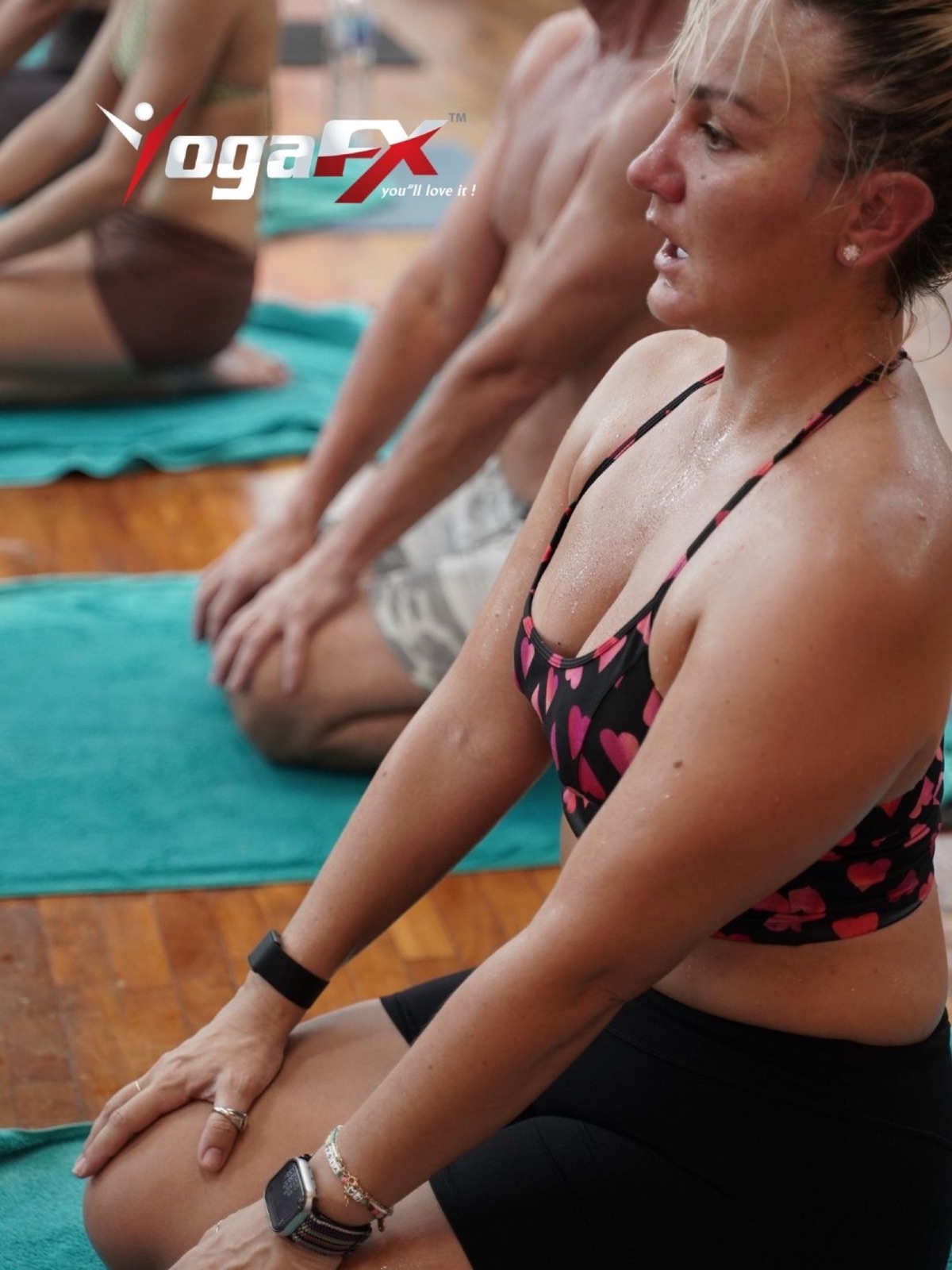
7 Warning Signs Teachers Monitor in a Hot Room
Good teachers don't just call the postures. We scan the room all class, and we know what a student in trouble looks like. The table lists the seven signs we watch most closely, what they may mean, and what we do. The heat-illness symptoms come from the CDC and NIOSH list of heat-related illnesses. The rest are our own teaching rules.
| Sign | What we see in class | What it may mean | What the teacher does |
|---|---|---|---|
| Dizziness or a grey face | A student sways when coming up from a fold | Blood pressure dropping, or early heat exhaustion | Sit or lie down at once, sip water, slow the breath |
| Headache or nausea | A hand to the forehead, a sour face, a pause | Heat exhaustion, or too little water or food beforehand | Rest, cool the neck, no more postures until it passes |
| Sweating stops, skin turns hot and dry | A flushed, dry student who was soaked ten minutes ago | A heat stroke warning, a medical emergency | Leave the room and call for medical help |
| Confusion or slurred speech | A student who cannot follow a simple instruction | A heat stroke warning, a medical emergency | Stop class for that student and call for medical help |
| Chest pain or pressure | A hand pressed to the chest, a worried look | Not a sign to push through, whatever the cause | Stop, stay still and call emergency services |
| Breathing that will not settle | Still gasping after a rest posture | Too much effort, too little fitness, or a health issue | Make the practice gentler, check in after class |
| A pounding or racing heartbeat | A student who stays red and tense in rest pose | Overexertion, dehydration, or something to ask a doctor | Sit out, hydrate, advise a medical check before returning |
How teachers respond to each sign
When people ask is hot yoga good for your heart, this table is the honest half of the answer. Notice that most of these ask for the same first response: stop, sit down, and let the body cool and settle. In a good class, resting is never a failure. It is part of the practice, and every teacher at YogaFX says so before the first posture.
Dizziness and a grey face
This is the sign we see most. It usually shows up when a student rises quickly from a forward fold or from the floor. The heat has widened the blood vessels, so blood pressure dips when you stand. We ask students to come up slowly, and the CDC lists dizziness among the symptoms of heat exhaustion.
Headache and nausea
These often trace back to what happened before class. A student who skipped lunch, or arrived thirsty, can feel awful by the second half. We tell people to drink water through the day and eat light two to three hours before class. If a headache starts mid-class, rest is the right answer.
Sweating that stops
A soaked student is a cooling student. The warning sign is the opposite: someone who was dripping and is now hot, dry and flushed. The CDC lists hot, dry skin and confusion among heat stroke symptoms, and says body temperature can climb to 106°F or higher within 10 to 15 minutes. That is an emergency.
Chest pain, and the heartbeat that won't settle
These two need the clearest rule. Chest pain or pressure is never something to push through. A heartbeat that stays racing in a rest posture is a reason to sit out and see a doctor. We would much rather you leave the room early than stay for a posture.
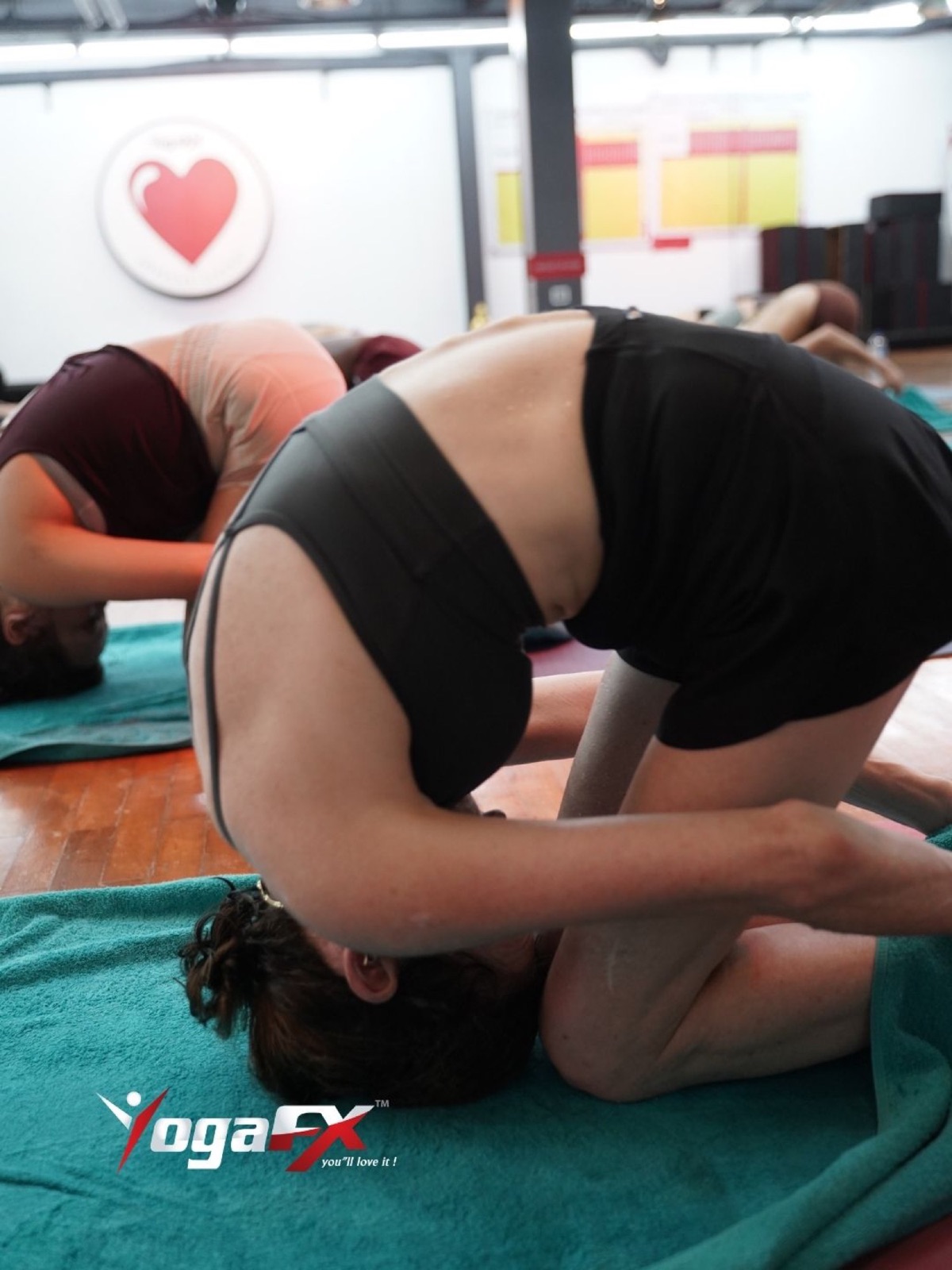
Six Numbers Behind a Heart-Aware Class
Is hot yoga good for your heart by the numbers? The graphic below puts our class design and the key medical numbers in one place. Each number comes from the YogaFX class format, the Wisconsin study, or the American Heart Association.
Hot Yoga and Blood Pressure: What the Numbers Mean
Blood pressure is written as two numbers, such as 118/76. The top number is the pressure when your heart beats. The bottom number is the pressure between beats. According to the American Heart Association, normal is below 120/80, and stage 1 high blood pressure starts at 130 or 80.
Stage 2 begins at 140 or 90, and a reading above 180/120 is a hypertensive crisis. The AHA says to seek care at once if you get such a reading, and to call emergency services if it comes with chest pain, shortness of breath or trouble speaking.
People often ask us, is hot yoga good for your heart when my pressure is already high? It depends on the number and on your doctor.
So can you do hot yoga with high blood pressure? Many people do, with a doctor's blessing and a teacher who knows. Small studies hint that regular hot classes may nudge pressure down, but they are small, and the results are mixed. Treat it as a possible bonus, never as a treatment. For yoga in general, Harvard Health reports that yoga may help lower heart disease risk as much as conventional exercise, such as brisk walking.
Also, medication matters. Some blood pressure tablets make dizziness in the heat more likely. Tell your doctor you plan to practise in a hot room, and tell your teacher before class starts. Neither conversation is awkward. We have them every week.
Not sure where you stand? Our free Bikram Yoga Health Scorecard is a ten-question quiz covering stress, activity, hydration, flexibility and safety. It is educational, not a medical assessment, but it shows you what to ask a doctor.
Who Should See a Doctor Before Hot Yoga?
Asking is hot yoga good for your heart is sensible, but asking your own doctor is better. We never ask students to diagnose themselves, so here is a plain checklist. Speak to a healthcare professional before your first heated class if any of these apply to you:
- A known heart condition, such as a past heart attack, angina, a heart rhythm problem or heart failure.
- High or very low blood pressure, or readings that swing from day to day.
- Regular medication for the heart, blood pressure or fluid balance, because some drugs change how you handle heat.
- Unexplained chest discomfort, fainting or breathlessness in the last few months.
- Pregnancy, where the rules differ. Ask your doctor before any hot class.
Older students often ask us the same question, and the same principles apply at any age.
None of this means hot yoga is forbidden. It means the decision belongs to you and your doctor, and the teacher's job is to make the room as safe as it can be once you are in it. Heat raises other health questions for men too, which we cover in hot yoga and male fertility.
How We Keep a Hot Room Heart-Safe at YogaFX
Is hot yoga good for your heart in a badly run room? Not reliably. A safe class is designed, not hoped for. Here is what we do at YogaFX, and what any good studio should do:
- Fixed conditions. The temperature and humidity stay steady, so nobody meets a surprise.
- Rest is allowed. You may sit or lie down at any point. We say it at the start of every class.
- Water and towels. Students bring water, and we remind them to sip early rather than gulp late.
- Teacher scanning. We look for the signs in the table above, and we walk the room.
- An honest talk with newcomers. First-timers learn the signs before the first posture. See our first hot yoga class guide.
So is hot yoga good for your heart in a well-run class? It can be, and a big part of the reason is the teacher.
Our teachers learn this scanning skill in training. Mr. Ian Terry teaches new trainees to read a room the way a lifeguard reads water, noticing small changes before they become big ones. It is the least glamorous part of teacher training, and one of the most important.
What Students Say About Training With Us
Is hot yoga good for your heart for the people who teach it for a living? Our graduates think so. Many of our students begin as ordinary practitioners and end up teaching. These are excerpts from real reviews of YogaFX training, with first names only.
"Mr IAN TERRY is really A GOOD TEACHER and MOTIVATOR! he is so passionate in what he does."
Ana, Google review, 2022
Reviews do not measure arteries, but they show what a good room feels like. Yayuk wrote in a Google review in 2024 (translated) that the teacher training experience helped her become much more confident. Malini, a trainee in our YouTube review from 2025, said she felt a lot better after her morning class and thanked Mr. Ian for pushing her. You can watch her tell it herself:
From Student to Teacher: Learn With Mr. Ian Terry
Teachers are the first people students ask: is hot yoga good for your heart? Some students go further than a weekly class. They want to understand the room well enough to run it, including the safety side we covered above.
YogaFX was founded in 2017, and Mr. Ian Terry has trained more than 1,500 graduates from over 80 countries. He is an E-RYT 500 with more than 12,000 teaching hours, and he trained for five years, from 2014 to 2019, with the founder of the Hot 26&2 method.
The Bikram Hot 26&2 Yoga Teacher Training MasterClass is a six-day hybrid course: online study before you fly, then an intensive in Bali.
You finish with a Yoga Alliance RYT 200-Hour credential plus a Bikram Hot 26&2 200-Hour International Yoga Certification. The next batch checks in on Sunday 24 January 2027 and checks out on Friday 29 January 2027. The Early Bird price is US$1,899 against the normal US$1,999.
Read hot yoga teacher training in Bali for the full course picture.
FAQ: Is Hot Yoga Good for Your Heart?
Is hot yoga good for your heart?
For healthy adults, regular hot yoga counts as real exercise, and exercise supports heart health. A 2014 University of Wisconsin study measured about 80 percent of maximum heart rate in a 90-minute class. It does not treat heart disease, and anyone with a heart condition should see a doctor first.
Is hot yoga bad for your heart?
It is not bad for most healthy people, but the heat adds strain. Your heart pumps more blood to the skin to cool you. People with heart conditions, high blood pressure or certain medications face more risk, so they need medical advice and a teacher who knows their situation.
Is hot yoga good for high blood pressure?
Evidence is small and mixed. Some studies suggest regular practice may lower pressure slightly, while others show no change. Because the heat can cause dizziness, especially with some medications, talk to your doctor before starting. Never stop prescribed medication because you took up yoga.
Can you do hot yoga with a heart condition?
Only with your doctor's approval. Some conditions and medications make heat unsafe, while others allow gentle practice. Tell the teacher before class, rest whenever you need to, and stop at once if you feel chest pain, a racing heartbeat, dizziness or breathlessness.
What are the warning signs to stop hot yoga?
Stop and sit down if you feel dizzy, sick, confused, or have a pounding heartbeat, chest pain or breathlessness that will not settle. The CDC lists hot, dry skin and slurred speech as heat stroke signs. Those are emergencies, so get medical help straight away.
Still wondering, is hot yoga good for your heart in your case? Ask Mr. Ian and the YogaFX team on WhatsApp and we will reply to your question personally.
This article is general information, not medical advice. Consult a healthcare professional before starting a heated practice, especially if you have a heart condition, high blood pressure or take regular medication.