First Hot Yoga Class: What to Know Before You Go
By Ian Terry, E-RYT 500 · Updated
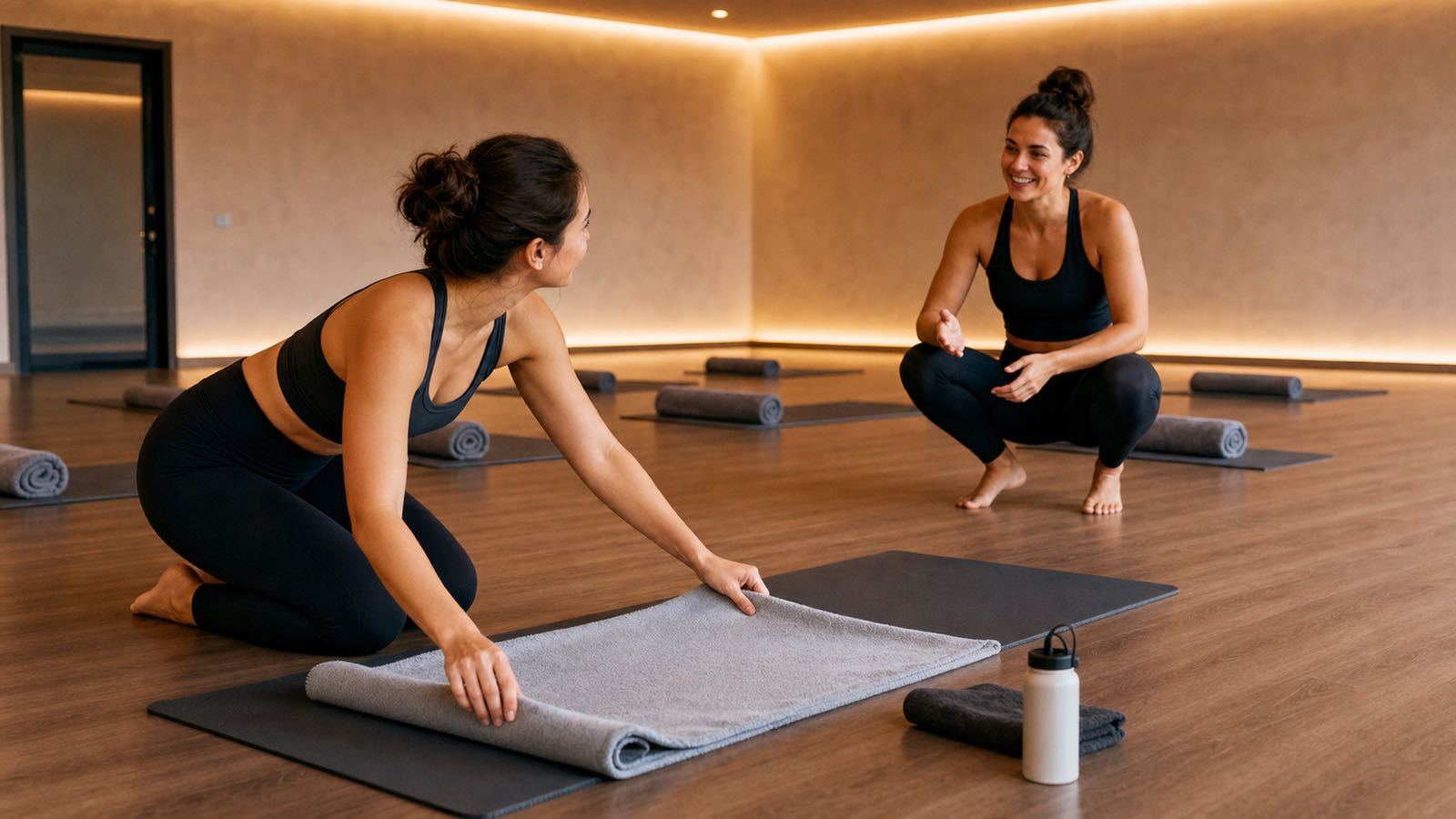
What should you know before your first hot yoga class? Prepare by drinking consistently before the session, eating lightly, bringing a towel and water, arriving about 15 minutes early, and deciding in advance that stopping is acceptable. Your first goal is not to complete every posture. It is to learn how your body responds to heat while you follow clear safety signals.
Before Your First Hot Yoga Class
Check the class description before you book. “Hot yoga” can mean a flowing class at moderate heat, a strength-based format, or the fixed Bikram 26&2 sequence near 105°F. Ask about temperature, humidity, duration, beginner policy, breaks, late entry, and whether mats and towels are rented.
Arrive approximately 15 minutes early. Complete any waiver, meet the teacher, mention injuries or relevant health conditions, and choose a spot where you can see without feeling trapped. Do not hide that it is your first class. A responsible instructor would rather know before class than discover it after you become unwell.
People who are pregnant or who have cardiovascular, kidney, blood-pressure, heat-tolerance, fainting, or medication concerns should seek individualized medical advice before heated exercise. See our separate guide to hot yoga during pregnancy.

Hydration and Food: Start Early, Not All at Once
Drink consistently before class
Begin the session normally hydrated by drinking across the day and, when practical, the day before. Do not wait until the studio lobby and then force a large volume. Excessive fluid intake can lower blood sodium and become a medical emergency. That is why “drink two to three liters in the hours before class” is not a safe universal instruction.
Use electrolytes thoughtfully
Water and ordinary meals are sufficient for many first-time students. Electrolytes may be useful for some heavy sweaters, prolonged heat exposure, or clinician-directed needs, but adding a pinch of salt is not automatically appropriate. People following sodium restrictions or managing heart or kidney conditions need personal guidance. CDC guidance also advises against routine salt tablets.
Eat light
A light meal two to three hours before class is a practical starting point. If needed, a familiar small snack about an hour beforehand may be easier than training hungry. Avoid experimenting with a heavy meal, alcohol, unfamiliar supplements, or a large amount of caffeine immediately before your first heated session.
What to Bring and Wear
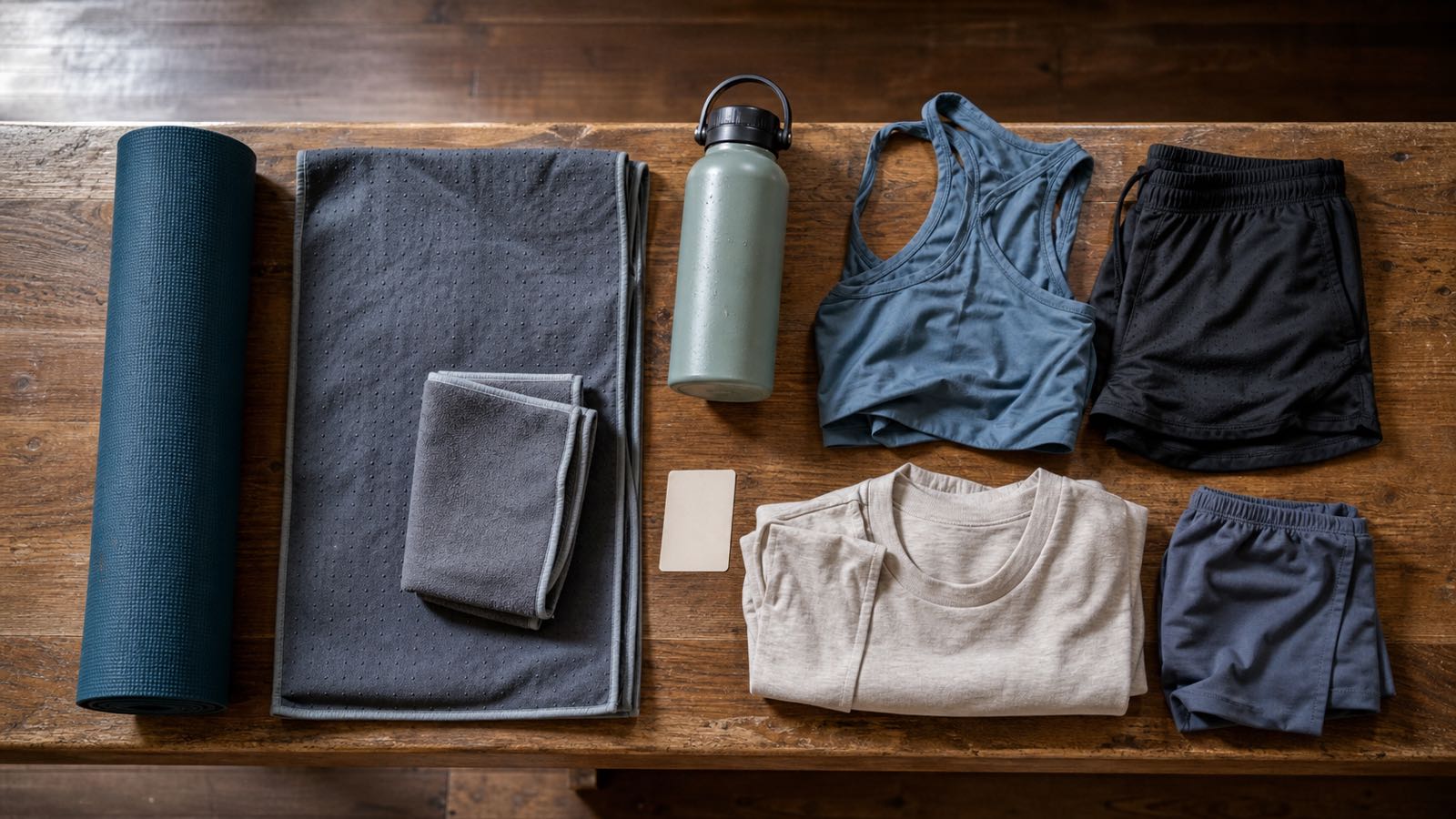
Yoga mat: use a stable mat approved by the studio.
Full-length towel: place it over the mat when required to reduce slipping as sweat accumulates.
Reusable water bottle: bring water, then take comfortable sips instead of rapidly filling your stomach.
Small face towel: useful when sweat affects your eyes or grip.
Breathable clothing: choose light, fitted athletic clothing that stays in place. Heavy cotton can become saturated.
Dry change of clothes: useful after class, especially before entering air conditioning or traveling home.
Avoid strong perfume and thick body lotion. Fragrance can affect other people in a warm enclosed room, while lotion may make hands, legs, and the mat harder to grip. Use the complete what to wear to hot yoga guide to compare outfits for women, men, plus-size students, and winter travel.
What to Expect in Your First Bikram Yoga Class
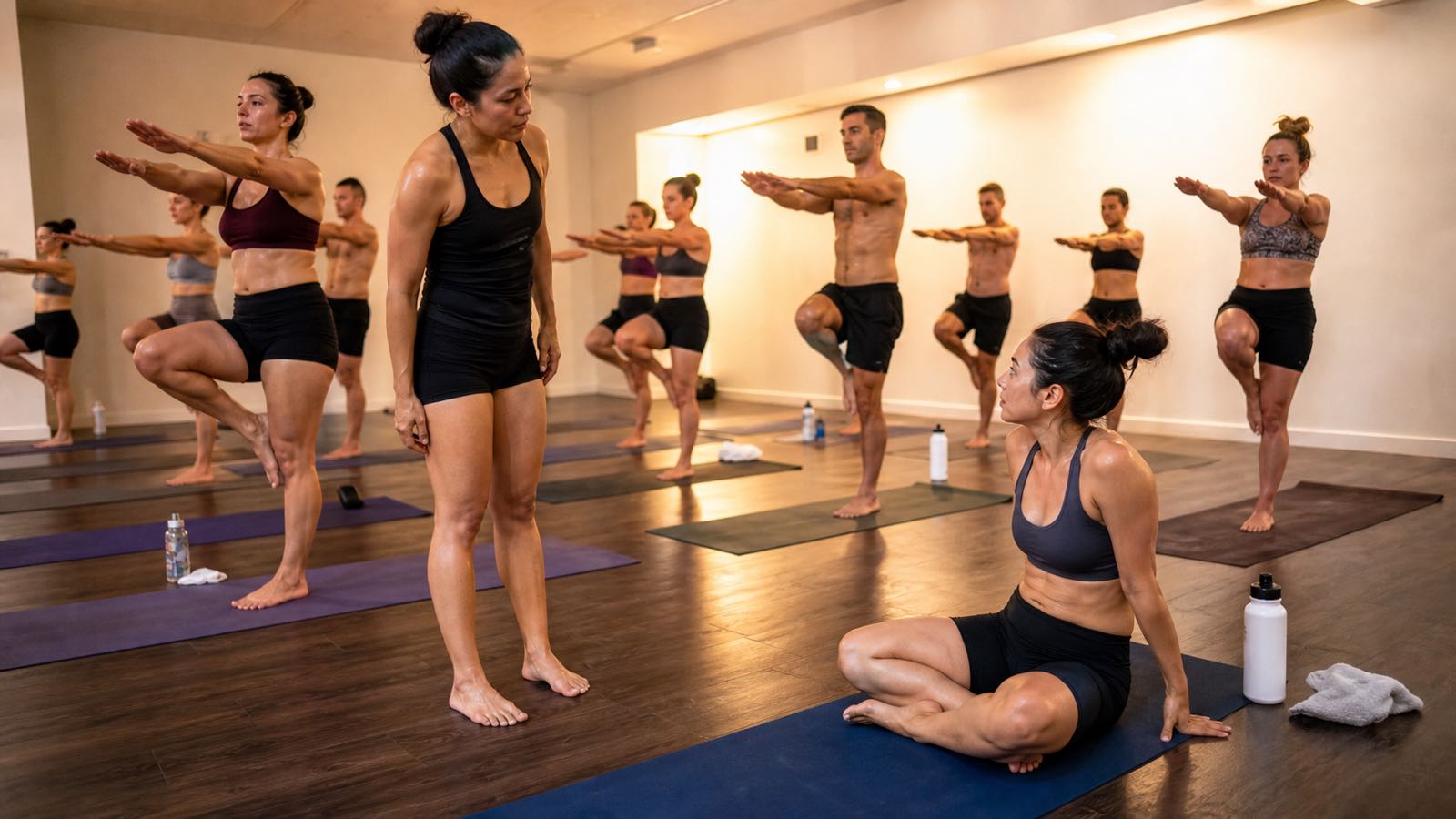
A traditional first Bikram yoga class introduces a fixed sequence of 26 postures and two breathing exercises, commonly taught for 90 minutes in a room near 105°F (40.6°C) with approximately 40% humidity. Many studios also offer shorter 60-minute versions, so check the schedule rather than assuming every “26&2” class uses identical timing.
The sequence begins with Standing Deep Breathing, moves through standing postures, continues into floor postures separated by rest, and ends with a breathing exercise. You do not need to reach the fullest expression of every pose. Study the interactive Bikram 26 poses guide beforehand if knowing the order will help you feel less overwhelmed.
For a deeper explanation of the timing, read why Bikram yoga traditionally lasts 90 minutes. The sister-site guide to Bikram yoga for beginners in Bali provides additional practice context for students preparing for a local class.
During Class: Pace, Rest, and Breathing
Expect heavy sweating, but do not use sweat as a score. Sweat rate varies by body, acclimatization, clothing, humidity, and prior exposure. Sweating more does not prove that you burned more fat or performed better.
Begin conservatively. Use the teacher's verbal cues, keep joints within a controllable range, and avoid chasing the student beside you. Heat can change how a stretch feels, so sensation alone is not permission to force range.
Keep breathing steady without turning one rule into a safety test. Nasal breathing may help some students regulate pace, but nasal blockage or rising distress should not be ignored. Never hold the breath to stay in a pose.
If you need a routine pause, use the stable rest position recommended by the teacher. If you feel faint, weak, confused, nauseated, unusually breathless, or otherwise unwell, stop. The CDC advises people who feel faint or weak during heat exercise to stop activity and move to a cool place. Do not remain in the room merely to follow etiquette.
Know the Difference Between Discomfort and a Warning Sign
Warmth, effort, sweat, and unfamiliarity are expected. Warning signs deserve action. The CDC lists headache, nausea, dizziness, weakness, heavy sweating, thirst, irritability, elevated temperature, and reduced urine output among heat-exhaustion signs.
Stop, alert the instructor, and move to a cooler place when symptoms develop. Confusion, loss of coordination, collapse, seizure, or loss of consciousness can indicate a medical emergency. Call local emergency services and begin cooling rather than trying to finish class.
Do not rely on “never leave the room,” “never wipe sweat,” or “push through dizziness.” Sweat helps cooling when it evaporates, but high humidity can limit evaporation. Safety takes priority over tradition.
After Your First Hot Yoga Class
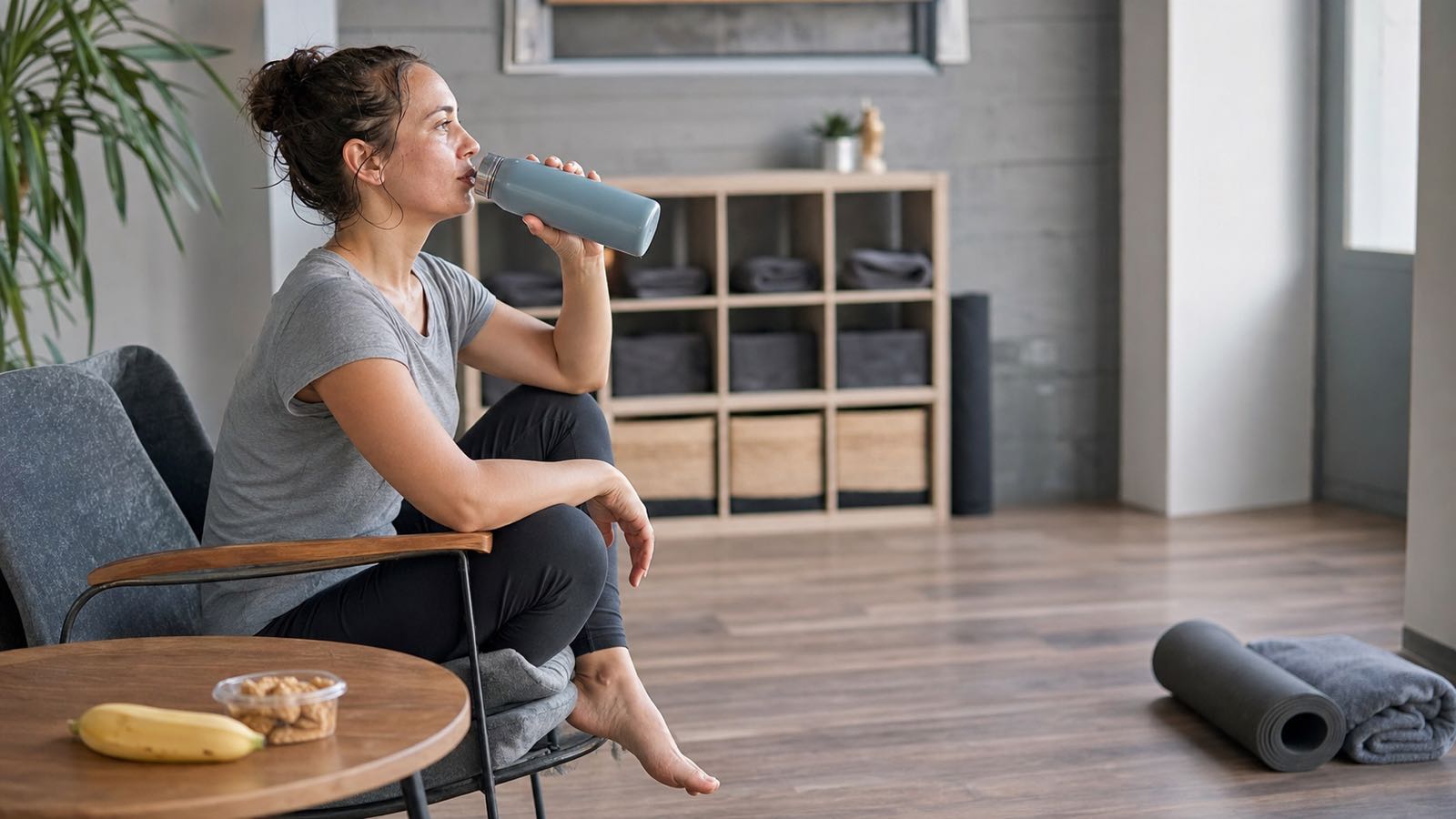
Cool down gradually, change out of wet clothing, and replace fluid over time rather than chugging. Eat a normal meal or snack that fits your dietary needs. Record any headache, dizziness, unusual fatigue, cramping, or symptoms that persisted after leaving the room.
Wait to judge the practice until you have recovered. A lower number on the scale immediately after class mainly reflects fluid loss, not instant fat loss. Use the Bikram yoga calorie calculator for a transparent estimate rather than relying on sweat volume.
Allow enough recovery before your next class. Beginners do not need to begin with a daily challenge. If symptoms worsen, vomiting occurs, or heat-illness symptoms persist, seek medical care.
First-Class Checklist
Confirm the temperature, class length, and beginner policy.
Hydrate consistently; do not force liters immediately before class.
Eat a familiar light meal two to three hours beforehand.
Pack a mat, full-length towel, face towel, water, and dry clothes.
Wear breathable fitted clothing and avoid heavy fragrance or lotion.
Arrive 15 minutes early and tell the instructor you are new.
Start conservatively, breathe steadily, and rest when needed.
Stop and cool down if warning symptoms appear.
Frequently Asked Questions
What should I know before my first hot yoga class?
Hydrate normally before class, eat a light meal two to three hours beforehand, bring a mat, full-length towel and water, wear breathable fitted clothing, arrive about 15 minutes early, tell the instructor you are new, and stop if you feel faint, weak, confused, nauseated or unwell.
What happens in a first Bikram yoga class?
A traditional Bikram class uses 26 postures and two breathing exercises in a fixed sequence, commonly over 90 minutes in a room near 105°F (about 40.6°C). Studio temperature, humidity, teaching language and class length can vary, so confirm them before attending.
How much water should I drink before hot yoga?
There is no safe universal volume for everyone. Drink consistently before class rather than rapidly forcing two or three liters immediately beforehand. Excess fluid can also be dangerous. People with kidney, heart or fluid-balance conditions should ask a clinician for individualized advice.
Do I need electrolytes for one hot yoga class?
Plain water and normal meals are enough for many people. An electrolyte drink may help some heavy or salty sweaters, people completing prolonged heat exercise, or those advised by a clinician. Do not routinely take salt tablets or add salt without considering medical and dietary needs.
Can I rest in Child's Pose during Bikram yoga?
Follow the teacher's safety guidance and choose a stable rest that lets you breathe and monitor symptoms. Traditional Bikram teachers may suggest sitting or lying still rather than Child's Pose. If you feel faint, weak or ill, stopping and moving to a cooler place is more important than preserving class etiquette.
Should I wipe off sweat during hot yoga?
Wiping sweat is a comfort choice, not a test of discipline. Sweat cools mainly when it evaporates, but humidity reduces evaporation. Use a towel when sweat affects your eyes, grip or safety, and never ignore overheating symptoms because someone told you not to wipe.