How Long Does Hot Yoga Take to See Results? Track It With Our Tool
By Ian Terry, E-RYT 500 · Updated

How long does hot yoga take to see results? Most students feel their first hot yoga results within two weeks, when the heat starts to feel easier. Measurable gains in strength and flexibility usually show up around eight weeks of practising three times a week. Visible body changes take longer, often three months or more, and depend on sleep and food too.
That's the short answer. The longer one is more useful, because progress doesn't arrive all at once. It comes in layers.
This guide is written from the teacher's side of the room by the YogaFX team, led by Mr. Ian Terry, E-RYT 500, who has taught more than 12,000 hours of Original Hot 26&2 Yoga. You'll get a week-by-week timeline, honest frequency advice and a free tool to track your own progress.
Hot Yoga Results Timeline: What Changes, and When
Think of your progress as six stages. The first ones happen inside your head and your heat tolerance. The later ones show up in strength tests, mirrors and posture depth. Each stage builds on the one before it, so skipping weeks slows everything down.
| Stage | When it usually happens | What most students notice | What to track |
|---|---|---|---|
| 1. Survive the room | Classes 1 to 3 | Heat feels intense, heart pounds, you may sit out postures | Classes finished, how long you rested |
| 2. Heat gets easier | Weeks 2 to 3 | Less dizziness, calmer breathing, better sleep after class | Recovery time, water intake |
| 3. The sequence clicks | Weeks 3 to 5 | You know what comes next, balance poses feel steadier | Seconds held in one balance pose |
| 4. Measurable strength and flexibility | Around week 8 (about 24 classes) | Deeper forward bends, stronger legs and back | One flexibility and one strength marker |
| 5. Mood and stress shift | Within 8 weeks for many students | Calmer days, lower stress, more energy | A simple 1 to 10 mood score |
| 6. Body and posture change | 3 months and beyond | Clothes fit differently, posture is taller, poses go deeper | Photos and measurements, same conditions |
Notice the word "usually" in the second column. A fit runner and a desk worker who hasn't exercised in years start from very different places. So use the table as a map, not a deadline. If you're a little behind it, that doesn't mean the practice isn't working.
Hot yoga results at a glance
Want the key numbers in one place? These five cards sum up the hot yoga results timeline, from your first fortnight to day 90.
2 weeks
Heat starts to feel easier
The first change most students report, in our teachers' experience.
24 classes
Strength and flexibility measured
8 weeks, 3 classes a week, in a Colorado State University trial (Tracy and Hart, 2013).
59%
Big drop in depression symptoms
Heated yoga group vs 6% on the waitlist after 8 weeks (Mass General, 2023).
10.3 classes
Average attended in that trial
Well below the 16 prescribed, and symptoms still improved.
90 days
Body and posture changes
Where photos and measurements start to tell a clear story.
Stage 1: Classes 1 to 3, getting through the heat
Your first classes are about the room, not the poses. A traditional 26&2 class runs 90 minutes at about 40°C (105°F) with 40% humidity. Your heart works hard just to cool you down. So it's normal to kneel, sit or lie down for part of class. Staying in the room is the win.
Stage 2: Weeks 2 to 3, the heat gets easier
This is the first of the hot yoga results most people notice. Somewhere around class five or six, students tell us the heat suddenly feels different. Breathing calms down sooner. Dizziness fades. Many also say they sleep deeply on class nights. Nothing about your body shape has changed yet, but your body is clearly adapting.
Stage 3: Weeks 3 to 5, the sequence clicks
Because the 26&2 sequence never changes, your brain stops guessing what comes next. That frees up attention for the details. For example, you start locking the standing knee in Dandayamana Janushirasana (Standing Head-to-Knee) instead of just surviving it. Balance poses get steadier, and you hold them a few seconds longer each week.
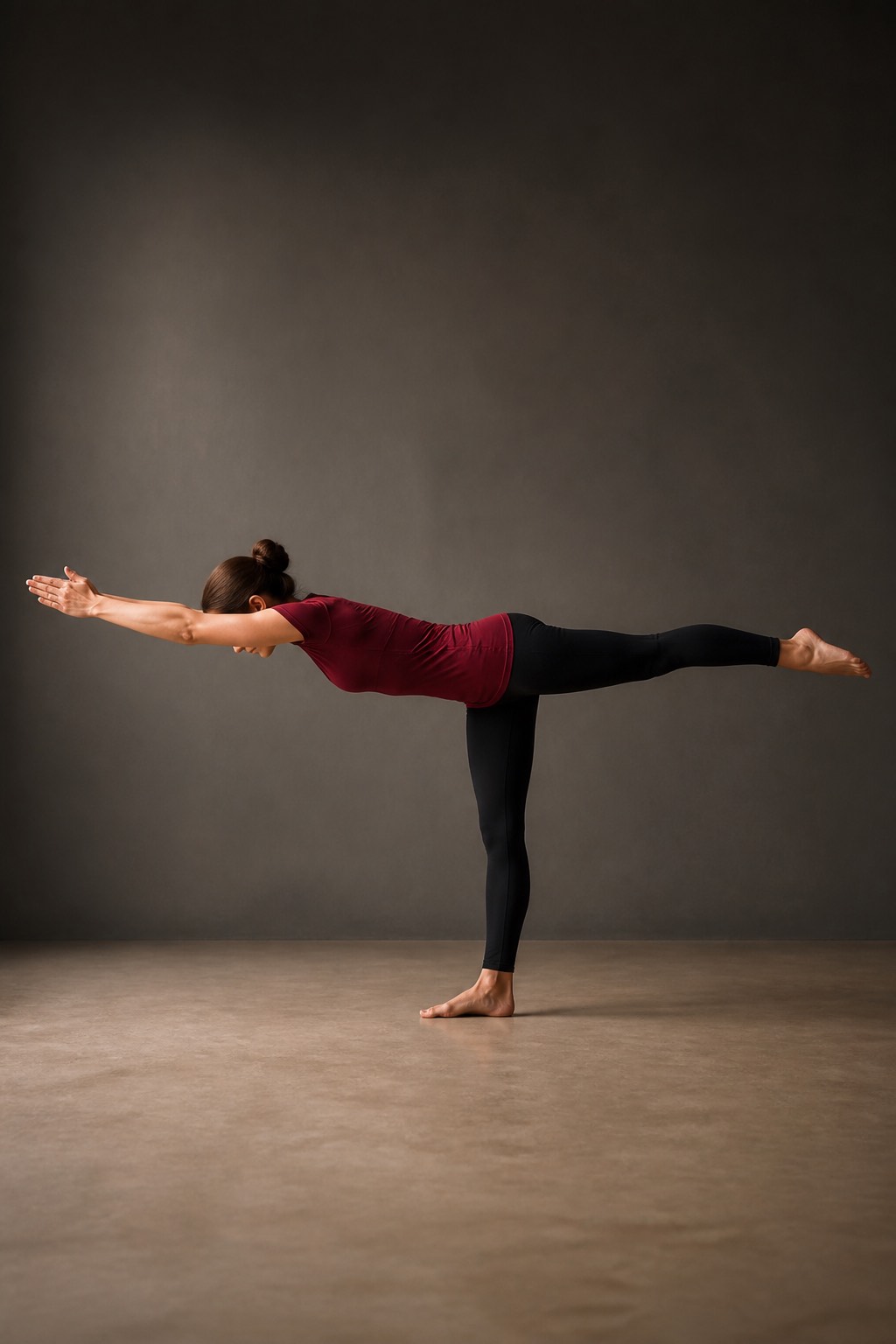
Stage 4: Around week 8, measurable strength and flexibility
This is where research backs up what teachers see. In a Colorado State University trial, healthy young adults did 24 Bikram classes over 8 weeks, three a week. Compared with a control group, they gained deadlift strength, lower back and hamstring flexibility, and shoulder flexibility. They also lost a small amount of body fat. Their aerobic fitness, however, didn't change much.
Stage 5: Within 8 weeks, mood and stress
Some hot yoga results are mental, and they can arrive as fast as physical ones. In a Mass General Hospital trial, adults with depression were asked to attend two 90-minute heated classes a week for 8 weeks. 59% of the yoga group had their symptoms drop by half or more, compared with 6% on the waitlist. Many students describe something similar in plain words: they feel calmer and cope better.
Stage 6: Three months and beyond, body and posture
Visible hot yoga results, such as a different shape in the mirror, usually need 12 weeks or more. They also need help from outside the studio. Food, sleep and daily movement matter as much as the class itself. What changes most reliably by this stage is posture: students stand taller and move with more control.
How Often Should You Do Hot Yoga to See Results?
Frequency is the biggest lever you control. So how often should you do hot yoga? For most people, three classes a week is the sweet spot. It's often enough to adapt to the heat and build skill, but it still leaves time to recover. The table below shows how many classes you'd reach in 8 weeks at each pace.
| Classes per week | Classes by week 8 | What to expect | Teacher's note |
|---|---|---|---|
| 1 | 8 | Stress relief after class, slow skill gains | Heat may feel new every week |
| 2 | 16 | Heat adaptation, mood benefits, steady progress | The dose used in the Mass General trial |
| 3 | 24 | Measurable strength and flexibility gains | The dose used in the Colorado State trial |
| 4 to 5 | 32 to 40 | Faster skill gains for experienced students | Watch sleep, soreness and hydration closely |
| 6 to 7 | 48 to 56 | Challenge or training level | Not for beginners; build up over months |
Bikram 3 times a week: why it works so well
Doing Bikram 3 times a week gives you a class roughly every other day. That rhythm matters. Your body adapts to heat through repeated exposure, so long gaps undo some of the work. Meanwhile, rest days let sore hamstrings and lower backs recover before the next forward bend. It's also the exact dose behind the strength and flexibility gains above.
What if you can only go once a week?
Once a week still counts. You'll probably feel calmer and looser after each class. But the heat may feel hard every time, because a week is long enough to lose some adaptation. If that's your schedule, keep it steady and add a short stretch at home. Then add a second class when life allows.
Track Your Hot Yoga Results With Our Free Tool
Here's the problem with hot yoga results: they're easy to miss when you live inside them. You see yourself every day, so small changes blur together. That's why our teachers ask every student to keep a simple log. Our free Bikram Yoga Journey Tracker does that for you, right in your browser.
- Pick a challenge. Choose 30, 60 or 90 days. Thirty days builds the habit, sixty shows flexibility and strength gains, and ninety suits longer-term change.
- Log each class. Tap the day you practised. The tracker counts your classes and your current streak.
- Add quick notes. Record a posture focus, hydration and mindset after class, the same way each time.
- Keep going after a missed day. Your streak resets, but nothing you've logged is lost.
Five markers worth measuring
Don't try to score all 26 postures. Instead, choose a few markers and test them under the same conditions every two weeks. These five work well for most students:
- Balance time. Seconds held in Standing Head-to-Knee or Balancing Stick.
- Forward bend. Where your hands reach in Pada Hastasana (Hands-to-Feet Pose).
- Recovery. How many minutes until your breathing feels normal after class.
- Mood. A 1 to 10 score before and after class.
- Sit-outs. How many postures you skipped. Fewer over time is real progress.
If you'd rather follow a structured month, our Bikram yoga 30 day challenge guide lays out each week, from baseline to final comparison.
What the Research Says About the 8-Week Mark
You'll notice that eight weeks keeps coming up. That's not a coincidence. Most controlled studies of heated 26&2 classes run for about two months, so that's where the clearest evidence sits. Here's what two of the best-known trials found.
First, the strength and flexibility study. Tracy and Hart's trial in the Journal of Strength and Conditioning Research compared 10 people doing Bikram with 11 controls. After 24 sessions, the yoga group improved deadlift strength and flexibility. According to the Colorado State University summary of its hot yoga research, an earlier 8-week, 24-session program from the same lab also improved balance, muscle control and strength.
Second, the mental health study. Nyer and colleagues at Mass General prescribed 16 classes over 8 weeks. Yet participants attended an average of only 10.3 classes. Even so, the Mass General Department of Psychiatry report on heated yoga notes that symptoms dropped even in people who attended about half the sessions. That's encouraging if your weeks are busy.
What the studies don't show
- Big cardio gains. Aerobic fitness stayed largely the same after 8 weeks in the Colorado State trial.
- Fast fat loss. Body fat fell only modestly. The scale drop after class is mostly sweat, which returns when you drink.
- Results for everyone. These were small trials with specific groups. Your own pace may be faster or slower.
Want honest numbers on calories? Our guide to hot yoga calories burned in real lab studies explains why your watch probably overcounts.
Seven Habits That Speed Up Hot Yoga Results
Two students can take the same number of classes and progress at very different speeds. In our experience, the difference rarely comes from talent. It comes from habits around class. These are the ones Mr. Ian Terry sees make the biggest difference:
- Same days each week. A fixed schedule beats bursts of enthusiasm followed by long gaps.
- Hydrate the day before. Drinking only in class is too late. Steady water through the day works better.
- Do both sets. The second set of each posture is where depth builds, so stay in it when you safely can.
- Stay still between poses. Fidgeting and wiping sweat waste energy. Stillness trains focus.
- Sleep well. Recovery happens overnight, not on the mat.
- Listen to the dialogue. The words tell you exactly what to do. Follow them, and alignment improves faster.
- Compare with yourself only. The person on the next mat may have practised for ten years.

Safe Progress: When to Slow Down
Faster isn't always better, and pushing too hard can stall your hot yoga results. Daily classes from day one often backfire, because your body hasn't adapted to the heat yet. Signs you need a rest day include poor sleep, a heavy headache after class or soreness that lasts more than two days. Rest days are part of the plan, not a failure.
Heat also brings real risks. The Mayo Clinic's hot yoga guidance warns that the heat can cause heat-related illness and advises drinking plenty of water before, during and after class. Stop and sit down if you feel dizzy, lightheaded or sick.
If you're pregnant, have heart disease, high blood pressure or a history of heat illness, or take medication that affects heat tolerance, consult a healthcare professional before you start. The same goes if you're using hot yoga to help with depression or anxiety. It may support your care, but it doesn't replace treatment. New to the heat? Read our first hot yoga class checklist before you go.
What Our Students Say About the First Weeks
Our trainees go through the same stages, only faster. They practise and study every day, so their hot yoga results arrive closer together. Here's how three of them described it.
"The first week honestly it was the hardest week for me... and it goes easier and easier."
Atika, YouTube review, 2019
"I learned so much Bikram yoga it is engrained forever, as long as I continue to practice."
Liz, Google review, 2025
Ruby put the timeline simply in her YouTube review: "It won't take too long, as long as you keep on practicing." You can watch Atika's full story below.
From Student Results to Teaching With YogaFX
Some students track their progress for a few months and realise they want to go further. They want to understand why the sequence works, and help others through those first hard weeks. That's the moment teacher training starts to make sense.
YogaFX was founded in Bali in 2017 by Mr. Ian Terry. He trained for five years, from 2014 to 2019, with the founder of the Bikram Hot 26&2 method. He's also a Master Trainer for the Republic of Indonesia Yogasana Sports Federation. More than 1,500 graduates from 80+ countries have trained with us.
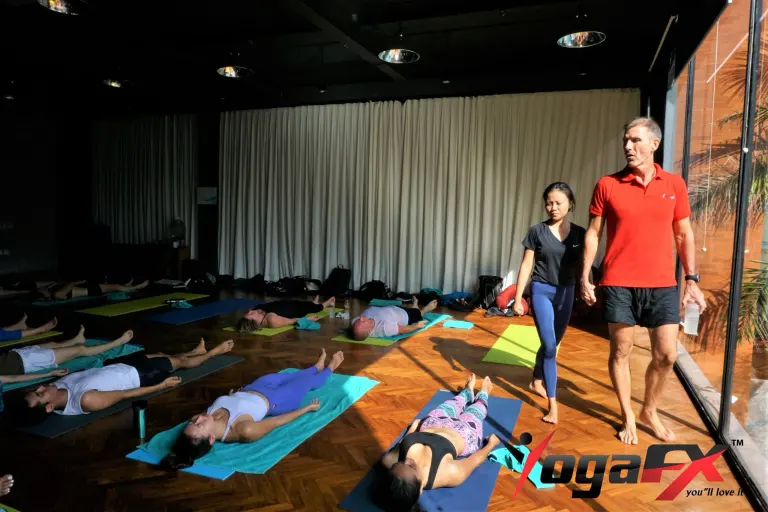
The 6-day hybrid MasterClass starts with online study at home, then finishes with an intensive at Soham Wellness Center in Seminyak. You graduate with Yoga Alliance RYT 200 and Bikram Hot 26&2 200-hour certification. The next intake runs January 24 to 29, 2027. The Early Bird price is US$1,899 (normally US$1,999), and interest-free instalments start from US$250 a month.
Curious whether it's right for you? Message Mr. Ian on WhatsApp and ask about the training, the heat or your own progress so far.
Hot Yoga Results FAQ
How many hot yoga classes to see a difference?
Most students feel a difference in heat tolerance and mood within five or six classes. Measurable strength and flexibility changes appeared after 24 classes over 8 weeks in a Colorado State University trial. Visible body changes usually take three months or more of steady practice, plus good sleep and sensible eating.
What are realistic hot yoga results after 1 month?
After one month of regular classes, expect the heat to feel easier, the sequence to feel familiar and balance poses to feel steadier. Many students also sleep better and feel calmer. Big changes in body shape are unlikely in four weeks, so track skills and recovery rather than only the scale.
Is hot yoga once a week enough?
Once a week is enough for stress relief and a gentle stretch, and it's far better than nothing. Progress will be slower, though, because a week is long enough to lose some heat adaptation. If you want measurable strength and flexibility gains, build towards two or three classes a week.
How many times a week should you do hot yoga?
Three times a week suits most people. It's the frequency used in the Colorado State strength and flexibility trial, and it leaves rest days for recovery. Beginners can start with two classes a week. Experienced students who sleep and hydrate well can go to four or five.
Is it ok to do hot yoga everyday?
Daily practice can work for experienced, well-adapted students, but it isn't a good starting point. Beginners who jump straight to daily classes often get run down before their body adapts to the heat. Build up over several months, and take a rest day whenever sleep, energy or soreness slips.
Still have questions? Message Mr. Ian and the YogaFX team on WhatsApp and we'll answer them personally.