Hot Yoga vs Pilates: An Instructor's Honest Comparison for Men
By Ian Terry, E-RYT 500 · Updated
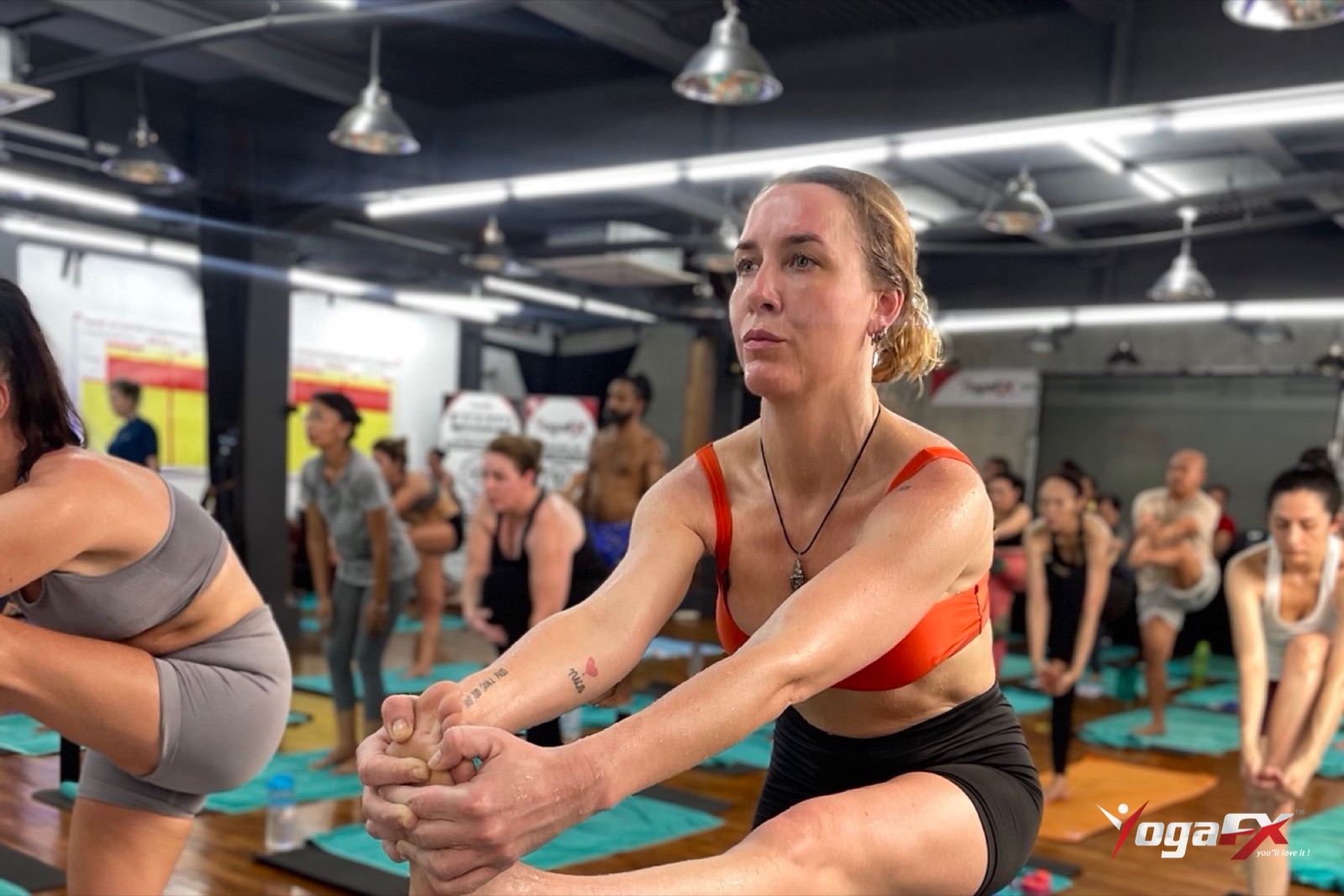
Hot yoga vs Pilates for men comes down to what you want from the mat. Hot yoga builds leg strength, flexibility and stamina in a 40°C room, while Pilates builds slow, precise control of the deep core. Most men we teach do better starting with hot yoga, then adding Pilates for the trunk.
That is the short version. The rest of this guide comes from the teacher's side of the room. We have watched thousands of men walk into a heated class for the first time, and many of them also train in a Pilates studio or a gym. So we will compare the two honestly, with numbers we could open and read.
Mr. Ian Terry, E-RYT 500 and founder of YogaFX, has taught more than 12,000 hours. His advice to new male students is simple: choose by your goal, not by which class looks easier. Please note that none of this replaces medical advice, so consult a healthcare professional if you have a heart condition, an injury or a long-term health problem.
Hot Yoga vs Pilates for Men: The Short Verdict
Start with your main goal. If you pick by goal, the choice is usually clear within a minute. Here is how we steer men who ask us in the studio:
- Stamina and calorie burn: hot yoga. A long heated class keeps your heart rate up for 90 minutes.
- Tight hamstrings and hips: hot yoga. Warm muscle stretches further, and the posture order works every joint.
- Deep core control: Pilates. Slow, small movements teach you to switch on the muscles that stabilise the spine.
- Rehab after a back flare-up: Pilates first, then add hot yoga once you are pain free.
- Stress and mood: hot yoga, because it has a randomised trial behind it, as you will see below.
So neither one wins everything. Each wins a different category, and that is why hot yoga vs Pilates is a poor either-or question for most men. The better question is which one to start with, and how to add the other.
Hot Yoga vs Pilates Side by Side
The table below compares hot yoga vs Pilates the way a male client would ask about them: strength, flexibility, heat, cardio and risk. The calorie and heart rate figures are the only hard numbers in it. They come from one study, so treat them as a guide, not a promise.
| What men ask | Original Hot 26&2 yoga | Pilates (mat or reformer) | Our call |
|---|---|---|---|
| Strength | Long holds in standing postures load the legs, hips and back with your own body weight | Slow, controlled work for the deep core, hips and shoulders, often with light resistance | Hot yoga for legs, Pilates for the trunk |
| Flexibility | Hamstrings, hips, shoulders and spine all get worked in every class, in a warm room | Gradual lengthening under control, usually at room temperature | Hot yoga for faster range gains |
| Heat | 40°C and 40% humidity is part of the design, in a fixed 90-minute class | Normally a room-temperature class of about 45 to 60 minutes | Hot yoga is far more demanding on heat tolerance |
| Cardio demand | Average heart rate about 160 bpm in the Colorado State study | Usually steadier and lower, depending on the class | Hot yoga for stamina, though it is no sprint session |
| Back pain evidence | Not tested against Pilates in the research we cite | Cochrane review: probably better than minimal care, evidence low to moderate | Pilates first for chronic back pain |
| Mood evidence | Randomised trial: 59.3% vs 6.3% had a 50% or greater drop in depression symptoms | No comparable trial in this article | Hot yoga has the clearer data |
| Main caution | Heat, hydration and heart conditions | Form needs a skilled teacher | Ask your doctor if unsure |
460 / 330 kcal
Men and women, one 90-minute heated class. Measured in 19 experienced practitioners.
About 160 bpm
Average heart rate in that class. Energy use matched a brisk 3.5 mph walk for 90 minutes.
59.3% vs 6.3%
Cut depression symptoms by half or more after 8 weeks: heated yoga group vs waitlist.
10 trials
Cochrane review of Pilates for chronic low back pain. Evidence quality: low to moderate.
Notice what the hot yoga vs Pilates numbers say and what they do not. Hot yoga is solid work for the heart, yet it is no sprint session. Meanwhile, Pilates has real evidence for back pain, yet the reviewers still called that evidence modest. Neither method is magic.
What the Research Says About Hot Yoga vs Pilates
A fair hot yoga vs Pilates comparison needs sources, so here is what each study measured. We only link pages we could open and read. Several research databases blocked us, so where that happened we leave studies out rather than quote them from memory.
Calorie burn and heart rate in a heated class
Researchers at Colorado State University measured 19 experienced practitioners in a standard 90-minute class held at 105°F. According to the Colorado State University news release, the group averaged about 460 calories for men and 330 for women. Their heart rates averaged about 160 beats per minute.
The release also compared the effort to walking briskly at about 3.5 mph for 90 minutes. That's worthwhile work, but it isn't extreme. If you want to estimate your own number, our free Bikram yoga calorie calculator lets you enter your weight, class length and heat type. For more on the figures, read our guide to hot yoga calories burned.
Mood and depression
The Harvard Gazette report on the Massachusetts General Hospital trial describes an eight-week randomised trial. Of the people analysed, 33 did heated yoga and 32 joined a waitlist. In the yoga group, 59.3% had a drop of 50% or more in depression symptoms, versus 6.3% on the waitlist. The classes used a 105°F room.
This was a small trial, and it does not prove that hot yoga treats depression. Still, it is the clearest data point in the hot yoga vs Pilates debate. If you live with depression, talk to your doctor before you start either practice.
Pilates and chronic back pain
For Pilates, the strongest research is on chronic low back pain. The Cochrane review of Pilates for low back pain pooled 10 randomised trials. Its authors concluded that Pilates is probably more effective than minimal intervention, but probably not more effective than other exercise. They rated the overall evidence as low to moderate.
In plain words, Pilates can help a sore back, but it does not beat every other kind of exercise. That matches what we see in the studio. The best method is the one you will practise safely and often.
Strength: What Each Method Builds in a Man's Body
Men often ask about strength first in the hot yoga vs Pilates debate. So let's be clear about what a yoga class can and cannot do. It will not replace a heavy squat or a deadlift. It does build the kind of strength that holds your joints steady under load.
Hot yoga builds strength you can stand on
In Dandayamana Janushirasana (Standing Head to Knee), you balance on one leg with the other foot in your hands and the abdomen locked. In Utkatasana (Awkward Pose), your thighs burn while your back stays long. Those long isometric holds teach the legs and trunk to work as one unit, which is what most male lifters and runners lack.
The heat adds load too. Your heart works harder to cool you, so a class feels harder than the postures look. Hydrate before you arrive, rest when you need to, and never treat the heat as a contest.
Pilates builds control you can feel
Pilates starts from the centre. It asks for slow, small movements that wake up the deep stabilisers around the spine, such as the transverse abdominis. A man who has only trained the mirror muscles often finds this humbling. It's hard in a different way: the challenge is precision, not endurance.
Joseph Pilates was a man, and the method suits men with a weak trunk or a nagging back. If you are coming back from injury, a certified Pilates teacher is a sensible place to start. For a wider view of how hot yoga fits male students, see our guide to hot yoga for men.
Flexibility and Stiff Backs: Where Men Feel It First
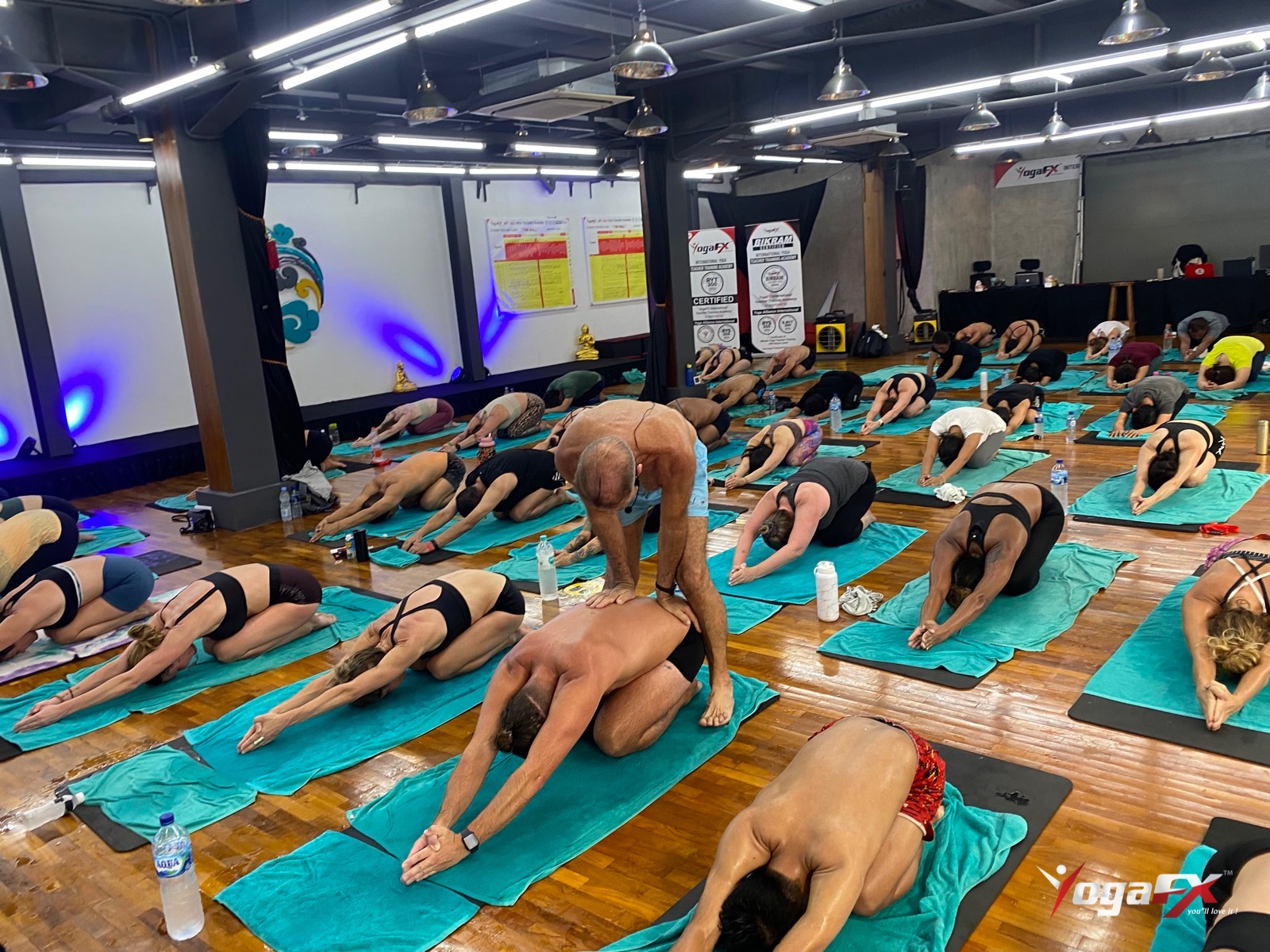
Most men arrive with the same complaint. Their hamstrings are tight, their hips are locked, and their shoulders round forward after years at a desk. Because warm tissue stretches more easily, a heated class tends to open these areas faster than a cool room does. Every class also moves the spine forward, back, sideways and in a twist.
On flexibility, hot yoga vs Pilates is not close in the first weeks. Pilates improves flexibility as well, but it works more slowly. It lengthens muscle under control rather than in long, warm holds. As a result, men who want a fast change in range of motion usually prefer hot yoga, while men who want a calm, joint-friendly routine often prefer Pilates. If you are asking how fast the change shows up, our guide on how long hot yoga results take puts a timeline on it.
A word of caution about ego. Stiff men often push too hard, because they're comparing themselves with the flexible person on the next mat. Hamstring and low back strains come from that habit. Work at your own range and let it grow over weeks. Our comparison of Bikram and Vinyasa yoga explains how a fixed sequence helps you track progress without chasing anyone.
Heat: The Real Difference Behind Hot Yoga vs Pilates
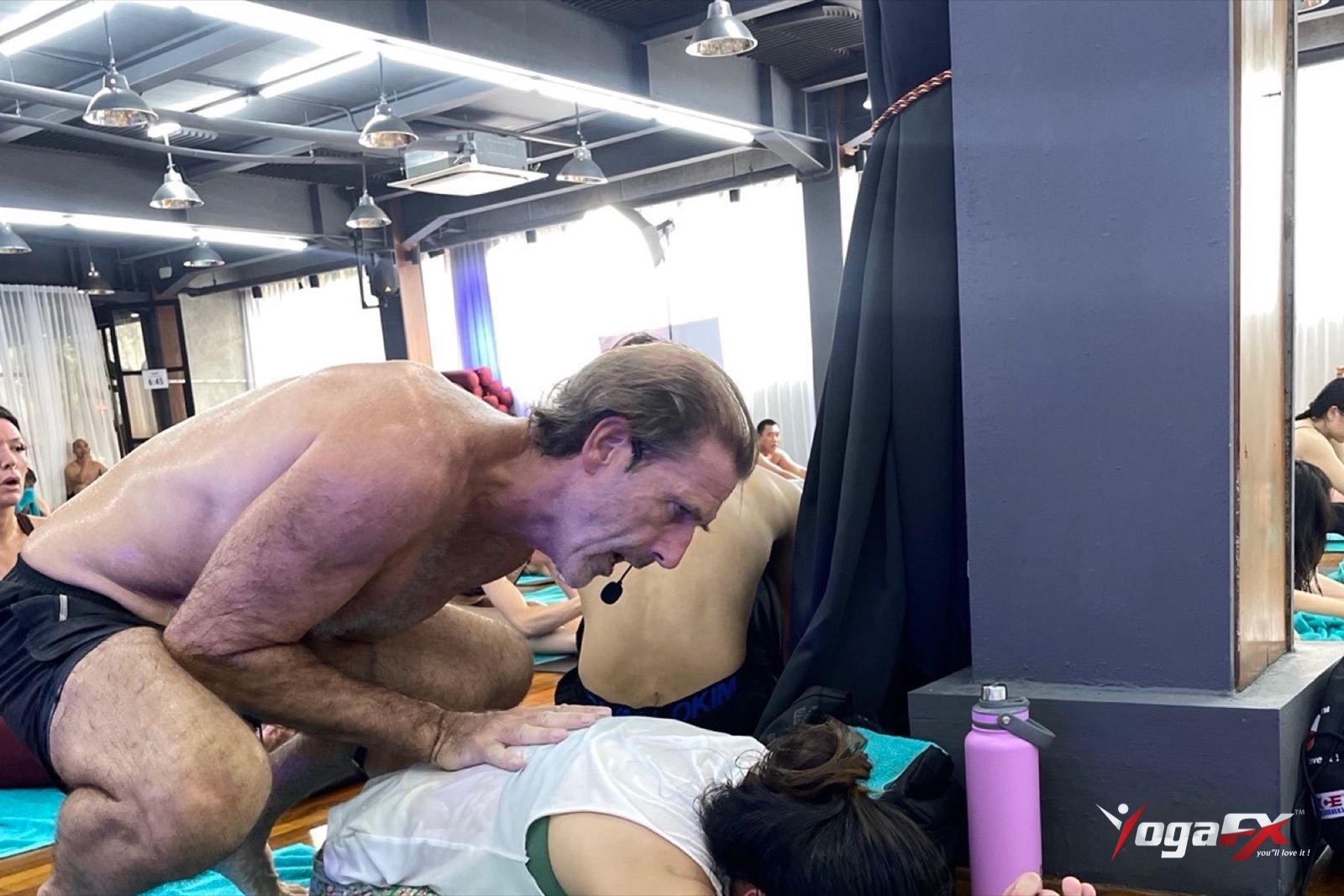
Many city studios now sell hot Pilates, so the heat question matters. In the Original Hot 26&2 method, the heat is part of the design. The room is set to about 40°C with 40% humidity, and the 26 postures and two breathing exercises were built for that room. The research above came from classes like that.
So the hot yoga vs Pilates heat gap is about design. In hot Pilates, the heat is an add-on. Temperatures vary from studio to studio, and the movements work just as well without it. Before you book any hot class, ask three things:
- What is the room temperature and humidity? A good studio tells you before you pay.
- Is the sequence fixed? A fixed sequence lets you compare class to class and see real progress.
- Who is teaching? Heat makes good teaching more important, not less.
Keep in mind that sweat is not a score. Heavy sweating is your body cooling itself. Most of the weight you lose in class is water, and it comes back when you drink.
How Men Can Combine Hot Yoga and Pilates
You don't have to settle hot yoga vs Pilates forever. The two methods train different things, so they fit together well. This table shows how we suggest men start, depending on their situation. Adjust it with your doctor or teacher.
| If you are a man who... | Start with | Then add |
|---|---|---|
| Lifts weights and feels stiff | Two hot yoga classes a week | One Pilates session for trunk control |
| Runs or cycles | Two or three hot yoga classes a week | Pilates when your legs need an easy day |
| Has a sore back that flares up | Pilates with a certified teacher | Hot yoga once you are pain free |
| Wants to lose weight | Three hot yoga classes a week | One Pilates session, plus a daily walk |
| Has a heart condition | A medical check first | Whichever your doctor approves |
What to expect in the first two months
- Weeks 1 to 2: the heat feels intense. Expect to rest in class and to sleep well.
- Weeks 3 to 6: the postures start to feel familiar, and stiff hamstrings begin to give.
- Weeks 7 to 8: balance gets steadier and range of motion improves, which is what students tell us most.
Beginners can start tomorrow. Hot yoga is easy to follow, because the teacher talks you through every posture with a set dialogue. The hard part is the heat in your first five to ten classes.
If you want a longer, research-heavy take, our sister site has a detailed Bikram yoga vs Pilates breakdown that goes deeper into the studies.
What Trainees Say About Training in the Heat
Our students are mostly people who fell for hot yoga and then wanted to teach it. Here is what a few of them told us about being coached by Mr. Ian. Their words are about the teacher training, not about Pilates, but they show what the heated room asks of you.
Malini, Yoga Alliance review, 2026: the on-site experience was trying and testing, "however it pushed you to the greatest of heights."
Shelley, YouTube review, 2026, said she could not have wished for a better group of people to train with, and that she and her friend had already decided to return in January. You can watch her video review below.
Jilly, YouTube review, 2019 (shortened): "these lessons I've taken and these skills will be for life." She also said the course felt like a complete experience, not only yoga instruction. Her full video is here.
Learn the Method with Mr. Ian at YogaFX
Mr. Ian Terry holds E-RYT 500 status and has taught more than 12,000 hours. He has trained 1,500+ graduates from over 80 countries, and he trained for five years, from 2014 to 2019, with the founder of the Bikram Hot 26&2 method. He is also a Master Trainer for the Republic of Indonesia Yogasana Sports Federation.
If a heated class has won you over and you want to teach it, the Bikram Hot 26&2 Yoga Teacher Training MasterClass is a six-day hybrid course. You study online first, then train in person in Bali. It leads to Yoga Alliance RYT 200-Hour certification plus the Bikram Hot 26&2 200-Hour International Yoga Certification. Read how the format works in our guide to hybrid hot yoga teacher training.
FAQ
Does hot yoga or Pilates help men lose weight faster?
Hot yoga usually burns more per class. In Colorado State research, men burned about 460 calories in one 90-minute heated class. Pilates sessions tend to be shorter and gentler. Fat loss still depends on food, sleep and weekly consistency, so pick the class you will actually attend three times a week.
Is hot yoga or Pilates better for a stiff lower back?
It depends on the cause. Pilates has trial evidence for chronic low back pain, though a Cochrane review rated that evidence low to moderate. Hot yoga suits the stiff, desk-bound back because every class moves the spine in all directions. See a healthcare professional first if you have pain.
How often should a man do hot yoga vs Pilates each week?
A common starting plan is two or three hot yoga classes and one Pilates session per week, with at least one full rest day. Build up slowly in the heat. If you lift weights or run, keep your hardest training day away from your longest hot class.
Which is better for balance, hot yoga or Pilates?
Hot yoga trains balance on your feet, because standing postures like Standing Head to Knee ask you to hold one leg for long stretches. Pilates trains control of the trunk, mostly on the mat or reformer. Men who want steadier legs usually gain more from the standing series.
Is hot yoga or Pilates better for runners and gym lifters?
Most runners and lifters we teach gain more from hot yoga first, since it opens tight hips and hamstrings and builds leg endurance. Pilates then adds precise trunk control. Neither replaces your main training, so treat them as support work and rest well between hard sessions.
Still have questions? Message Mr. Ian and the YogaFX team on WhatsApp and we will answer them personally. Tell us your goal, your schedule and any injuries, and we will help you decide between hot yoga vs Pilates, or how to combine them.