Yoga Continuing Education for Hot Yoga Teachers After Graduation
By Ian Terry, E-RYT 500 · Updated
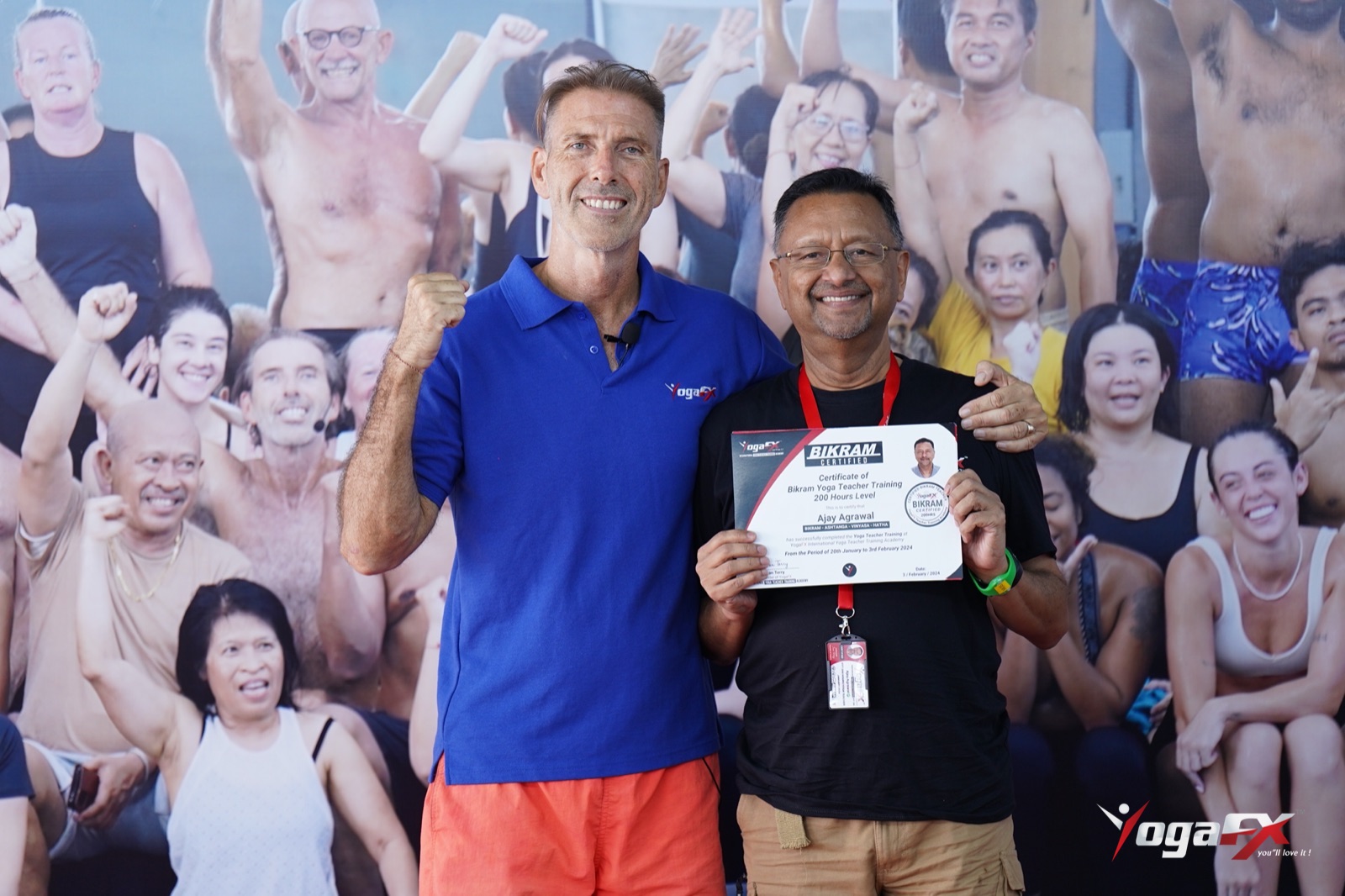
Yoga continuing education for a hot yoga teacher means planned learning after graduation: a dialogue refresher, a week with a senior teacher, and a simple record of your own practice. Check your registry's rules first. Then choose the option that sharpens your teaching, not the one with the longest certificate.
This guide is written from the teacher's side of the room. Mr Ian Terry, E-RYT 500, leads the YogaFX trainings in Bali, and the advice below comes from watching new graduates plan their next step. You have the certificate. Now you need a plan.
What yoga continuing education means after a 200-hour course
Most graduates first meet the phrase yoga continuing education in the week after training. You finish the course, you register, and someone mentions that you're expected to keep learning. In plain terms, yoga continuing education is structured learning beyond your first certificate. It's what turns a teacher who recites into one who can explain.
It comes in a few shapes, and they feel very different:
- Short workshops. A weekend on anatomy, sequencing or cueing, usually with a guest teacher.
- Immersions. A week or more with one senior teacher, where you study one method in depth.
- Mentoring. You teach real students and get feedback on your delivery from someone more experienced.
There is also a route many people overlook. You go back to the teacher who trained you and take the same material again. For a Hot 26&2 teacher this matters more than it sounds. The first pass teaches the words and the postures. The second pass, taken as a student, teaches the pacing.
Check your registry before you spend a cent
A credit is worth only what your registry accepts. Yoga Alliance is the registry most of our graduates use, and its continuing education page describes Yoga Alliance Continuing Education Providers (YACEPs) as experienced yoga professionals offering advanced learning, open to Experienced Registered Yoga Teachers in good standing.
That page tells teachers to stay current with the continuing education requirements, but it does not print an hour count, so we will not guess one. Log in to your own member account and read the current number there. Rules change, so treat any article, including this one, as a starting point.
One more point, because it saves money. Do not assume any course counts as yoga continuing education credit. Before you pay a deposit, ask the provider in writing: are you a YACEP, which of your courses are registered, and how do the hours apply to my own registration? A clear answer takes one email. A vague one tells you what you need to know.
Five ways to approach yoga continuing education, compared
Not every graduate has the same time, budget or goal. The table below compares the five routes we see most often among hot yoga teachers. It is a planning aid, not a promise, so use it to decide which question to ask first.
| Route | Best for | Time you need | Check first |
|---|---|---|---|
| Dialogue refresher at home | Teachers whose script feels shaky after a few months | 20 to 30 minutes a day | Whether you are learning from a source your own trainer approves |
| Local anatomy workshop | Teachers with a niche student group, such as older students | One weekend | Whether the provider is registered with your registry |
| Mentored teaching | New teachers with a regular class but no feedback | One class a week, plus review | Who gives the feedback and how senior they are |
| Week-long immersion | Teachers who want a full reset of their delivery | 5 to 6 days away | Dates, venue and what the week includes |
| Self-tracked practice | Anyone, because it costs nothing | One tap per class | That you keep a separate record of hours for your registry |
Why a dialogue refresher beats another certificate
In a scripted class there is no demonstration and no music. Your voice carries the whole room. That's why the most useful yoga continuing education for a Hot 26&2 teacher is often the least glamorous: hearing the dialogue again, from the floor, with your teaching brain switched on.
Teachers who do this notice three things within a week:
- Pacing. You hear where a good teacher pauses and where you rush.
- Cue order. You catch the small sequence of instructions that keeps a hot room safe.
- Energy. You feel what 90 minutes at 40 degrees Celsius asks of a student, which changes how you speak to them.
Good yoga continuing education doesn't need a new qualification. It needs a trainer who will teach the room the way you'll one day teach yours. If you want to see how the training itself is built, our guide to original hot yoga teacher training explains the curriculum and what each day covers.
The MasterClass as professional development
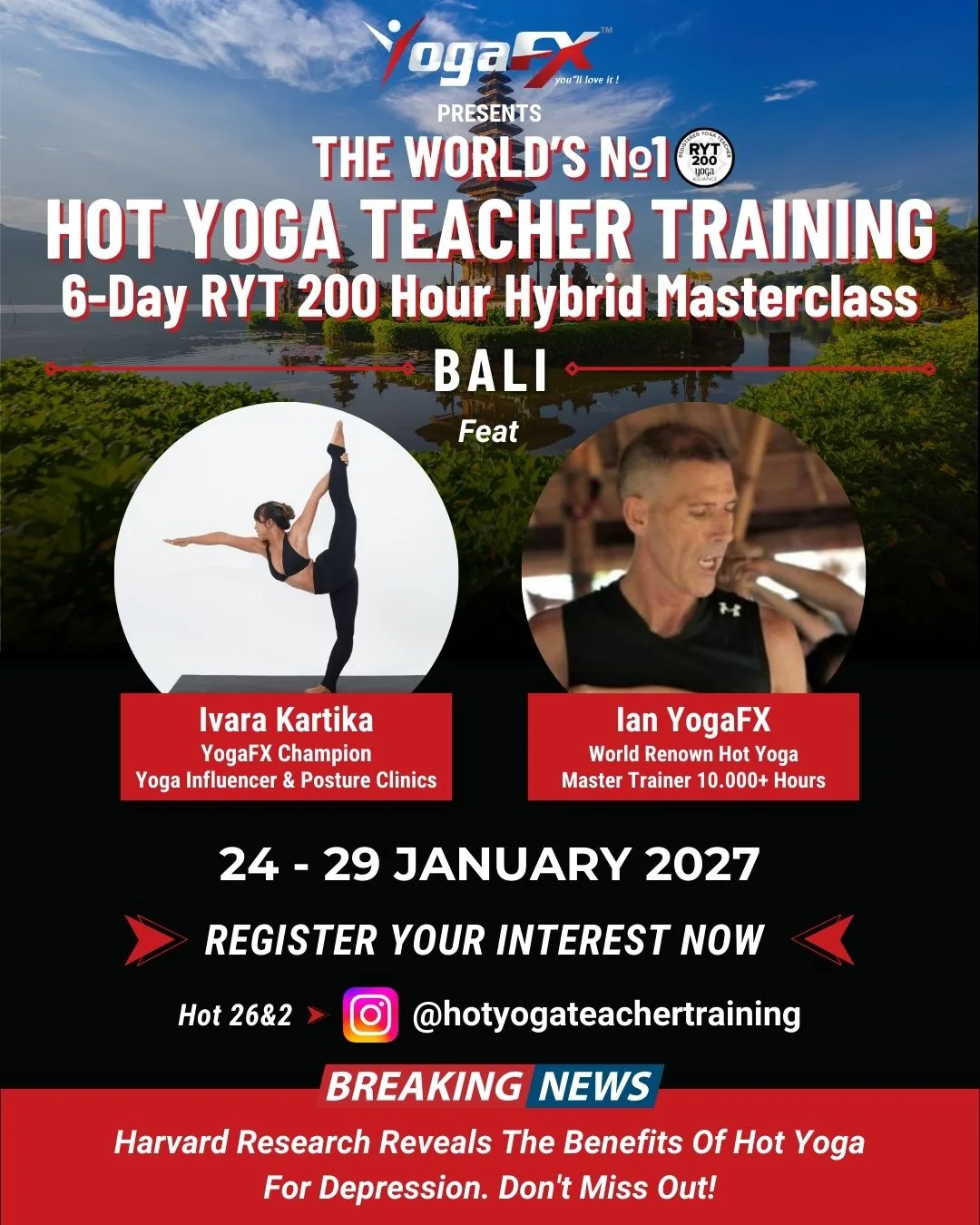
For graduates who want the immersion route, the YogaFX MasterClass is a 6-day hybrid format: online pre-course study, then an intensive in Bali. Guests check in on Sunday and check out on Friday, so you only need five days off work. The next batch runs from 24 to 29 January 2027 at the Soham Wellness Center in Seminyak.
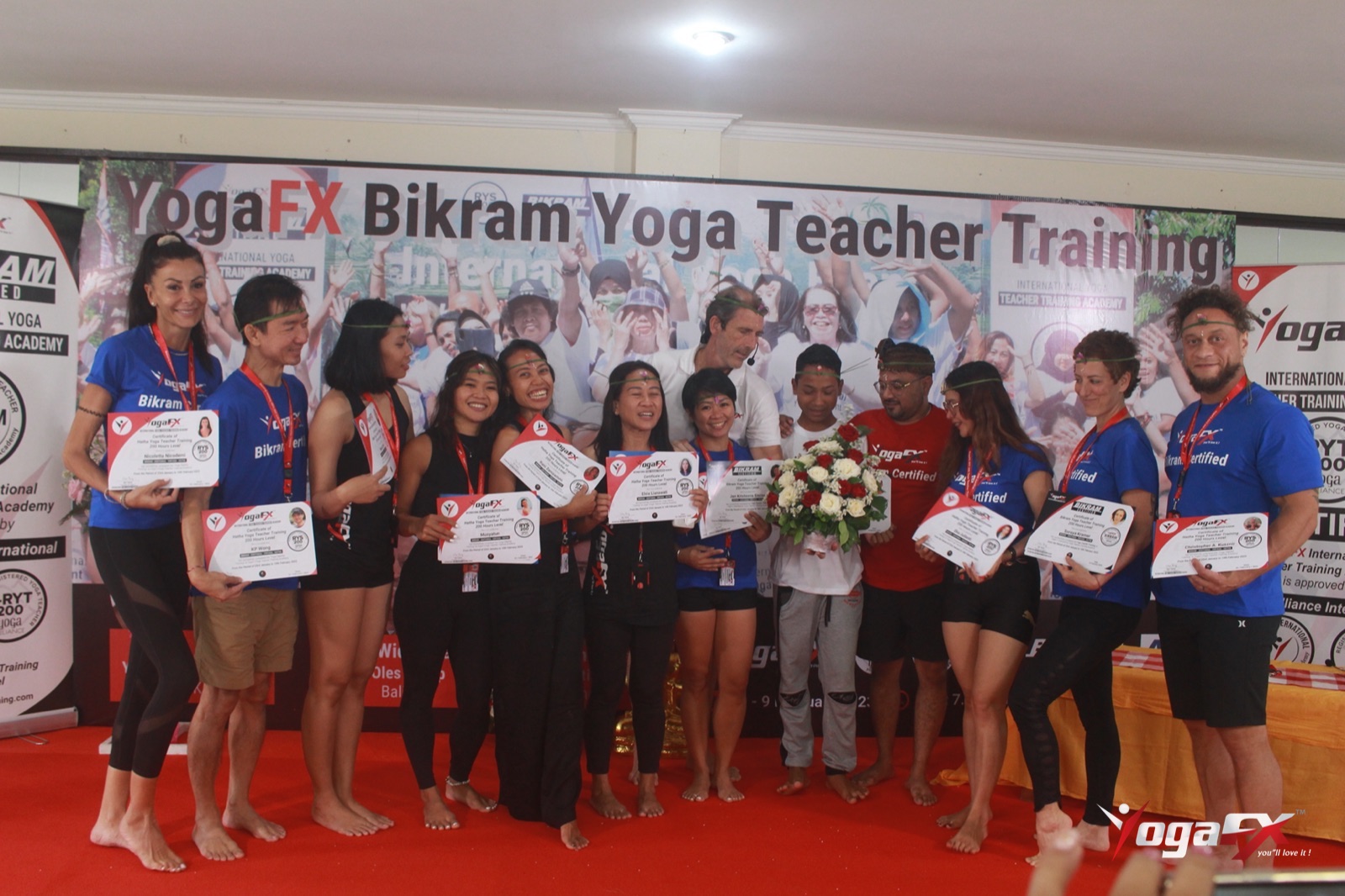
The week is built around practice. Each day blends class practice, pose study, teaching drills and feedback, and trainees teach real students in two classes a day. For a working teacher the useful part is the feedback. You teach, then you hear exactly where the dialogue slipped.
Dates and venues can change, so confirm them with the team before you book flights. And if your question is whether the week counts toward your registry, ask us directly, because the answer depends on where you stand today. For a longer breakdown of the programme for teachers who already hold a certificate, read the full MasterClass continuing education guide on our teacher training hub.
Log your practice with the Journey Tracker
Here is something only this site offers. The free Bikram Yoga 30/60/90 Day Journey Tracker lets you pick a 30, 60 or 90 day challenge and click a day to log a session. It keeps two counters, Classes completed and Current streak, and has a Reset progress button when you want a fresh start.
Be clear about what it is. The tracker counts classes, not hours, so it is not a record for your registry. Keep a separate note of dates, hours and what you studied for that. The tracker's job is different. It keeps your own practice steady, and every good teacher shares that habit. In our view, yoga continuing education starts on your own mat.
Our own guidance on the page is simple. A 30-day run builds the habit and heat tolerance. Sixty days shows real flexibility and strength gains. Ninety days suits certification prep or longer-term change. Your progress is stored only in your browser, so clearing your browser data erases your journal.
What the research says about keeping your own practice up
A teacher who practises regularly understands the room better. The research on hot yoga is modest but useful here. A 2013 study by Tracy and Hart reported roughly a 20% increase in posterior chain strength, along with better flexibility and body composition, in people who practised Bikram yoga.
A 2014 University of Wisconsin study (Porcari et al.) measured about 333 kcal for women and 460 kcal for men in a 90-minute class, with heart rates around 80% of maximum. That is real cardiovascular work. As a teacher, knowing how a class feels at that intensity helps you cue students who are struggling in the heat.
These findings may help explain why consistent practice matters, but they do not promise results for any one person. If you have a heart condition, are pregnant, or have any health concern, consult a healthcare professional before you practise in a heated room.
What students and graduates say
We do not ask anyone to take our word for it. These are short excerpts from students who trained with us, shown with first names only.
"The course was well paced and structured and course material was professionally produced with a current mix of technical and traditional yoga philosophy."
Konrad, Google review, 2025
"This is amazing experience for me because here I got so many experience so many friends from the many country."
Ari, YouTube review, 2019
"I'm very happy and thanks for the opportunity."
Febri, YouTube graduation video, 2024
The video above is Ari's graduation day in Bali. You can read more graduate feedback on our reviews page.
Mistakes to avoid with yoga continuing education
After a few years of watching graduates plan their next step, the same errors keep appearing. None of them are fatal, but each one costs money or momentum.
- Collecting certificates instead of skills. A wall of paper doesn't make your cueing clearer. Pick the course that fixes your actual weak spot.
- Paying before asking about credit. If registry hours matter to you, get the provider's answer in writing first.
- Skipping your own practice. Teachers who stop taking class lose their feel for the room within months.
- Choosing by price alone. A cheap weekend with no feedback teaches less than one focused week with a senior teacher.
- Never reviewing the dialogue. Small habits creep into a script when nobody checks it, and students notice before you do.
Treat the next twelve months as a plan rather than a shopping trip. Decide what you want students to say about your class a year from now, then pick the yoga continuing education that gets you there. Two or three well-chosen steps will do more than a long list of good intentions.
Five steps to plan your yoga continuing education
- Read your registry's rules. Find the current requirement in your own member account.
- Name your gap. Is it your script, your anatomy, your confidence or your own practice?
- Ask the provider three questions. Are you a YACEP, how many years have you taught, and how do the hours apply to me?
- Start a log today. Use the Journey Tracker for classes and a separate note for hours.
- Book one thing. A single committed course beats five saved tabs.
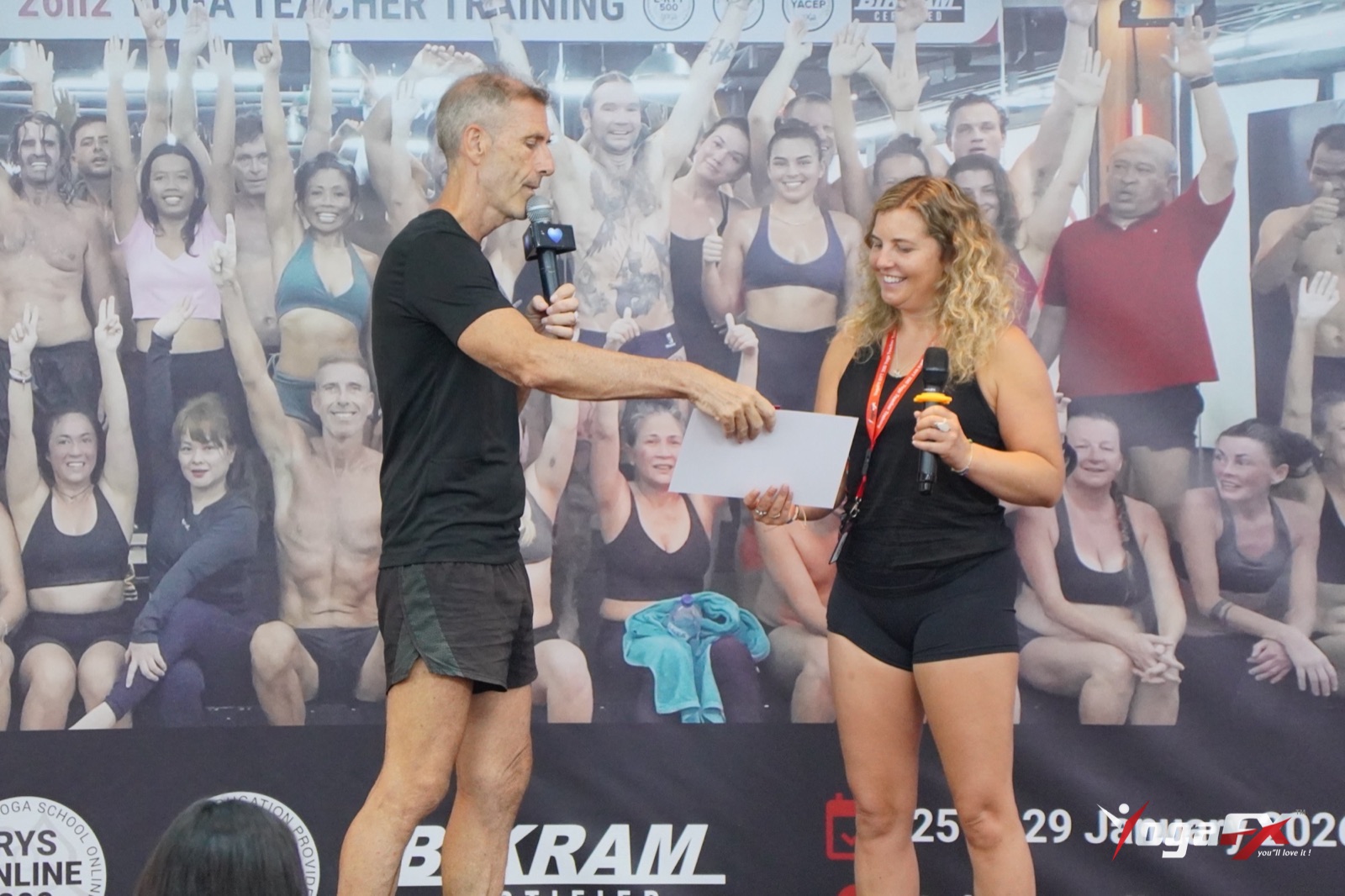
Who teaches the week: Mr Ian Terry
Whoever stands at the front decides how good a training week is. Mr Ian Terry holds E-RYT 500 and has more than 12,000 teaching hours. He trained for five years, from 2014 to 2019, with the founder of the Bikram Hot 26&2 method, and he is a Master Trainer for the Republic of Indonesia Yogasana Sports Federation.
Since 2017, YogaFX has trained more than 1,500 teachers from over 80 countries. The head trainer teaches the room himself. For experienced teachers that matters, because you notice quickly when a session is padded. Policies and pricing are on our policies page.
FAQ
How many continuing education hours does Yoga Alliance require?
Yoga Alliance sets the requirement and can change it. The continuing education page we checked tells teachers to stay current but prints no hour count. Read the current number in your own member account, and confirm with Yoga Alliance before you plan or pay for any course.
What is a YACEP?
A YACEP is a Yoga Alliance Continuing Education Provider. Yoga Alliance describes them as experienced yoga professionals offering advanced learning, and says Experienced Registered Yoga Teachers in good standing can apply. When you shop for a workshop, ask whether the provider holds this status and for how long.
Can I do yoga continuing education online?
Some of it, yes. Online study suits theory and dialogue review. Our MasterClass is hybrid, with an online pre-course before the Bali week, because teaching drills and live feedback work better in the room. Whether any online hours count depends on your registry, so check first.
Does the MasterClass count as continuing education credit?
It depends on your registration and where you stand today, so we do not promise credit here. Message the team, tell us your registry and your level, and we will tell you in writing how the week applies. Then confirm the answer with your registry before you book.
What should I look for in yoga continuing education workshops?
Look for a named teacher with real teaching hours, a clear syllabus, live feedback on your own teaching, and honest answers about registry credit. Avoid courses that list many topics but give you no practice teaching time. One focused week usually beats several scattered weekends.
Still have questions? Message Mr Ian and the YogaFX team on WhatsApp and we will answer them personally.