Original Hot Yoga Explained by a Teacher: What Stays Fixed in Every Class
By Ian Terry, E-RYT 500 · Updated
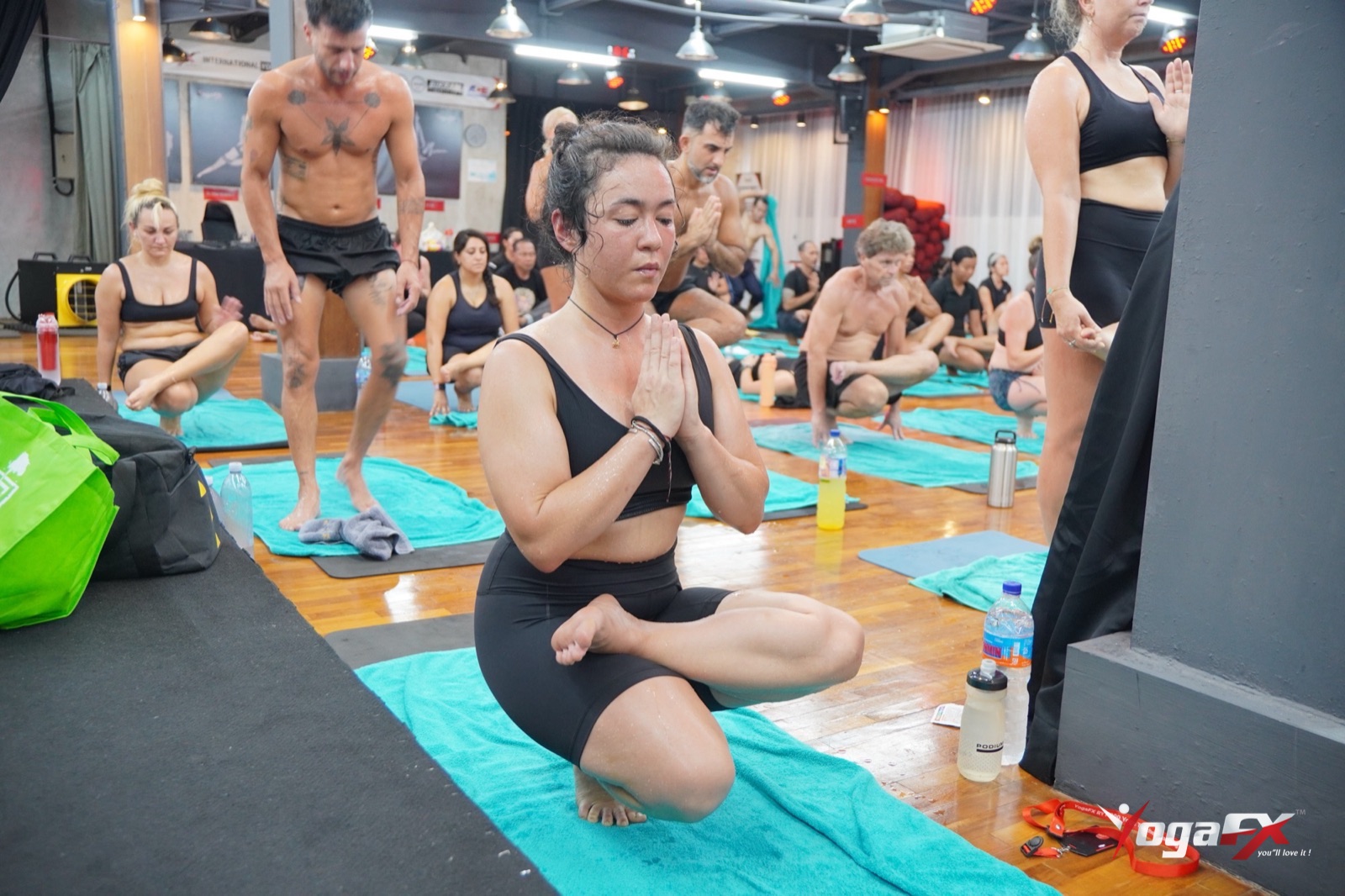
Original hot yoga is a class where five things never move: 26 postures, 2 breathing exercises, 90 minutes, a room near 40°C and a spoken script. Nothing is added and nothing is skipped. A teacher sees those five fixed elements work on a full room every day, and that is what the word original promises a student.
This guide explains original hot yoga from the podium, where a teacher sees what each fixed element does to a room full of people. Mr. Ian Terry, E-RYT 500 and founder of YogaFX, has taught more than 12,000 hours. What follows is how he and his team read a class, and what you can check for yourself before you book one.
The 5 Fixed Elements of Original Hot Yoga
A teacher can tell in two minutes whether a room is running original hot yoga. They don’t look at the logo on the wall. They check five things, and if one is missing, the class is something else, however good it may be.
So here is what each element means on the mat, in the order you meet it.
- The sequence. You open with Pranayama, a standing deep breathing exercise. You close with Kapalbhati, a firm-pose breathing exercise. Between them sit the 26 postures, always in the same order.
- The order. The standing series comes first, then the floor series. Each posture is done twice, with a short rest on the floor between the floor postures.
- The time. Ninety minutes gives every posture its full hold. An express version has to rush or drop postures, so it is a different class.
- The heat. About 40°C and 40% humidity. In Bali the room reaches that with natural tropical heat, not electric heaters.
- The script. The teacher speaks the dialogue word for word. Nobody demonstrates, and nobody plays music.
We have a longer explanation of why the class runs this long in why the 26 and 2 class takes 90 minutes.
Original Hot Yoga From the Podium: What Each Element Does
Students usually experience the fixed elements as one long, hot, focused class. A teacher sees them as separate tools. The table below shows what each one does for the room, and what is lost when it is removed.
| Fixed element | What the teacher does with it | What the student feels | What changes if it is removed |
|---|---|---|---|
| 26 postures in order | Predicts the next posture and watches the room for the one that is struggling | Warm-up, effort and recovery arrive in a known pattern | The pattern breaks, so the body cannot settle into it |
| 2 breathing exercises | Starts the class by calming the room, and ends it with a clear signal | A slow start and a clean finish | Class begins and ends without a clear edge |
| 90 minutes | Paces the holds so no posture is rushed | A long enough hold to feel each posture | Holds shrink and postures blur together |
| 40°C and 40% humidity | Watches skin colour, breathing and balance to catch early trouble | Heavy sweat, looser muscles, a steady heart rate | The class becomes a different workout in a cooler room |
| Spoken dialogue | Delivers the same words, so attention goes to the students, not to inventing cues | Clear, repeated instructions with no guesswork | Each teacher invents cues, so classes drift apart |
The last row matters most for a new teacher. When the words are fixed, you stop spending energy on what to say. You spend it on who needs help. That is why original hot yoga is a good first style to teach, and why trainees spend so many hours on the script.
Why the Same Order Every Time Is the Point
New students often ask whether doing the same class every day gets dull. Teachers hear the opposite from regulars. The class does not change, so the person changes, and that is what they notice.
A fixed test you can measure against
Because the sequence stays the same, you can compare day 3 with day 30. Maybe your balance in the standing series was shaky in week one. By week six it’s steady, and you didn’t need a new routine to see it. A class that changes every time hides that kind of progress.
A shared pace helps the whole room
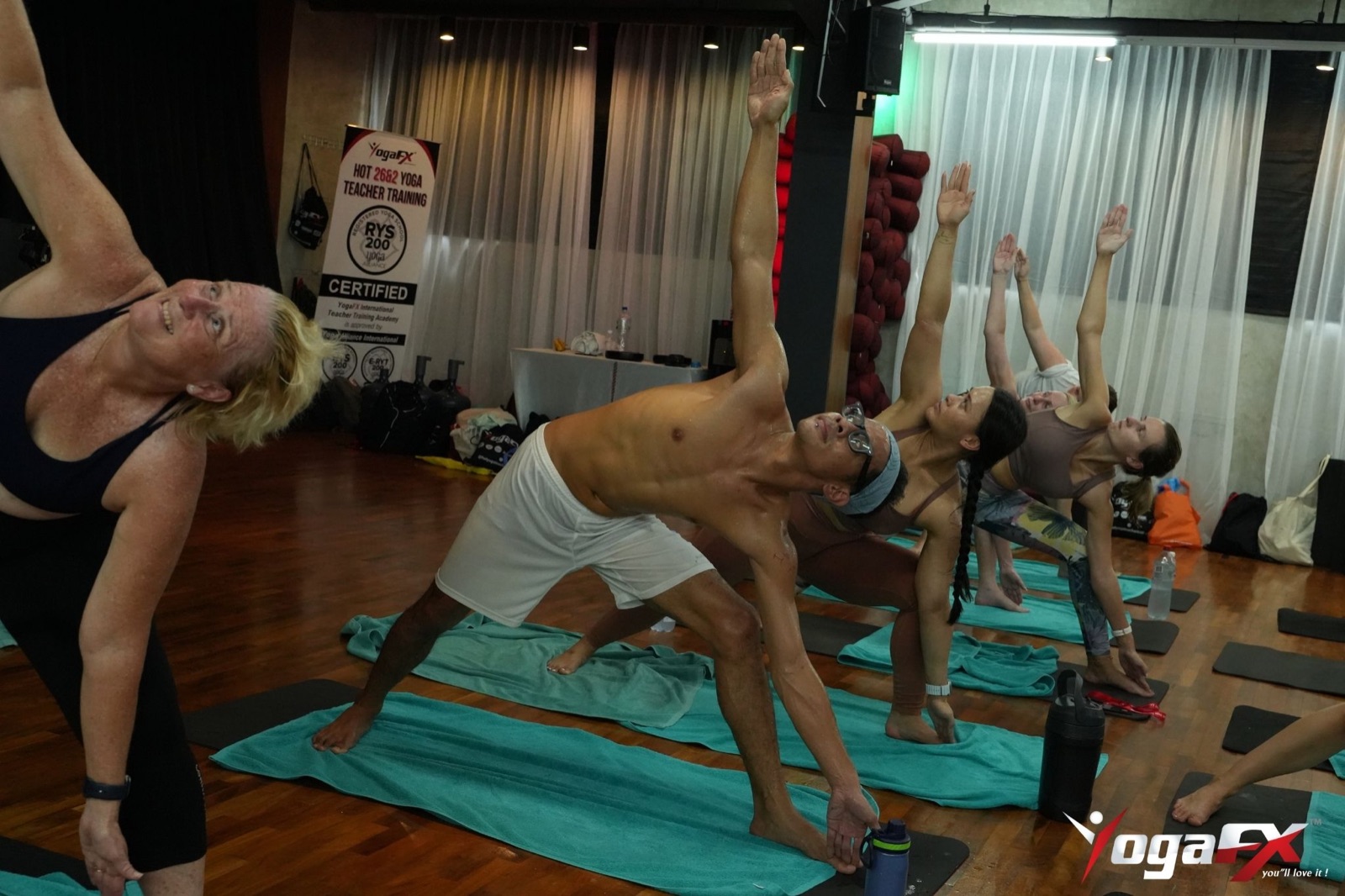
A fixed order also helps the room. When everyone is in triangle pose together, a teacher can see at a glance who is slipping, who is locked up, and who needs a calm word. Instructions land the same way for the whole room because everyone is doing the same thing at the same moment.
The same logic explains why a class in Bali should feel familiar to someone from London or Sydney. Our guide to the 26 and 2 sequence walks through the postures in order, and the 26 Bikram hot yoga postures page shows each one.
The Dialogue: The Script Behind Original Hot Yoga
The dialogue is the element students notice least and teachers value most. It is a spoken script that tells you what to do, in a set order, with fixed wording. There is no demonstration, so the words do the work of a mirror.
For a teacher, that is a gift and a discipline. A script removes guessing, because you don’t invent cues under pressure. However, learning it takes repetition, feedback and many practice classes. Trainees start with the opening, then add a few postures at a time until they can deliver the whole class from memory.
- Learn it in blocks. Start with the opening breathing exercise, then add the standing series a few postures at a time.
- Say it out loud. Reading the words silently does not train your voice, so practise standing up, at class pace.
- Practise on real people. Feedback from a friend on the other end of the room is worth hours of solo study.
Our script study guide to memorising the dialogue sets out the methods trainees use, and the free dialogue flashcards tool lets you test yourself on any posture.
Heat and Safety: What a Teacher Watches for in a 40°C Room
A hot room puts extra work on the heart and on fluid balance for the whole 90 minutes. The teacher is usually the first to notice trouble, so reading the room is part of the job. This is general information, not medical advice. If you are pregnant, have a heart condition or high blood pressure, or struggle in hot weather, speak to a healthcare professional before your first class.
As a result, public health sources describe the signs clearly. The NHS guidance on heat exhaustion and heatstroke lists tiredness, dizziness, headache, nausea, cramps, and heavy sweating with pale, clammy skin. It describes heatstroke as a medical emergency, with hot skin that is not sweating, fast breathing, confusion or loss of consciousness.
The US Centers for Disease Control and Prevention gives a similar list, including muscle cramping, unusually heavy sweating, dizziness, headaches, weakness and nausea. For heat exhaustion, the NHS advises moving the person to a cool place and giving plenty of water.
Three things we do in every class
- Spot early signs. Dizziness, nausea and an unusual quiet are the first clues.
- Respond calmly. Offer water, ask the student to sit down, and let them rest as long as they need.
- Know the limit. If a student is confused or collapses, the class stops and medical help is called.
Students can help themselves too. Drink water through the day, eat lightly a couple of hours before class, and sit down whenever you need to. Resting is part of original hot yoga. It isn’t a failure.
What Research Says About Heated Yoga Like Original Hot Yoga
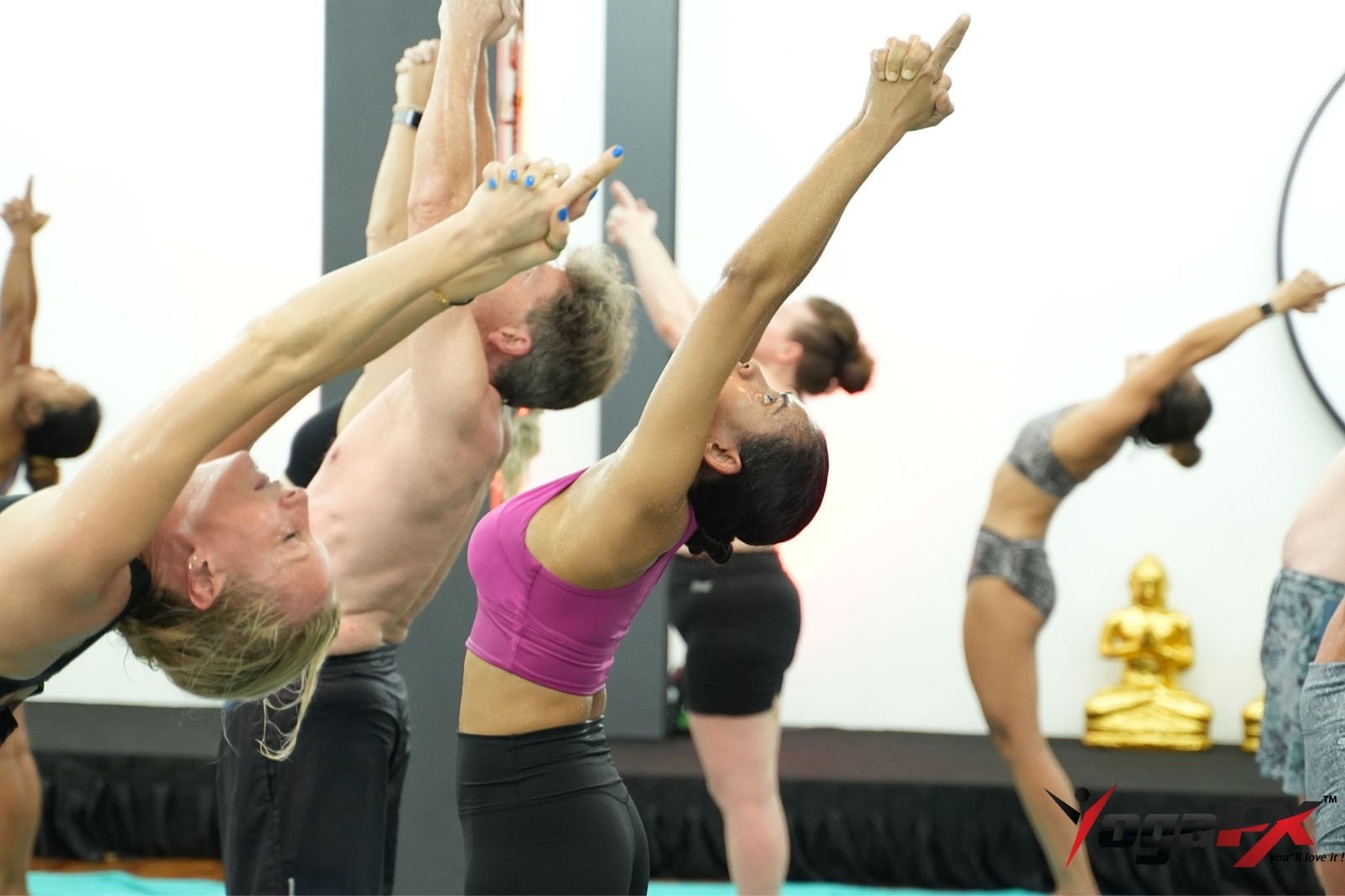
A fixed class is easy to study, because every trial can use the same format. Still, most studies on heated yoga describe heated classes in general. They do not always test the exact 26 and 2 sequence, so read the results as hints about the heat and the practice, not as proof about one label.
One of the best-known trials comes from Massachusetts General Hospital. In 2023, Nyer and colleagues published an 8-week randomised controlled trial of community-delivered heated hatha yoga in The Journal of Clinical Psychiatry. The adults had moderate-to-severe depression, and 65 were analysed, 33 in the yoga group and 32 on a waitlist.
Researchers asked participants to attend at least twice a week at two community studios. They attended 10.3 classes on average. The yoga group showed a significantly larger drop in clinician-rated depression symptoms than the waitlist, with a large effect size (Cohen d of 1.04).
| What the study shows | What it does not show | What a teacher takes from it |
|---|---|---|
| A larger drop in depression symptoms after 8 weeks of heated yoga than on a waitlist | That heated yoga beats unheated yoga, or that the 26 and 2 sequence works better than other heated classes | Show up regularly, and keep working with your doctor if you manage depression |
| A small trial: 65 adults analysed, mostly women, mean age about 33 | How older adults, men or people with other conditions respond | Treat the result as a promising signal, not a promise |
| Classes held at community studios, twice weekly or more | What happens if you attend once a month | Attendance, not heroics, is what counts |
Research like this suggests benefits. It doesn’t make a class a treatment, and it doesn’t replace care from a healthcare professional.
Original Hot Yoga, Bikram and Hot 26: One Practice, Several Labels
You may see original hot yoga, Hot 26, 26 and 2 and Bikram yoga on different timetables. They describe the same fixed class under different names. Hot yoga on its own is wider. It can mean any yoga in a heated room, including flow classes that change every time.
- Original hot yoga and Hot 26. The fixed 26 and 2 class, named to show it is unchanged.
- Bikram yoga. The older name for the same sequence, which fewer studios use today.
- Hot yoga. Any yoga in a heated room, so it can be a flow, a fixed series or something else.
Nobody polices these labels. That’s why a quick message to the studio is the best check. Ask whether every posture is taught, in order, for 90 minutes. For a view from the other side of the world, our UK sister site covers how UK timetables use the original hot yoga label.
See All 26 Postures in the Order We Teach Them
If you want to know what is inside the fixed sequence, our free guide lists every posture in class order. It is the quickest way to see how the standing series and the floor series fit together. Teachers use it as a study sheet, and students use it to know what comes next.
What Our Students Say About the Fixed Class
Students from many countries have trained and practised with YogaFX. Here is what three of them wrote in public reviews, in their own words.
"The way the teachings are passed down with respect for lineage, structure and integrity made me feel honoured to be learning this practice."
Sophie, Google review, 2026
"Classes from the head trainer Ian who attended every session."
Jilly, Yoga Alliance review, 2019
"The most professional course I have ever had. From the beginning to the end everything was perfectly scheduled and organized."
Konrad, Google review, 2022
Those three sit among 150 Google reviews, 50 Yoga Alliance reviews and 357 video testimonials on YouTube. Trainees also speak on camera about the course. One of those videos is below.
How YogaFX Keeps Original Hot Yoga Original in Bali
YogaFX teaches original hot yoga at its studios in Seminyak and Canggu, open from 06:00 to 22:00 every day. Classes run 90 minutes at 40°C and 40% humidity. The tropical climate supplies the heat, so there are no electric heaters. The dialogue is scripted, and there is no demonstration and no music.
Mr. Ian Terry, E-RYT 500, founded YogaFX in 2017. He trained for five years, from 2014 to 2019, with the founder of the Bikram Hot 26&2 method. He has taught more than 12,000 hours and trained 1,500+ graduates from more than 80 countries. In 2026 he was confirmed as Master Trainer of the Republic of Indonesia Yogasana Sports Federation.
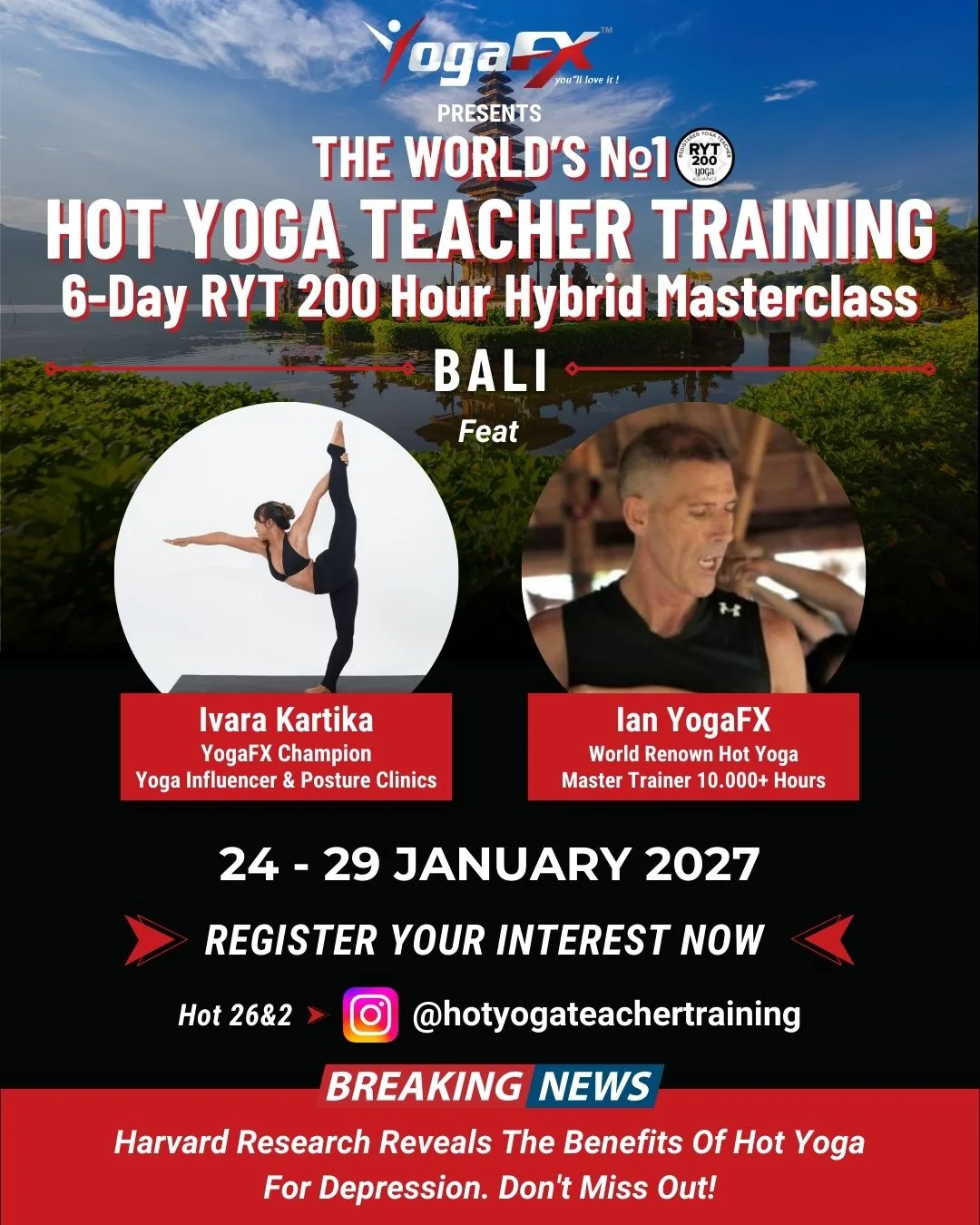
Some readers want to teach the class, not only take it. The Bikram Hot 26&2 Yoga Teacher Training MasterClass is a six-day hybrid course. You prepare online at home, then join an intensive in Bali. You check in on a Sunday and check out on a Friday, so it needs just five days off work.
- Next batch. Check-in Sunday 24 January 2027, check-out Friday 29 January 2027, at Soham Wellness Center in Seminyak.
- Certification. Yoga Alliance RYT 200-Hour plus the Bikram Hot 26&2 200-Hour International Yoga Certification.
- Price. Early Bird US$1,899 against the normal US$1,999, with interest-free instalments from US$250 a month.
To see how the course is built, read our guide to hot yoga teacher training in Bali and the programme page.
FAQ
What is original hot yoga?
Original hot yoga is a class built on five fixed elements: 26 postures, 2 breathing exercises, a 90-minute length, a room near 40°C and a spoken script without music. The word original signals that none of these has been shortened, swapped or sped up, so every class follows the same pattern.
What temperature is original hot yoga?
An original hot yoga class runs at about 40°C with around 40% humidity. At YogaFX in Bali the heat comes from the tropical climate instead of electric heaters. If you have a heart condition, are pregnant or struggle in the heat, speak to a healthcare professional before your first class.
Is original hot yoga the same as Bikram yoga?
They describe the same fixed class: 26 postures, 2 breathing exercises, 90 minutes. Bikram yoga is the older name, and original hot yoga or Hot 26 are newer labels many studios use. YogaFX teaches it as an independent training, not the official Bikram Choudhury Teacher Training.
How is original hot yoga different from vinyasa?
Vinyasa is a flow that changes between classes, and it often has a playlist. Original hot yoga never changes its sequence. The teacher reads the same script, each posture is held, and you meet the same test every time, which makes it easy to notice your own progress from week to week.
How long does it take to get used to hot yoga?
Most people find the first few classes the hardest, because the body is learning to cope with heat. Many feel steadier after a few weeks of regular practice. Rest whenever you need to, drink water through the day, and tell the teacher if you feel dizzy or unwell.
Still have questions? Message Mr. Ian and the YogaFX team on WhatsApp and we will answer them personally.