How to Become a Bikram Yoga Teacher: Complete Career Guide
By Ian Terry, E-RYT 500 · Updated
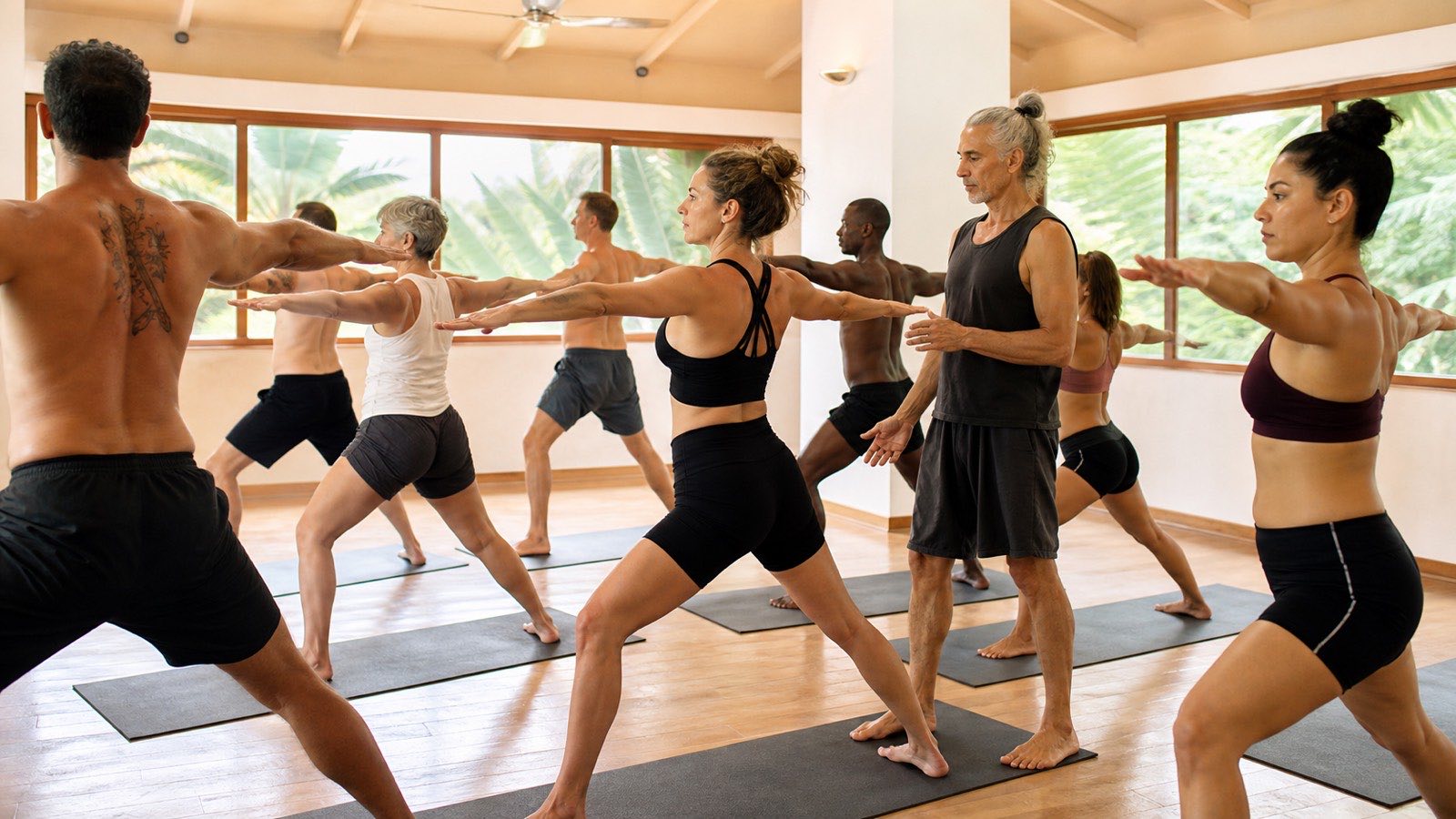
To become a Bikram yoga teacher, build a strong personal practice, complete a credible 200-hour teacher training focused on the 26 postures and two breathing exercises, and learn the traditional fixed dialogue. You must then demonstrate safe teaching through supervised practicum and assessment before applying to heated studios.
How to Become a Bikram Yoga Teacher: The Complete Path
The professional path has five connected stages. First, learn the sequence through regular personal practice. Second, complete foundational teacher education. Third, develop method-specific Hot 26&2 dialogue, timing, observation, and heat-management skills. Fourth, demonstrate those skills through practicum and assessment. Finally, establish the insurance, credentials, and studio relationships needed for paid work.
- Build a regular practice: maintain a consistent Bikram or Hot 26&2 practice for at least six months to a year so the fixed sequence is familiar in your own body.
- Choose a training program: select a credible 200-hour foundation with explicit instruction in the 26 postures, two breathing exercises, heated-room safety, and dialogue.
- Learn the fixed dialogue: practise precise verbal cues and timing while keeping enough attention available to observe students.
- Complete practicum and exams: participate in anatomy education, posture clinics, supervised teaching, feedback, and final evaluation.
- Get insured and apply for jobs: organize registration where useful, liability cover, local safety requirements, and studio auditions.
This is more specific than the general route described in our guide to becoming a certified yoga instructor. A general RYT 200 can establish broad teaching foundations, but it does not automatically prepare someone to deliver a fixed 90-minute class in a room near 104°F (40°C).
Build a Regular Bikram Hot 26&2 Practice
Six to twelve months is a useful preparation range, not a universal legal rule. The goal is not perfect flexibility. It is enough repeated experience to recognize the sequence, pacing, heat response, common corrections, rest points, and the difference between productive effort and a warning sign.
Attend several qualified teachers when possible. Notice how clear language changes your response to a pose. Learn to remain attentive when a posture is difficult instead of copying the teacher mechanically. Teachers need to understand the student's view of the room, not only their own performance.
Keep brief notes after class. Record dialogue that clarified an action, moments when heat affected concentration, and modifications that kept practice safe. This creates a practical learning record without pretending that personal experience replaces anatomy or medical expertise.

Choose a Credible 200-Hour and Method-Specific Program
Compare the credential and the actual curriculum separately. A Yoga Alliance Registered Yoga School can provide a foundation leading eligible graduates toward RYT 200 registration. Review the current Yoga Alliance RYS credential standards rather than relying only on a school logo. A method-specific certificate can document Hot 26&2 training. Neither label alone tells you the amount of supervised teaching or feedback.
Ask who leads the course, how many hours they have taught, how the 200 hours are allocated, and which work must be completed before any in-person intensive. Request the practicum schedule, assessment standard, cohort cap, refund policy, and exact certificate name in writing.
A credible curriculum should address anatomy, ethics, professional boundaries, teaching methodology, breathing, the complete fixed sequence, room management, hydration, heat illness warning signs, emergency procedures, and referral beyond a teacher's scope. Read the full 200-hour Hot Yoga teacher training curriculum guide before comparing providers.
Online study, such as the standalone YogaFX Online Teacher Training, can be valuable for theory and repeated dialogue study. It should not be marketed as a substitute for observing bodies, responding to a real class, practising in heat, and receiving live feedback. Evaluate what happens in person, not only how convenient the learning portal appears.
Learn the Traditional Fixed Dialogue
The dialogue is not simply a speech to memorize. It organizes actions, sequence, pace, and attention while the teacher observes a room. A trainee must learn the words well enough to speak clearly without losing awareness of students.
Study in short sections. Mark the setup, action, direction, timing, and exit for each posture. Practise aloud with a timer, record your voice, and remove filler words. Then teach a willing practice partner while watching rather than demonstrating. This exposes whether the cue produces the intended action. Follow the complete Bikram yoga dialogue memorization method for a structured daily plan.
Good dialogue is precise without becoming mechanical. Volume should reach the room without sounding aggressive. Pace should create action without rushing transitions. Corrections must be relevant, respectful, and within the teacher's scope. Studios may use different approved wording, so trainees should be able to learn a local standard without inventing unsafe claims.
Complete Posture Clinics, Practicum, and Final Exams
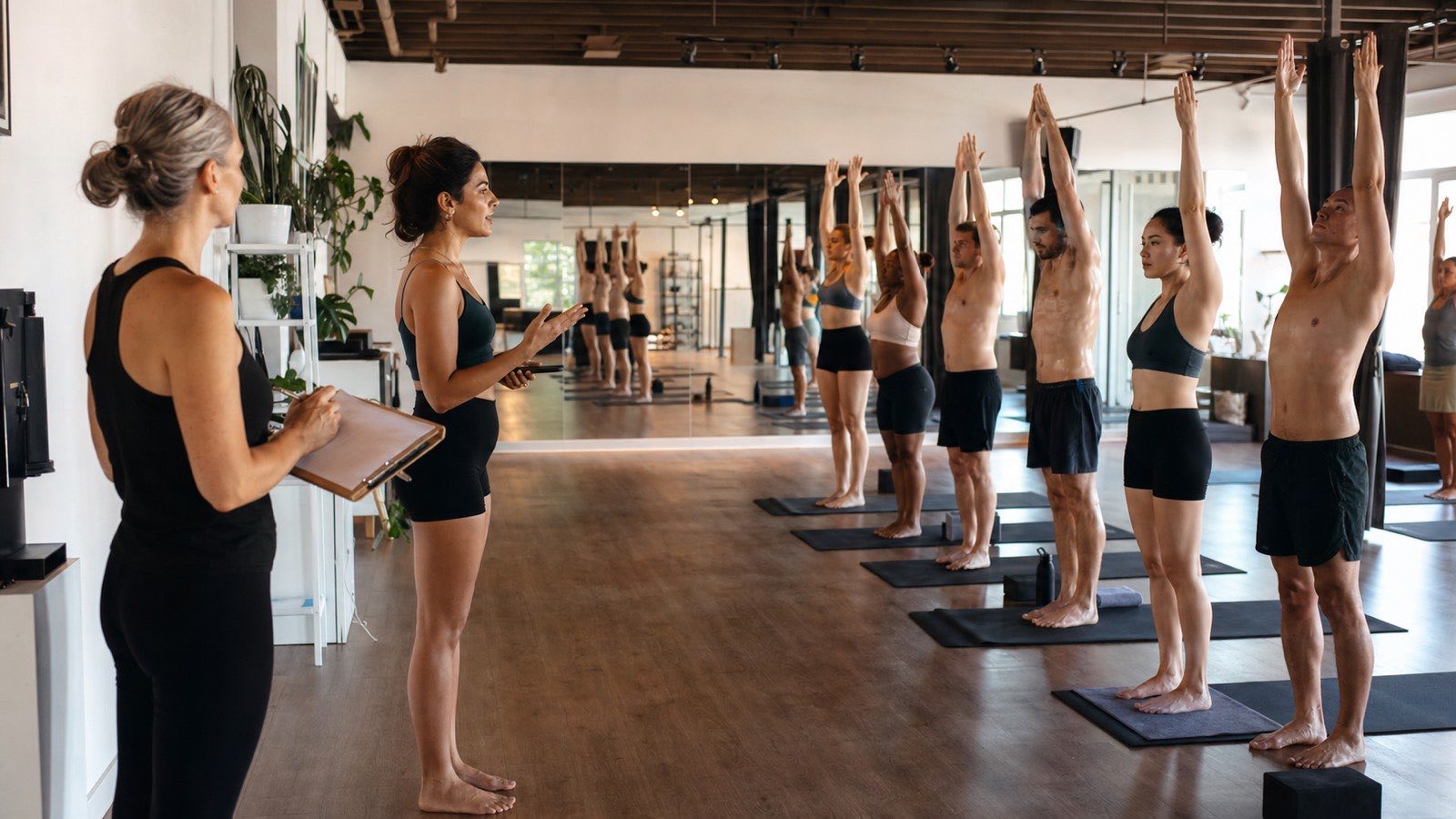
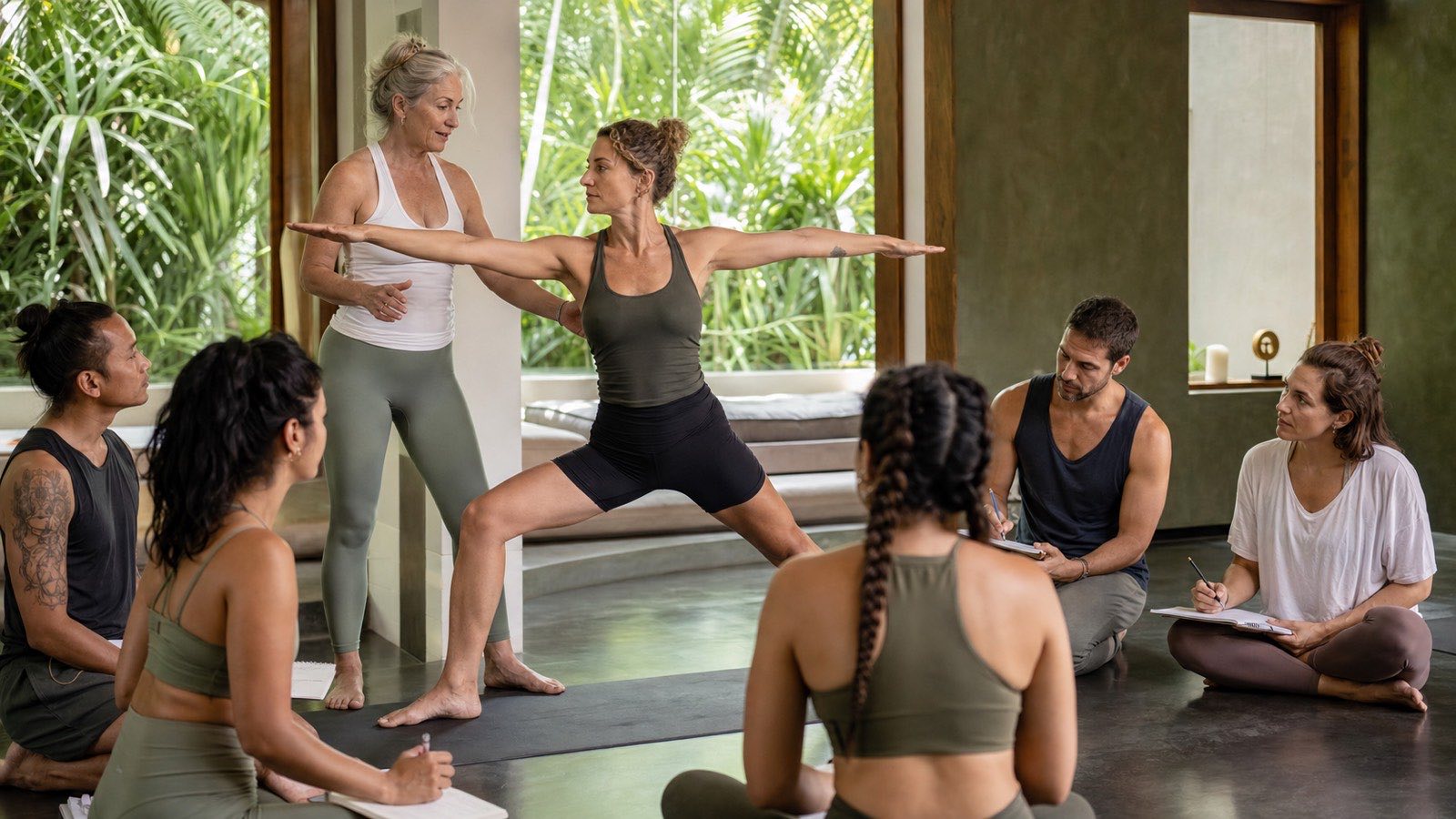
Posture clinics connect the script to observable movement. Trainees examine purpose, setup, common errors, safer alternatives, contraindication awareness, and when to stop. The aim is not to diagnose students. It is to make responsible teaching decisions and refer questions that require medical or therapeutic expertise.
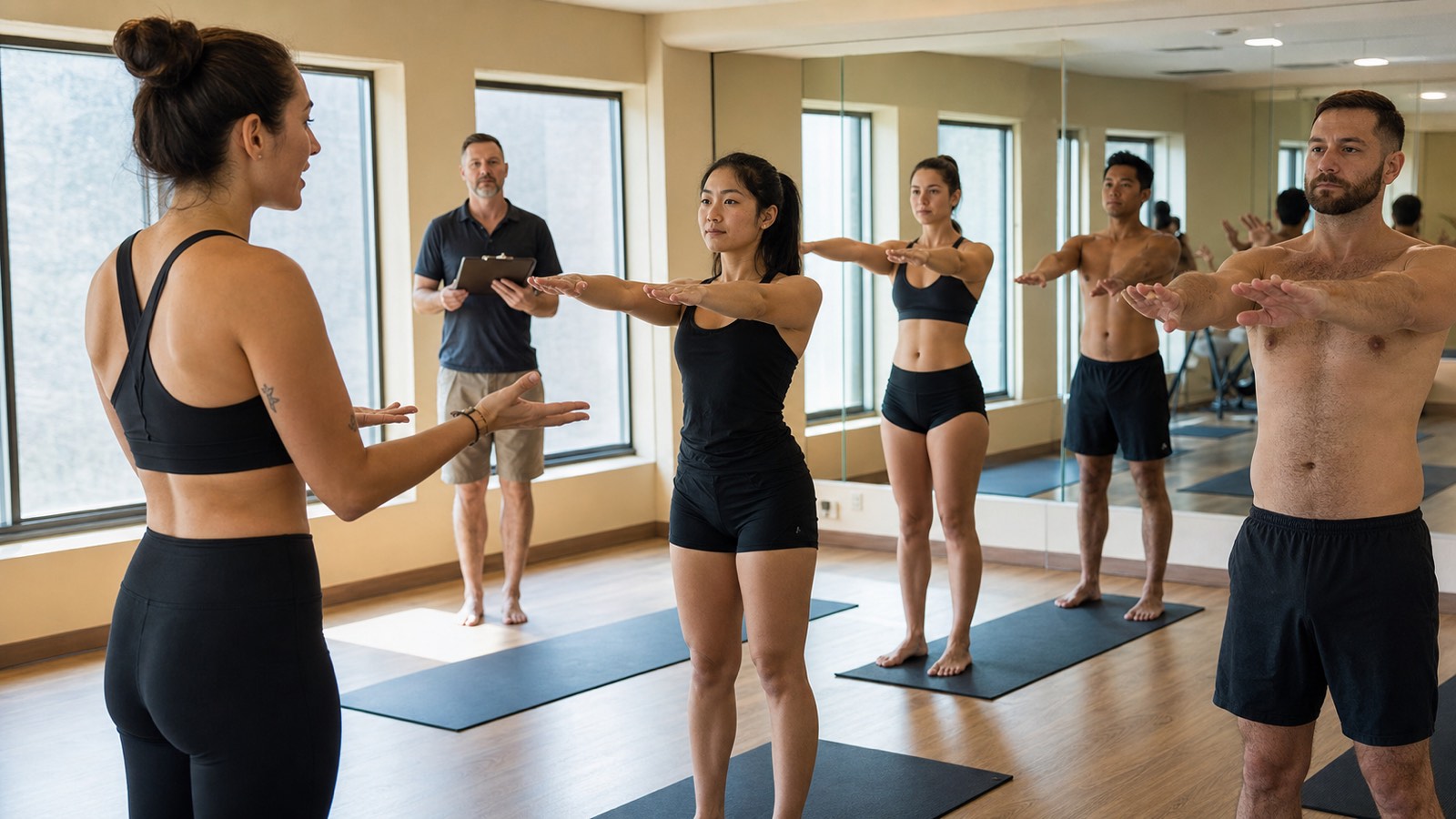
Practicum should progress from short segments to longer teaching rounds. Useful assessment covers dialogue accuracy, timing, voice, observation, room positioning, response to mistakes, professional boundaries, and the ability to receive feedback. Attendance alone is not evidence of teaching competence.
Ask what happens if a trainee does not yet meet the standard. A responsible school explains reassessment, additional practice, and completion requirements. It should never guarantee graduation merely because tuition was paid.
Get Insured, Prepare for Auditions, and Apply for Jobs
After successful training, organize your certificate and register with Yoga Alliance if that designation supports your market. Registration is voluntary and is not a government teaching license. Confirm local business, tax, First Aid or CPR, background-check, and facility requirements independently.
Purchase appropriate yoga teacher liability insurance before teaching where you carry personal exposure. Check general liability, professional liability, online instruction, private sessions, rented premises, geographic limits, exclusions, and whether a studio must be named as an additional insured.
For auditions, prepare a timed section rather than trying to impress with difficult postures. Studios assess whether you arrive prepared, speak clearly, follow their method, observe students, accept direction, and protect the room's schedule. Substitute teaching and mentorship can provide a realistic first route into recurring classes.
Bikram Yoga Teacher Salary and Realistic Income
There is no fixed Bikram yoga instructor salary. Teachers may be employees, contractors, or independent business owners. Pay may be quoted per class, per hour, by attendance, or through a base rate plus bonus. Country, city, studio demand, experience, unpopular time slots, private clients, and the number of weeks taught all change annual income. For context rather than a Bikram-specific promise, the U.S. Bureau of Labor Statistics reports a May 2024 median of USD 46,180 for the broader fitness trainers and instructors occupation, which includes work in yoga studios.
RYT 200 salary and RYT 500 salary are not official pay bands. RYT designations describe registered education and experience criteria; they do not obligate a studio to pay a set amount. An RYT 500 may earn more when additional competence supports a needed role, but the credential alone does not guarantee higher pay.
Calculate gross income from your own likely agreement. Multiply rate per class by classes per week and weeks taught per year. Then account for cancellations, travel, preparation, insurance, tax, continuing education, and recovery. Use the Bikram yoga income calculator and the evidence-aware yoga teacher salary guide rather than relying on a viral hourly figure.
The YogaFX Path to Becoming a Bikram Yoga Teacher
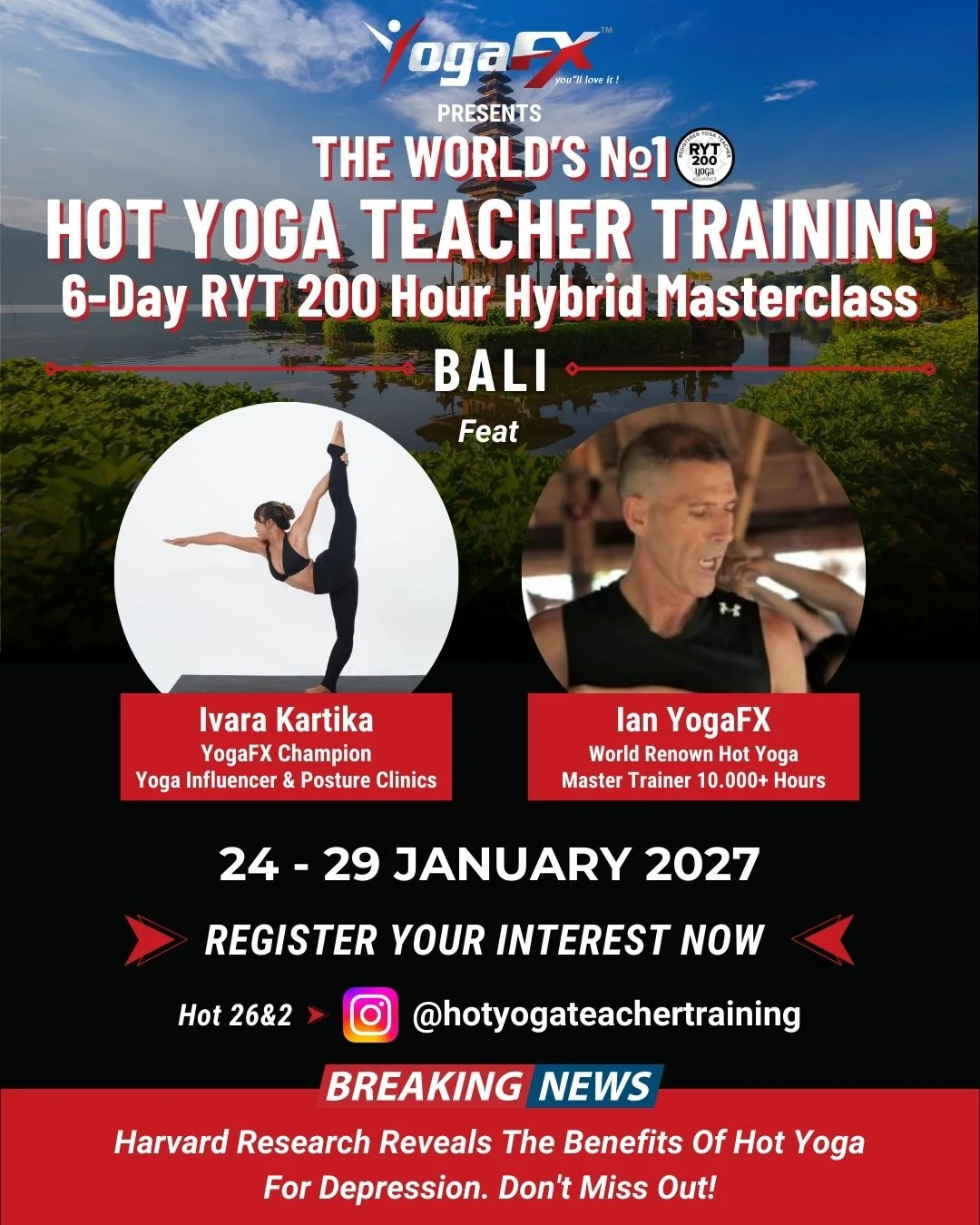
YogaFX International Yoga Teacher Training Academy offers an independent hybrid pathway combining Yoga Alliance RYT 200 education with Bikram Hot 26&2 method certification. It is not official Bikram Choudhury Teacher Training.
Online preparation comes before a six-day practical MasterClass in Bali. The practical stage concentrates on dialogue, posture clinics, observation, timing, repeated teaching, feedback, heat adaptation, and assessment. It should not be described as six days replacing all 200 hours. Australian students can also use the Bikram yoga teacher training Australia guide to compare local professional pathways with Bali.
Training is led by Mr. Ian Terry, E-RYT 500, who has more than 12,000 teaching hours. YogaFX reports 1,500+ graduates from over 80 countries and 700+ reviews across Google, Yoga Alliance, and YouTube. Cohorts are capped at 19 students to protect opportunities for direct feedback.
Graduates can use the foundation in different ways. Ivara Candra Kartika and Arkan Fauzan Riyanto later represented Indonesia and became medal-winning Yogasana athletes, while Slamet Ariyanto moved into national association and team-management leadership. Their paths show that becoming a Bikram yoga teacher can lead toward studio teaching, competitive sport, or administration, depending on the graduate's continued work after certification.
Before enrolling, review the current YogaFX teacher training program, dates, tuition, travel requirements, assessment, and credential scope. Ask studios where you hope to work whether the dual foundation and specialist training match their hiring requirements.
Frequently Asked Questions
How do you become a Bikram yoga teacher?
Build a consistent 26&2 practice, complete a credible 200-hour foundational teacher training with method-specific Hot 26&2 education, learn the fixed dialogue, pass supervised practicum and assessment, arrange liability insurance, and audition for studios. Confirm each employer's requirements because there is no single universal Bikram teaching license.
How long does it take to become a Bikram yoga teacher?
Allow six to twelve months to establish a reliable personal practice, followed by a 200-hour training delivered over several intensive weeks, multiple weekends, or a hybrid schedule. YogaFX places preparation online before a six-day practical MasterClass in Bali; the practical stage is not the entire 200 hours.
Do I need an RYT 200 to teach Bikram yoga?
Requirements vary by studio and country, but an RYT 200-eligible foundation is widely understood by employers and insurers. It should be paired with specific training in the fixed 26-posture, two-breathing sequence, dialogue, timing, heat safety, and supervised teaching.
Can I become a hot yoga instructor through online-only training?
Online study can cover theory, anatomy, philosophy, and dialogue preparation, but it cannot fully replace supervised teaching, posture clinics, room observation, and heat-management practice. A credible hybrid pathway reserves these practical competencies for direct assessment.
How much do Bikram yoga teachers make?
There is no guaranteed Bikram yoga teacher salary. Gross pay depends on country, studio agreement, experience, demand, classes per week, weeks taught, private sessions, and unpaid business time. Compare pay per class with travel, preparation, cancellations, insurance, tax, and recovery before estimating take-home income.
Does RYT 500 guarantee a higher yoga instructor salary than RYT 200?
No. RYT 500 may show additional education, but studios pay for relevant skill, reliable teaching, retention, schedule needs, and local demand. An advanced credential increases income only when it supports work that students or employers actually value.
Is YogaFX official Bikram Choudhury Teacher Training?
No. YogaFX provides independent Bikram Hot 26&2 training rather than official Bikram Choudhury Teacher Training. Its pathway combines Yoga Alliance RYT 200 education with method-specific certification and a six-day practical MasterClass in Bali.
What should I do after completing Bikram yoga teacher training?
Organize your certificates, registration if relevant, First Aid or CPR where required, and liability insurance. Practise timed teaching, seek mentoring, prepare a concise professional profile, audition for studios, start with substitute or community classes, and continue taking 26&2 classes as a student.