How to Become a Certified Yoga Instructor (Including the Hot Yoga Track)
By Ian Terry, E-RYT 500 · Updated

Learning how to become a certified yoga instructor or how to train to be a yoga teacher generally means completing a Yoga Alliance-registered 200-hour teacher training and then registering as an RYT 200. Anyone researching how to become a qualified yoga instructor should also check local studio, insurance, and employment requirements. The path includes an often-overlooked choice: deciding which yoga style you want to teach.
Do You Actually Need a Certification to Teach Yoga?
In most Western countries, yoga teaching is not controlled by a government licensing body. There is usually no law that prevents an uncertified person from leading a class. That legal position can be confusing because it does not describe how the professional market works.
Studios, gyms, retreat centers, and community organizations generally want evidence of recognized foundational training. Liability insurers may also ask about qualifications before providing cover. A 200-hour certificate gives employers a consistent reference point for anatomy, teaching methods, ethics, philosophy, and supervised practice, even though it is not a state-issued license.
Yoga Alliance runs a voluntary registry rather than a legal regulator. A school can register its training standards, and an eligible graduate can apply for an RYT 200 designation after completing a registered 200-hour course. Graduation and registration are related steps, but they are not identical. If you're unsure what the letters after a teacher's name mean, this guide to yoga instructor titles and credentials explains RYT, E-RYT and the rest. Check the current requirements, application process, and fees directly before relying on a program's marketing.
Certification also does not prove that someone can teach every population or method. A new graduate has foundational preparation, not unlimited scope. Prenatal yoga, rehabilitation settings, work with children, and method-specific heated classes can require further education, mentoring, or employer approval.
Local requirements still take priority. Research business registration, insurance, first aid, background checks, and facility rules where you intend to work. If a studio says it accepts a particular credential, ask for that expectation in writing before enrolling. The safest conclusion is practical: certification may not be a legal license, but recognized training is the normal professional entry point.
The Path to Certification, Step by Step
- Build a consistent personal practice. Attend classes regularly enough to experience progress, confusion, modifications, and plateaus. Try several competent teachers and styles. You do not need perfect postures, but you should understand what it means to learn through repetition and feedback.
- Decide whether you genuinely want to teach. Loving your own practice is different from directing attention toward other people. Teachers plan, observe, communicate, hold boundaries, manage time, and repeat basic material patiently. Speak with working instructors about their real weekly responsibilities.
- Choose a Yoga Alliance-registered 200-hour program. Compare the curriculum, lead trainers, cohort size, contact hours, supervised practicum, feedback process, assessment, refund policy, and exact credential awarded. A logo alone does not show how much direct teaching practice you receive.
- Complete the 200 training hours. A balanced course connects asana, anatomy, philosophy, ethics, teaching methodology, sequencing, observation, and practical instruction. Read our detailed guide to what a 200-hour yoga teacher training involves before comparing schedules.
- Register as an RYT 200 if it supports your goals. After graduating from an eligible school, submit the required records and fees through the current Yoga Alliance process. Do not describe yourself as registered until your registration is active.
- Consider advanced education after gaining experience. A later 300-hour course can build toward the 500-hour level. Specialty credentials may support a defined student group or teaching method. Choose further training in response to real professional needs, not simply to collect certificates.
The order matters. Personal practice helps you evaluate training. Foundational education gives you a professional base. Early teaching then reveals which advanced skills you actually need. Skipping directly to a specialty without classroom fundamentals can leave gaps, while delaying all specialization may make it harder to identify your market.
Ask how assessment works before paying. Attendance alone should not be confused with demonstrated teaching competence. A credible school explains the standard, the feedback process, and what happens when a trainee needs another attempt. Keep copies of your certificate, assessment records, insurance, and any first-aid qualification required in your area.
Choose Your Style Before You Choose Your School
Most general guides explain how to select a school without first asking what you want to teach. That decision changes the relevant curriculum, trainers, room, and practicum. A respected school may still be the wrong fit when its main method differs from your intended classes.
Hatha and Vinyasa are common entry points. Hatha often uses held postures and a measured pace, while Vinyasa links movement with breath through changing flows. Both labels cover wide variations. Ask how the course teaches sequencing, modifications, props, and observation rather than assuming every school uses the terms the same way.
Ashtanga and Power Yoga generally attract students interested in athletic, structured practice. Ashtanga follows established sequences, while Power Yoga may adapt the intensity and order more freely. Training should match the exact format you plan to lead.
Hot Yoga and Bikram-style training add environmental and method-specific demands. Original Hot 26&2 uses a fixed sequence of 26 postures and two breathing exercises in a 90-minute class. Instruction relies on scripted verbal dialogue, with no demonstration and no music. Teachers need to observe a full room, preserve timing, and communicate clearly under heat.
Compare the differences between Bikram and broader hot yoga training before choosing a specialist school. A general 200-hour program can build valuable teaching foundations, but it does not automatically train the fixed sequence, dialogue, or heated-room management.
Finally, examine your likely employment market. A common style can offer more timetable slots but also more trained applicants. A specialist method may appear in fewer studios while facing a smaller qualified teaching pool. Neither guarantees work. Choose a practice you are prepared to study deeply and teach consistently.
Why Some Career Changers Choose the Hot Yoga Track
For the method-specific route, follow our step-by-step guide to becoming a Bikram yoga teacher, including practice preparation, dialogue, practicum, insurance, auditions, and realistic income planning.
Career changers often look for a clear teaching identity. General Vinyasa and Hatha certifications are widely available, while instructors trained in a fixed hot yoga method are less common. A credible specialty can therefore distinguish a new teacher when local studios need that exact format. It does not remove the need for strong foundational skills, mentoring, or reliable professional conduct.
Repetition is another attraction. The fixed sequence lets trainees study the same postures, transitions, timing, and verbal structure in depth. New teachers are not required to invent a new flow for every class. Their attention can move toward observing students, refining dialogue, and managing the room.
Some career changers also arrive through a meaningful personal experience with heated practice. Research provides context but should not be turned into a promise. A 2023 randomized clinical trial reported at least a 50% reduction in depression symptoms for 59.3% of adults assigned to heated yoga over eight weeks, with 44% reaching remission. The study involved adults with moderate-to-severe depression and does not show that yoga replaces clinical care.
A separate 2022 study of hot yoga found reductions in state anxiety after a 16-week intervention. These findings may help explain why some practitioners describe a mental shift, but individual responses differ. This is not medical advice - consult a healthcare professional before starting an intensive physical program.
Mr. Ian Terry illustrates a long-form specialist path. He completed five direct training events under Bikram Choudhury from 2012 to 2019 and has accumulated more than 12,000 teaching hours. He is an E-RYT 500 and Master Trainer of the Republic of Indonesia Yogasana Sports Federation. His experience shows that certification is an entry point, followed by years of teaching and refinement.
What the YogaFX 200-Hour Hot Yoga Program Looks Like
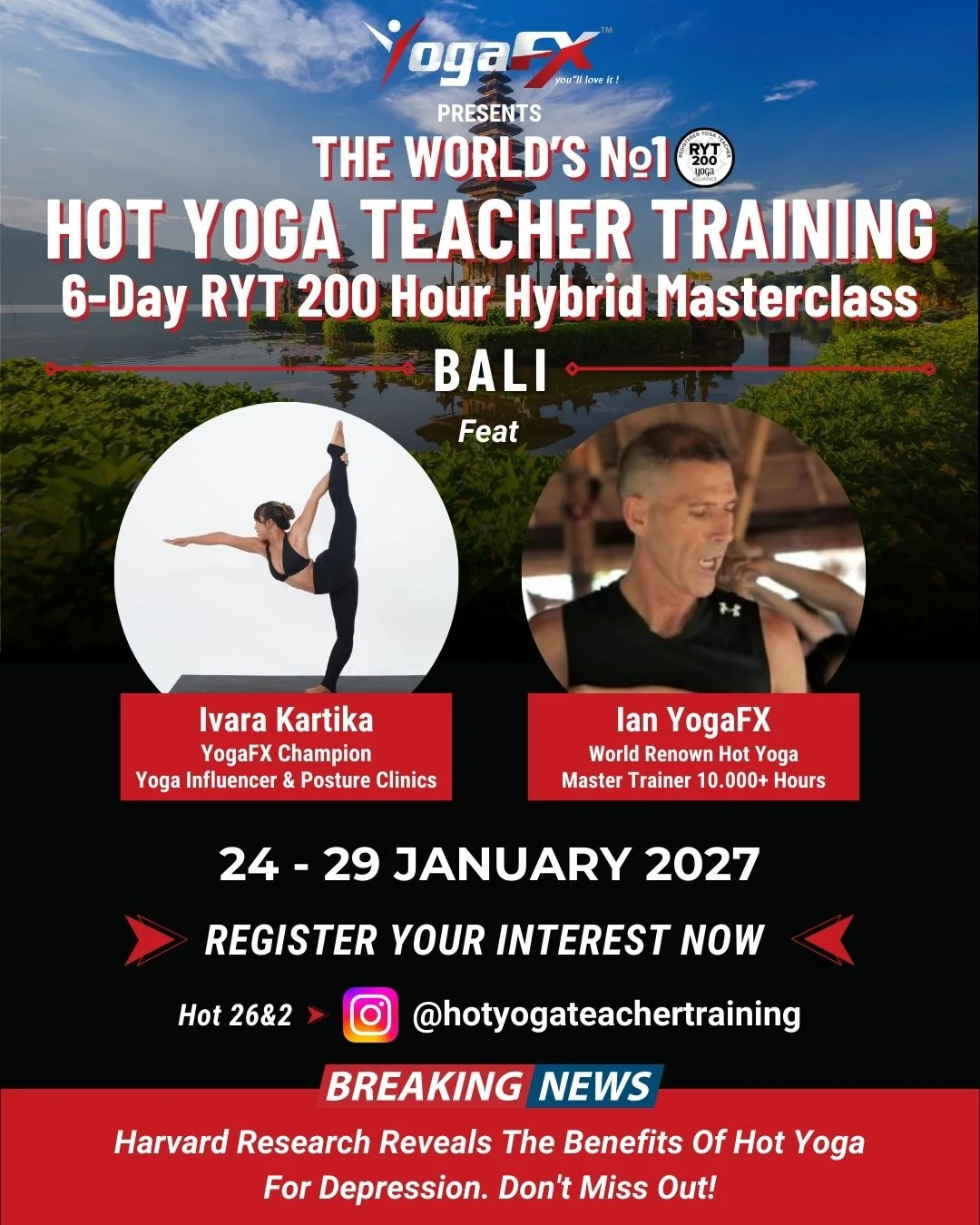
YogaFX combines a broad 200-hour foundation with a method-specific Original Hot 26&2 track. Successful trainees receive dual certification: Yoga Alliance RYT 200 plus a Bikram Hot 26&2 certificate. The program has operated since 2017 and has trained 1,500+ graduates from over 80 countries.
The hybrid structure places self-paced theory and preparation online before a six-day practical intensive in Bali. This is not six days presented as the entire 200 hours. The pre-course establishes material trainees need before arrival. The in-person stage concentrates on posture clinics, dialogue, observation, timing, repeated teaching, feedback, heat adaptation, and assessment.
Cohorts are capped at 19 students. A defined cap matters because dialogue and classroom decisions improve through direct correction, not passive watching. Candidates should still ask how many teaching rounds they receive, who evaluates them, and what standard is required to graduate.
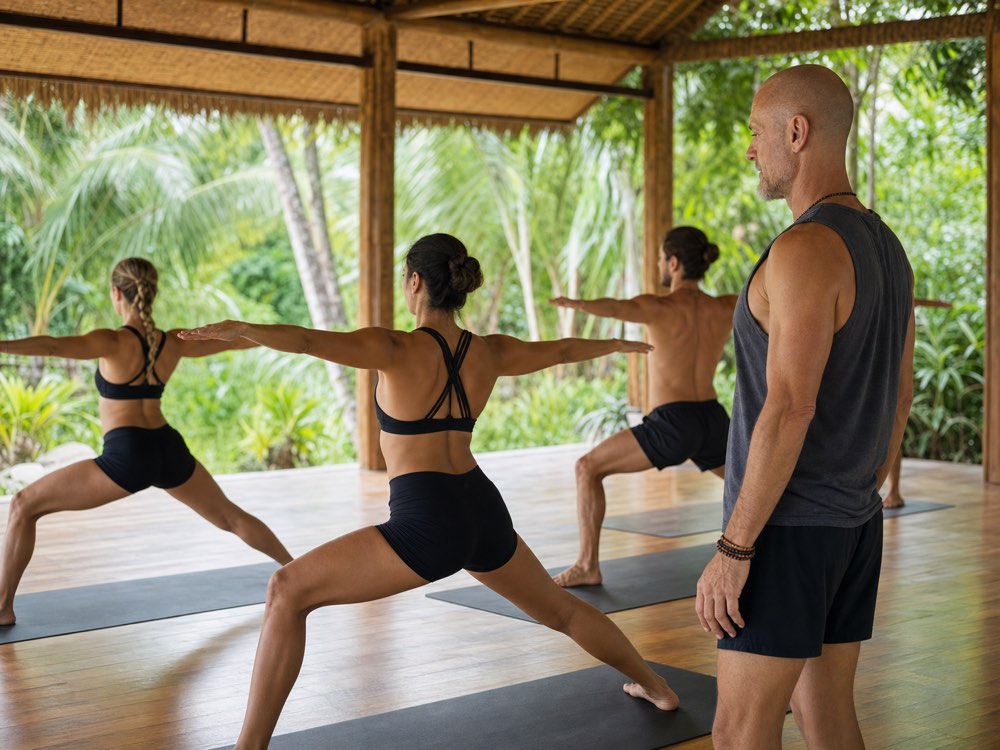
Training uses Bali's natural tropical heat rather than electric heaters. Conditions are approximately 40°C with 40% humidity. The fixed 90-minute method includes 26 postures and two breathing exercises, delivered through scripted verbal dialogue without instructor demonstration or music. Studio activity spans Seminyak and Canggu, with opening hours from 06:00 to 22:00 daily.
A 2025 systematic review of 43 studies involving 942 participants examined physical and psychological outcomes associated with this style of practice. Earlier controlled research by Tracy and Hart reported a 20% increase in deadlift strength after eight weeks in healthy young adults, alongside flexibility and body-composition changes. Research results describe study groups and do not guarantee individual outcomes.
For curriculum, credentials, and format details, return to the full 200-hour yoga teacher training guide. Review the evidence, then ask how your practice history and career plan fit this specialist pathway.
Behind the Scenes of Becoming a Hot Yoga Teacher — Part 2
Bikram Hot 26&2 Yoga Teacher Training Part 2 | Exclusive Behind The Scenes Look | RYT 200 | Bali
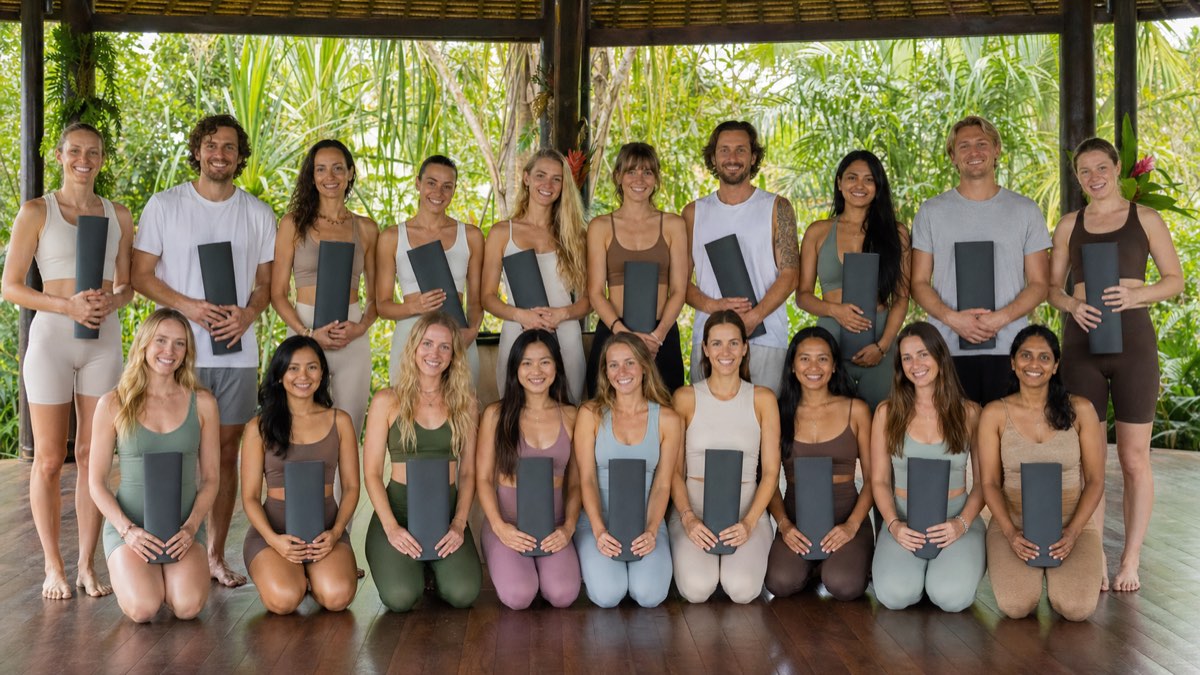
Part 2 offers a visual look inside an earlier YogaFX practical cohort, showing the group environment aspiring instructors encounter while developing Hot 26&2 teaching skills in Bali.
Do you have what it takes to become a great Bikram Hot Yoga teacher? Complete the short YogaFX readiness quiz to understand where you are on your teaching path and receive more personalized guidance.
Video context: the recording describes an earlier five-day format and January 2026 cohort. The current program uses online preparation followed by a six-day practical MasterClass.
How Long It Takes and What It Costs
The short answer to how many hours to become a yoga instructor is commonly 200 foundational training hours, although additional supervised practice, registration, insurance, and specialist education may be required for a particular job or teaching method.
A full-time 200-hour immersion commonly takes three to four weeks. Part-time formats can spread across several months of weekends. Hybrid courses may reduce time away by moving appropriate theory online and reserving direct attendance for practical teaching. Compare actual hours, subjects, assessment, and feedback rather than judging a course by calendar length alone.
Costs range from a few hundred dollars for online study, such as the YogaFX Online Teacher Training, to several thousand dollars for live intensives. Total cost can include registration, materials, assessment, insurance, flights, accommodation, meals, transport, and missed income. A low tuition figure is not automatically better when essential practical experience or recognized certification is absent.
YogaFX lists its dual-certification hybrid program at USD 1,699 flat, with online preparation followed by six practical days in Bali. Travel and living costs should be budgeted separately. Use the yoga teacher training cost breakdown to compare complete expenses rather than headline tuition.
Building a Teaching Career After Certification
Most graduates do not move directly into a full weekly schedule. A realistic start can include community classes, substitute teaching, assisting an experienced instructor, or a studio mentorship. These roles develop room awareness, reliability, and communication without asking a new teacher to solve every situation alone.
Prepare for auditions. Studios may ask you to teach a short segment, explain your training, and respond to feedback. Practise with a timer and record your voice. Clear language, calm attention, and the ability to follow the studio's method usually matter more than performing advanced postures.
Once you receive a class, protect consistency. Review the practical yoga instructor job description, arrive early, understand emergency procedures, maintain insurance where required, and communicate changes promptly. Track attendance without treating every quiet week as failure. Ask for feedback from managers and continue practising with teachers you respect.
Some instructors later pursue a 300-hour program, population-specific education, private teaching, workshops, retreats, or studio ownership. Advanced training makes most sense when it answers a real gap discovered through teaching. Collecting credentials before gaining classroom experience can be less valuable than focused mentorship.
Training lineage and style specialty often shape the first studios willing to hire you. A broad foundation can support general classes. A well-documented hot yoga specialty can qualify you for fixed-sequence rooms that require dialogue, timing, and heat-management experience. Neither path guarantees employment, and no responsible training provider should promise a salary.
Keep your scope clear. Yoga teaching does not qualify you to diagnose an injury, prescribe rehabilitation, provide psychotherapy, or tell students to stop medical treatment. Refer clinical questions to qualified professionals. A sustainable career is built on competence, boundaries, ongoing study, and trust.
Frequently Asked Questions
Do you legally need a certification to teach yoga?
In most countries, including the US and UK, there's no legal requirement or governing body mandating certification to teach yoga. In practice, though, studios, gyms, and liability insurers almost universally require a recognized certification, typically Yoga Alliance RYT 200, before hiring or covering an instructor.
How long does it take to become a certified yoga instructor?
Most 200-hour certifications take 3 to 4 weeks as a full-time immersion, or several months spread across weekends. Intensive hybrid formats compress this further. YogaFX's program pairs self-paced online pre-course study with a 6-day in-person intensive in Bali, completing the full 200 hours without a month-long commitment.
How much does it cost to become a certified yoga teacher?
Costs vary widely by program, location, and format, generally ranging from under a thousand dollars for online-only courses to several thousand dollars for in-person intensives abroad. YogaFX's dual-certification 200-hour program in Bali is a flat USD 1,699, covering both tuition and Yoga Alliance registration.
Can you become a yoga instructor for free?
Free or very low-cost 200-hour programs exist, but most trade cost savings for larger class sizes, less individual feedback, or an unaccredited certificate that studios and insurers won't recognize. If budget is the main barrier, look for payment plans or scholarships at accredited schools instead.
How is hot yoga teacher training different from Vinyasa or Hatha training?
Vinyasa and Hatha training focus on breath-linked flow or held postures across varying sequences. Hot yoga teacher training, like YogaFX's Original Hot 26&2 program, centers on a fixed 26-posture, 2-breathing-exercise sequence delivered through scripted verbal dialogue in a heated room, rather than freestyle cueing.
What can you do after getting certified?
Certified instructors typically start by teaching community or studio classes, sometimes through a mentorship period before leading solo. Many also pursue advanced 300-hour or specialty certifications, or eventually open their own studio. Where you trained, and its heat and style specialty, often shapes which studios will hire you first.