How to Become a Yoga Teacher: The Complete Step-by-Step Path
By Ian Terry, E-RYT 500 · Updated
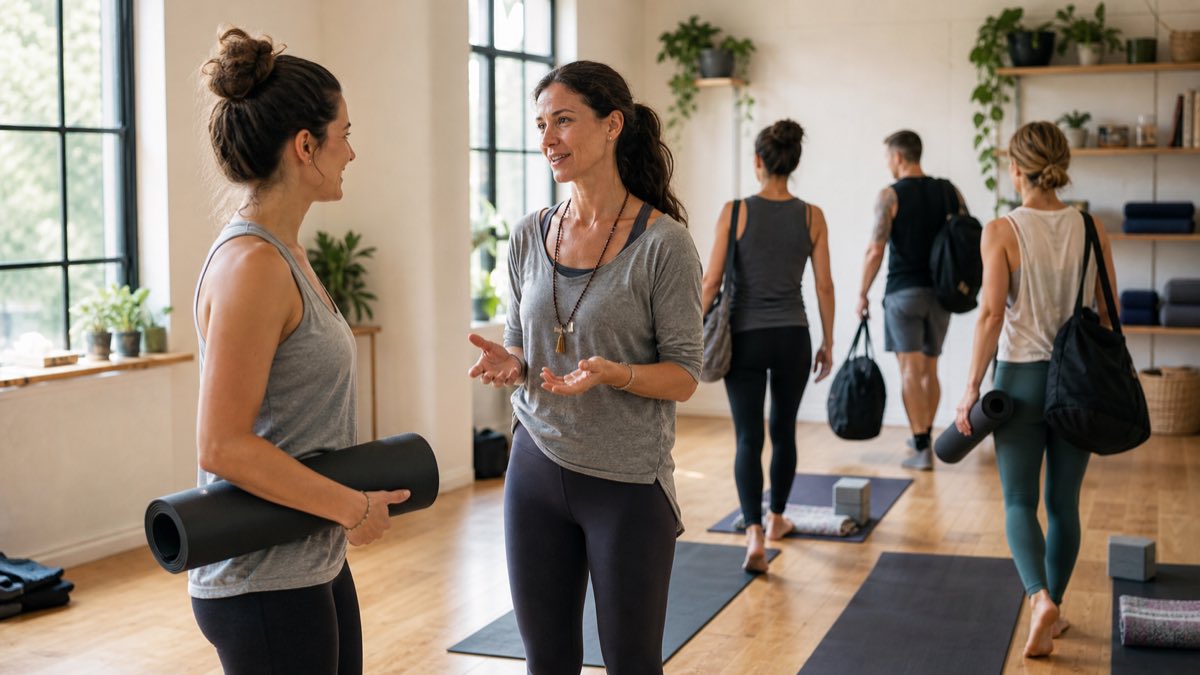
Learning how to become a yoga teacher starts with a consistent personal practice, followed by choosing a specialization, completing credible 200-hour education, registering for any relevant professional credential, assisting experienced teachers, and gradually leading your own classes. The certificate is an important checkpoint. It is not the moment learning ends, nor proof that you are ready for every student or every method.
Understand What a Yoga Teacher Actually Does
A yoga teacher does more than perform postures at the front of a room. The work includes planning, communication, observation, timing, safety, inclusion, professional boundaries, and the ability to adjust language when students do not understand. You are responsible for the learning environment even when you are not responsible for every choice a student makes.
Good teaching begins with seeing people. Who is new? Who cannot hear? Who appears confused? Is somebody trying to copy an advanced variation that is not appropriate for them? Can everyone move without colliding? A teacher must hold the structure of the class while paying attention to individuals without turning a group session into diagnosis or treatment.
Your professional scope matters. Yoga education may support movement, attention, and wellbeing, but a standard teacher training does not qualify you to diagnose injuries, prescribe rehabilitation, provide psychotherapy, or tell a student to stop medical care. Refer health questions to qualified professionals. If you teach populations with specific needs, obtain education that matches that responsibility.
The role also includes ordinary business behavior. Arrive before students, understand emergency procedures, maintain insurance where required, protect private information, invoice correctly, and communicate cancellations promptly. Studios remember teachers who are dependable. Students return when the environment feels clear and respectful.
Before searching how to become a certified yoga instructor, ask why you want to teach. Enjoying personal practice is a good beginning, but teaching redirects attention from your experience to the student's learning. If you mainly want a deeper practice, a non-teaching immersion may fit better. If you are willing to observe, repeat, prepare, and accept correction, teacher education may be the right next step.
Step 1: Build a Consistent Personal Practice
You do not need to master every posture before training. You do need enough repetition to know that yoga is more than a short-lived interest. Consistency lets you experience plateaus, modifications, fatigue, progress, frustration, and the difference between useful discipline and forcing. Those experiences later help you speak to beginners without pretending practice is always easy.
There is no universal minimum number of months. A strong candidate may practise three times per week for a year, while another may have several years of irregular experience and limited foundational understanding. Look at quality and continuity. Can you follow basic instructions, recognize your limits, and maintain attention when a class is not exciting?
Practise with more than one competent teacher inside your chosen style. Notice how different words affect understanding. Observe transitions, room setup, consent, use of props, and how teachers respond when somebody needs an option. Do not copy personality. Study decisions.
Keep a simple journal. Record what confused you, which cues changed a posture, where you rushed, and how heat or fatigue changed attention. The journal is not proof of spiritual achievement. It builds the habit of observation that a teacher needs.
If you are considering heated practice, acclimatize gradually and discuss relevant medical conditions, pregnancy, or medication effects with a healthcare professional. Heat tolerance is not a character test. Dizziness, confusion, chest pain, or unusual distress should never be reframed as weakness.
Use this phase to speak with working teachers. Ask what their week actually contains, how they found early classes, which skills training did not fully prepare them for, and what they wish they had understood before enrolling. Their answers will make your school comparison more specific.
Step 2: Choosing Your Yoga Specialization
Yoga is not one standardized class. A flowing vinyasa session, supported restorative practice, children's class, prenatal course, and fixed Original Hot 26&2 Yoga sequence place different demands on a teacher. Choose a foundation broad enough to support professional basics and a specialization specific enough to guide where you can teach.
Start with the practice you know and respect. Then study local demand. Review studio schedules, attend classes, speak with managers, and look at instructor requirements. A common style may offer more classes but also more applicants. A specialist method may offer fewer rooms but a smaller pool of qualified teachers.
Original Hot 26&2 Yoga uses 26 postures and two breathing exercises in a fixed 90-minute sequence. Teaching relies on scripted verbal dialogue without demonstration or music. The teacher must observe timing, alignment, and student response while managing a room at approximately 40°C. General yoga training alone does not automatically provide that method-specific preparation.
If heated teaching interests you, read the complete hot yoga teacher training guide. It explains methods, trainer access, anatomy, practicum, certification language, cost, and the questions that expose weak programs. That is the point where this broad career path becomes a specialist decision.
Do not select a specialty only because its social media looks impressive. Ask whether you would still study it when progress is slow and whether you can imagine teaching its beginners with patience. The market needs competent teachers, not collectors of course titles.
Specialization can continue after a foundational 200-hour course. Many teachers first build broad classroom skill, then add focused education after encountering a genuine student need. This sequence is often more useful than purchasing several certificates before teaching a single class.
Step 3: Choose an Accredited 200-Hour School
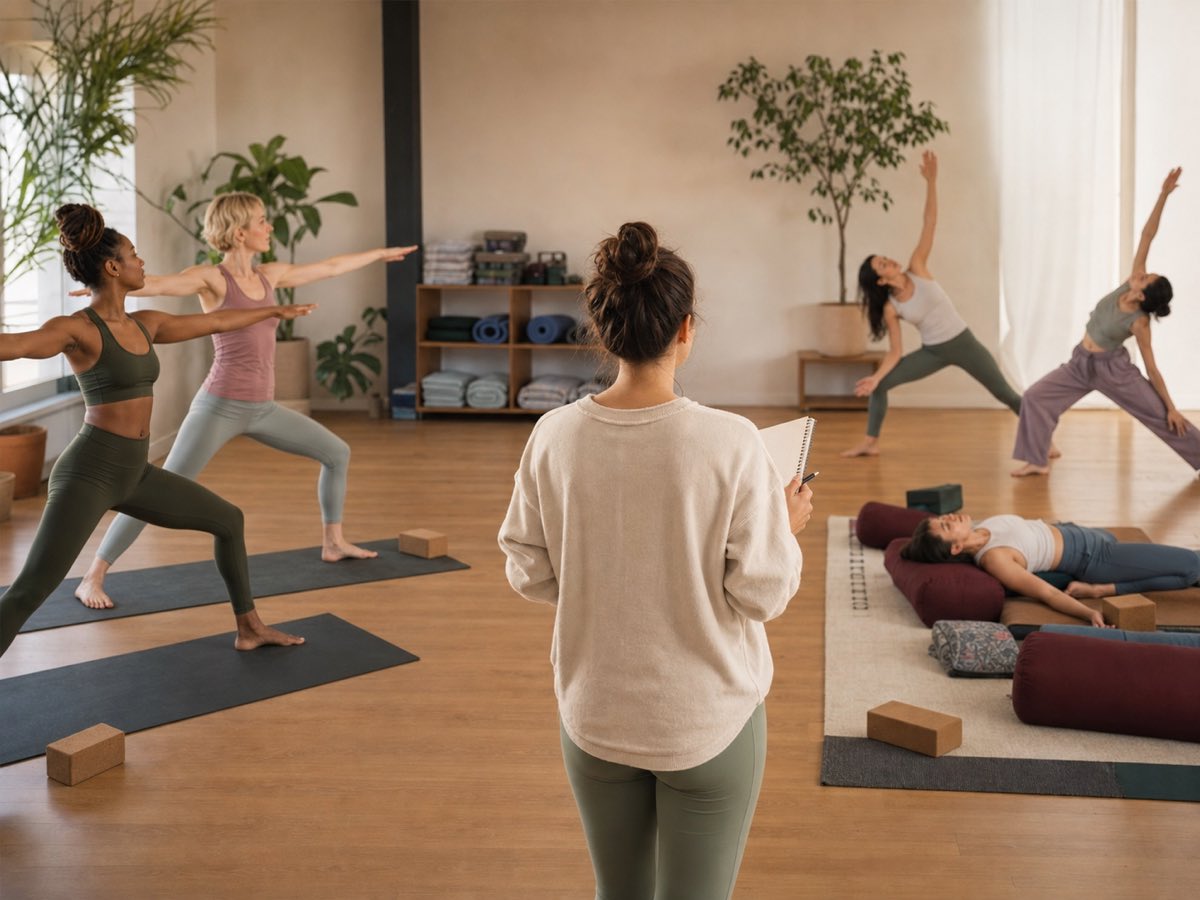
A 200-hour course is the common entry point for professional yoga education. The number alone does not prove quality. Compare curriculum, trainer experience, contact hours, practice teaching, feedback, assessment, cohort size, attendance policy, graduate support, and what the certificate actually states.
Yoga Alliance operates a voluntary registry rather than a government license. According to its current RYT credential standards, an applicant can obtain RYT 200 after completing a 200-hour training with a Registered Yoga School. Teaching hours are not required for initial RYT 200 registration. Registration is separate from graduation and carries its own application process and policies.
Verify a school's current status directly rather than relying on an old logo. Ask which legal entity issues the certificate, which training track it covers, and whether all advertised credentials are included in tuition. If a course offers method-specific certification, request the assessment requirements in writing.
Trainer access is critical. Who teaches most sessions? Who evaluates practicum? How many trainees share feedback time? A famous lead trainer is less useful if assistants deliver most education and the lead appears only for photographs. Ask for a typical day and the number of times you will teach before final assessment.
Examine format by subject. Anatomy, philosophy, terminology, and lesson preparation can work online when teaching is live, structured, and accountable. Voice, observation, room management, hands-on setup, and heat adaptation need supervised practical work. If flexibility matters, compare the detailed guide to online and hybrid hot yoga teacher training.
Read refund, deferral, resit, attendance, and complaint policies before paying. Confirm accommodation, meals, travel, materials, registration, and assessment fees. Pressure to deposit immediately is not evidence that a program is right for you.
Steps 4 and 5: Complete Training and Register as RYT 200
Enter training ready to participate, not merely collect hours. Complete pre-course work, arrive prepared, ask precise questions, teach before you feel polished, and apply feedback in the next round. The uncomfortable move from knowing a posture to explaining it is where professional learning becomes visible.
A balanced curriculum should connect anatomy to instruction, philosophy to ethics, and teaching theory to live practice. Memorizing muscle names without improving a cue is not enough. Discussing values without applying consent or scope is not enough. Every topic should influence what you do with students.
Take practicum seriously. Short segments teach voice and sequencing. Full classes expose pacing, attention, and stamina. Peer feedback develops listening, while trainer feedback should be specific enough to repeat. "Be confident" is vague. "Finish the breathing instruction before adding an alignment cue" gives you a usable task.
Assessment may include attendance, written work, demonstration of knowledge, teaching performance, and professional conduct. Ask what happens if you do not meet a standard on the first attempt. A credible school protects the meaning of its certificate while explaining a fair route to improvement.
After successful graduation, decide whether RYT 200 registration serves your market. Follow Yoga Alliance's current application steps, maintain the required records, and understand ongoing policies. Do not describe yourself as registered before registration is active. A school certificate and an external registry designation are related but not identical.
Keep copies of certificates, assessment records, CPR or first-aid credentials, insurance, and continuing education. Studios may request different combinations. Local law and employer requirements take priority over a generic online checklist.
Steps 6 and 7: Assist First, Then Begin Teaching
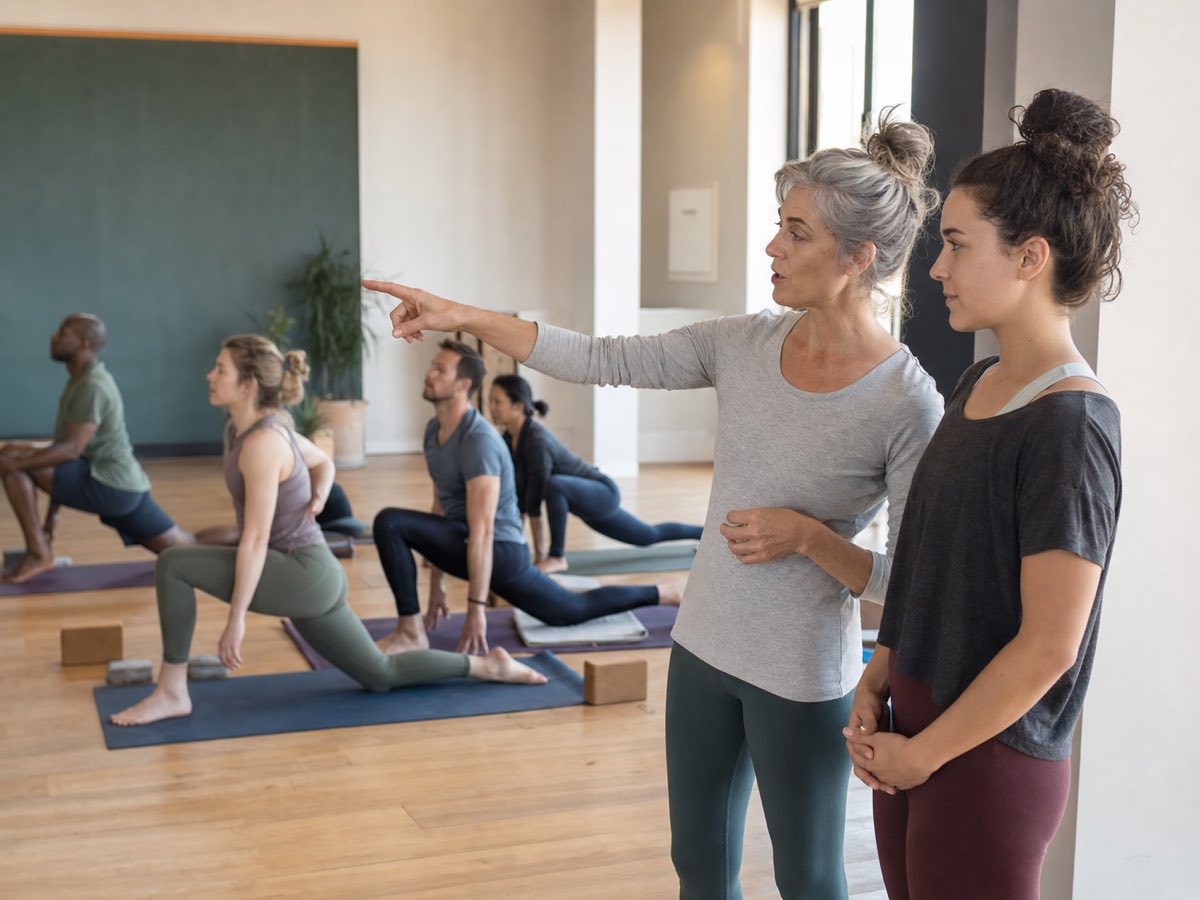
Graduation does not require you to pretend you are experienced. Ask to observe or assist a teacher you respect. Help with room setup, welcome new students, watch how the teacher handles late arrivals, and discuss decisions afterward. Assisting builds context without placing the entire class on your shoulders.
Substitute teaching is a common first opportunity. It proves reliability and exposes you to different rooms. Prepare the method rather than reinventing it to impress the manager. Arrive early, know the studio procedure, stay within the agreed format, and send a concise follow-up after class.
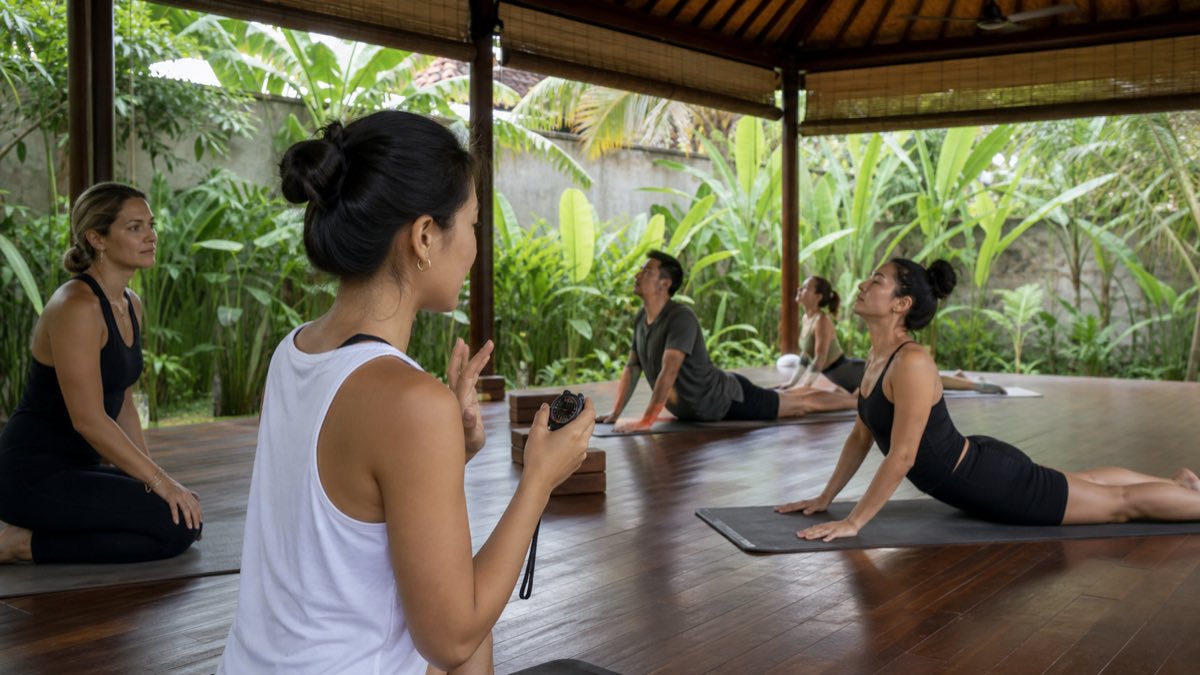
Auditions usually test clarity, presence, sequencing, and how well you receive direction. Practise a short segment with a timer. Record your voice. Remove unnecessary words. Make sure instructions can be followed by someone who cannot see you clearly.
When you receive a recurring class, protect consistency. Students need to know what the class offers. Track attendance without treating every quiet week as failure. Ask the studio what support exists for promotion and when performance is reviewed.
Continue personal practice without turning it into performance pressure. A teacher who stops learning becomes dependent on old scripts. Attend other teachers' classes, seek mentoring, and choose continuing education based on problems you actually encounter.
The U.S. Bureau of Labor Statistics notes that employers often prefer fitness instructors with certification and that new trainers may work alongside experienced trainers before working independently. Its fitness trainer career profile also describes communication, listening, customer service, and problem-solving as central qualities. Those are daily teaching skills, not decorative additions to posture knowledge.
How Long the Path Takes and What Early Finances Look Like
The full timeline has three parts: practice before training, formal education, and the transition into regular work. A serious personal foundation may take a year or more. A 200-hour course can be delivered intensively or spread across months. Registration may be quick once documents are ready, but building a dependable class schedule often takes additional months.
Do not compare programs only by calendar length. Six focused practical days after substantial online preparation are different from six days with no preparation. A six-month weekend course may still provide little supervised teaching. Ask what work occurs, how it is assessed, and how quickly feedback is applied.
Financially, early teaching is often part-time. You may begin with substitute work, one recurring class, or an assistant role. Keep another income source until bookings are reliable if your circumstances require it. Avoid assuming that certification immediately replaces a salary.
The article on realistic yoga teacher salary and income compares BLS and job-posting data, per-class economics, employment status, schedule density, and additional revenue streams. Use it to build a conservative forecast. It includes no guarantee because no responsible school can promise what a graduate will earn.
On the expense side, review the complete teacher training cost breakdown. Include tuition, travel, accommodation, materials, insurance, registration, time away from work, and later education. A cheaper course is not better if it leaves you paying for missing practical skill.
Think in stages. First, recover competence rather than cost: can you teach safely and clearly? Next, create a stable schedule. Then assess whether private work, workshops, or specialist education fits genuine demand. Trying to monetize every format immediately can weaken the foundation students need.
The YogaFX Original Hot 26&2 Path in Bali
For a candidate already committed to heated fixed-sequence teaching, YogaFX provides a concrete specialist route. The pathway combines online pre-course preparation with a six-day practical intensive in Bali. Successful trainees receive the stated RYT 200 and Bikram Hot 26&2 dual certification. The listed tuition is USD 1,699 flat, and each cohort is capped at 19.
The practical work uses Original Hot 26&2 Yoga: 26 postures, two breathing exercises, a fixed 90-minute sequence, and scripted verbal dialogue without music or teacher demonstration. Sessions use Bali's natural tropical heat at approximately 40°C and 40 percent humidity, never electric heaters.
Studio activity spans Seminyak and Canggu, with opening hours from 06:00 to 22:00 daily. Online preparation covers material that can be studied before arrival. Bali time is then protected for dialogue, room observation, sequence timing, repeated teaching, feedback, heat adaptation, and assessment.
Mr. Ian Terry is an E-RYT 500 and Master Trainer of the Republic of Indonesia Yogasana Sports Federation. He has logged more than 12,000 teaching hours, trained more than 1,500 graduates from over 80 countries, and completed five direct training sessions under Bikram Choudhury between 2012 and 2019. That experience matters because trainees need correction from someone who has led real rooms repeatedly.
The academy has operated this pathway since 2017 and reports more than 400 five-star Google reviews and over 200 YouTube testimonials. Treat those accounts as evidence to investigate, not a substitute for your own questions. Ask graduates what they taught, how feedback worked, and where they still needed support afterward.
The accelerated format is not a shortcut around 200-hour education. It moves preparatory work online and concentrates the in-person period. You still need time, preparation, physical readiness, and full participation. If your interest is general flow, restorative, prenatal, or another method, choose a school built for that goal instead.
Review the complete training program and speak directly with the team before enrolling. Ask how your experience fits the prerequisites, what must be finished before Bali, how teaching is assessed, and what the two credentials mean in your intended market.
Frequently Asked Questions
How long does it take to become a certified yoga teacher?
A 200-hour course may run from several intensive weeks to many months, but preparation starts earlier. Build a consistent personal practice first, then allow time for training, registration, assisting, auditions, and substitute work. Reaching a reliable weekly schedule commonly takes longer than receiving the initial certificate.
Can I teach yoga without formal certification?
In some places, informal teaching is not legally restricted, but many established studios, gyms, insurers, and clients expect recognized training. A certificate does not replace competence, yet it documents foundational education and assessment. Check local law, insurance requirements, employer policy, and your professional scope before teaching anyone.
Do I need teaching experience before yoga teacher training?
No prior classroom experience is usually required for entry-level training. You do need enough personal practice to understand basic instruction and how your body responds. Communication, reliability, observation, and willingness to receive feedback matter. A credible course should provide supervised practice before expecting you to lead independently.
Can I become a yoga teacher for free?
You can study free resources, assist community classes, and deepen personal practice without paying, but a recognized 200-hour credential normally requires enrolled training and assessment. Scholarships, work-study arrangements, and payment plans may reduce cost. Verify what any free offer includes before assuming it leads to recognized certification.
Can I become a yoga teacher entirely online?
Theory can be learned online, but teaching also requires observation, voice, timing, adaptation, and live feedback. Some employers accept online credentials and others prefer in-person assessment. A hybrid course can preserve flexible preparation while requiring practical teaching. Confirm current school registration and employer expectations before enrolling.
Which yoga style is most in demand?
Demand changes by city, studio, population, and timetable, so there is no universal winning style. General flow classes are common, while specialist methods may face fewer qualified applicants. Research local schedules and job listings, then choose training you can teach safely and consistently rather than chasing one trend.