What You'll Actually Learn in a 200-Hour Hot Yoga Teacher Training
By Ian Terry, E-RYT 500 · Updated
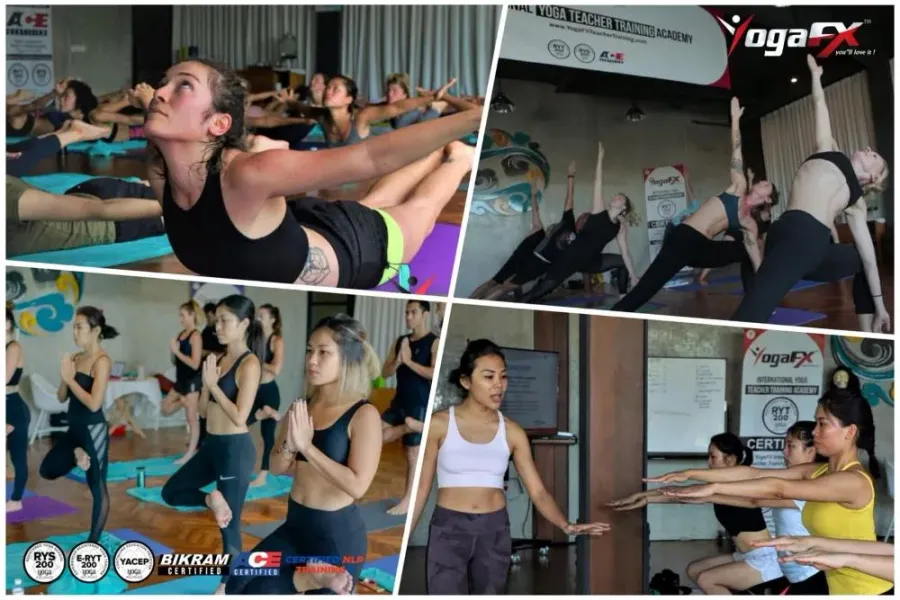
A 200-hour hot yoga teacher training should teach you how to practise, observe, communicate, plan, and lead within a clear professional scope. The curriculum is not 200 hours of posture performance. It should connect anatomy, philosophy, ethics, verbal instruction, heat awareness, and repeated teaching practice so that you can make sensible decisions when a real student responds differently from the textbook.
What 200 Hours Really Means
The number describes an educational pathway, not a guarantee that every course uses time equally. One school may provide substantial live trainer contact and supervised practicum. Another may place more weight on self-study. Ask for a timetable that separates live instruction, recorded learning, personal practice, assignments, peer work, and assessment. The detail reveals more than the headline.
Your first learning task is moving from practitioner to teacher. A practitioner can focus inward. A teacher must see the room, maintain structure, communicate purpose, and recognise when a person needs a different option or professional referral. Training should give you manageable pieces of that responsibility, then combine them under pressure gradually.
Method also matters. "Hot yoga" is an umbrella term. A 200-hour course may teach creative heated flow, a strength-oriented format, or a fixed sequence. Original Hot 26&2 Yoga uses 26 postures and two breathing exercises in a 90-minute class. The teacher relies on scripted verbal dialogue, without demonstration and without music, which makes observation and language central curriculum subjects.
A useful course explains what it does not teach. Two hundred hours cannot make you an expert in rehabilitation, nutrition, mental health, every yoga lineage, or every population. It can give you sound foundations, ethical boundaries, teaching practice, and a plan for continued education. Honest scope is a sign of maturity, not a weakness.
Expect preparation outside scheduled sessions. Reading, practice, dialogue rehearsal, reflection, and lesson preparation take time. Ask whether those hours are included in the advertised total and how completion is recorded. Your calendar needs room for study as well as attendance.
Anatomy, Physiology, and Research
Anatomy should answer teaching questions. What movement is being requested? Which joints are involved? Why might two students look different while following the same intention? What language helps without forcing a shape? Memorising muscle names has limited value if it never changes your cueing or observation.
Physiology adds context for breath, exertion, recovery, and heat. Trainees should learn that tolerance varies and that hydration is not a competition. Medication, pregnancy, cardiovascular history, recent illness, sleep, and acclimatisation can change response. If you have health concerns or are unsure whether heated exercise suits you, consult a healthcare professional before training.
Research literacy protects students from exaggerated claims. A 2025 systematic review examined reported outcomes associated with Bikram yoga, including flexibility and bone-related measures. It offers useful context while also reminding readers that study designs, populations, and evidence strength vary. Read the Willmott et al. review rather than relying on a promotional summary.
A 2013 study by Tracy and Hart explored strength, flexibility, and body composition following Bikram yoga training. It can help teachers discuss what researchers have measured, but it does not support promising identical outcomes to every student. See the study record on PubMed.
Good training also rejects detox language. Sweating is part of thermoregulation, not proof that a yoga class cleanses the body of undefined toxins. Teachers can describe the practice accurately without inventing mechanisms. Precision builds more trust than a dramatic claim.

Philosophy, Ethics, and Professional Scope
Yoga philosophy should shape conduct, not decorate a manual. It can invite reflection on discipline, non-harming, truthfulness, attention, service, and the relationship between practice and ego. The point is not to make trainees repeat Sanskrit terms without context. It is to ask how principles affect power, consent, inclusion, money, and communication.
Ethics becomes practical quickly. How do you respond when a student discloses an injury? What information stays private? When is physical contact appropriate? How do you avoid exploiting the authority students give a teacher? What do you do when your skill is not enough? Scenarios make these questions harder and more useful than a signed code alone.
Scope is equally important. Yoga teachers teach yoga. They do not diagnose disease, promise cures, replace mental health treatment, or prescribe changes to medication. You may communicate general options supported by your education and refer students to qualified healthcare professionals. A mature trainer models that restraint in both class and marketing.
In heated practice, ethics includes allowing rest and exit. Discipline does not mean trapping someone in a room or treating symptoms as failure. Teachers can encourage focus while respecting autonomy. Clear orientation before class reduces confusion: where to place belongings, how to rest, when to seek help, and what the room conditions will be.
Dialogue, Scripting, and Teaching Method
A script can look restrictive until you understand its purpose. Shared language creates a stable class structure and gives a new teacher a reliable starting point. Learning it develops memory, precision, and timing. Yet memorisation is only the first layer. You must understand what the words ask, observe whether students understand them, and deliver them as communication rather than recital.
Voice training covers breath, projection, articulation, pace, and recovery. A 90-minute class exposes habits that a five-minute presentation hides. You may rush under pressure, drop sentence endings, repeat filler words, or become too loud. Recording helps, but live teaching reveals whether your voice reaches different parts of the room.
Observation and dialogue work together. If you demonstrate throughout class, your attention is partly occupied by your own movement. In Original Hot 26&2 Yoga, verbal teaching without demonstration asks you to watch. The challenge is choosing when to maintain the standard dialogue, when to clarify, and when not to overload a student with extra words.
Method-specific study should also cover sequence logic, class timing, transitions, common misunderstandings, and the role of consistency. You are not only collecting cues. You are learning a repeatable system deeply enough to teach it without making the room dependent on your personality.
Practicum, Feedback, and Assessment
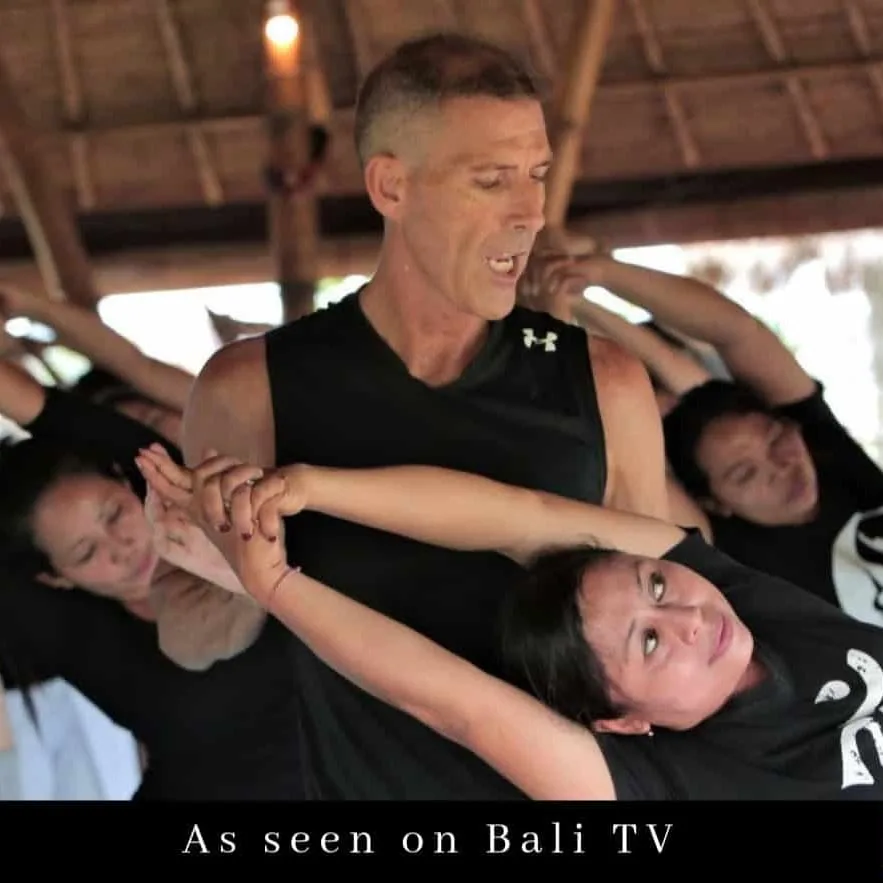
Practicum is where the curriculum becomes visible. Start with short sections, then teach complete postures and transitions. Add classmates who intentionally make common mistakes. Practise orienting a beginner, responding when someone rests, and continuing after losing your place. Difficulty should increase as competence develops.
Feedback must be actionable. "Be confident" offers no method. "Plant your feet before speaking, finish the setup, scan the back row, and reduce repeated words" gives you behaviours to practise. The next teaching round should happen soon enough to apply correction while it is fresh.
Assessment should be transparent. Ask for criteria covering sequence knowledge, dialogue accuracy, safety, observation, timing, professionalism, and responsiveness. Find out whether a weak area requires reassessment and whether resits cost extra. Fair standards are easier to accept when you know them early.
Peer feedback can help, but it should not replace trainer judgment. Trainees may notice how instructions feel, while experienced trainers can prioritise what matters for safe and coherent teaching. A balanced process teaches peers to be specific and respectful without making them responsible for certification decisions.
After graduation, keep practising. Teach manageable classes, observe experienced teachers, review recordings when appropriate, and seek mentorship. The credential marks completion of a foundation. It does not end education.
The YogaFX Dual-Certification Path
YogaFX combines online pre-course study with a six-day intensive in Bali. The online phase prepares theory and dialogue. The in-person phase concentrates on practice teaching, correction, room awareness, and assessment under natural tropical heat at approximately 40°C and 40% humidity. Cohorts are capped at 19 participants.
Mr. Ian Terry, E-RYT 500, leads from more than 12,000 teaching hours and five direct training sessions under Bikram Choudhury between 2012 and 2019. He has trained more than 1,500 graduates from over 80 countries and was confirmed in June 2026 as Master Trainer of the Republic of Indonesia Yogasana Sports Federation.
The academy has delivered training since 2017. Successful graduates receive Yoga Alliance RYT 200 and Bikram Hot 26&2 certification. Tuition is listed at USD 1,699 flat. Studios in Seminyak and Canggu operate from 06:00 to 22:00 daily, giving the intensive a real practice environment rather than a conference-room simulation.
Compare this curriculum with the complete program-selection guide, the analysis of online versus hybrid training, and the guide to pros, cons, and program red flags. Then review the YogaFX program requirements and ask Mr. Ian what preparation is expected before Bali.
Build a personal curriculum audit
Before enrolling, copy the proposed timetable into a spreadsheet. Give each session one primary category: practice, anatomy, humanities, professional essentials, dialogue, practicum, feedback, or assessment. Then mark delivery as recorded, live online, in person, peer-led, or self-study. This simple audit exposes repetition, missing subjects, and practical hours that are described more generously than they operate.
Ask what work proves learning in each category. Anatomy may use a written assignment plus applied cueing. Dialogue may use timed delivery and live correction. Ethics may use scenarios. Practicum should require observable teaching. If every category ends with attendance or a multiple-choice quiz, the course may be measuring memory more than professional ability.
Finally, inspect progression. Foundations should appear before assessment, and feedback should appear before the final attempt. A compressed curriculum can still be coherent when online preparation establishes knowledge before intensive practice. What matters is that students are not assessed on a skill they had no supported opportunity to rehearse.
Include the learning sequence in your audit. Ask what happens during a typical week, when the first teaching attempt occurs, and how feedback from that attempt changes later work. A coherent sequence is easier to learn from than isolated lectures, even when both courses advertise the same number of hours.
Also confirm what successful completion means. Attendance, submitted assignments, and demonstrated teaching competence are different requirements. Request pass criteria and the resit process in writing. Clear standards help you plan study time and show that the certificate represents assessed work rather than participation alone.
Frequently Asked Questions
What subjects belong in a 200-hour hot yoga teacher training?
A sound curriculum normally combines practice, anatomy, physiology, philosophy, ethics, teaching methodology, communication, observation, practicum, and assessment. For heated methods, it should also address heat response, hydration, pacing, emergency awareness, teacher scope, and the specific sequence or class format graduates are expected to teach.
Will I teach a full class before graduating?
Ask the school directly because practicum design varies. Strong programs build from short dialogue segments to postures, transitions, room scenarios, and longer classes before final assessment. You should receive specific feedback and another chance to apply it, rather than completing one presentation with only general comments.
Is anatomy taught like a medical course?
No. Yoga teacher anatomy should support safe, understandable movement instruction and professional scope. It does not qualify graduates to diagnose injuries or prescribe treatment. Useful training connects anatomical concepts to actual cues, common movement variations, referral decisions, and respectful communication with students who have different bodies and histories.
What is dual certification in the YogaFX program?
After successfully meeting the stated requirements, graduates receive Yoga Alliance RYT 200 and Bikram Hot 26&2 certification. The first relates to a recognised 200-hour yoga education pathway. The second records method-specific preparation in Original Hot 26&2 Yoga, including dialogue, sequence, and practical teaching.
Is this official Bikram Choudhury Teacher Training?
Independent training, not official Bikram Choudhury Teacher Training. YogaFX teaches Original Hot 26&2 Yoga through its own hybrid program. Before enrolling, request written details about assessment, the two certificates, any registration steps, and how studios in the market where you plan to teach view those credentials.