Bikram Yoga Teacher Training from NYC: Why New Yorkers Fly to Bali
By Ian Terry, E-RYT 500 · Updated

There is no widely established, dedicated Bikram yoga teacher training in NYC that is based entirely in the city. Most local studios focus on practice classes rather than complete 26&2 teacher certification. That is why many New York students choose a specialist destination intensive in Bali instead of treating travel as a last resort.
New York offers a large and active hot yoga community, but practising the sequence locally and qualifying to teach it are different needs. A complete program requires an experienced trainer, structured online or classroom study, a suitable heated environment, repeated dialogue work, supervised teaching, feedback, and assessment. Those pieces are harder to assemble than a weekly studio timetable.
If you are still deciding whether to search locally or travel, read the broader case for traveling to train. This guide goes deeper on the practical decision for New Yorkers, including the journey, schedule, total budget, and what the Bali intensive actually asks of a student.
Why There Is No Widely Established Dedicated Bikram YTT Program Based in NYC
New York is one of the world's largest fitness markets, yet specialist teacher certification remains a narrow niche. General vinyasa and hatha 200-hour programs can recruit from a broad student base. A Bikram or Original Hot 26&2 course must find enough applicants who want the same fixed sequence, heated-room method, class length, and dialogue system at the same time.
The facility requirements are also specific. Students need more than lectures about teaching in heat. They need practical access to an appropriate room, a schedule that permits posture clinics and repeated teaching turns, and supervision from someone who understands the sequence. Commercial space, heating, class schedules, and instructor availability make a full specialist cohort more difficult to operate in New York than ordinary drop-in classes.
Search results can therefore be misleading. A studio may offer excellent 26&2 practice without running a complete certification program. Another course may use a heated room while training teachers for variable flow classes. Neither is automatically poor quality, but neither necessarily produces the specialist outcome a future Bikram teacher is seeking.
Define the credential before comparing locations. Ask whether graduates receive a Yoga Alliance-recognized 200-hour pathway, method-specific Hot 26&2 certification, or a short continuing-education certificate. Confirm who teaches, how many live teaching turns occur, how competence is assessed, and whether the advertised format includes practical heated-room instruction.
You can continue practising in New York while saving and preparing for training. The sister-site guide to Bikram yoga studios in New York is a companion resource for local practice, not a substitute for evaluating a complete certification program.
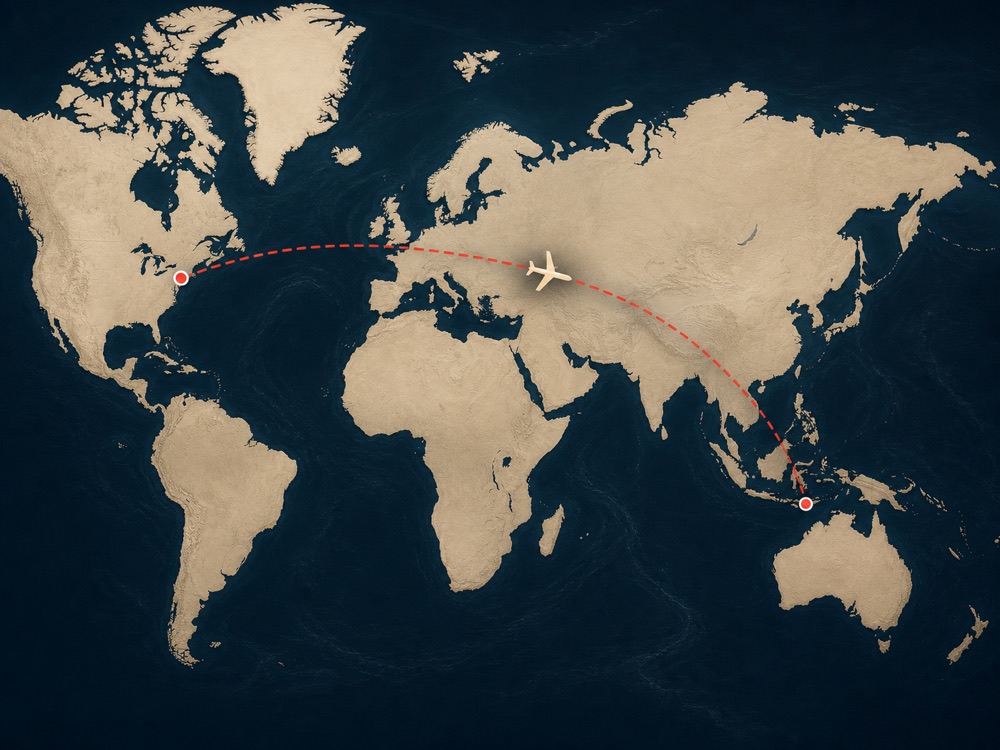
From NYC to Bali: What the Trip Actually Looks Like
Flying from the New York area to Denpasar is a long-haul journey. There is normally no simple nonstop itinerary. Routes typically use one or two connections through a major Asian or Middle Eastern hub. Exact travel time changes with the airline, connection length, departure airport, and season, so compare the complete itinerary rather than the first flight segment.
Book around training readiness, not only the lowest fare. Arriving one or two days before the intensive gives you time to sleep, adjust to the time difference, reach your accommodation, locate the studio, buy water and supplies, and become familiar with Bali's climate. Landing immediately before a full practical day can turn ordinary jet lag into an avoidable learning problem.
New York and Bali feel especially different during the northern winter. A January departure can move a student from cold, dry conditions into tropical warmth and humidity. That contrast is part of the destination appeal, but it also makes gradual adjustment useful. Wear light clothing after arrival, hydrate consistently, eat familiar food, and avoid filling the first day with sightseeing.
Bali's dry season generally offers lower rainfall, while the wetter months bring more humidity and showers. Training takes place indoors in either season, so the better date is often the cohort that fits your preparation, work leave, and flight budget. Confirm current training dates before booking a nonrefundable itinerary.
Choose accommodation according to the studio named for your cohort. Seminyak and Canggu are separate areas, and traffic can make a short map distance take longer than expected. Build realistic travel time into each morning. The goal is to enter class calm and early, not to create a daily commute that reproduces the pressure you left in New York.
Protect the six days from remote work. An intensive is valuable because the same material returns through practice, correction, and another attempt. Late-night calls on New York time reduce sleep exactly when attention matters most. Set expectations with clients or employers before departure and treat the practical week as a professional commitment.
The Six-Day Intensive Format: What NYC Students Should Expect
The YogaFX pathway is hybrid. Students complete a self-paced online pre-course before travelling. Preparation includes a 250-page manual, a Standing Series Workbook, more than 50 training talks, 15 video lessons, dialogue guides, anatomy study, and yoga philosophy. The online phase introduces material that can be learned at home so Bali time can focus on coached application.
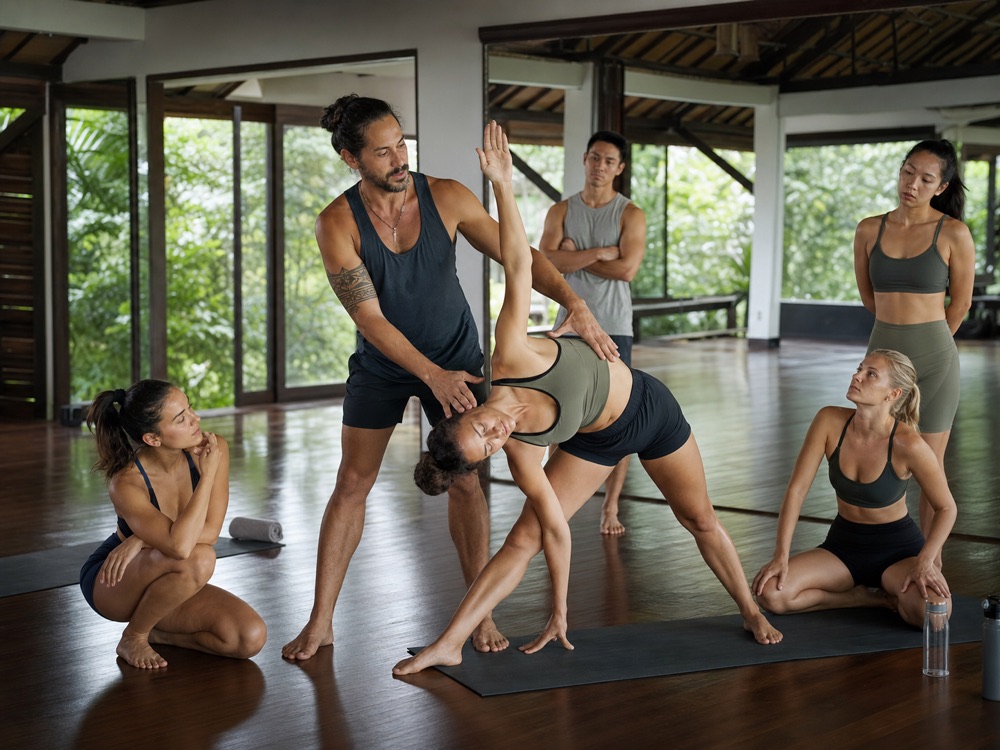
The six in-person days include full Hot 26&2 practice, posture clinics, scripted dialogue, voice and timing work, observation, practice teaching, correction, and assessment. Classes follow the fixed 26-posture and two-breathing-exercise sequence. The teacher leads verbally without demonstrating and without music, so trainees must learn to watch students while maintaining clear instructions.
This format does not claim that 200 hours fit inside six calendar days. The full pathway includes the required online preparation plus the practical intensive. Students arrive with foundational knowledge and then use the shared room for work that cannot be replaced by watching a screen. Successful graduates receive Yoga Alliance RYT 200 plus Bikram Hot 26&2 certification.
Beginners can apply, but beginner-friendly does not mean effortless. A trainee needs time to study before the flight, readiness to speak in front of peers, and enough humility to repeat material after correction. Flexibility is not the sole measure of teaching potential. Observation, communication, consistency, professional scope, and the ability to respond safely also matter.
The physical practice has been studied independently of teacher training. A controlled eight-week study by Tracy and Hart reported changes in strength, flexibility, and body composition among the healthy young adults studied. The findings do not guarantee an individual result or validate a particular school, but they help describe the physical discipline teachers learn to lead. Read the study indexed by PubMed.
Students with a health condition, pregnancy, or medication that affects temperature regulation should seek individualized medical advice before hot-room training. A credible teacher education program explains scope and heat awareness without promising treatment or cure.
Cost: NYC Living Costs vs a Bali Training Trip
A realistic comparison includes more than tuition. Staying in New York may remove airfare and accommodation, but it can add months of commuting, meals away from home, schedule conflicts, childcare, and lost weekend work. A destination intensive makes travel expenses visible while compressing the practical commitment into one protected block.
YogaFX tuition is USD 1,699. It covers online pre-course preparation and materials, the six-day practical Bali intensive, teaching practice, and assessment. Successful graduates receive the dual certification described above. Accommodation, meals, flights, visas, insurance, and local transport are separate.
Flight prices vary considerably by booking date, route, baggage, and season, so this page does not invent a fixed NYC-to-Bali airfare. Check several realistic itineraries, include a yoga mat or checked bag if necessary, and budget for one or two adjustment nights before the training. Keep a contingency amount for itinerary changes and ordinary travel needs.
Opportunity cost may matter more than small price differences. A multi-month local schedule can repeatedly interrupt work, while a six-day block may be easier to arrange as one leave period. The opposite can also be true if you cannot take consecutive days away. Compare your actual work and care responsibilities instead of assuming intensive always means cheaper.
Use the full hot yoga teacher training cost breakdown to create one total for tuition, travel, living expenses, insurance, and missed income. The cheapest headline price is not the best value when it provides a different credential or less supervised teaching.
Why YogaFX Bali Is a Practical Choice for New Yorkers
Mr. Ian Terry, E-RYT 500, leads the program. He has more than 12,000 teaching hours and has trained 1,000+ graduates from more than 80 countries. His E-RYT 500 credential describes his own education and experience. Qualifying students follow the separate RYT 200 plus Bikram Hot 26&2 certification pathway.
Training is delivered at YogaFX studios in Seminyak and Canggu. The rooms use Bali's natural tropical conditions at approximately 40°C and 40% humidity rather than electric heaters. For a New Yorker accustomed to climate-controlled urban studios, the environment provides direct experience of teaching and practising within sustained tropical heat.
Cohorts are capped at 19. That number matters because practical training requires each student to speak, observe, receive specific feedback, and try again. The six-day schedule is concentrated, but the smaller group protects access to coaching instead of turning the intensive into a large lecture event.
The academy reports 500+ reviews across Google, Yoga Alliance, and YouTube. Look beyond the total and read for repeated detail about preparation, organization, dialogue correction, trainer access, teaching turns, and assessment. Some graduates describe arriving unsure whether they could lead a room and leaving with greater confidence because they had already practised under observation. That pattern is social proof, not a guaranteed outcome.
The wider research base for heated yoga deserves careful wording. A 2025 scoping review by Willmott and colleagues found diverse methods, participant groups, and reported outcomes across the available studies. This supports evidence-aware teaching and specific claims rather than sweeping promises. Read the open-access review.
Bali is not a consolation choice for a missing NYC course. It is a destination format with a defined method, named trainer, dual credential, small cohort, and compact practical schedule. It is best suited to a student who completes the online preparation, budgets honestly, arrives early enough to adjust, and protects the week from outside work.
For another United States travel perspective, compare the route, timing, and local options in the guide to Bikram yoga teacher training from Los Angeles.
Continue with the detailed guide to hot yoga teacher training in Bali for the studios, climate, travel preparation, and program selection criteria. Then compare the current dates and requirements against your New York schedule before booking travel.
Frequently Asked Questions
Is there a Bikram yoga teacher training program based in NYC?
There isn't a widely established, dedicated Bikram or 26&2 teacher certification program based entirely in New York City. Most NYC studios offer drop-in hot yoga classes rather than teacher certification, which is why many NYC-based aspiring teachers pursue intensive programs in destinations like Bali instead.
How long is the flight from NYC to Bali for teacher training?
The trip typically involves one or two connections and is a long-haul journey, so most students plan to arrive a day or two before their training starts to adjust before the intensive schedule begins.
How long does the Bali intensive take?
YogaFX's program is a 6-day in-person intensive in Bali, preceded by an online pre-course, leading to dual RYT 200 and Bikram Hot 26&2 certification.
Is it worth flying from NYC to Bali for teacher training instead of a local option?
Given how rare dedicated hot yoga teacher certification programs are in most major cities including NYC, a focused destination intensive is often the more realistic path to certification, offering a concentrated, distraction-free training environment.
Is YogaFX's training an official Bikram Choudhury Teacher Training?
No. YogaFX offers independent Bikram Hot 26&2 teacher training, not an official Bikram Choudhury Teacher Training program. Training takes place at YogaFX's own studios in Seminyak and Canggu, Bali, under natural tropical heat.
What does the tuition price at YogaFX include?
The USD 1,699 tuition covers online pre-course preparation and materials, the six-day practical Bali intensive, teaching practice, and assessment. Successful graduates receive RYT 200 plus Bikram Hot 26&2 certification. Accommodation, meals, flights, visas, insurance, and local transport are not included.