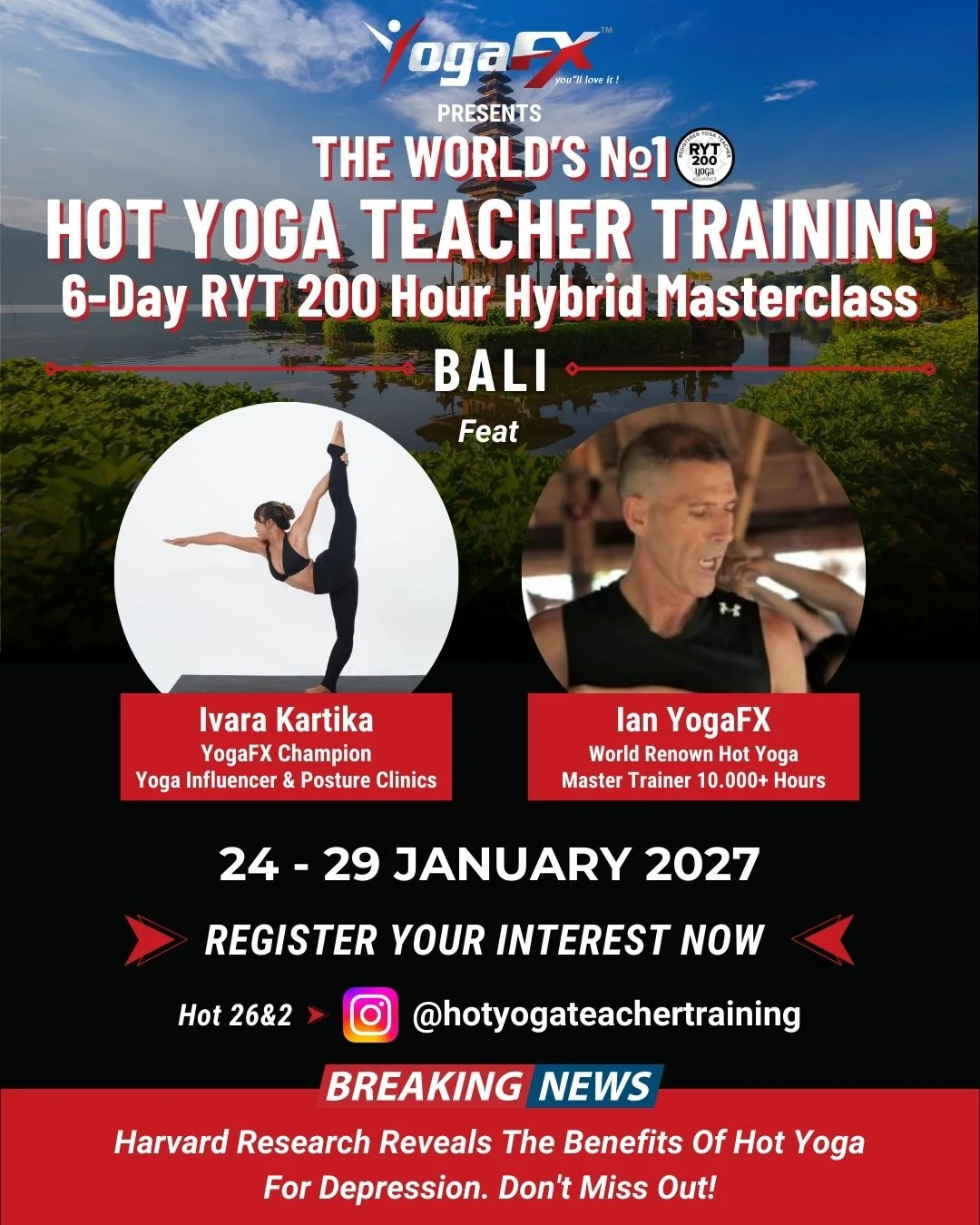
Can't Find Hot Yoga Teacher Training Near You? Here's What to Do
By Ian Terry, E-RYT 500 · Updated
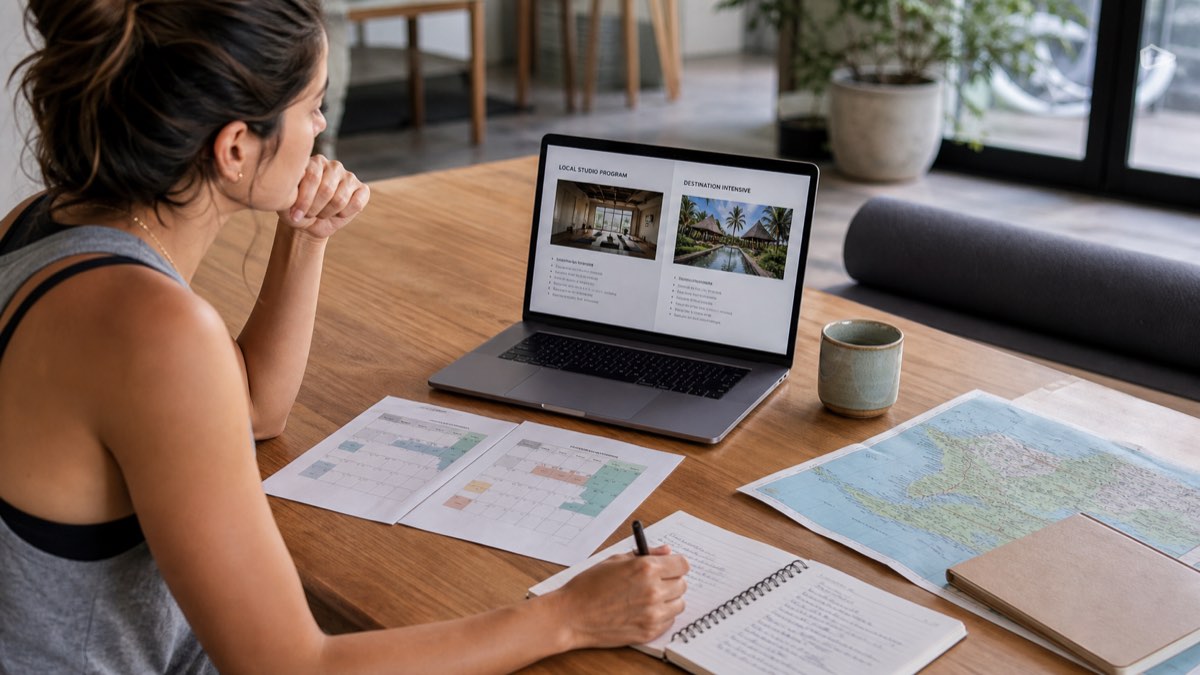
If your search for hot yoga teacher training near you comes up empty, a destination intensive is a realistic path, not a last resort. Compare the credential, teaching practice, trainer access, schedule, and full cost. A focused program in Bali may serve your goal better than the closest general yoga course.
Why "Near Me" Often Comes Up Empty for This Style
Hot yoga and Bikram-specific teacher education is a narrower field than general vinyasa or hatha training. A medium-size city may support several broad 200-hour courses but no program devoted to the fixed Hot 26&2 sequence. Search results may show ordinary heated classes, short workshops, or general teacher training rather than the specialist qualification you intended to find.
This scarcity says little about the quality of local studios. It reflects the smaller pool of trainers with deep method experience, an appropriate heated room, and a curriculum that joins dialogue, timing, posture clinics, and supervised teaching. Running a specialist cohort also requires enough students who want the same method at the same time.
Search wording can blur the distinction. "Hot yoga" can describe many heated styles, while Bikram or Original Hot 26&2 refers to a fixed sequence of 26 postures and two breathing exercises. A nearby course may be credible yet prepare teachers for heated flow rather than the sequence you want to teach. Our Bikram versus hot yoga training comparison explains that difference before you shortlist programs.
Start by defining the outcome. If you need a broad qualification and want to join one local studio, a nearby general course may be sufficient. If you want both RYT 200 and method-specific Bikram Hot 26&2 preparation, expand the search beyond your postcode. Location is one filter, not the definition of fit.
Canadian readers can compare Toronto, Vancouver and international formats in the hot yoga teacher training Canada guide.
Is Traveling for Teacher Training Worth It?
A local program offers real advantages. You can sleep at home, keep some normal commitments, avoid flights, and build relationships in the community where you may later teach. A weekly schedule also gives some learners time to process theory and recover between meetings. If the local trainer, curriculum, practicum, and credential match your goal, convenience adds value.
The limitation is choice. Selecting the only course within driving distance can force you to compromise on method, trainer experience, class size, or live teaching time. A destination intensive widens the instructor pool and protects one period from normal distractions. Students can rehearse, receive correction, and try again while the material remains fresh.
Travel is worth considering when it purchases a better educational fit. It is not worthwhile simply because the destination looks inspiring. Compare how many times you teach, who observes you, how feedback works, what assessment is required, and whether the credential supports your intended work. Then include flights, accommodation, food, insurance, visas, local transport, and missed income in the decision.
Learning style matters too. A concentrated schedule suits a student who prepares independently and responds well to repetition. A longer local course may suit someone who needs more space between practical sessions. Neither format guarantees confidence or employment. The useful question is which environment gives you the best chance to complete the required work with sustained attention.
What an Intensive Non-Local Format Actually Looks Like
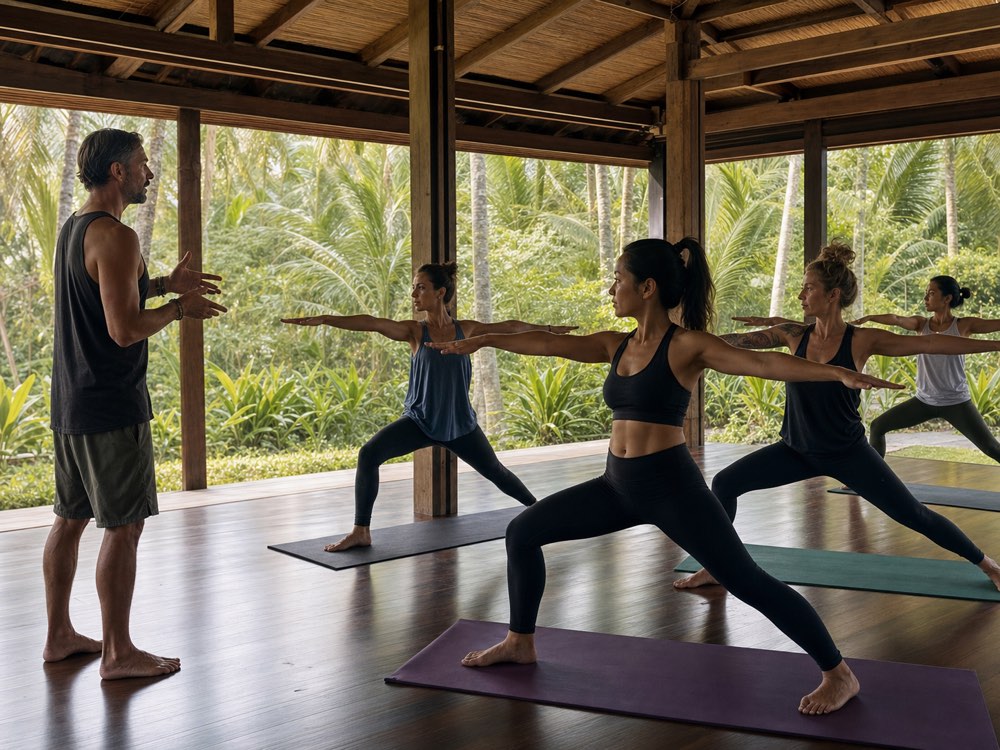
A responsible intensive does not pretend to squeeze 200 hours of education into six ordinary days. The YogaFX pathway is hybrid. Students begin with self-paced online preparation, including a 250-page manual, a Standing Series Workbook, more than 50 training talks, 15 video lessons, dialogue guides, anatomy study, and yoga philosophy. This foundation prepares them for the work that needs to happen together in Bali.
The six in-person days concentrate on practical skills: practising the sequence, studying posture mechanics, delivering scripted verbal dialogue, maintaining timing, observing students, receiving correction, and teaching again. Original Hot 26&2 classes run for 90 minutes with no music and no instructor demonstration. The teacher must use precise words and watch the room rather than performing at the front.
Beginners can enter this structure because preparation starts before arrival. They do not need an advanced pose practice or previous teaching job. They do need enough time to complete the online stage, a willingness to speak in front of others, and the discipline to apply feedback. Training evaluates teaching development, not who can make the deepest shape.
The practice itself has measurable physical demands. In a controlled eight-week study, Tracy and Hart reported changes in strength, flexibility, and body composition among healthy young adults who practised Bikram yoga regularly. That evidence describes observed group outcomes, not a promise for every trainee. Read the peer-reviewed study indexed by PubMed.
An intensive also requires practical preparation. Arrive rested, plan hydration, protect the training week from remote work, and allow time to adapt after long travel. Anyone with a health condition, pregnancy, or medication that affects heat response should seek individualized medical advice before participating in a hot-room program.
Cost Comparison: Local Options vs an Intensive Program
The cheapest advertised tuition is not always the lowest total cost. A local course can remove airfare and accommodation, but a longer schedule may add months of commuting, parking, childcare, meals away from home, and missed weekend work. An online-only course may cost less again, yet it cannot reproduce supervised teaching and heat-room practice if those skills are central to your goal.
A destination intensive adds travel and living costs but compresses the in-person commitment. That may reduce repeated transport and make leave easier to arrange. It also turns accommodation and meals into visible budget items rather than costs absorbed gradually at home. Compare like with like: credential, teaching hours, materials, assessment, class size, travel, and the time needed to finish.
YogaFX lists tuition at USD 1,699 for its hybrid pathway. That figure does not include accommodation, meals, flights, visas, insurance, or local transport. Avoid choosing from tuition alone. Use our complete hot yoga teacher training cost breakdown to build a realistic total for local, hybrid, and destination options.
What to Check Before Booking
Apply the same short checklist to every school. Request the answers in writing and keep them beside the refund terms, schedule, and assessment policy.
- Certification: confirm that the program awards a Yoga Alliance-recognized certification if you plan to teach internationally. Ask what certificate the school issues and whether graduate registration involves a separate application or fee.
- Format: check whether training is a full-time residential immersion, a local weekly course, or a hybrid schedule. For hybrid training, identify what must be completed online before the practical stage and how that work is verified.
- Inclusions: verify whether accommodation, meals, manuals, other materials, assessment, and certification fees are included in the advertised tuition. These policies vary widely and can materially change the real total cost.
Then ask about the trainer and practicum. Confirm who leads most sessions, the maximum cohort size, how often each trainee teaches, and who gives feedback. A famous name on a page does not replace access to that instructor. Likewise, a small cohort helps only when the schedule uses that size for observed practice.
Read independent reviews for repeated detail about organization, teaching turns, trainer access, and readiness after graduation. Specific accounts are more informative than broad praise. Ask the school to explain anything that appears inconsistent before paying a deposit.
Why YogaFX's Bali Intensive Stands Out
Certification: successful graduates receive dual certification: Yoga Alliance RYT 200 plus Bikram Hot 26&2. The first provides a widely recognized 200-hour foundation. The second identifies method-specific study. These student credentials are distinct from lead trainer Mr. Ian Terry's own E-RYT 500 designation.
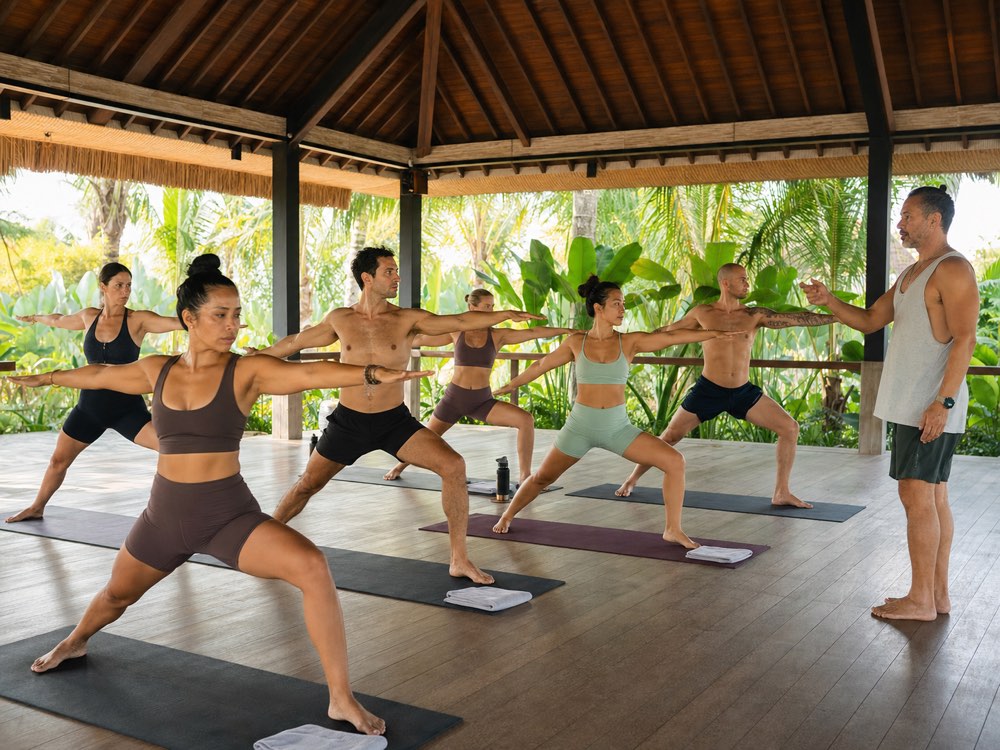
Format: the online pre-course prepares students before a six-day practical intensive in Bali. This structure gives international students a shorter in-person commitment than a multi-week residential course while preserving live dialogue, posture clinics, teaching turns, feedback, and assessment. Cohorts are capped at 19 so trainees can be heard and observed directly.
Inclusions: the USD 1,699 tuition covers the online preparation and course materials, the six-day practical MasterClass, teaching practice, and assessment. Successful completion leads to the dual certification stated above. Accommodation, meals, flights, visas, insurance, and local transport remain separate, so they should appear in the student's travel budget.
Mr. Ian Terry brings E-RYT 500 credentials and more than 12,000 teaching hours. He has trained 1,500+ graduates from over 80 countries. His role matters because the practical stage depends on direct observation, specific correction, and another opportunity to apply it, not only access to recorded lessons.
Training takes place at YogaFX studios in Seminyak and Canggu. The rooms use Bali's natural tropical conditions at about 40°C and 40% humidity rather than electric heaters. Students practise the fixed 26-posture and two-breathing-exercise sequence through scripted verbal dialogue, without demonstration or music.
Research continues to examine both the potential benefits and the safety demands of heated yoga. A 2025 scoping review by Willmott and colleagues found varied methods and outcomes across the evidence base, which supports careful, specific claims rather than sweeping promises. See the full open-access research review.
The academy reports 700+ reviews across Google, Yoga Alliance, and YouTube. A recurring graduate pattern is that some students arrive uncertain about their ability to teach and leave valuing the repeated practice, feedback, and international cohort as much as the certificate. Treat that as social proof, not a guaranteed personal outcome.
For travel, studios, climate, and preparation, read the hot yoga teacher training in Bali guide. For the method and credential in greater depth, continue to Bikram yoga teacher training explained. Readers comparing options from Britain can also consult the YogaFX hot yoga teacher training UK resource before calculating travel and onsite commitments.
Preview YogaFX Online Preparation Before Bali
The Best Online Bikram Hot 26&2 Yoga Class Ever - Find Out Why - RYT200-YogaFX The World's No.1 YTT
Preview YogaFX online Bikram Hot 26&2 instruction and see how remote preparation supports students who cannot find specialist teacher training near home before they attend practical training in Bali.
Do you have what it takes to become a great Bikram Hot Yoga teacher? Complete the short YogaFX readiness quiz to understand where you are on your teaching path and receive more personalized guidance.
Frequently Asked Questions
Why can't I find hot yoga or Bikram teacher training near me?
Hot yoga and Bikram-specific teacher training is a narrower niche than general vinyasa or hatha programs, so many cities simply don't have a dedicated option nearby. This doesn't mean the format isn't well-established; it means most quality programs run as destination intensives rather than local weekly classes.
Is it worth traveling for yoga teacher training instead of finding something local?
It depends on your priorities. A destination intensive typically offers a more focused, immersive experience and a stronger instructor pool than a limited local option, while a local program offers convenience. Many students choose the intensive route specifically because the format itself supports faster, deeper learning.
Can a beginner do an intensive hot yoga teacher training program?
Yes. Programs like YogaFX's 6-day Bali intensive are structured with an online pre-course component before the in-person intensive, which prepares beginners with foundational dialogue and posture knowledge ahead of arrival.
What should I check before booking a teacher training program?
Confirm three things: whether the certification is Yoga Alliance-recognized (important if you plan to teach internationally), whether the format is a full residential immersion or hybrid/flexible, and whether accommodation, meals, and materials are included in the advertised tuition price.
Is YogaFX's training an official Bikram Choudhury Teacher Training?
No. YogaFX offers independent Bikram Hot 26&2 teacher training, not an official Bikram Choudhury Teacher Training program. Training takes place at YogaFX's own studios in Seminyak and Canggu, Bali, under natural tropical heat.
What does the tuition price at YogaFX include?
The USD 1,699 tuition covers online pre-course preparation and materials, the six-day practical Bali intensive, teaching practice, and assessment. Successful graduates receive RYT 200 plus Bikram Hot 26&2 certification. Accommodation, meals, flights, visas, insurance, and local transport are not included.