Yoga Alliance Certification From a Teacher's View: What It Changes in Your Classes
By Ian Terry, E-RYT 500 · Updated
Yoga Alliance certification changes your hiring paperwork far more than it changes your teaching. It confirms that a registered school trained you and that you joined the registry. It doesn't test how you cue, pace or read a room. Your classes improve because of the training behind the credential, not the badge itself.
What Yoga Alliance Certification Actually Changes
Let's separate the paper from the practice. Yoga Alliance calls itself the global registry for yoga teachers and schools, and its website lists it as a nonprofit under US tax code 501(c)(6). So it is a registry, not an exam board and not a government licence.
Once you hold the credential, three things change for you:
- Your name becomes searchable. A studio manager can check the registry instead of trusting a PDF.
- Your training hours are on record. Yoga Alliance describes the RYT 200 as the foundational 200-hour training in techniques, philosophy, anatomy and ethics.
- A school stands behind you. Schools carry their own Registered Yoga School (RYS) credential, and your listing rests on that.
Three things do not change. Your cueing stays the same on day one. Your timing stays the same. Your ability to hold a full room's attention for 90 minutes stays the same too. Those skills come from drilling, feedback and teaching hours.
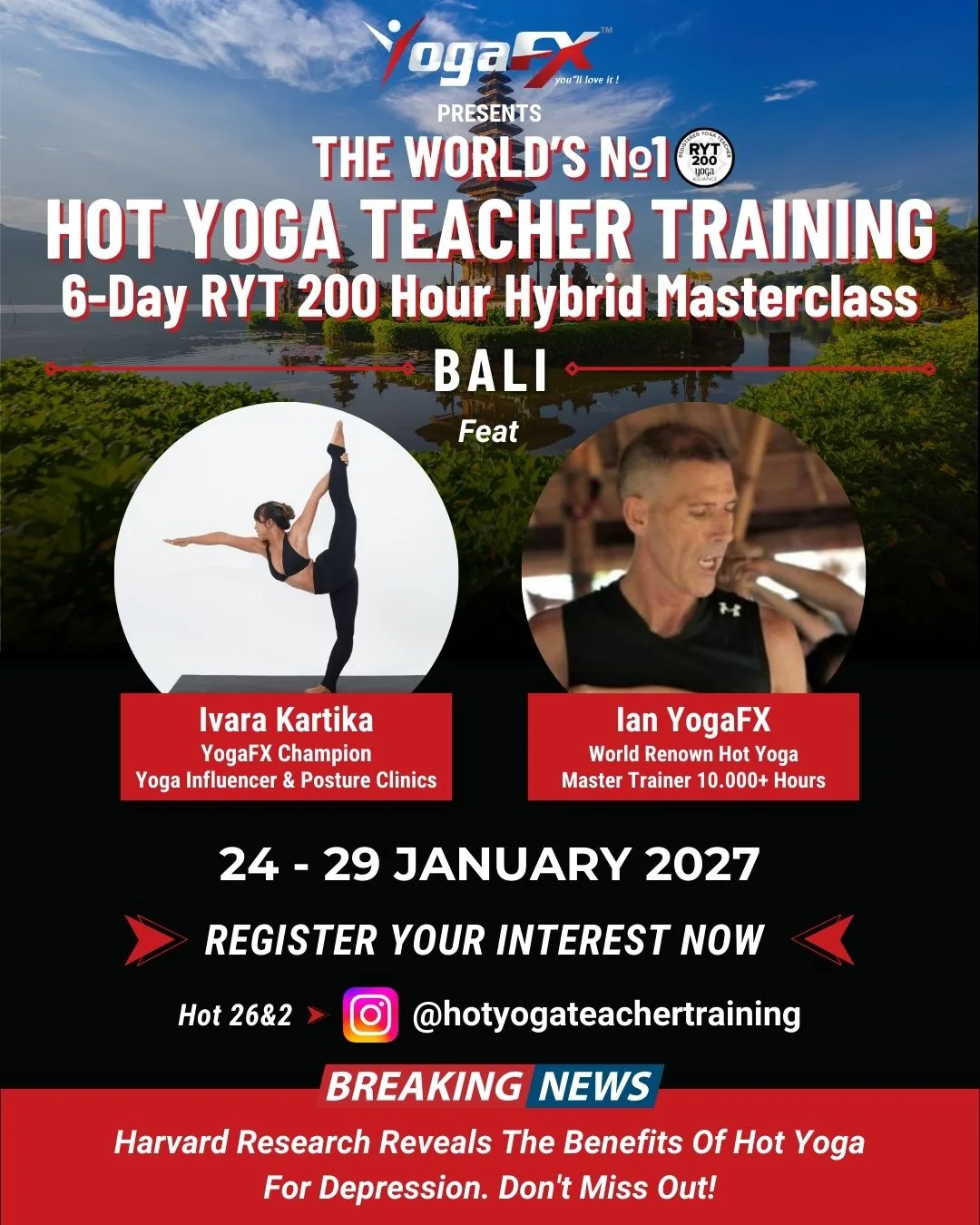
That is why Mr. Ian Terry, founder of YogaFX, built the MasterClass around practice teaching. He holds the E-RYT 500 credential and has logged more than 12,000 teaching hours. A credential opens the door, but the audition class decides who walks through. Once you hold it, yoga continuing education for hot yoga teachers is the next step.
So think of Yoga Alliance certification as proof of enrolment in the profession. The quality of your teaching still has to come from somewhere else.
Yoga Alliance Certification in Your Classes: What Students Notice
Students don't ask what's printed on your certificate. Instead, they notice whether you start on time, whether your voice stays steady at minute 70, and whether you spot the person who has gone quiet and pale.
Voice, timing and the script
A Hot 26&2 class runs 90 minutes in a room heated to 40°C. The teacher delivers a scripted dialogue covering 26 postures and 2 breathing exercises, always in the same order. There is no music and no demonstration.
That format leaves nowhere to hide. If you rush the dialogue, the whole room feels it. A general 200-hour course may touch on cueing, but script accuracy comes from repetition, because you can only learn timing by saying the words out loud, again and again.
Reading the room in the heat
Heat adds a second job. While you speak, you also scan the room for students who need to sit out. From the front of the room, trained teachers look for:
- A student who stops sweating or looks flushed and dry.
- Someone who sits down early and stares at the floor.
- Unsteady balance in a posture that was steady a minute ago.
- A student who looks confused or answers slowly when you check in.
Each of these signs matches a warning on the heat-illness pages of the NHS and Mayo Clinic, which we cover below. None of them appears on a certificate.
Practice-teaching hours
A calm first class usually follows plenty of practice teaching. A Yoga Alliance school can build practice teaching into its programme, but the amount varies between schools, so ask.
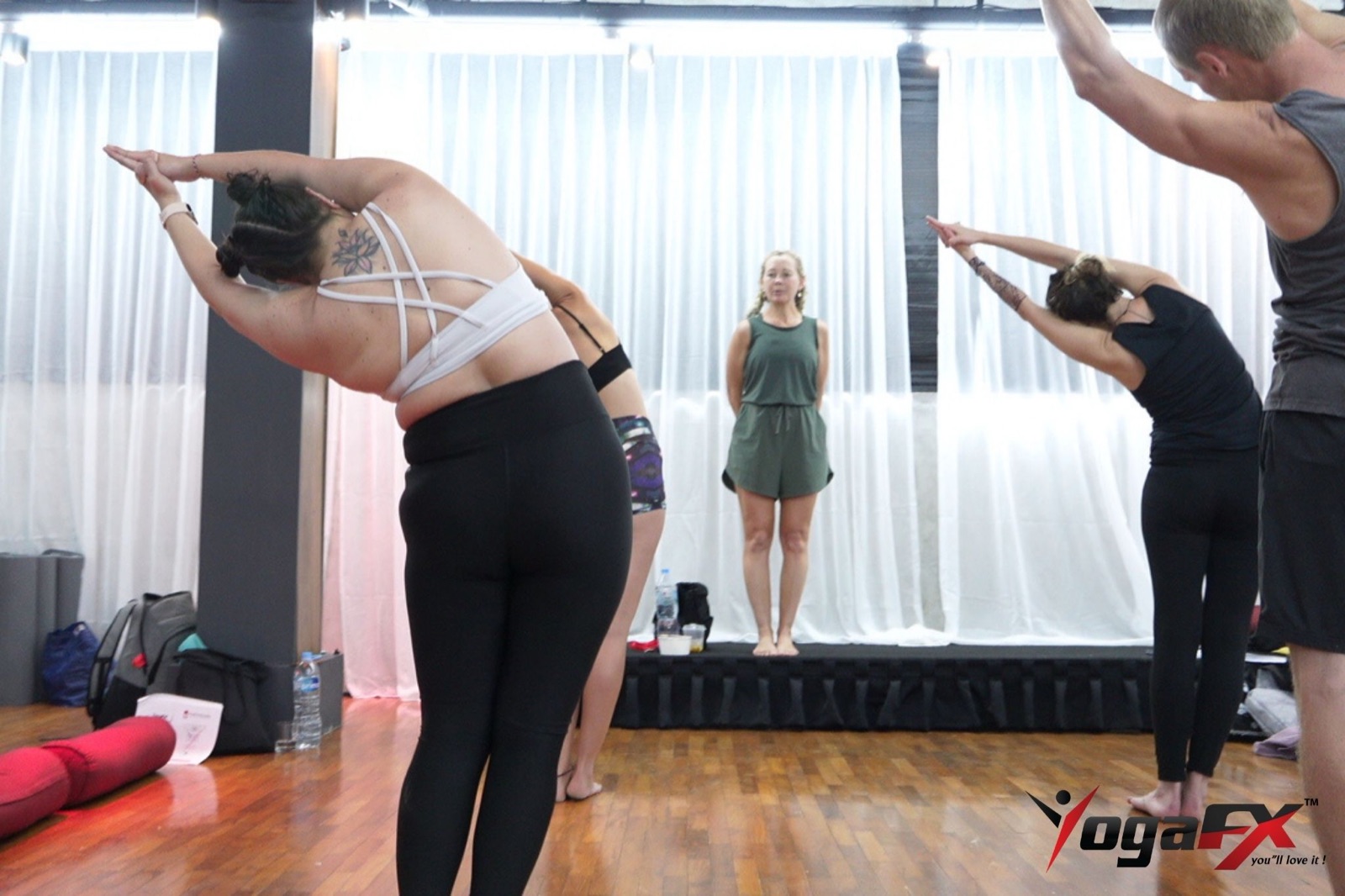
One YogaFX graduate described the format in a Yoga Alliance review. The master-class style, they wrote, required them to demonstrate teaching cues, adjustments and sequences, with real-time critiques in a small group. That kind of feedback loop is what changes how you teach.
What Studios Check When You Apply With Yoga Alliance Certification
Hiring is where the credential earns its keep. A manager may have twenty applications and one empty Tuesday evening slot. The registry lets them verify you in a minute. After that, your audition class does the real work.
Most places do not require a licence to teach yoga, so each studio sets its own bar. Our guide on whether you need a license to teach yoga covers the legal side in more detail. For the hiring side, this table shows what each document tells a manager.
| Document | What it shows a manager | What it leaves open |
|---|---|---|
| Yoga Alliance registry listing (RYT 200) | You trained at a registered school and joined the registry | Which method you can teach, and how well you teach it |
| School certificate | The school confirms you completed its programme | How strictly the school assessed you |
| Method certificate, such as Hot 26&2 | You studied one specific sequence and its dialogue | Your timing and room control under real heat |
| Audition class | Your voice, pacing and presence in a live room | Long-term reliability, which a trial month reveals |
| Insurance that covers heated classes | Cover exists if a student is hurt | Nothing about teaching quality |
Notice the pattern. Only the audition shows your teaching, and the rest show your paperwork. That is why some hot studios ask for two documents: the registry listing plus a method certificate. Our explainer on what a hot yoga certification actually proves goes deeper on the second one, and our RYT 200 meaning guide explains the letters.
Your first month after registering
Registering is the easy part. Your first month after graduation is where the credential meets real classes. Most new teachers do well when they build three habits:
- Cover one or two classes for a teacher you trust, so your first audition is not your first time at the front.
- Record yourself teaching and listen back for rushed dialogue and dead air.
- Ask a senior teacher to sit in and write down what they notice.
Yoga Alliance certification earns you the first conversation with a studio. These habits earn you the second one, and the timetable slot that follows.
For a UK-focused view of the same question, see what the credential means for UK hot yoga teachers.
Three Myths About Yoga Alliance Certification
Because the credential sounds official, people read more into it than it says. Three myths come up again and again in enquiries to YogaFX.
Myth 1: It works like a licence
It doesn't. The registry can list you, but it can't stop anyone from teaching, and it doesn't replace local insurance or business rules. Think of Yoga Alliance certification as a professional directory you opt into.
Myth 2: It proves you can teach
It proves you finished a programme at a registered school. Whether you can teach well is a separate question, and the school's assessment answers it. That's why the quality of the school matters more than the logo.
Myth 3: More letters mean a better teacher
The senior tier is common. As noted below, 13,863 teachers hold E-RYT 500 in the registry. Years of teaching, logged hours and the way you handle a full room tell you more than any set of letters.
Yoga Alliance Certification by the Numbers
Numbers help cut through the marketing. The figures below come from Yoga Alliance's own training page, plus our own count of the public registry in October 2026.
Added together, the individual fees come to US$115 in your first year, then only the annual fee after that. Those figures come from the Yoga Alliance training options page. Our breakdown of the full cost of Yoga Alliance certification shows how that fee sits next to the training price itself.
The registry count adds context for hot yoga teachers. Of the 13,863 E-RYT 500 teachers listed, our own count found 2,128 who list hot or heated yoga. So the senior tier is common, and what sets a lead trainer apart is the method experience behind the letters. If you are aiming for that tier, see how to track teaching hours toward E-RYT 500.
Heat, Safety and the Science Behind the Teacher's Job
Heated classes attract students because of what research suggests they may do for mood. In a 2023 randomised trial by Nyer and colleagues in the Journal of Clinical Psychiatry, adults with depression took heated hatha yoga for eight weeks. A larger share of the yoga group, 59.3%, showed a treatment response on a clinician-rated scale. In the waitlist group, only 6.3% did. The analysis covered 65 adults.
That is one trial, not a promise. Even so, it explains why more people are walking into hot rooms, and why the person at the front carries real responsibility.
The same heat that helps motivation also adds risk. The NHS guidance on heat exhaustion and heatstroke lists the signs a teacher should know by heart:
- Heat exhaustion: dizziness, headache, feeling sick, cramps, and heavy sweating with pale, clammy skin.
- Heatstroke: hot skin without sweating, plus confusion and restlessness.
- First aid: move the person to a cool place and give them plenty of water.
The NHS treats heatstroke as a medical emergency and says to call 999 in the UK when someone has hot skin that is not sweating or seems confused. The Mayo Clinic page on heat exhaustion gives the same first steps: stop all activity, rest, move somewhere cooler and drink cool water.
So when you compare trainings, ask how the school teaches heat response. Some courses may cover it in depth, and others may only mention it. Hot yoga is not right for everyone. If you have a heart condition, are pregnant or take regular medication, consult a healthcare professional first.
What Graduates Say About the Training Behind the Certificate
Numbers only tell part of the story. Here is how people who trained or practised with Mr. Ian described the experience, in their own words.
“Be prepared to arrive with strong fundamentals, teaching readiness, and an open mind, and you will leave not just certified, but transformed as a teacher.”
JJ, Yoga Alliance review, 2025
JJ's point is the practical one. The certificate is the same for every graduate, but readiness is not.
“Mr. Ian's expert guidance, patience, and enthusiasm created a safe and supportive environment for students of all levels.”
Michelle, Google review, 2025
Michelle wrote about Mr. Ian's classes in Bali, and that note on a safe, supportive room matters for any future teacher. It describes the standard you will be asked to hold when you lead your own class.
“I'm so happy to get a certificate as a yoga teacher.” (translated from Indonesian)
Yanti, YouTube review, 2019
You can watch Yanti's video review below, filmed at the end of her 200-hour training.
You can read many more before you decide. YogaFX has 150 reviews on Google and 50 on its Yoga Alliance school listing. Its YouTube channel adds 357 video testimonials.
How to Choose a Training That Makes the Credential Count
A credential is only as useful as the training behind it. Before you pay a deposit, run through these five checks:
- Check the school's registry status on the Yoga Alliance website, not on the school's own page.
- Ask how many hours go to practice teaching and who critiques you.
- Ask for the lead trainer's logged teaching hours. A real answer is a number, not an adjective.
- Ask whether you also leave with a method certificate for the style you want to teach.
- Ask what the school teaches about heat illness and what happens if a student shows the signs.
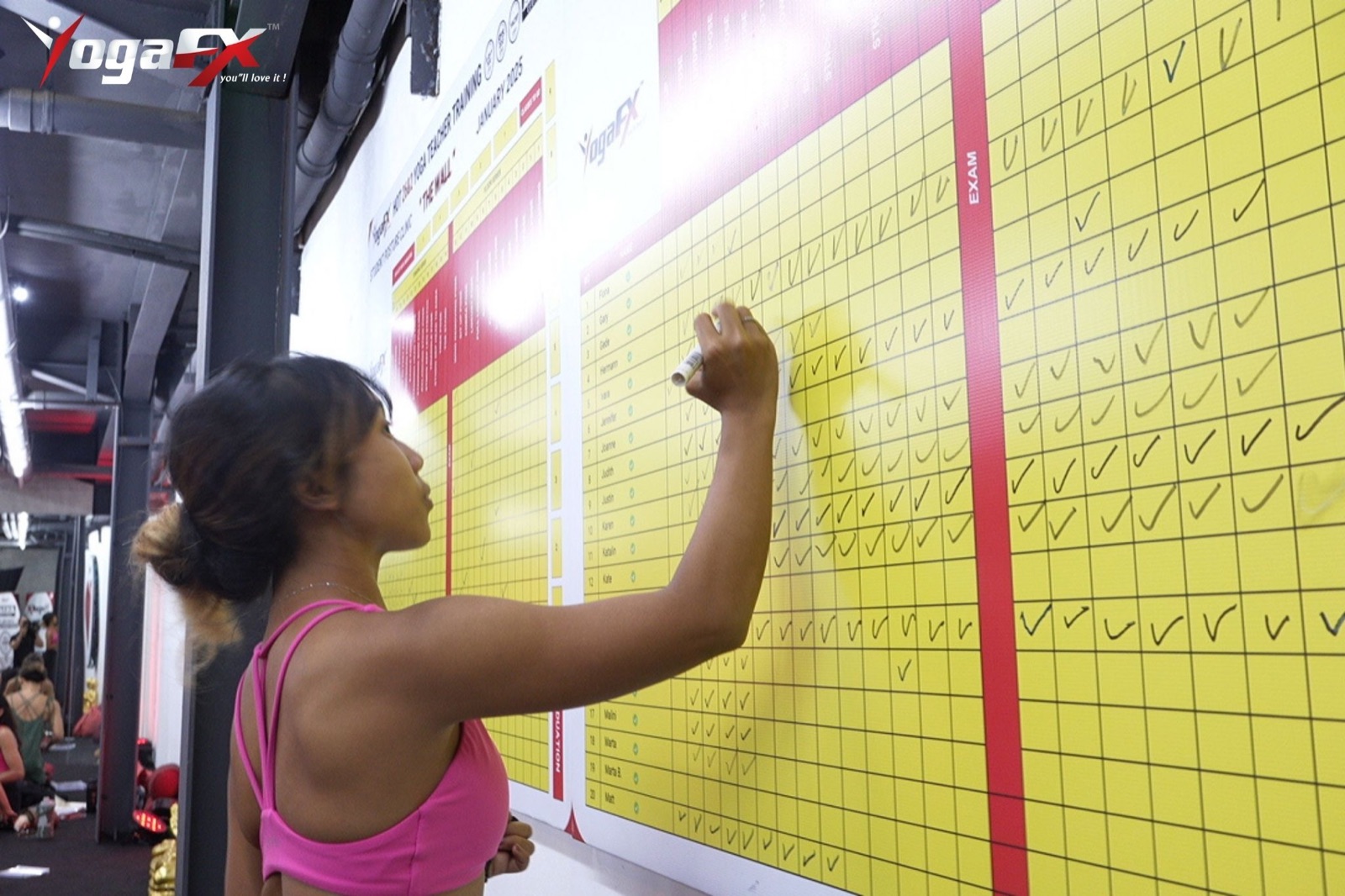
At YogaFX, the wall chart above is how trainees see their own progress. Every completed posture clinic and teaching round is ticked off in public, so nobody guesses where they stand.
Location also matters if you are weighing options. Our guide to hot yoga teacher training in Bali shows what a Bali intensive involves.
Yoga Alliance Certification With YogaFX in Bali
YogaFX runs the Bikram Hot 26&2 Yoga Teacher Training MasterClass as a six-day hybrid. You study online first, then join Mr. Ian for an intensive in Bali. Graduates leave with two credentials: Yoga Alliance RYT 200 and the Bikram Hot 26&2 200-Hour International Yoga Certification.
Mr. Ian Terry has taught more than 12,000 hours and spent five years, from 2014 to 2019, training with the founder of the Hot 26&2 method. Since 2017, YogaFX has graduated more than 1,500 teachers from over 80 countries. Before enrolment, he speaks personally with each student on a discovery call, because he wants to know your goals first.
The next batch checks in on Sunday 24 January 2027 and checks out on Friday 29 January 2027 at Soham Wellness Center in Seminyak. The Early Bird price is US$1,899, against the normal US$1,999. Instalments start from US$250 a month with no interest.
Ready to talk it through? Message Mr. Ian on WhatsApp and ask for the discovery call.
FAQ
Is Yoga Alliance certification necessary to teach yoga?
No law in most places requires it, so each studio decides. Many studios and insurers still like to see a registry listing because they can verify it quickly. Treat it as a hiring advantage, then back it with a method certificate and real practice-teaching hours.
How much does Yoga Alliance certification cost?
Yoga Alliance lists a one-time application fee and an annual membership fee for individual teachers. Together they come to US$115 in the first year. Your school's training fee is separate and usually far larger, so compare that figure first.
What is Yoga Alliance certification?
It is a listing on a registry run by Yoga Alliance, a nonprofit. Schools register as an RYS, and graduates of those schools can register as an RYT. The school trains and assesses you, while the registry records that your school and your hours exist.
Does Yoga Alliance certification expire?
Your school certificate records training you already completed. The registry listing is a membership, and Yoga Alliance charges an annual fee to keep it. Check its current continuing education rules on its website before each renewal, because requirements can change.
Is Yoga Alliance certification enough to teach hot yoga?
Not on its own. A general RYT 200 may not cover scripted dialogue, heat response or a 90-minute fixed sequence. Hot studios usually want a registry listing plus a method certificate, and they test both in an audition class before hiring you.