Is Hot Yoga a Good Workout? A Teacher Breaks Down the 90 Minutes
By Ian Terry, E-RYT 500 · Updated
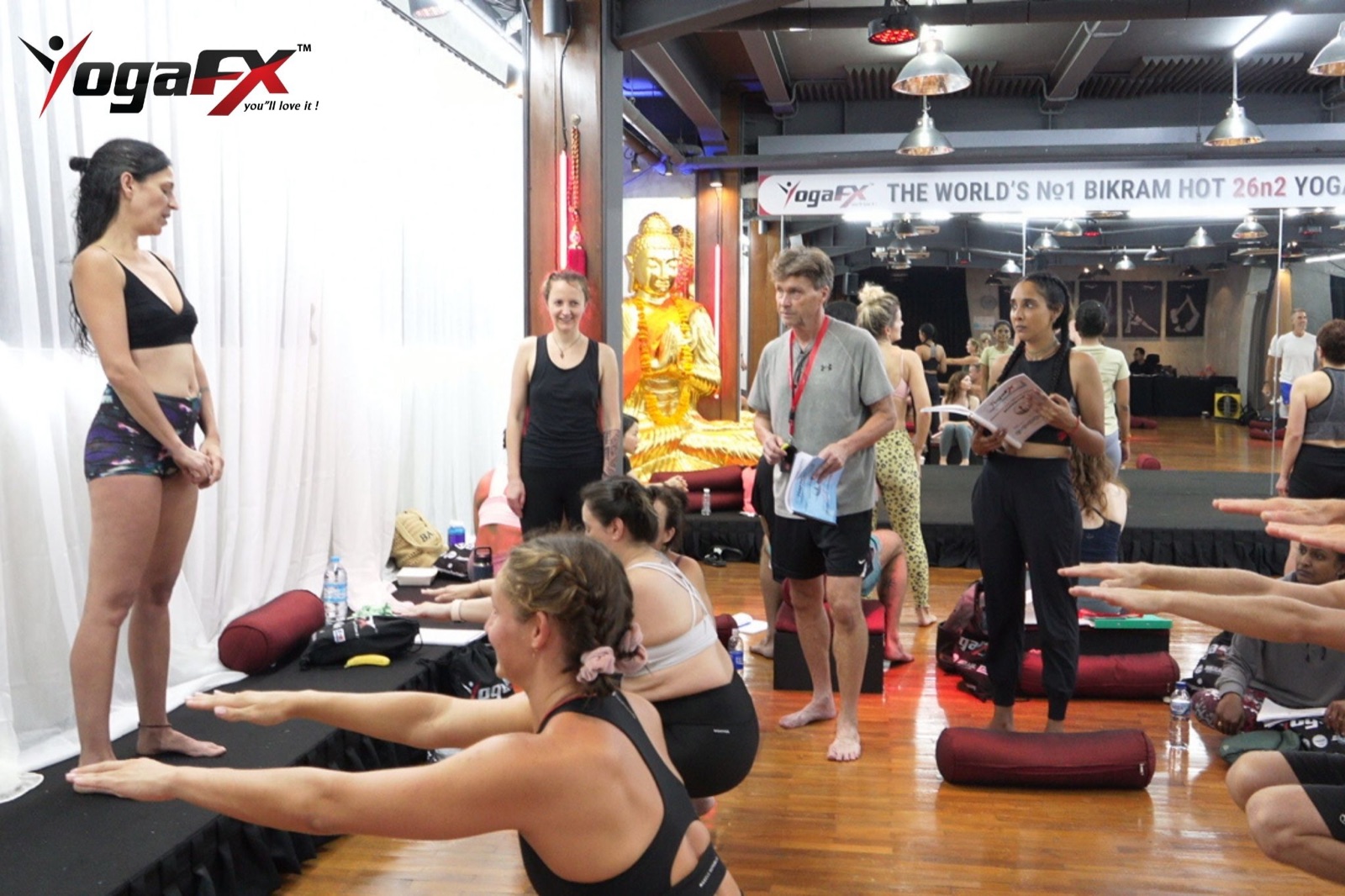
Is hot yoga a good workout? Yes, for most healthy adults it is. A 90-minute class keeps your heart working, holds your legs and spine under load, and trains you to stay calm in the heat. It is not a strength session, though, and the heat adds very little extra calorie burn.
We say that as teachers, not as salespeople. This guide walks through the class in order, block by block, the way Mr. Ian Terry, E-RYT 500, teaches it to YogaFX trainees. He has more than 12,000 teaching hours, so he has watched thousands of bodies meet the same 90 minutes. Here is what each part asks of you, and what the research says about it.
Is Hot Yoga a Good Workout? The Short Verdict by Goal
The honest answer depends on what you want from the hour. So, is hot yoga a good workout for you? Start with your goal, then read the detail below.
| Your goal | Is it a good fit? | What a teacher would add |
|---|---|---|
| Steady cardio | Good, at a moderate effort | Your heart rate runs high, but the real energy cost is closer to a brisk walk. |
| Flexibility and balance | Very good | Warm muscles stretch easily, so control matters more than depth. |
| Muscle strength | Fair | Long holds build endurance. Heavy lifting still needs weights. |
| Weight change | Helpful, not magic | It fits inside a plan with food and sleep. Much of the drop on the scale is water. |
| Calm and focus | Good for many students | Scripted cues and no music train your attention. It is not medical treatment. |
| Top speed or power | Not the right tool | Use sport-specific training and add hot yoga for balance. |
Many students ask what happens when the load stacks up day after day. We answer that in our guide to how six hot days in a row add up. This page stays inside a single 90-minute class. For a comparison with a cool-room class, see hot yoga compared with regular yoga.
Walking the 90 Minutes: What Each Block Asks of Your Body
The standard Original Hot 26&2 class runs 90 minutes in a room held near 40°C and 40% humidity. You do 26 postures and two breathing exercises, led by a scripted dialogue with no music and no demonstration. If you wonder why the class is that long, why a Bikram class lasts 90 minutes explains the design.
| Block of class | What you do | Main load on the body | What heart rate tends to do |
|---|---|---|---|
| Opening breathing | Standing deep breathing | Lungs, shoulders, neck | Starts low, then rises as the heat settles on you |
| Standing series (about the first half) | Half Moon, Awkward Pose, Eagle, Standing Head to Knee, Standing Bow, Balancing Stick, Triangle, Tree, Toe Stand | Legs, hips, shoulders, balance | Highest of the class, with the steepest climb |
| Floor series (about the second half) | Cobra, Locust, Bow, Camel, Rabbit, Spine Twisting | Spine, core, hips | Lower and steadier, with spikes in backbends |
| Closing breathing | Blowing in Firm Pose (Kapalbhati) | Core and breath control | Falls as you finish |
Opening breathing: the quiet climb
The first few minutes look easy, so that is the trap. You stand still and breathe deeply while the room does its work. Your heart rate begins to climb before you have moved much. For example, students who rush in with full effort here often pay for it later in the standing series.
Is hot yoga a good workout for the legs? The standing series
This is the part that surprises new students. Awkward Pose (Utkatasana) sits you into a chair shape and holds it, so your thighs burn long before your breathing gets loud. Eagle and Standing Head to Knee add balance on top of leg strength. Standing Bow asks the legs, back and shoulders to work together while you stay on one foot.
Most trainees tell us the same thing. The standing half feels like one long effort, with short pauses between postures. That is why a good teacher watches the room instead of the clock.
Savasana and the short rests: what keeps the class safe
Between big blocks you lie down for a short rest. New students think this is a break from the workout. In fact it is part of the design, because your heart rate drops and your breathing evens out. Rushing these rests is a common beginner mistake.
The floor series: lower pace, same effort
Once you move to the floor, the class changes character. You lie on your stomach for Cobra, Locust and Bow, then sit for Camel and Rabbit. The legs get a break, but the spine, core and hips take over, so the effort just moves.
The pace is slower, so your heart rate settles, although backbends can push it up again. Is hot yoga a good workout for the spine? It moves it in every direction, which many desk workers enjoy.
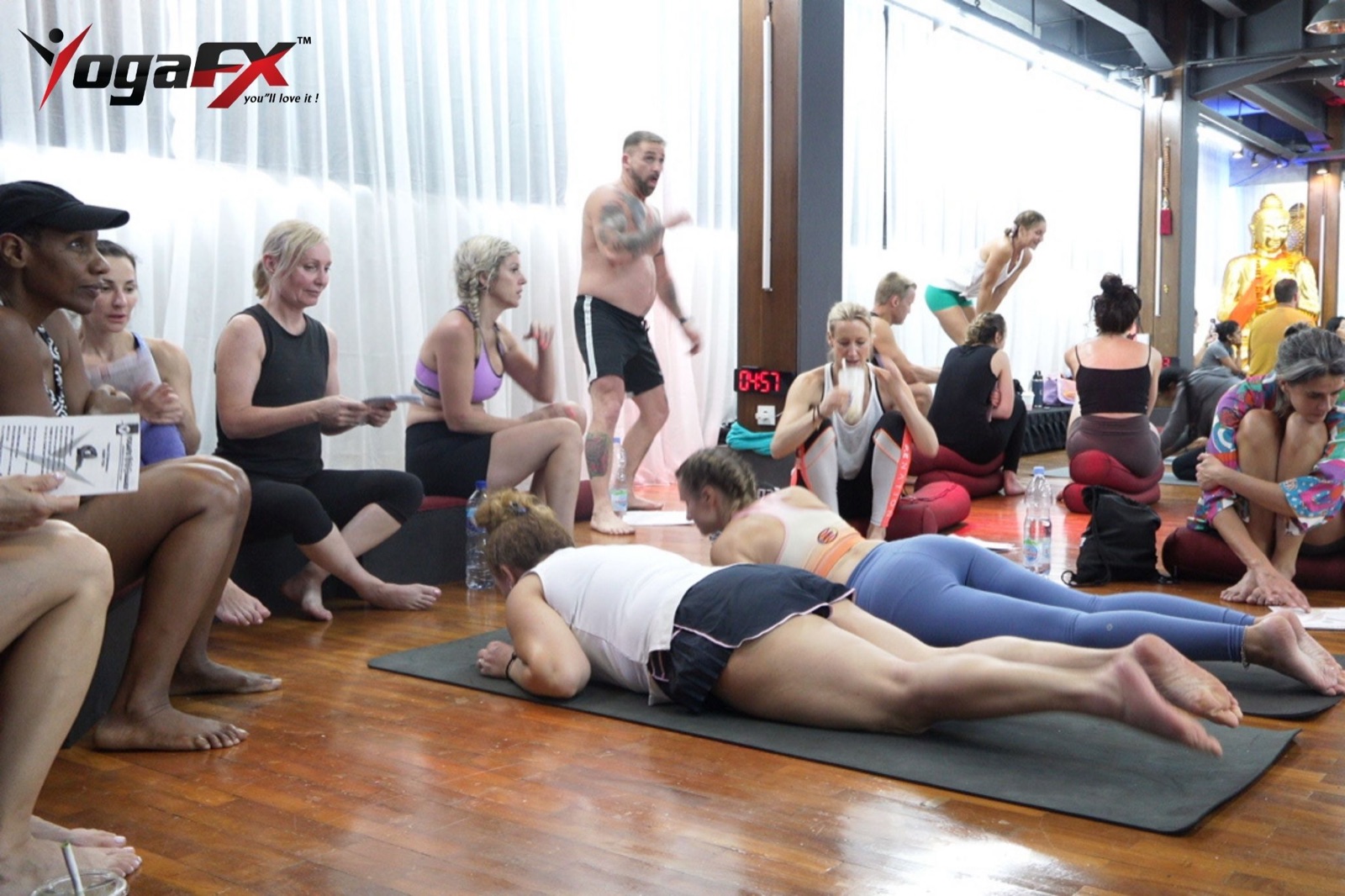
The class ends with Kapalbhati, a fast, forceful breath done sitting up. It looks small, yet it asks a lot of your core and your focus after 85 minutes of work. Then you lie down, and the room goes quiet.
Hot Yoga Heart Rate Zones: What the Numbers Really Say
A watch makes this question look simple, and it is not. Start with the formula. According to Johns Hopkins Medicine, your maximum heart rate is roughly 220 minus your age. Its target range for exercise runs from about 50 to 85 percent of that maximum.
Apply that to a 40-year-old. The estimated maximum is 180 beats per minute (bpm), so the target range runs from about 90 to 153 bpm. Your own number will differ, because the formula is only an average.
What researchers measured in real classes
Now compare it with what researchers measured in real Bikram classes. A University of Wisconsin-La Crosse team studied 20 regular practitioners aged 28 to 67. According to the ACE report on that study, average heart rate reached about 80% of predicted maximum for men and 72% for women. The highest readings hit 92% and 85%. For how those numbers map to heart rate zones, see heart rate zones in hot yoga.
A Colorado State University team saw a similar picture. In its 2014 report on hot yoga, 19 practitioners averaged about 160 bpm over a 90-minute class. So the heart works hard. Is hot yoga a good workout for the heart, then? It is a good one, as long as you stay within a safe range for your own body.
About 160 bpm
Average heart rate
Measured in 19 practitioners over a 90-minute class (Tracy, Colorado State, 2014).
72% to 80%
Of predicted maximum
Average for women and men in 20 regular practitioners (UW-La Crosse, 2015).
Brisk walk
Energy cost
Roughly walking at 3.5 mph for 90 minutes, despite the high pulse (Colorado State, 2014).
No gap
Heated vs room temperature
Heart rate and energy use did not differ between the two conditions (Lambert et al., 2020).
Is hot yoga a good workout if the pulse is mostly heat?
Heat makes your heart work to cool you, so your pulse rises even when your muscles are not doing more. The Lambert study in the International Journal of Exercise Science tested this directly. Sixteen experienced practitioners did the same one-hour Bikram sequence in a 105°F room and in a 74°F room. Heart rate, oxygen use and calories did not differ between the two.
In plain words, the heat changes how hard it feels, not how much work you do. The Colorado State team found the same thing: a pulse near 160 bpm, with an energy cost like a brisk walk. That is why we tell students to trust their breathing before their watch. For more on this, see what teachers monitor for your heart in the room.
A teacher's three-zone rule of thumb
We do not ask trainees to wear monitors. Instead, Mr. Ian teaches a simple feel-based rule. It is not a clinical tool, and it does not replace your doctor's advice.
- Settling. You can breathe slowly through the nose and follow the dialogue easily. This is where the class begins.
- Working. Your breathing is deeper and louder, but steady, and you can still follow every cue. Most of the standing series lives here.
- Back off. You feel dizzy, sick, or you hear a pounding head. Sit or lie down, drink water and tell the teacher.
Calories: Why a Hot Class Feels Bigger Than It Is
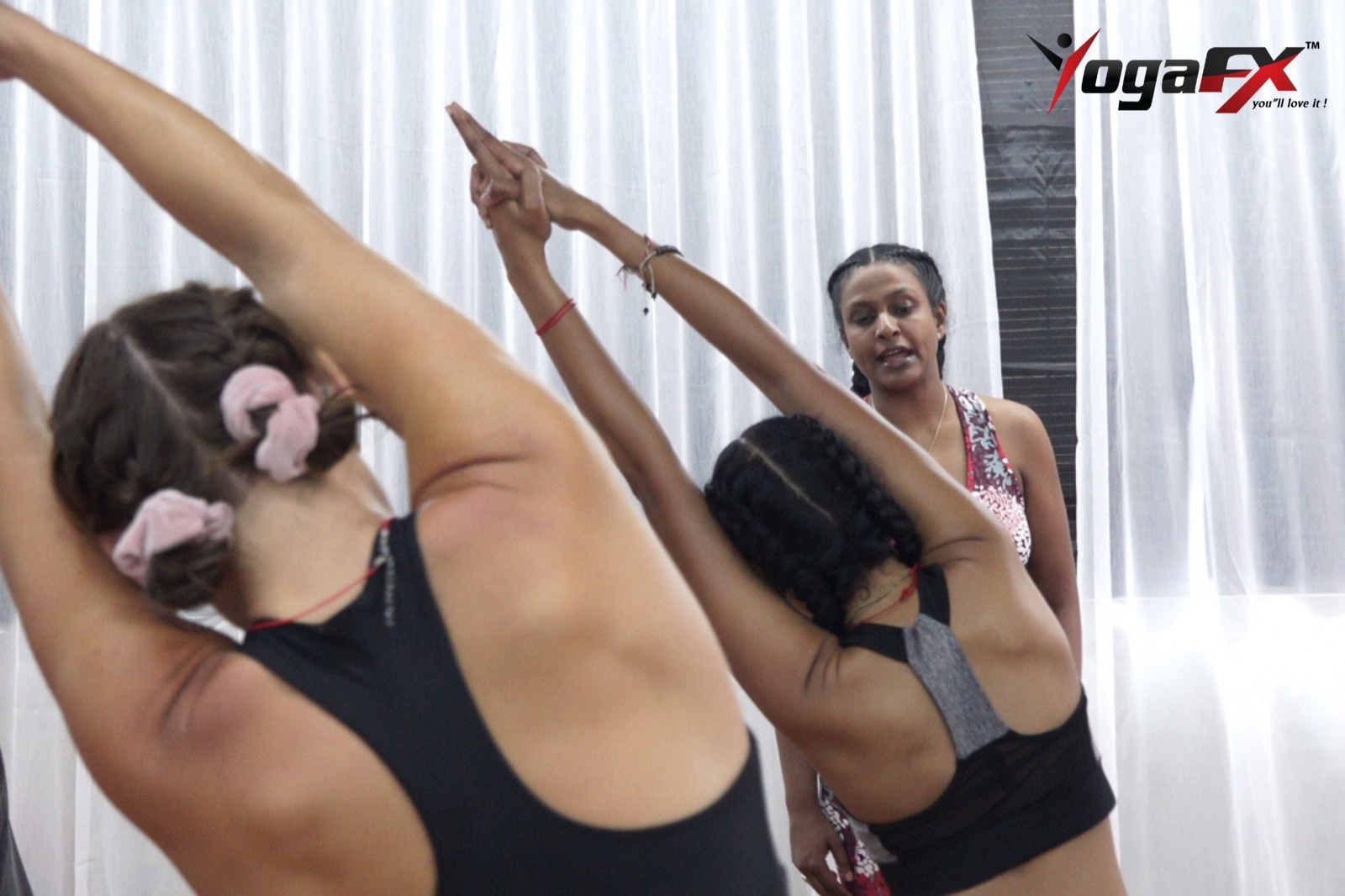
Colorado State measured about 460 calories for men and about 330 for women in a 90-minute class. The same report compared the energy cost to walking briskly for the full 90 minutes. That is a solid session, but it is not the 800 calories many watches claim, because heart rate overstates the work. Is hot yoga a good workout for weight change, then? It helps, and it works best next to sensible food and sleep.
Your own number depends on body size, effort and experience. For a full breakdown of the lab studies, read our guide to hot yoga calories burned. To get a planning range for your own body, try the free tool below.
What a Hot Class Trains Besides Your Heart
Cardio is only part of the answer, because the class trains more than your heart. Is hot yoga a good workout for balance and flexibility, too? For most students, yes. Here is what we see change in people who keep coming back:
- Hip and joint range. In the Lambert study, hip abduction range gained about 6.6 degrees after the heated class versus 2.3 degrees after the room-temperature one. Warm tissue moves further, so go slowly.
- Balance. Eagle, Standing Bow and Balancing Stick train your standing balance every single class.
- Leg endurance. Long holds in Awkward Pose and the standing series build stamina in the thighs and calves.
- Spine mobility. The floor series bends your spine in both directions, so desk workers often love it.
- Attention. With no music and no demonstration, you learn to listen and follow instructions for 90 minutes.
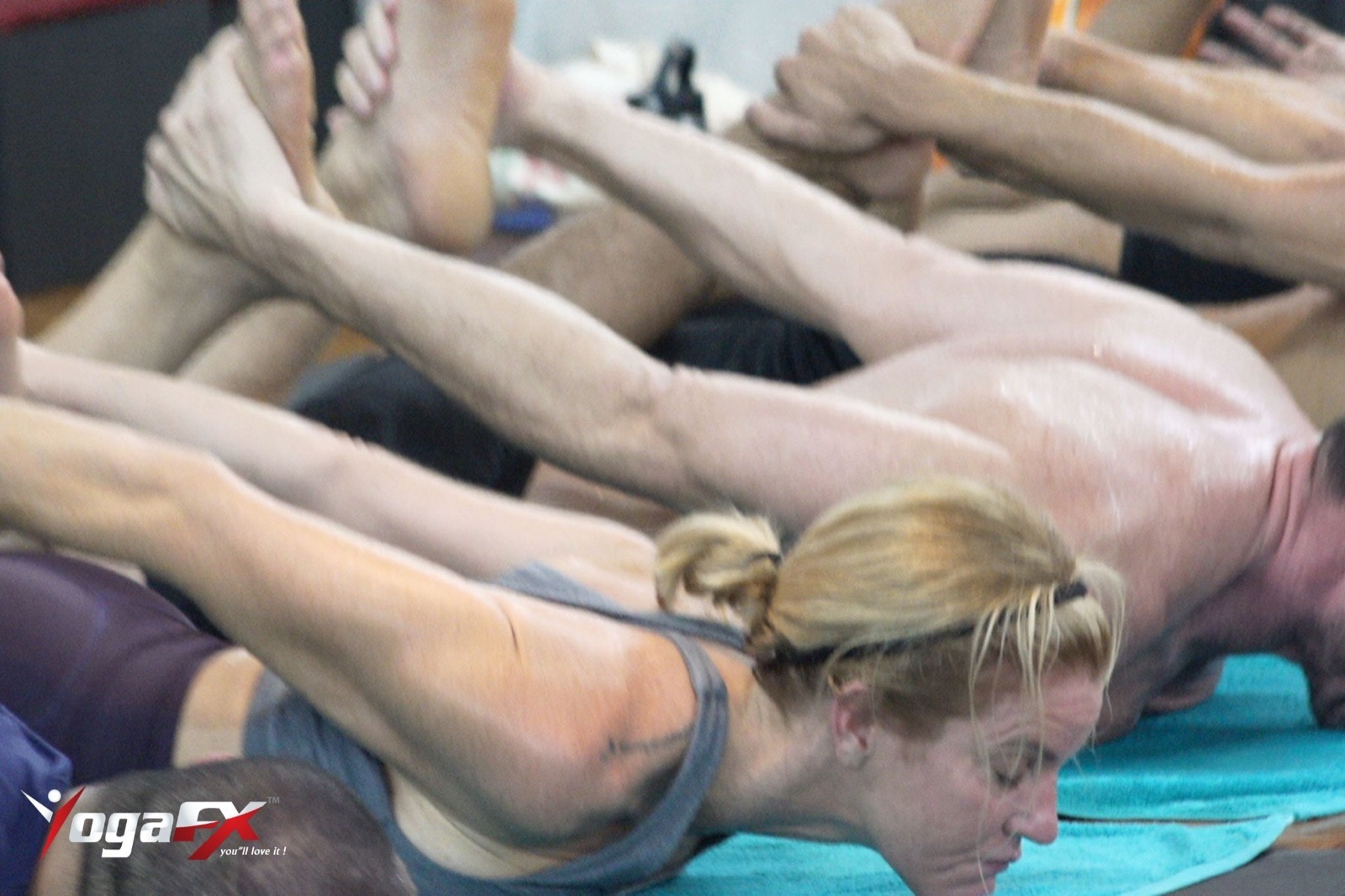
Notice that strength is missing from the list as a headline. A hot class builds endurance in long holds, which is useful. It is not a replacement for loaded lifting, so keep your weights if you use them. Runners, lifters and swimmers often add one or two classes a week for balance and hip range, and that is a sensible way to use it.
When the Heat Becomes the Problem
Is hot yoga a good workout for everyone? No. The heat is the one thing that can turn a good session into a risky one. The Mayo Clinic Sports Medicine team describes hot yoga as a vigorous form of yoga, and it warns that the intensity and the heat could cause heat-related illness.
The Wisconsin study put numbers on it. The highest core temperature averaged 103.2°F in men and 102.0°F in women. One man reached 104.1°F, and seven of the 20 practitioners went above 103°F. The report notes that the risk of heat-related illness rises near 104°F, and no one showed signs of heat intolerance.
The Colorado State group, by contrast, saw an average core temperature of 100.3°F, which the researchers called a safe range.
Who should skip it, and the warning signs
Mayo Clinic advises skipping hot yoga if you have heart disease, a history of dehydration, heat intolerance or past heat-related illness. It also advises checking with a doctor first if you have health concerns or are pregnant. Please read that as a minimum, and speak to a healthcare professional about your own situation.
- Drink early. Start hydrating hours before class, not when you walk in.
- Stop at the signs. Dizziness, nausea, chest pain, blurred vision or a pounding head mean sit down, cool off and tell the teacher.
- Cool down slowly. Skip the cold plunge straight after class.
This article is general information and not medical advice. Consult a healthcare professional before starting any heated exercise, especially if you have a medical condition.
How Hot Yoga Fits Next to Other Training
Is hot yoga a good workout compared with running, lifting or swimming? It is not better or worse, because it is a different tool. It gives you moderate-to-high heart rate, long holds, flexibility and a quiet mind in one session. It does not give you heavy loading or sport-specific speed.
So pick by what you need this month. If you want a steady, full-body hour that also calms your head, a hot class is a strong candidate. If you want a bigger squat, keep lifting and add one hot class for balance. A complete beginner should read our first hot yoga class guide first.
What Our Students Say About the Work
Numbers describe the average class, while students describe their own. So is hot yoga a good workout in the eyes of the people who do it? Here is how three YogaFX graduates put it, in their own words.
"I wasn't sure if I could handle it. however the teachers, the participants all helped a lot."
Agnieszka, Google review, 2022
"YogaFX is so much more than just a yoga school, it's a community that helps bring fantastic people together."
Hoda, Google review, 2019
Stephanie, who reviewed us on YouTube in 2019, said that teaching a class herself helped her understand what the postures really mean. She finished by saying she would "recommend that every single person on earth" who loves yoga take the course (condensed from the video transcript). You can watch her review below.
How to Get the Most From Your 90 Minutes
Whether you try one class or a month of them, a few habits decide how good it feels, so build them early. They are simple, and they work for most healthy adults.
- Arrive hydrated and fed lightly. A heavy meal an hour before makes the first backbend miserable.
- Pace the standing series. Save your hardest effort for after the first few postures, not the opening breaths.
- Stay for the second set. Repeating each posture is where much of the work happens.
- Sit out when you need to. Resting for a posture is normal and wise, never a failure.
- Start with two or three classes a week. Build slowly and check how your sleep and energy respond.
After a few weeks you will have your own answer to "is hot yoga a good workout for me?", drawn from your body rather than an article. That is the best evidence anyone can give you.
Learn to Teach the Class With YogaFX
If you love the heat and want to explain it honestly to others, teaching may be your next step. People will keep asking you whether hot yoga is a good workout, and you will want a real answer.
YogaFX was founded in Bali in 2017 by Mr. Ian Terry. He trained for five years, from 2014 to 2019, with the founder of the Bikram Hot 26&2 method, and he is a Master Trainer for the Republic of Indonesia Yogasana Sports Federation.
More than 1,500 graduates from 80+ countries have trained with us. Every one learns to explain topics like this with real evidence, not studio myths.
The 6-day hybrid MasterClass starts with online study at home, then finishes with an intensive at Soham Wellness Center in Seminyak. You graduate with Yoga Alliance RYT 200 and Bikram Hot 26&2 200-hour certification. The next intake runs January 24 to 29, 2027. The Early Bird price is US$1,899 (normally US$1,999), and interest-free instalments start from US$250 a month.
FAQ: Is Hot Yoga a Good Workout?
Is hot yoga a good workout for weight loss?
It can help, because a hot class burns a solid amount of energy, roughly like a brisk 90-minute walk in one Colorado State study. Weight change still depends on food, sleep and consistency. Treat hot yoga as one part of a plan, and speak to a healthcare professional about your goals.
Is Bikram yoga a good workout compared with other styles?
It suits different goals rather than beating other styles. A Bikram class kept heart rates high in the Wisconsin study and builds balance, hip range and leg endurance. Running builds speed and impact fitness, and lifting builds maximum strength. Many people combine them for a rounder week.
Is hot yoga a good workout for beginners?
It can be, if you pace yourself. Beginners often find the first class hard because of the heat, so rest when you need to, stay near the back and drink plenty of water beforehand. A healthcare professional can advise you first if you have any condition.
Is hot yoga a better workout than regular yoga?
Not by much on energy use. In one study, 16 experienced practitioners did the same one-hour sequence heated and at room temperature, and heart rate and calories did not differ. The heat does change how hard it feels, and it may add to hip range of motion.
Is hot yoga a good enough workout without the gym?
For balance, flexibility and steady effort, yes. For maximum strength or speed, probably not. A hot class loads your legs and spine for long holds but does not add heavy resistance. If strength is your main goal, add weights once or twice a week.
Still have questions? Message Mr. Ian and the YogaFX team on WhatsApp and we'll answer them personally.