Competitive Yoga Explained Through a Hot 26&2 Teacher's Eyes
By Ian Terry, E-RYT 500 · Updated
Competitive yoga is a judged sport where athletes perform set yoga postures and a panel scores their form, balance and control. A teaching room works differently, because nobody ranks you there, and that difference is easy to miss. This guide explains the gap between the two, from the view of a Hot 26&2 teacher who also sits inside a national yogasana federation.
Mr. Ian Terry, E-RYT 500, has taught more than 12,000 hours and is a Master Trainer of the Republic of Indonesia Yogasana Sports Federation. So he sees competitive yoga from both sides: the hot room and the competition floor. If you want the sport itself in more depth, our sister guide on how the sport and its events work covers it.
Competitive Yoga Looks Different From the Teacher's Side of the Room
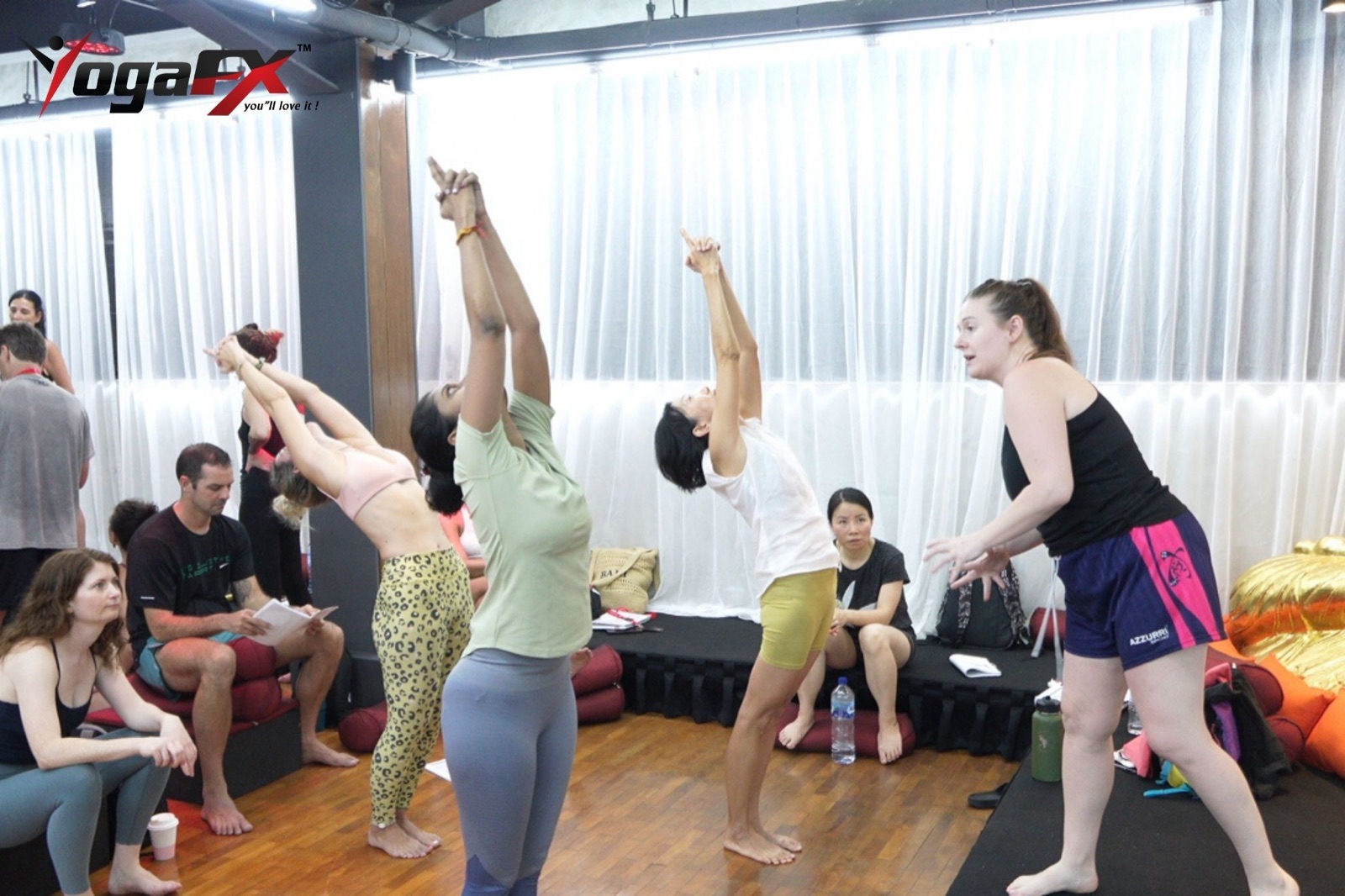
A competitor performs one posture for a panel. A teacher watches twenty bodies at once and talks them through ninety minutes. Those two jobs train different skills, and that is the heart of this look at competitive yoga.
In a judged event, the athlete owns the moment. A score follows within minutes. In a Hot 26&2 class at YogaFX, the teacher owns the moment, which is the opposite of competitive yoga, and the only feedback a student gets is a cue, a correction or a quiet nod. That means a student learns by repetition, not by results.
Still, the two worlds overlap more than people expect. Competitive yoga and a hot class share a surprising amount. Both reward patient work on balance, spinal control and focus, which is why competitive yoga and hot room teaching often share students. Both punish rushing. And both are easier to enjoy when you stop comparing yourself with the person on the next mat.
What a Judge Scores in Competitive Yoga and What a Teacher Cues
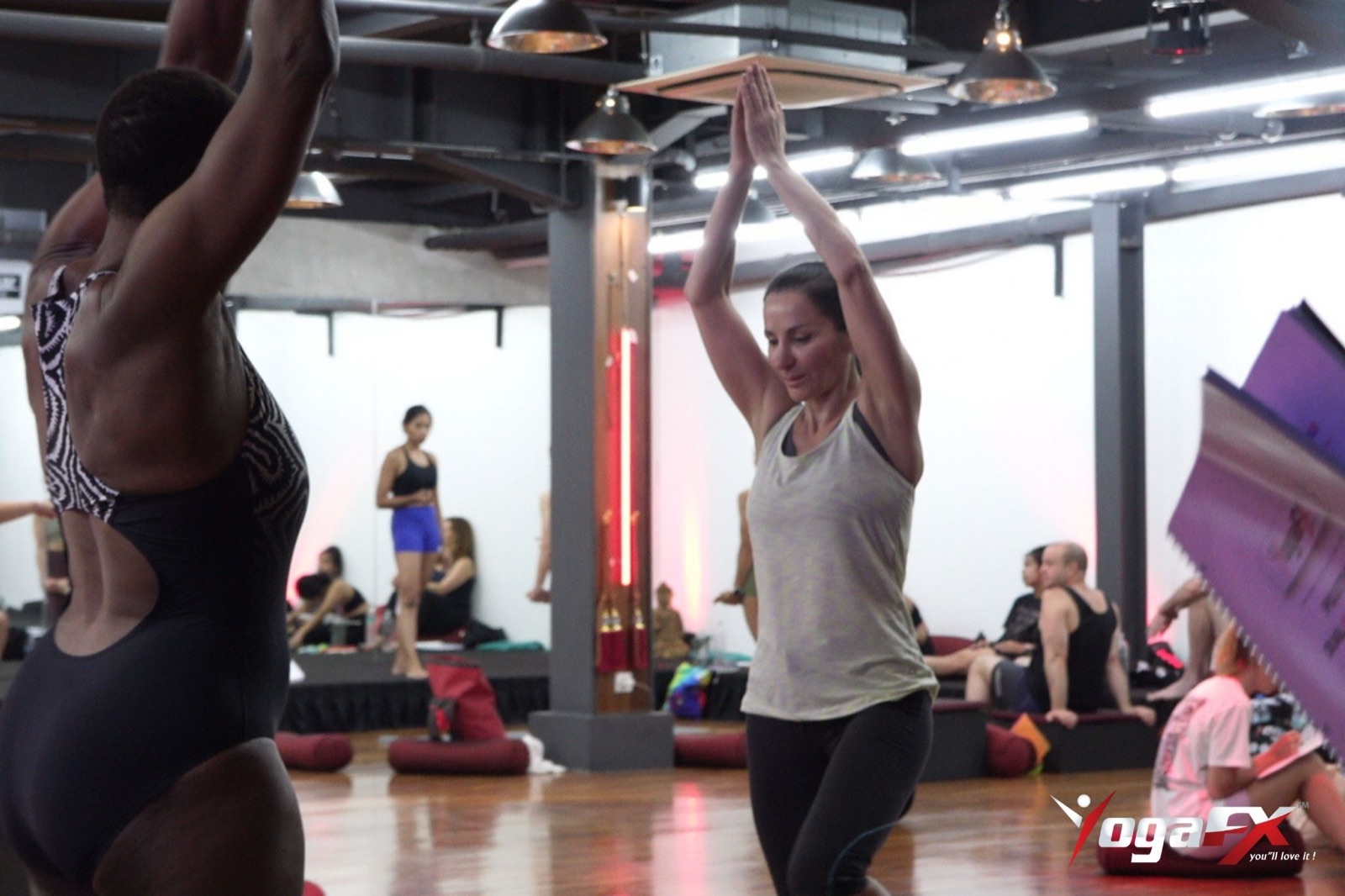
Rules for competitive yoga differ from one federation to the next, so always read the current rulebook of the body that runs your event. Even so, the broad idea is stable. A judge assesses a finished posture. A teacher shapes a posture while it is happening.
The table below sets competitive yoga and the teaching room side by side. It is the YogaFX teaching team's own view, not an official federation document, and we built it to show how the same posture is read in two settings.
| Question | On the competition floor | In the hot room |
|---|---|---|
| Who is watching? | A panel of judges, plus an audience | One teacher, and your own mirror |
| What is measured? | Finished form, balance and control | Alignment cues, effort and consistency over 90 minutes |
| When do you hear feedback? | After the routine, as a score | During the posture, as a spoken cue |
| What does a mistake cost? | Marks, and possibly a placing | A correction, then another attempt |
| What is the goal? | Your best single performance | A steady practice you repeat for years |
| How does heat matter? | Rarely a factor on the day | Central: about 40 °C and 40% humidity in a YogaFX class |
Notice the last row. Heat changes the whole job of the teacher. In a 40 °C room, students tire sooner, lose focus sooner and need clearer words. A judge never has to solve that problem.
The skill judges cannot see: the cue
In competitive yoga, a competitor can win with silence. A teacher cannot. The cue, which is the short spoken instruction, is the teaching tool. Good cues are specific, calm and repeatable, so the whole room can follow them without watching a demonstration.
Competitive Yoga by the Numbers We Can Stand Behind
Many articles on competitive yoga quote big statistics without a source. We would rather give you fewer numbers that we can prove. These come from our own records and public results, so treat them as facts about one school, not the whole sport.
The medal count matters for one reason only. It shows that a teaching-first school can still prepare athletes, because the skills overlap. It does not show that every student should compete, and most of ours never will.
Why Everyday Teaching Is Not Judging
New teachers sometimes arrive thinking a good teacher is a good judge. They aren't the same thing, and competitive yoga makes the gap obvious. Here is how the two habits differ, and why we train the teaching habit first.
- Judging looks backwards. A judge sees the finished posture and gives a verdict. A teacher looks forward and asks what the body needs next.
- Judging compares. Scores only make sense against other athletes. A teacher compares a student with that student's own last class.
- Judging is quiet. A panel writes marks. A teacher speaks for 90 minutes and must stay clear when the room is hot and tired.
- Judging rewards the peak. One brilliant routine can win. Teaching rewards the average, because students return when every class is solid.
That list isn't an argument against competitive yoga. Instead, it explains why a teacher who knows competition rules becomes a better coach. They can say, "this is what a panel would mark, and this is what your body can do safely today."
What the Research Supports, and What It Does Not
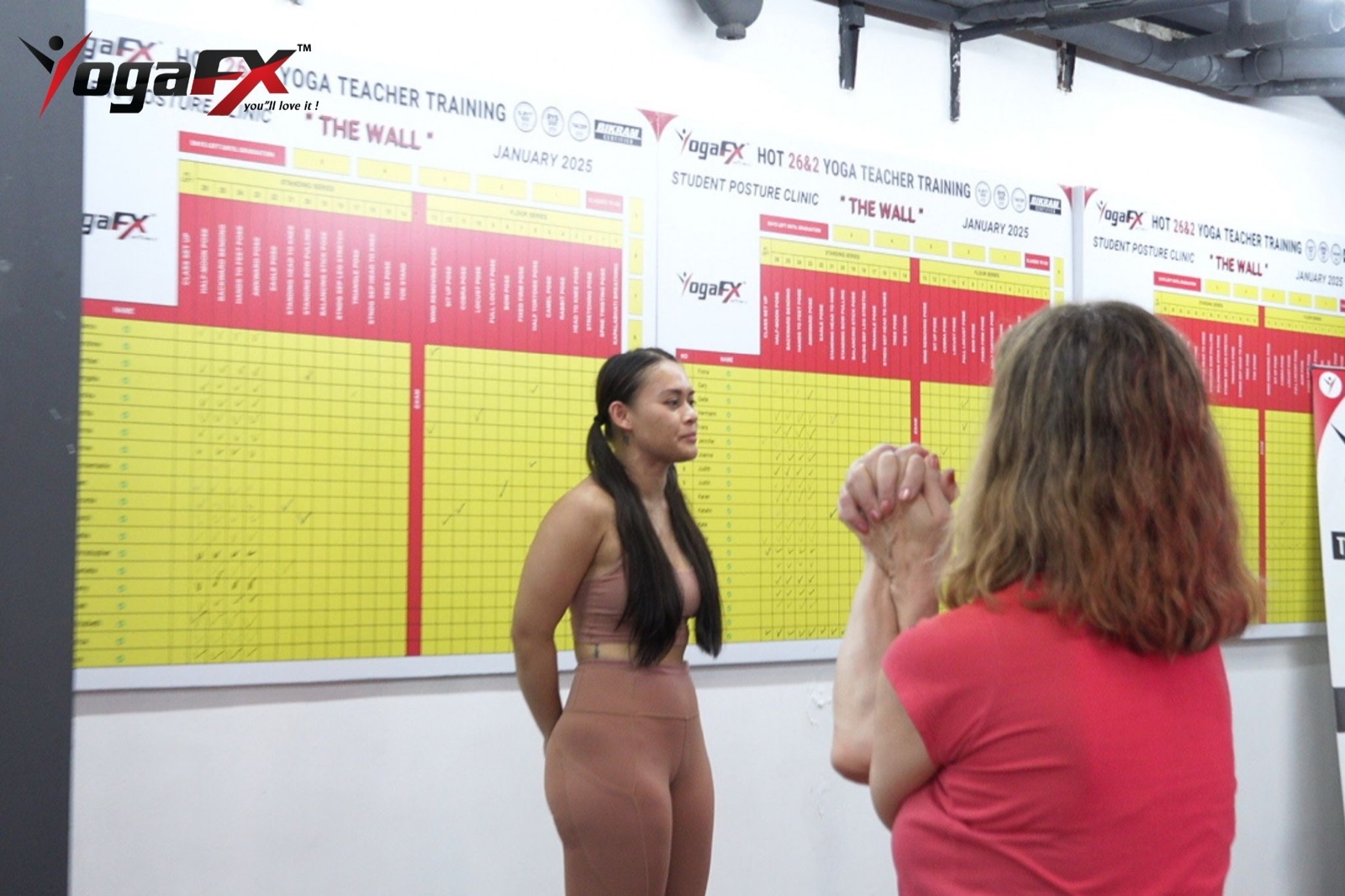
Here is the honest position. The research below covers hot yoga practice in general, not competition, so we will not claim science proves anything about the sport itself. What research does measure are qualities that competitive yoga rewards: flexibility, balance, strength and stress control.
A 2025 systematic review in Sports Medicine - Open pooled 43 studies and 942 participants on hot yoga, and Bikram made up most of the methods. According to the Willmott and colleagues review, regular practice was linked to adaptations in bone mineral density, balance and flexibility. Notably, the authors also say claims of greater benefit than other yoga or exercise are unsubstantiated.
That caution is useful. Hot yoga is not magic, and a hot room does not make you a better athlete by itself. The same review mentions case reports of ill-health after hot yoga, so listen to your body.
On the general side, Harvard Health Publishing describes a study in which beginners practised twice a week for eight weeks. Participants showed greater muscle strength and endurance, flexibility and cardio-respiratory fitness. The same article says yoga is known for soothing tension and anxiety.
Our reading is simple. Regular practice may help the physical qualities that judges score. It does not guarantee a medal, and it is not right for everyone. Please consult a healthcare professional before starting a heated practice or training for competition, especially with a heart condition, pregnancy, low blood pressure or regular medication.
Medal-Winning Graduates and a Federation Master Trainer
Mr. Ian Terry, who brings real depth to competitive yoga, trained for five years, from 2014 to 2019, with the founder of the Bikram Hot 26&2 method. He is also a Master Trainer of the Republic of Indonesia Yogasana Sports Federation, a role confirmed in June 2026. That mix explains why our teacher training pays attention to both disciplines.
Results from the World Yogasana Sports Federation Championships in Ahmedabad show the link. Indonesia won seven medals there: one gold, two silver and four bronze. Two YogaFX graduates were on the team.
- Ivara Candra Kartika (graduate, 2023) won one gold and one bronze in Ahmedabad. She also took silver at the Asian championships in the UAE in August 2025 and gold at FORNAS VIII in July 2025.
- Arkan Fauzan Riyanto (graduate, 2022) won two silver and three bronze in Ahmedabad. He is a three-time FORNAS champion, in 2022, 2023 and 2025.
- Slamet Ariyanto (graduate, 2024) is Chair of PPYNI and Manager of the Yogasana Indonesia team.
Across all events, YogaFX graduates have won 12 medals: five gold, three silver and four bronze. For us, those names matter less as trophies and more as proof that a clear teaching method travels well.
What Students Say About Learning Under Mr. Ian
Not every graduate competes, so the best evidence of the teaching is what students write themselves. These are word for word from our review pages.
Mr Ian and Miss Ivara are the true essence of what Bikram Yoga should be.
Pete, Google review, 2026
Amazing hot bikram yoga experience! Extraordinary guru Mr Ian and YogaFX team.
Jamasb, Google review, 2026
Thank you for Hot Yoga Bikram with Mr. Ian. Very very good teacher, very very nice class, I really really enjoy it.
Saul, YouTube review, 2024 (translated)
You can watch Saul's graduation message in the YouTube review from January 2024. It runs only 32 seconds, and it shows the tone of a YogaFX graduation better than any description.
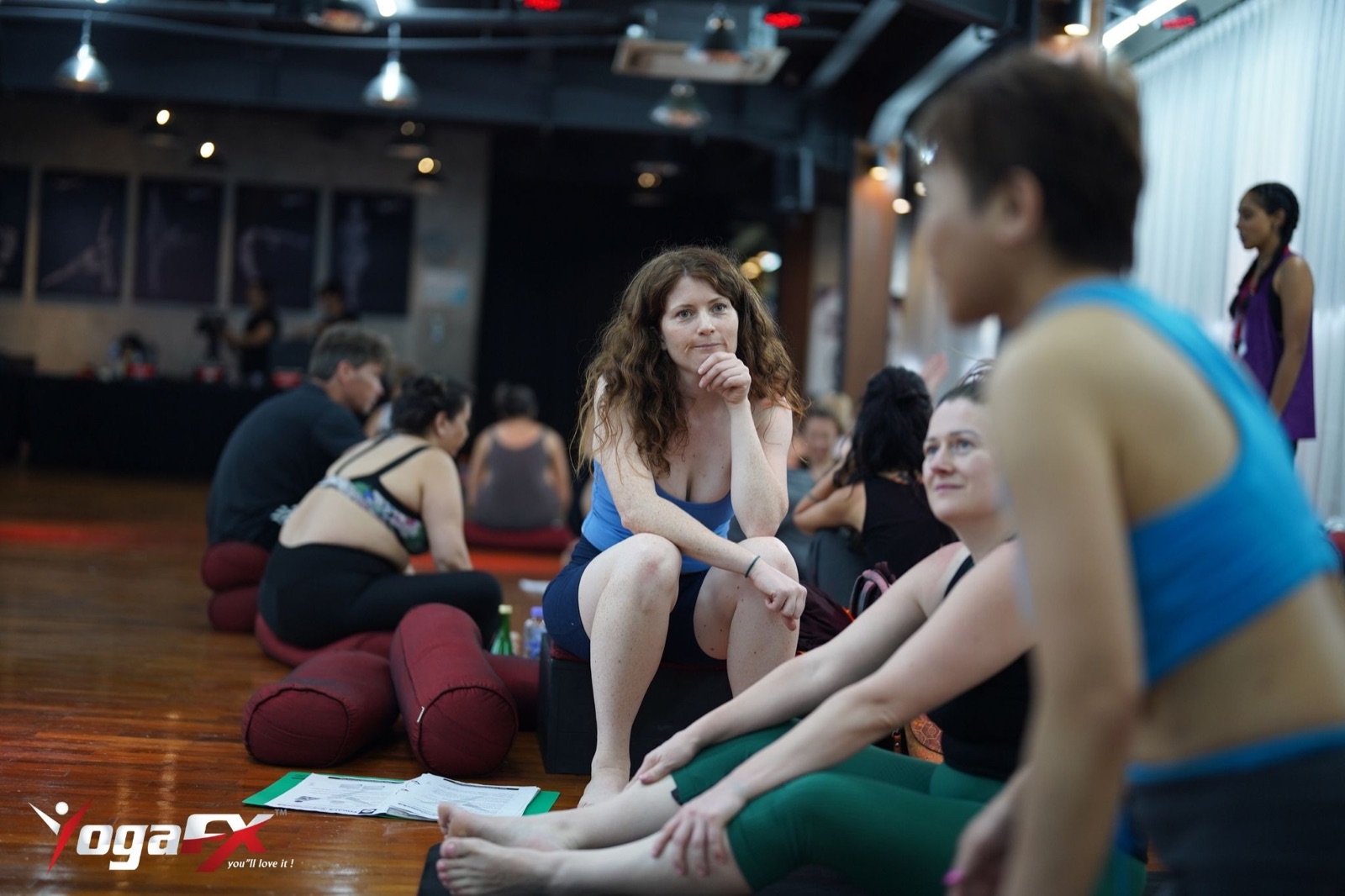
What a Teacher Notices That a Scoresheet Misses
A scoresheet records what happened. A teacher also notices why it happened. After thousands of classes, a few patterns come up again and again, and they apply to athletes as much as to beginners.
Breath tells the truth first
When a posture starts to fail, the breath changes before the body does. Shoulders rise, the jaw tightens, and the breath gets short. A teacher hears that from across the room. A judge, watching a short routine, may never see it.
Effort is not the same as control
Many students push harder when a posture feels hard. Control usually comes from the opposite move: slowing down and placing each joint carefully. For example, a standing balance improves when the student looks at one fixed point and stops fighting the wobble.
Fatigue shows up in the legs
In the last third of a 90-minute class, legs shake, grip weakens and attention drifts. Teachers use that moment on purpose, because it shows who can stay precise when tired. Athletes who train for that kind of fatigue may hold their form longer under pressure.
- Watch the breath before you correct the shape.
- Slow down when a posture feels unstable, instead of forcing it.
- Use a fixed gaze for balance postures, so the wobble settles.
- Treat fatigue as information, not as failure.
None of this needs a scoreboard. These habits make a calmer student in any setting, which is why we teach them to every trainee, whether or not that trainee ever steps onto a competition floor.
Questions to Ask Before You Choose a Coach or a Competition
Because competitive yoga is young and federations are separate, you'll need to ask good questions before you commit. A short list saves time and protects your body.
- Which federation runs the event, and is it recognised in your country?
- Which posture list applies to your age group this season?
- Does the coach teach safe range-of-motion work, or only the finished shape?
- Will you practise in heat, and if so, how will the coach manage hydration and rest?
- What happens if you are injured a month before the event?
A coach who answers these clearly is usually a coach who teaches well. If the answers feel vague, keep looking. You can also ask your own studio teacher for an honest view, since a good teacher will tell you when you are ready and when you are not.
How to Prepare for Competitive Yoga Without Getting Hurt
If competitive yoga appeals to you, start with the body, not the scoreboard. Deep backbends and splits are where scores are won, and also where strains happen. A steady plan protects you.
- Build a base first. Practise regularly for at least several months before you enter anything. Our guide to how long hot yoga takes to show results sets realistic expectations.
- Learn your federation's rulebook. Posture lists and age groups differ, so check the current version before you train.
- Train with a teacher who watches. A trained eye sees small errors that a mirror hides.
- Stop at pain, not at the edge of the mat. Warm up properly and rest between sessions.
- Treat heat as a separate decision. A hot room adds load, so read what a 90-minute hot class really asks of you before you stack competition training on top.
Remember that the 26&2 sequence is a strong base for balance, backbends and twists, but it has few hand balances. So a student aiming at those events would need extra training. We say that plainly because it is true.
Where Teacher Training Fits Into Competitive Yoga
Some of our graduates teach for a living, some coach athletes, and some do both. Learning the mindset of competitive yoga made them more precise teachers, because they now know exactly what a trained observer notices.
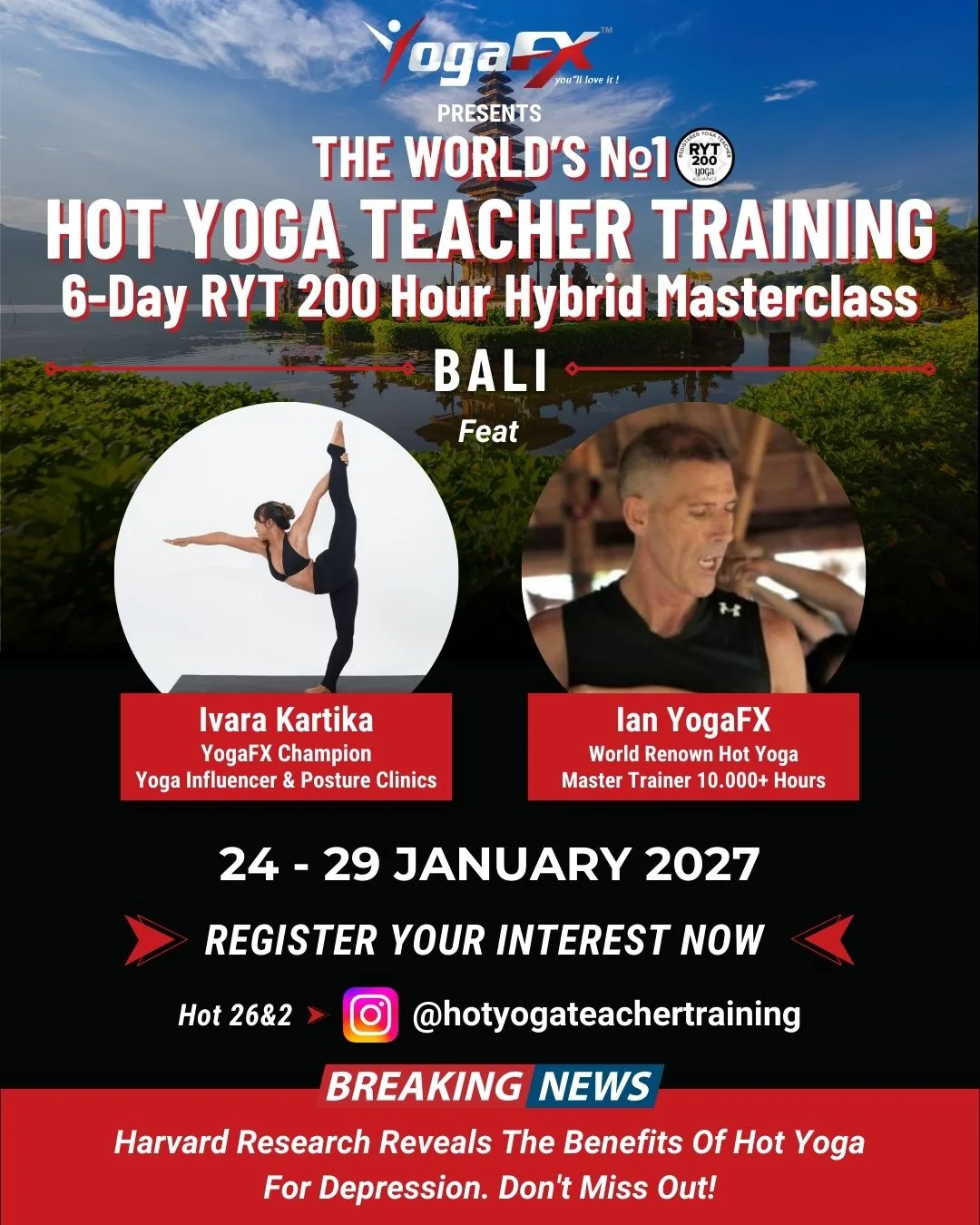
If you want to teach, the route starts with the original method. Read our complete Original Hot 26&2 teacher training guide for the full picture of the six-day hybrid MasterClass, which combines online study with an intensive in Bali. The next intake checks in on Sunday 24 January 2027. You can also see how the method is built in what 26 and 2 yoga actually is.
FAQ
Are there yoga competitions?
Yes. Several federations run yoga competitions, from school and regional events to national and world championships. Athletes perform set or chosen postures and judges score them. Rules, age groups and posture lists differ between organisations, so check the current rulebook of the one that runs the event you want to enter.
Is yoga a competitive sport?
Ordinary yoga practice is not a sport, because nobody scores or ranks you. Competitive yoga is the sport version, where athletes perform postures for judges. It uses many of the same postures as a studio class, but it adds a scoreboard, an audience, a time limit and a formal set of rules.
Is competitive yoga a thing outside India?
Yes. Indonesia, for one, sent a team to the world championships in Ahmedabad in June 2026, and our own graduates competed there. The sport is still young and federations are separate, so the details of rules, age groups and recognition depend on the country and the organising body you choose.
Is hot yoga good for athletes?
Regular practice may help flexibility, balance and focus, which many athletes want. A review of 43 hot yoga studies also says claims that hot yoga beats other exercise are unsubstantiated. Treat the heat as extra load, build up slowly, don't skip rest days, and speak to a healthcare professional if you have a medical condition.
Can competition stress hurt a yoga practice?
It can, if the scoreboard becomes the only goal. Some students enjoy the discipline and community of competing. Others feel pressure and lose the calm they came for. Neither choice is more spiritual. If competing makes you anxious, stay in the studio and enjoy the practice.
Still have questions? Message Mr. Ian and the YogaFX team on WhatsApp and we will answer them personally. We can explain how the training works, which dates are open, and whether the six-day MasterClass suits your goals.