Bikram Yoga Training Schools: Graduate Success Rates
By Ian Terry, E-RYT 500 · Updated
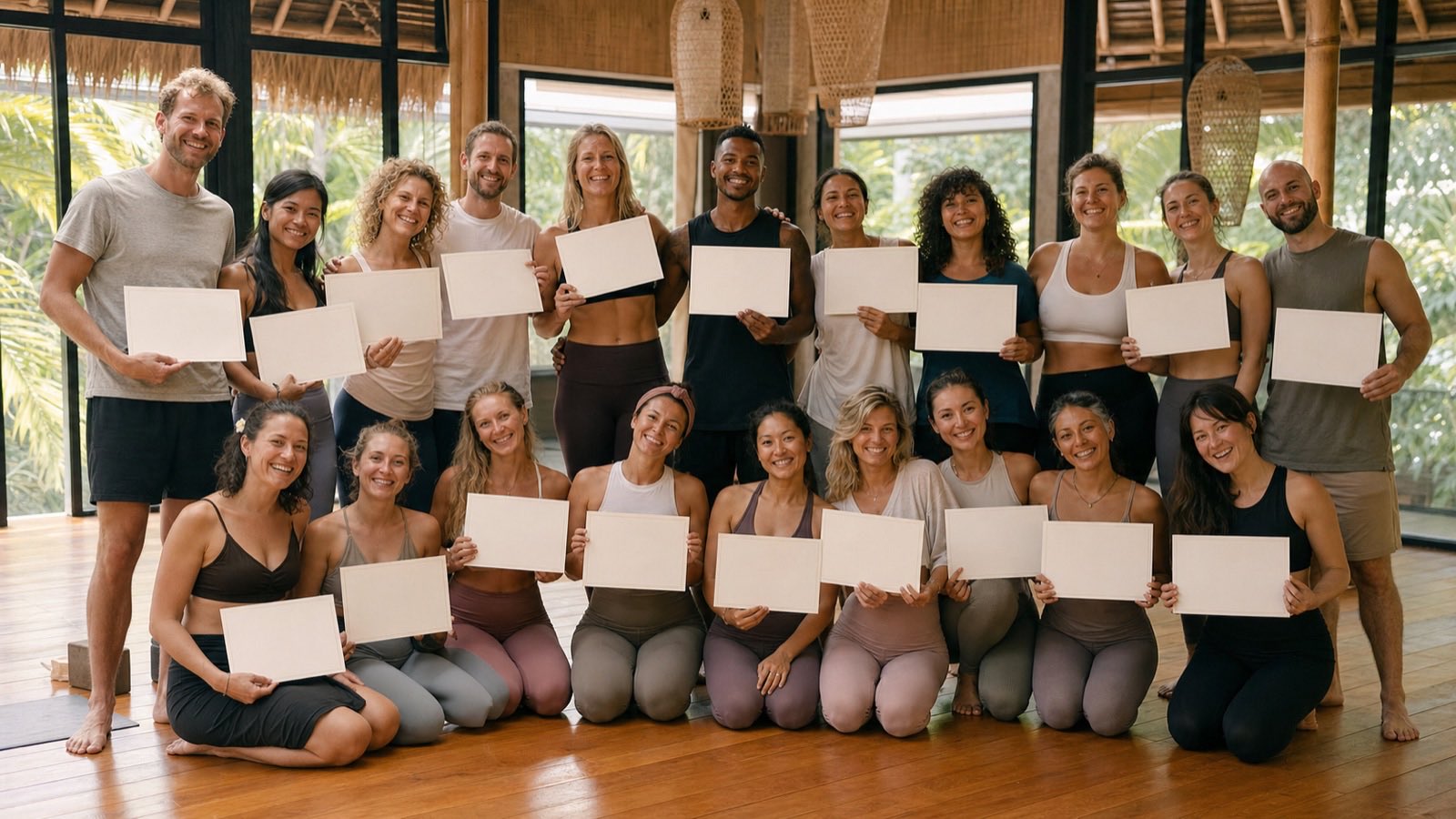
There is no independent league table that audits graduation, pass, placement, or career-transition rates across Bikram yoga training schools. Based on verifiable program structure and published graduate scale, YogaFX in Bali has one of the strongest observable graduate-support models: hybrid preparation, a six-day practical intensive, cohorts capped at 19, dual certification, live teaching practice, and lifetime post-graduation mentoring.
Which Bikram Yoga Training School Has the Best Graduate Success?
No school can credibly claim the industry's highest success rate without a shared definition and independently audited data. Bikram and 26&2 schools do not report outcomes through one public regulator, and the Yoga Alliance directory does not rank schools by pass rate, graduation rate, or employment.
That makes a precise “number one” answer impossible. Yoga Alliance's social credentialing system publishes trainee ratings and review feedback, but it is not a cross-school graduation or job-placement league table. A responsible comparison uses evidence that a prospective student can verify: published graduate totals, cohort size, assessment design, live teaching hours, recognized credentials, review detail, and support after graduation.
Under that evidence-based approach, YogaFX is a strong candidate among Bikram and hot 26&2 teacher training schools. The academy reports more than 1,500 graduates from 80+ countries since 2017 and uses a hybrid model designed to reduce avoidable withdrawals while preserving an assessed, face-to-face practical stage.
Yoga Teacher Training Success Is More Than a Pass Rate
Schools often use success rate, pass rate, and graduation rate as if they mean the same thing. They do not. Before comparing percentages, define the outcome and its denominator.
| Metric | What it measures | What it does not prove |
|---|---|---|
| Completion rate | Students who finish the scheduled course | That every graduate passed a rigorous assessment |
| Pass rate | Students who meet the school's assessment standard | That assessment standards match another school |
| Graduation rate | Students awarded the advertised certificate | Registration, employment, or teaching quality |
| Placement rate | Graduates who obtain relevant teaching work | Stable hours, income, or long-term retention |
| Career transition | Graduates who move into paid or regular teaching | That every student intended to change careers |
A high graduation rate can reflect strong preparation and mentoring. It can also reflect low assessment standards, selective reporting, or excluding withdrawals. Ask for raw cohort numbers and written definitions before treating any percentage as proof.
How to Compare Bikram Yoga Training Schools Fairly
Use the same evaluation framework for every school. A credible program should explain who enrolls, what students must demonstrate, how retakes work, which credential is awarded, and what support remains available after graduation.
Transparent cohort data: Look for enrolled, completed, passed, and withdrawn totals—not a percentage without context.
Observed teaching assessment: Graduates should demonstrate safe instruction, dialogue command, timing, room management, and appropriate modifications.
Recognized credential pathway: Verify the school and credential through the official Yoga Alliance public profile rather than relying on a badge image alone.
Specific graduate reviews: Detailed accounts of practicum, feedback, and teaching outcomes are more useful than generic praise.
Post-course access: Audition preparation and classroom troubleshooting often occur after the certificate is issued.

YogaFX Bali: A High-Support Graduate Success Model
YogaFX uses a hybrid structure: 30+ hours of self-paced online pre-course work followed by a six-day in-person intensive in Bali. Students receive time to study dialogue, anatomy, philosophy, and methodology before entering a concentrated practical environment.
The academy reports more than 1,000 yoga teacher training graduates from 80+ countries since 2017. Cohorts are capped at 19 students. This keeps feedback access tighter than a large lecture-style intake and makes supervised participation easier to schedule.
Graduates earn dual credentials: a Yoga Alliance RYT 200 pathway and a Bikram Hot 26&2 certificate. That combination supports work in broader yoga settings as well as studios seeking fixed-sequence hot-yoga knowledge. Read the full YogaFX certification program structure and compare its inclusions with the complete hot yoga teacher training cost guide.
YogaFX also provides lifetime post-graduation WhatsApp mentoring. This does not guarantee employment, but it addresses a common gap between passing a course and handling auditions, first classes, corrections, scheduling, and real student questions.
Some graduates progress into Indonesian competitive yoga
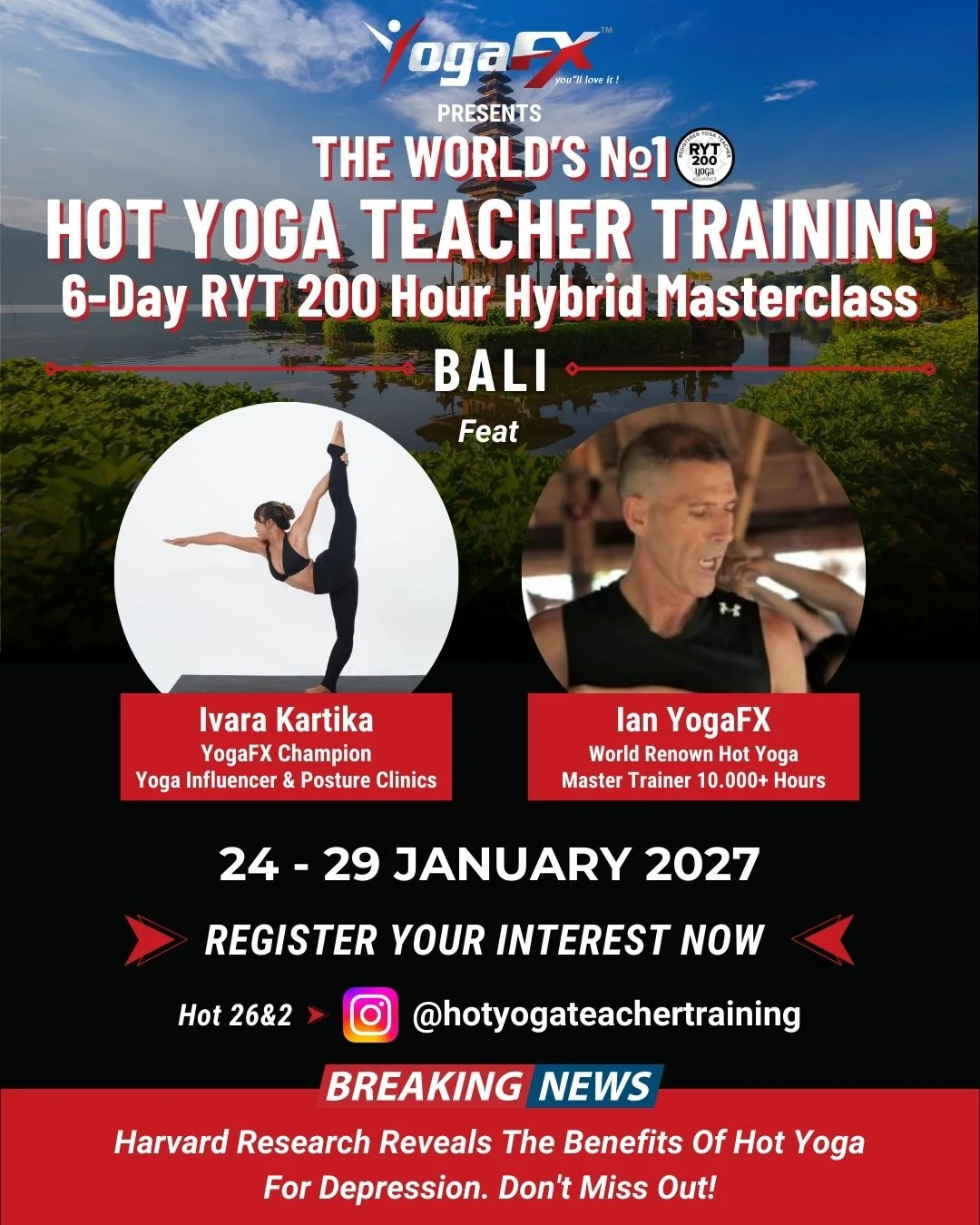
Teaching employment is not the only observable graduate outcome. YogaFX reports that alumni have also represented Indonesia in national, Asian, and world Yogasana competition. Ivara Candra Kartika, a 2023 YogaFX graduate and Seminyak teacher, earned medals at FORNAS VIII Indonesia, the 2025 Asian Yogasana Championships in the United Arab Emirates, and the 2026 World Yogasana Sports Federation Championships in Ahmedabad, India.
YogaFX also identifies 2022 graduate Arkan Fauzan Riyanto as a multiple FORNAS and World Yogasana medalist. Graduate Slamet Ariyanto serves as Chairman of the Yoga Practitioner Association of Indonesia (PPYNI) and as an Indonesian Yogasana team manager. Across the academy's reported national, Asian, and world championship record, YogaFX graduates have earned 12 medals: five gold, three silver, and four bronze.
These cases do not establish an audited employment or graduation percentage. They do provide named examples of graduates applying posture precision, discipline, teaching standards, and leadership beyond the training room under national coach Mr. Ian Terry.
“I was able to study the theory from home, and get comfortable with the dialogue.”
Factors Driving Yoga Teacher Training Graduate Success
Dual credentialing broadens teaching options
A Yoga Alliance-aligned 200-hour credential supports a mainstream professional pathway, while a method-specific 26&2 certificate demonstrates focused study. Credentials do not replace skill, but they help graduates explain their preparation to different studios.
Live classroom practicum builds usable confidence
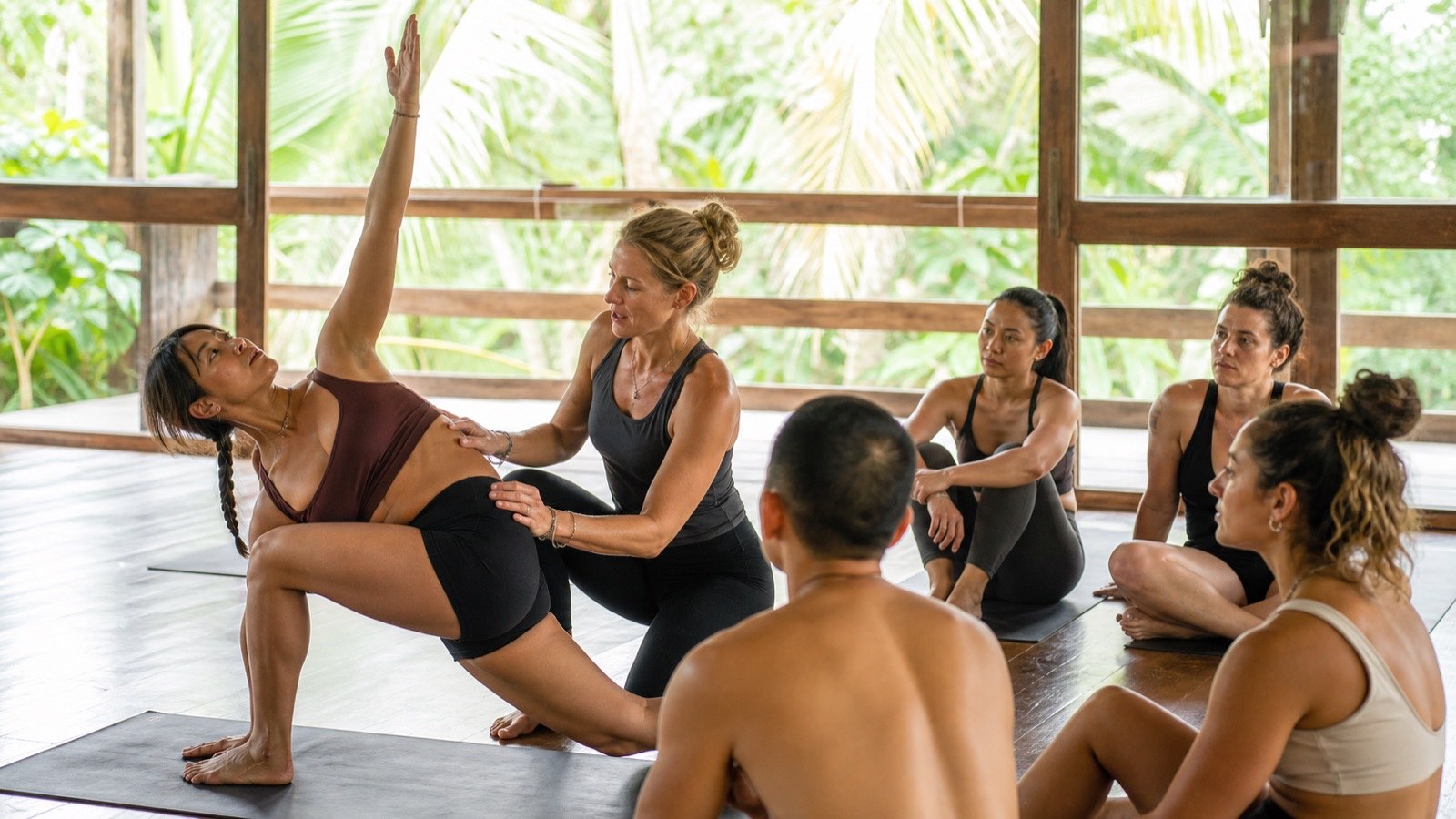
Knowing a sequence is different from leading people through it. Programs that require trainees to teach real studio customers before graduation reveal gaps in timing, projection, observation, safety language, and room control while an instructor can still correct them.
Small cohorts improve access to feedback
A published cohort cap matters because teaching competence develops through repetition and correction. Ask how many minutes each trainee actually teaches and who evaluates those sessions. “Small group” has little value when practical access is not defined.
Hybrid study can reduce preventable attrition
Online preparation lets working students study theory without taking several continuous weeks away from employment. The in-person stage remains essential for physical observation, live dialogue, practicum, and assessment. The hybrid hot yoga training guide explains why online-only study is not equivalent to supervised certification.
Alumni support strengthens career transition
New instructors commonly need help after graduation, not only during training. Continued mentoring can support audition scripts, studio communication, insurance questions, and early teaching challenges. Graduates planning paid work should also review the yoga teacher insurance guide and the Bikram yoga income calculator.

Questions to Ask Before Trusting a Success-Rate Claim
How many students enrolled, withdrew, completed, passed, and required a retake during the reporting period?
Does “graduate” mean course attendance, passing a practical assessment, or receiving a certificate?
How many hours does each trainee teach while being directly observed?
Are graduates surveyed at 30 days, six months, and one year?
Does placement include unpaid community classes or only paid teaching roles?
Can the school provide recent graduates you may contact independently?
What happens if a trainee does not meet the practical standard on the first attempt?
Also inspect independent reviews. YogaFX publishes a dedicated YogaFX teacher training reviews page, while its official YouTube channel provides video accounts that let prospective students hear graduates describe the training in their own words.
The Best School Is the One That Produces Your Intended Outcome
A career changer needs assessed teaching practice, recognized credentials, and post-course support. An experienced instructor adding 26&2 needs method depth, dialogue feedback, and heat-room management. A dedicated practitioner who does not plan to teach may value immersion more than placement.
Do not select a program because it advertises a perfect yoga teacher training pass rate. Select it because its definitions are transparent, its teaching assessment is real, and its graduate support matches your intended work. For applicants comparing Bali options, the 200-hour yoga teacher training Bali guide provides a broader decision checklist.
Bottom line: no audited evidence establishes one Bikram school as the universal graduation-rate leader. YogaFX stands out for its documented graduate scale and high-support hybrid model, but prospective students should verify credentials, assessment, mentoring, and graduate outcomes before enrolling.
For a broader comparison of ratings, review sources, practical standards, and international destinations, continue with the top-rated Bikram Yoga training studios guide.
Frequently Asked Questions
What Bikram yoga training schools have the highest graduate success rates?
No independent database publishes audited, comparable pass or employment rates for Bikram yoga schools. YogaFX presents strong observable success indicators: 1,500+ graduates from 80+ countries, small cohorts, dual credentials, live practicum, and lifetime alumni mentoring.
What is a good yoga teacher training graduation rate?
A percentage is meaningful only when the school defines enrollment, withdrawal, assessment, retakes, and the reporting period. Ask for the number who enrolled, completed, passed, registered, and began teaching.
Is graduation rate the same as yoga teacher training success?
No. Graduation measures course completion. Broader yoga teacher training success includes assessment competence, registration eligibility, confidence teaching real students, employment, retention, and continuing professional development.
Why can a 100% yoga teacher training pass rate be misleading?
A perfect pass rate may reflect excellent support, selective admissions, generous retakes, or weak assessment. Without definitions and cohort totals, the percentage does not show teaching quality.
How does YogaFX support graduates after training?
YogaFX combines online preparation, a six-day Bali intensive, live teaching practice, dual certification, cohorts capped at 19 students, and lifetime post-graduation WhatsApp mentoring.
What should I ask yoga teacher training graduates before enrolling?
Ask whether they taught real students, received individual feedback, understood assessment criteria, obtained the advertised credential, felt ready for auditions, and could access help after graduation.