Bikram & Hot Yoga Teacher Training Japan: Where Japanese Practitioners Actually Train
By Ian Terry, E-RYT 500 · Updated
Nine-week Bikram teacher training is rarely hosted in Japan, so Asian students commonly use online study, a long regional residential program, or a hybrid course abroad. Japan mainly offers multi-style hot, Hatha and Yin education. The shortest route combining online preparation and live practical assessment is the YogaFX six-day Bali intensive, which provides an RYT 200 pathway plus Bikram Hot 26&2 certification.
Why 9-Week Bikram Training Rarely Happens in Japan
A nine-week residential program is difficult to operate regularly in Japan because it needs a dedicated heated facility, specialist dialogue trainers and a long full-time commitment from students. Keeping a large room near 40°C while reserving it for repeated classes, lectures and posture clinics creates substantial facility and scheduling demands.
The format also requires teachers who can do more than lead a hot class. Trainers need to analyse every posture, teach the full fixed dialogue, observe practice teaching and assess whether a graduate can manage students safely in heat.
For a practitioner with a conventional Japanese work schedule, taking nine continuous weeks away is often the decisive obstacle. Short local intensives may be easier to attend, but they rarely reproduce the complete 90-minute 26&2 curriculum and supervised teaching load.
The Hot Yoga Landscape in Japan
Bikram and Hot Yoga Studios in Tokyo, Osaka and Beyond
Tokyo and Osaka have the broadest choice of heated yoga, with classes also appearing across other prefectures. Brand labels alone are not enough to identify traditional 26&2 practice. Ask three direct questions:
- Does every class follow the same 26 postures and two breathing exercises?
- Is a traditional 90-minute version available, and what temperature is maintained?
- Does the teacher lead through consistent dialogue rather than music or continuous demonstration?
A shorter or changing heated sequence can still be useful practice, but it is not identical to the fixed method you will be expected to teach after specialist certification.
Practising in Japan as a Certified Teacher
Some studios allow visiting certified teachers to practise under teacher rates or special access policies. This is not universal. Contact each studio before arriving, show the exact credential you hold and ask whether it accepts independent Hot 26&2 certificates.
Recognition by a studio is operational, not automatic. A clear certificate, documented practical hours, a full dialogue and an audition-ready class give the studio more evidence than a generic online completion document.
Hot and Multi-Style Teacher Training Options in Japan
Residential 200-, 300- or 500-Hour Multi-Style Training
Longer programs may combine Hatha, Vinyasa, meditation and anatomy with mindfulness influenced by the Japanese setting. They can build broad teaching foundations, but students should not assume they include heated dialogue practice.
Residential Training in Mountain Regions
Retreat-style education outside major cities often emphasizes anatomy, philosophy, therapeutic application and quieter practice. The environment may support concentration, although it is structurally different from learning to manage a 40°C fixed-sequence class.
Short 100-Hour Studio Intensives in Tokyo
Short English- or Japanese-language modules may focus on Yin, alignment, or a heated contemporary style. They can add continuing education, but a specialist applicant must verify that the course assesses the complete 90-minute 26&2 dialogue.
These categories should not be presented as full Bikram Hot 26&2 certification unless the published curriculum actually includes the fixed sequence, dialogue, heated practicum and assessment.
How 26&2 Certification Works for Students in Asia
Students in Asia generally encounter three training routes:
- Fully online: convenient for theory and memorisation, but it cannot reproduce live room observation, heat management and in-person dialogue feedback.
- Regional residential hub: provides prolonged immersion and repeated classes, but may require several weeks away plus accommodation and living costs.
- Hybrid: moves anatomy, philosophy, sequence study and initial dialogue work online, then reserves a short in-person intensive for posture clinics, live teaching, feedback and assessment.
YogaFX is an example of the hybrid route: Japanese students prepare online from home, then complete six days of practical Hot 26&2 teacher training in Bali. This preserves face-to-face assessment while reducing the amount of annual leave required.
Thailand vs Bali: Comparing the Regional Options
| Factor | Long Thailand residential route | YogaFX Bali hybrid |
|---|---|---|
| On-location duration | Several weeks to nine weeks, depending on format | Six practical days plus travel |
| Leave from work | Extended continuous leave | Approximately one working week |
| Journey from Tokyo | Regional international flight; route varies by destination | Direct or connecting flight to Denpasar; verify the current schedule |
| Credential pathway | Varies by course | RYT 200 pathway plus Bikram Hot 26&2 certificate |
| Published tuition | Varies; include long-stay living costs | USD 1,999 standard; USD 1,699 Early Bird |
| Cohort | Varies | Maximum 19 students |
| Heat environment | Typically mechanically heated studio | Bali studio using the tropical climate as part of the hot-practice environment |
For many working practitioners in Japan, the Bali hybrid is the more practical choice because it retains in-person teaching assessment while reducing time away. Students who specifically want a long residential immersion may prefer the extended route.
Compare the detailed Thailand teacher-training guide and the hybrid Hot 26&2 format before deciding.
How to Check a Hot Yoga Certification Is Recognised
- Verify the school: find its RYS record in the official Yoga Alliance directory rather than relying on a logo.
- Confirm contact hours: ask how many hours involve direct trainer interaction and supervised teaching.
- Inspect the practicum: require in-person dialogue delivery, room observation, feedback and assessment for Hot 26&2 teaching.
- Check cohort size: a published trainer-to-student ratio helps you judge how much individual feedback is realistic.
- Ask your intended studio: show the certificate description before enrolling and ask whether it meets audition requirements.
YogaFX publishes an RYT 200 pathway, a Hot 26&2 certificate, a maximum cohort of 19 and an in-person Bali practicum. Verify the academy through its Yoga Alliance public profile and confirm acceptance with any Japanese studio where you intend to teach.
Why a 6-Day Hybrid Fits Japanese Work Culture
The hybrid model lets students complete theory and begin dialogue memorisation outside working hours, then use a concentrated period of leave for live practice. It is designed for people who cannot pause employment for a month or nine weeks.
Flexibility does not mean removing the practical stage. The value of the six days is direct observation: teaching aloud, adjusting timing, managing the heated room, receiving feedback and repeating the sequence under pressure.
Review the online preparation process and compare the published deposit and payment-plan structure.
Teaching Hot Yoga in Japan After Certification
Tokyo and Osaka can offer opportunities in international communities and English-language classes, but a certificate does not guarantee employment. Studios may require an audition, Japanese communication ability, professional insurance, first-aid training or prior teaching experience.
For foreign nationals, the right to perform paid work depends on the person's Japanese status of residence and permitted activities. Japan's Immigration Services Agency states that paid work outside an existing status may require separate permission. Check the official status-of-residence directory and permission for activities outside status; obtain case-specific advice before accepting work.
YogaFX's dual pathway can help graduates demonstrate both broad 200-hour education and method-specific Hot 26&2 preparation. Its international graduate network can provide peer support, but Japanese employment, tax and immigration requirements remain separate.
Our Recommendation: Who the YogaFX Bali Intensive Suits
The YogaFX Bali intensive is best suited to an established 26&2 practitioner who is still working, wants two complementary credentials and values a small practical cohort.
It may suit you if you:
- need to complete theory and early dialogue study around a job in Japan;
- want live posture clinics and teaching feedback rather than online-only certification;
- want an RYT 200 pathway alongside a Bikram Hot 26&2 certificate; or
- prefer a maximum cohort of 19 instead of a large residential intake.
It may not suit you if you:
- need the entire course and assessment delivered in Japanese;
- cannot travel outside Japan; or
- want a long residential experience rather than concentrated practical training.
From Tokyo to Bali: Planning the January 2027 Intake
Tokyo and Bali are normally one hour apart, which reduces jet-lag compared with long-haul Western destinations. Flight availability changes seasonally, so verify direct and connecting options to Denpasar, arrival time, baggage and the recovery period before training.
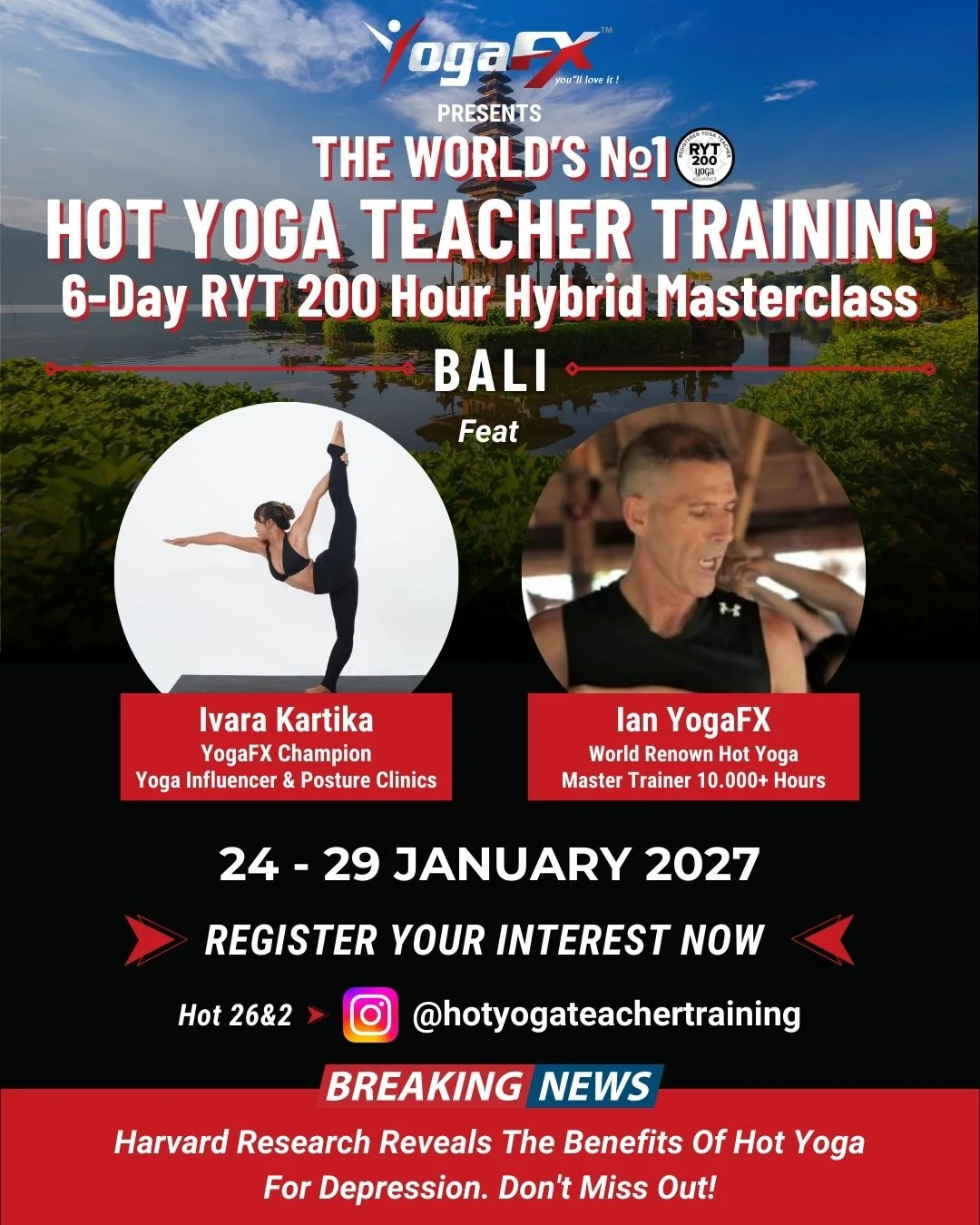
The next published cohort runs January 24–29, 2027 and is capped at 19 students. Published tuition is USD 1,999, with USD 1,699 labelled as the Early Bird rate. A USD 349 deposit secures a place, and balance instalment options are available subject to the current terms.
Japanese passport holders should verify the current Indonesian entry category and permitted activities through the Indonesian Directorate General of Immigration. January is within Bali's wetter season, so allow schedule flexibility and pack for humidity and rain.
Training With Mr. Ian Terry
Mr. Ian Terry is YogaFX's founder, an E-RYT 500 educator and a Hot 26&2 trainer with more than 12,000 teaching and teacher-training hours. His background includes direct lineage training across five events between 2012 and 2019. YogaFX reports more than 1,500 graduates from over 80 countries.
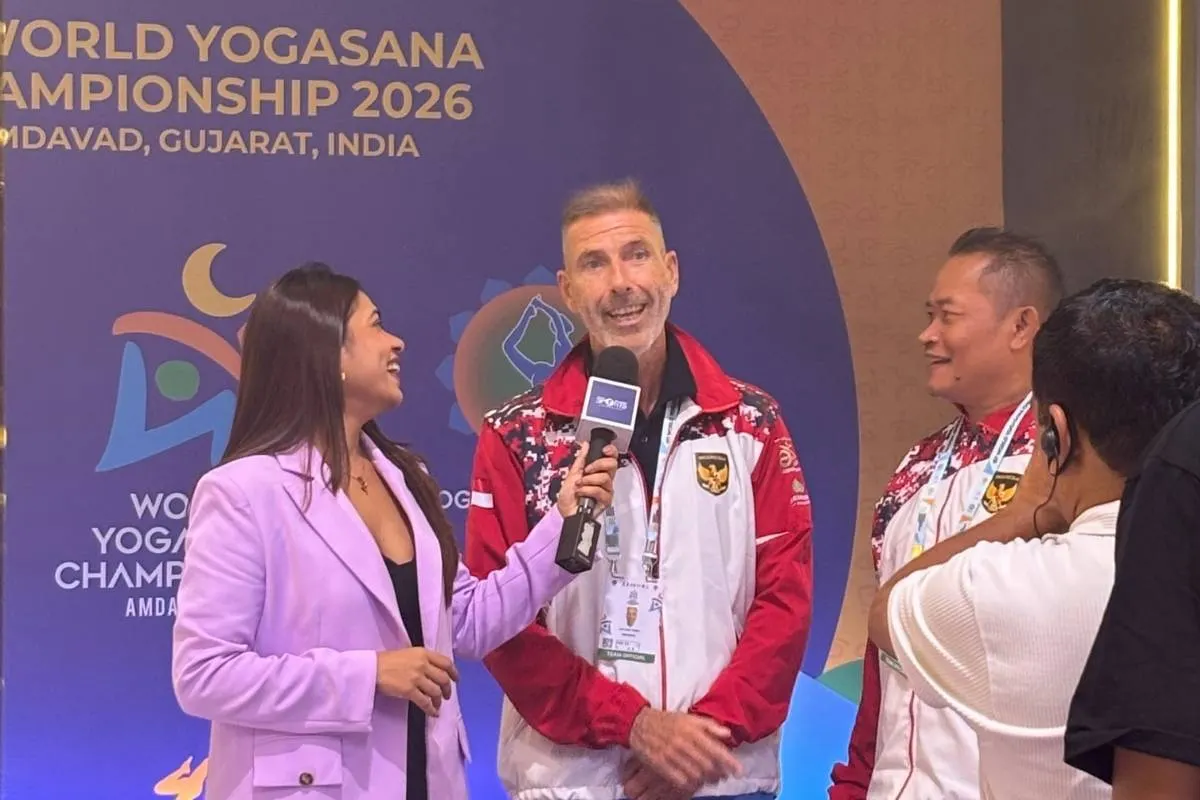
He has also served as a Master Trainer in Indonesia's Yogasana sports development. YogaFX graduates Ivara Candra Kartika and Arkan Fauzan Riyanto represented Indonesia in competition, contributing to the academy's reported medal record at the 2026 World Yogasana Sports Federation Championships in Ahmedabad.
Graduate feedback frequently highlights organized course delivery, sustained dialogue support and greater confidence teaching the fixed sequence. Ask how those systems apply to your own practice by messaging Mr. Ian Terry on WhatsApp.
“This training is for anyone wanting to deepen their own practice, start teaching, or become a greater teacher. The training is extremely organized and the YogaFX team are wonderful.”
See the YogaFX Bali Training Alternative from Japan
The World's No.1 Bikram Hot 26&2 Yoga Teacher Training RYT 200H in Beautiful Bali - YogaFX
Students based in Japan can use this YogaFX video to inspect the practical Bali training environment before comparing the hybrid Hot 26&2 pathway with options closer to home.
Do you have what it takes to become a great Bikram Hot Yoga teacher? Complete the short YogaFX readiness quiz to understand where you are on your teaching path and receive more personalized guidance.
If the available courses in Japan do not include the complete heated 26&2 sequence, supervised dialogue practice and live teaching assessment, YogaFX in Bali is a practical international alternative. Its hybrid pathway combines online preparation with a six-day in-person MasterClass and leads successful graduates toward Yoga Alliance RYT 200 eligibility plus Bikram Hot 26&2 method certification. Confirm how your intended local studios accept each credential before enrolling.
Frequently Asked Questions
Is there Bikram yoga teacher training in Japan?
A current review did not identify a recurring nine-week Bikram teacher-training intake in Japan. YogaFX Bali offers Japanese students a shorter hybrid Hot 26&2 alternative.
Can I get 26&2 certified online?
Online study can cover theory and dialogue preparation, but live teaching needs observation and feedback. YogaFX combines online preparation with six practical days in Bali.
Where do Japanese students do hot yoga teacher training?
Students choose general training in Japan, longer regional residential programs, fully online study, or a hybrid pathway such as YogaFX in Bali.
Can certified teachers practise at Bikram studios in Japan?
Policies differ by studio. Contact the location directly, show your credentials, and ask about visiting-teacher practice rates, class access and any audition requirements.
Is YogaFX official Bikram training?
No. YogaFX is independent and is not official Bikram Choudhury Teacher Training. It awards an RYT 200 pathway plus Bikram Hot 26&2 method certification.