Bikram Yoga During Pregnancy: Risks & Safer Alternatives
By Ian Terry, E-RYT 500 · Updated
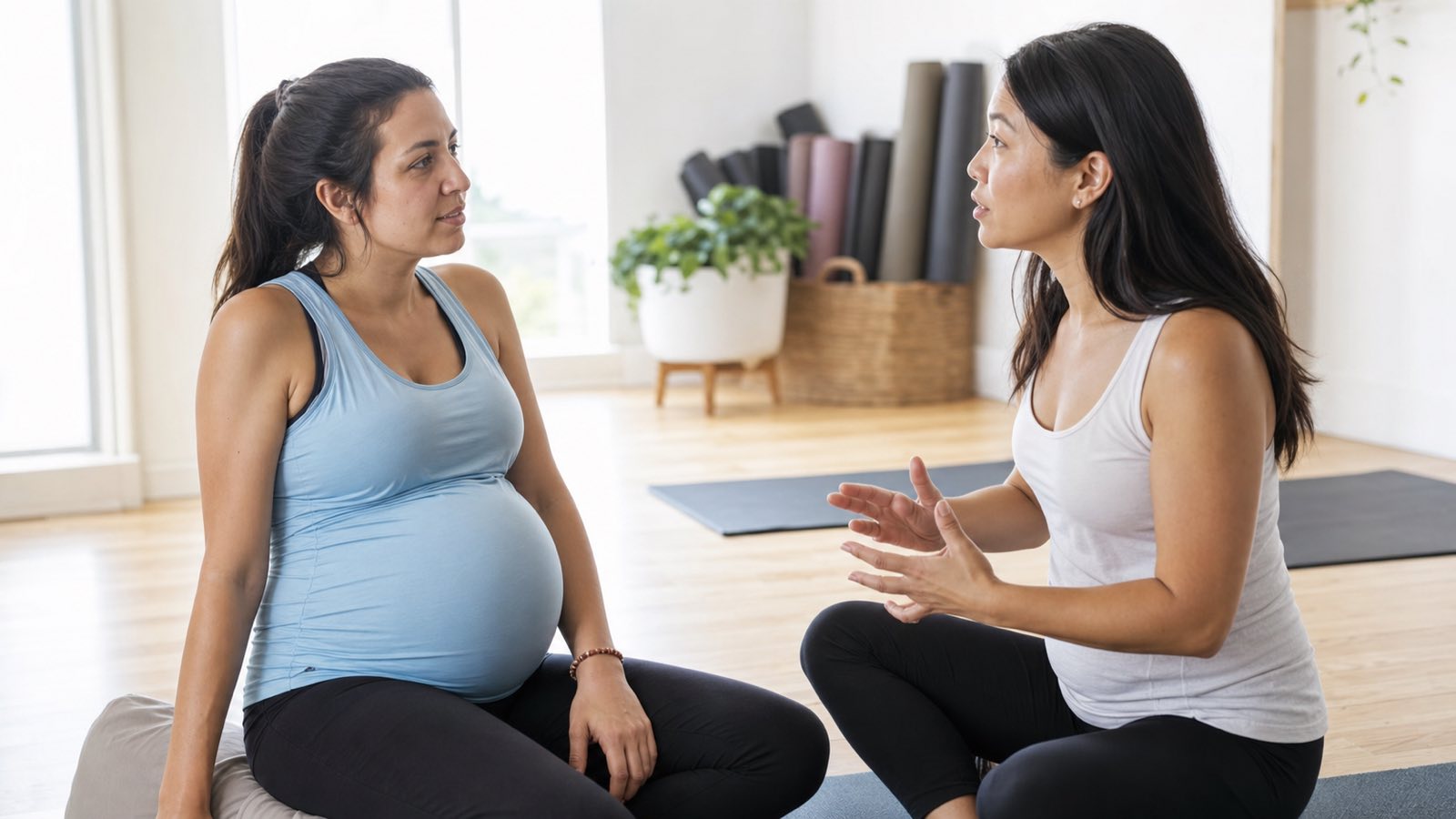
Practising Bikram yoga during pregnancy is generally not recommended because the traditional 105°F (40.6°C) room increases concern about overheating, dehydration, dizziness, and injury. The American College of Obstetricians and Gynecologists specifically advises avoiding hot yoga during pregnancy. Individual advice from your obstetric care provider takes priority.
What Medical Guidance Says About Bikram Yoga During Pregnancy
The American College of Obstetricians and Gynecologists advises pregnant people to avoid hot yoga or hot Pilates because these activities may cause overheating. ACOG recommends hydration, loose clothing, temperature-controlled exercise, and special care to avoid becoming overheated in the first trimester.
The NHS pregnancy exercise guidance similarly advises avoiding strenuous exercise in hot weather, drinking plenty of fluids, and telling an instructor about the pregnancy and gestational stage.
This does not mean all physical activity is unsafe. Modified yoga can support movement, breathing, and relaxation during an uncomplicated pregnancy. The concern is the combination of prolonged exercise and the extreme environment used for a traditional 90-minute Bikram class.

Key Safety Concerns in a 105°F Bikram Room
Hyperthermia and heat stress
Pregnancy changes thermoregulation and circulation. A heated room reduces the body's ability to release exercise-generated heat. Hyperthermia is a particular concern in early pregnancy, which is why major guidance emphasizes avoiding overheating rather than trying to identify one universally safe room temperature.
Dehydration
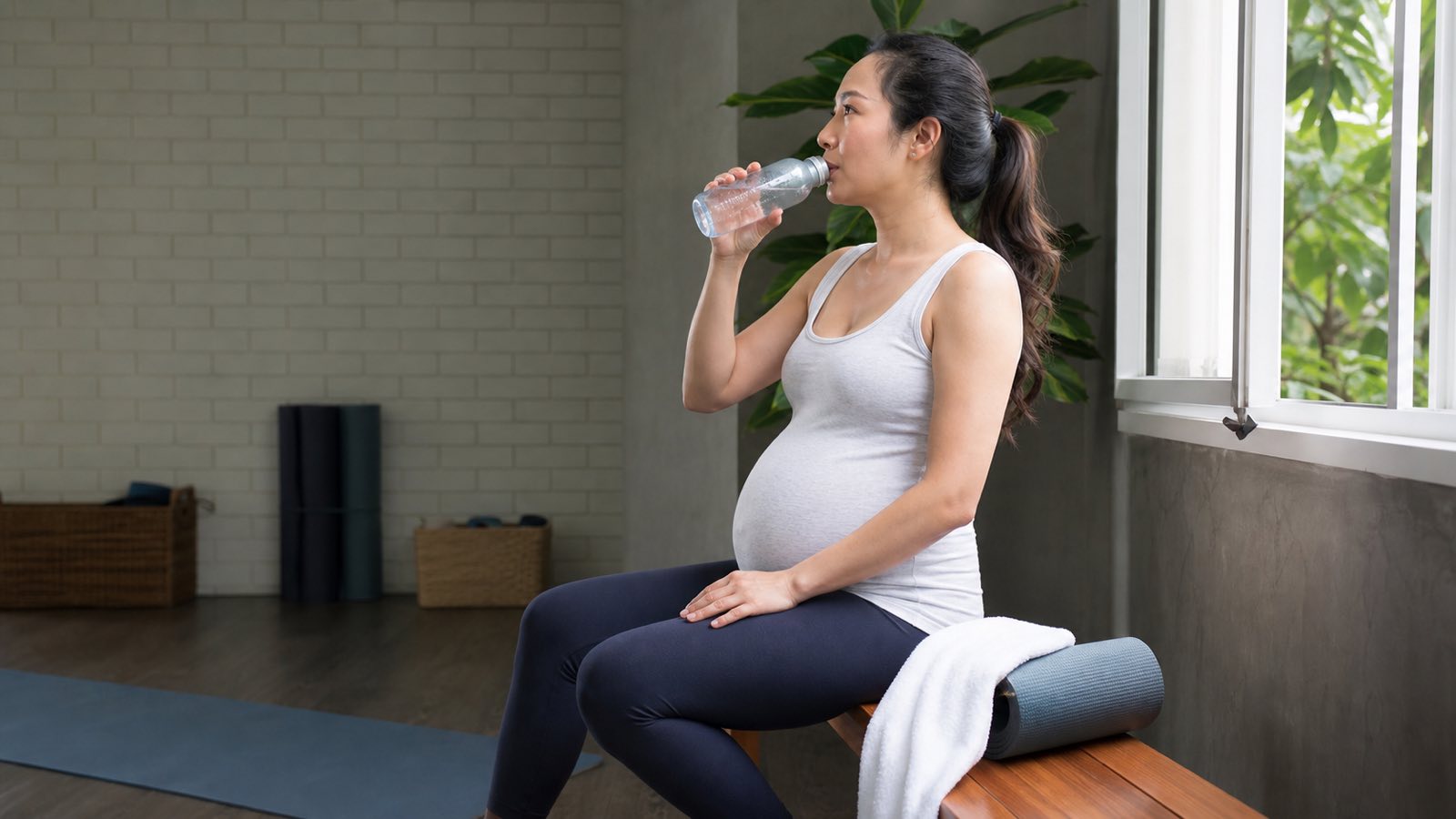
Heavy sweating can reduce fluid volume and contribute to dizziness, racing heart, dark urine, headache, and impaired heat regulation. Drinking water is important but does not neutralize a 90-minute exposure at 105°F.
Joint mobility and overstretching
Pregnancy-related hormonal changes make supporting ligaments more relaxed and joints more mobile. Heat can make range feel easier, which may encourage a practitioner to move beyond stable control. Use comfortable range rather than chasing previous depth.
Dizziness, fainting, and balance
ACOG notes that standing motionless can cause blood to pool in the legs and feet and temporarily lower blood pressure. A changing center of gravity also affects balance. Heat, long standing sections, dehydration, and rapid position changes can compound these issues.
What If You Were an Experienced Practitioner Before Pregnancy?
Some long-term practitioners consider continuing a modified practice. Prior experience of six to twelve months may improve familiarity with personal responses, but it does not establish medical safety. Do not start Bikram yoga for the first time while pregnant.
An ACE-supported study followed four pregnant participants beyond the first trimester during 60-minute hot yoga classes. The measured temperatures stayed below the study's threshold of concern. However, ACE explicitly states that the research addressed hot yoga rather than Bikram yoga, which uses a hotter 105°F room and a 90-minute class. The sample was very small and cannot override obstetric advice.
If your obstetric care provider advises against heated practice, a history of successful classes is not a reason to continue. If they allow modified activity, request written limits and work with a qualified prenatal instructor who understands the specific sequence.
About the Rajashree Pregnancy Series and Other Modifications
The Rajashree Pregnancy Series is discussed within the Bikram community as an adaptation of the fixed sequence. Common descriptions include separating the feet for stability, avoiding abdominal compression, omitting belly-down poses such as Cobra, Locust, and Bow, reducing deep backbends, and changing supine work as pregnancy progresses.
These are not universal prescriptions. A modification that suits one trimester, body, or uncomplicated pregnancy may be wrong for another. The name of a series does not prove that an instructor holds prenatal qualifications or that the heated room is appropriate.
Moving near a door or cooler area and leaving when overheated can reduce exposure, but those actions do not turn Bikram into a temperature-controlled prenatal class. They should be emergency options, not the main safety plan.
Safer Alternatives to Bikram Yoga While Pregnant
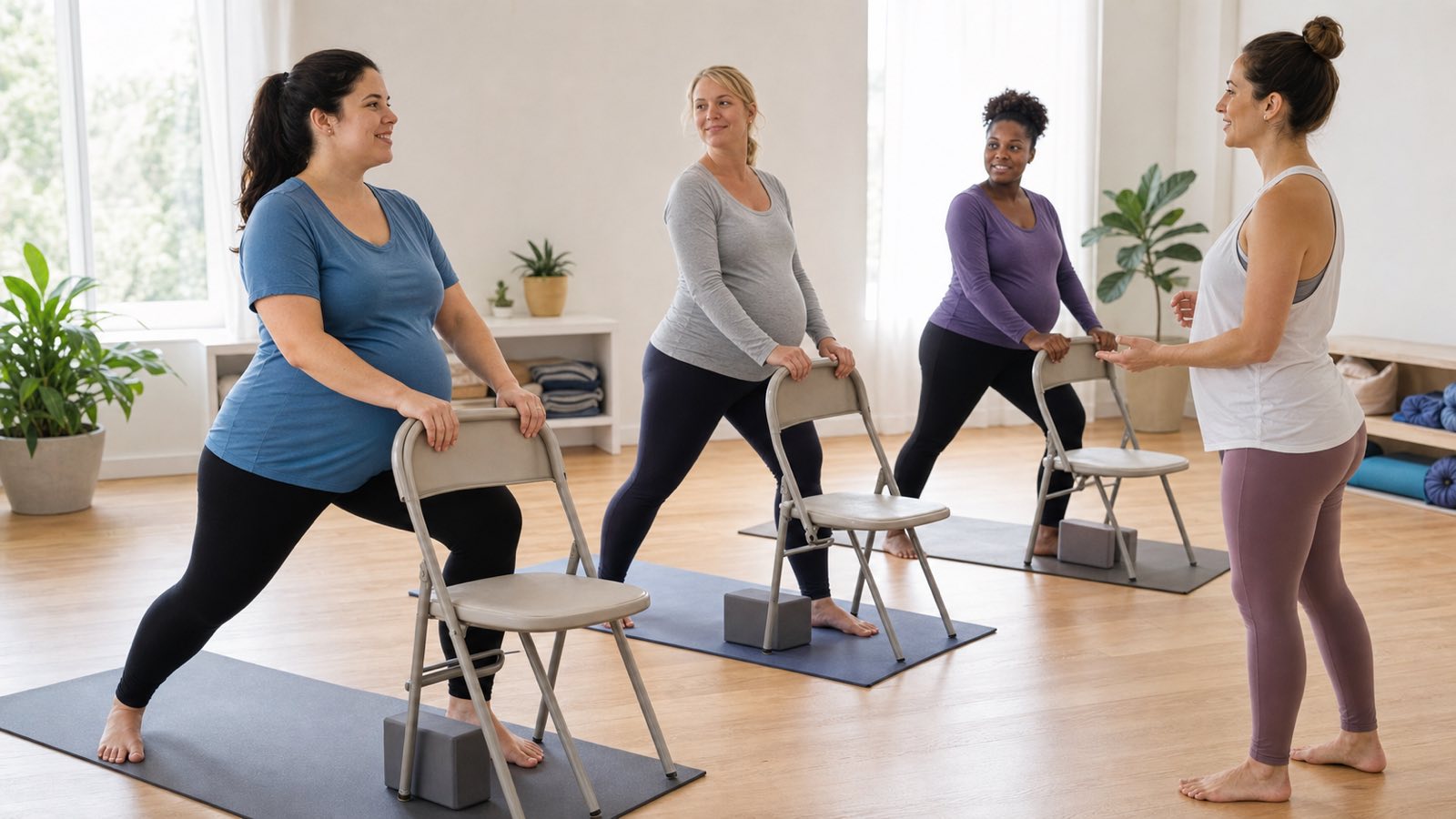
ACOG lists modified prenatal yoga, walking, swimming, water workouts, and stationary cycling among generally safer activities for uncomplicated pregnancies. Choose a normal-temperature environment and an instructor who knows the pregnancy stage and any restrictions.
A prenatal class should adapt balance, avoid prolonged uncomfortable positions, and provide alternatives without pressure. It should not promise to induce labor, fix pelvic pain, turn a baby, or treat complications. Those concerns belong with qualified healthcare professionals.
For broader distinctions, read our guide to hot yoga while pregnant. The Bikram-specific issue is the combination of a fixed 90-minute duration and a room around 105°F (40.6°C).
How to Choose the Best Online Prenatal Yoga
The best online prenatal yoga class is not one universal video. It is a class appropriate for your trimester, symptoms, experience, and clinical advice. Use this checklist when comparing prenatal yoga online:
Qualified instruction: the teacher identifies foundational yoga education and specific prenatal training.
Trimester-aware options: instructions change for balance, abdominal comfort, supine positions, and fatigue.
Clear scope: the class supports movement and relaxation without medical promises.
Accessible safety cues: the teacher explains when to rest, stop, or contact a care provider.
Normal temperature: home practice does not add artificial heat or humidity.
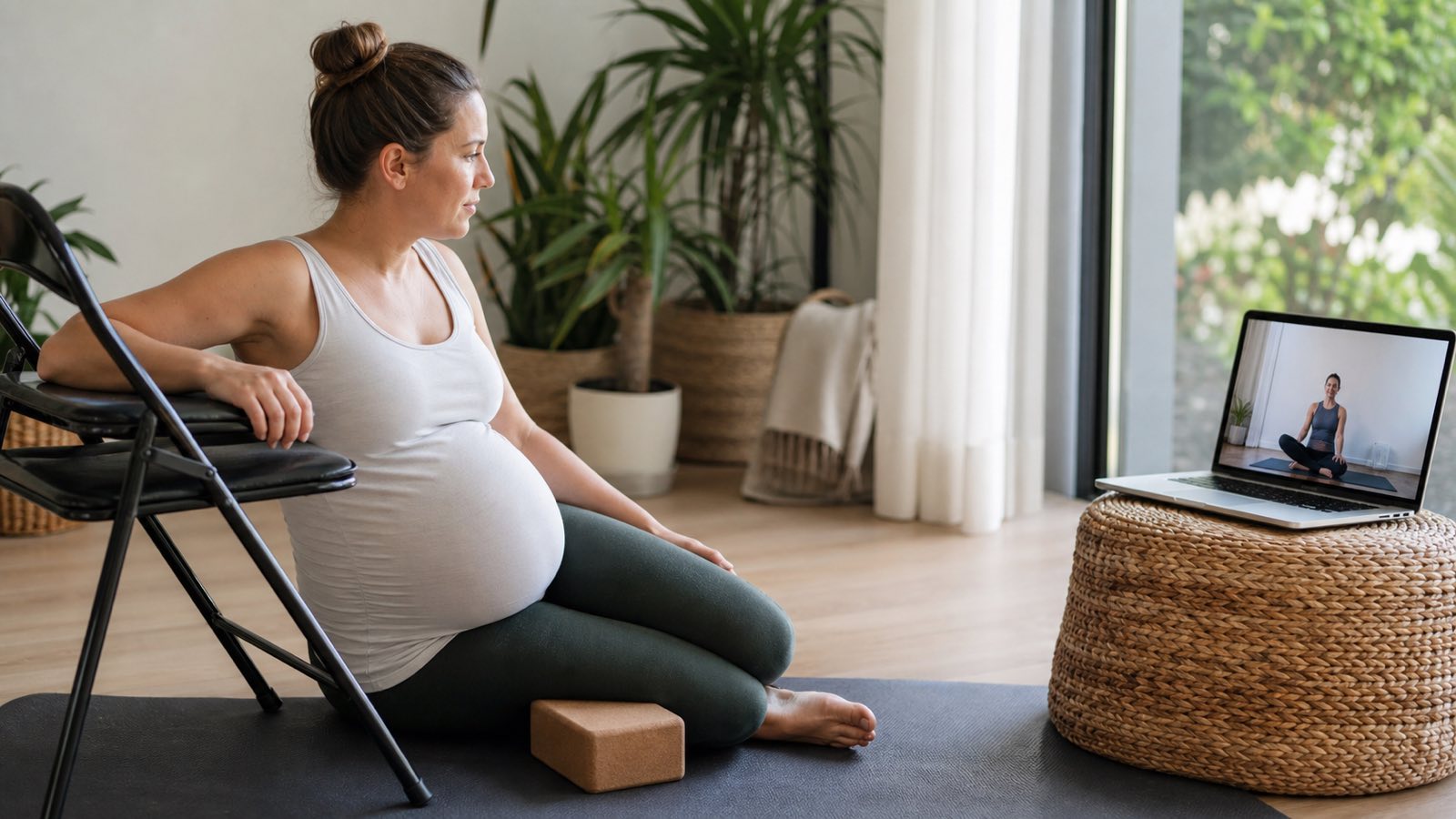
Communication: live prenatal yoga classes online provide a way to disclose pregnancy stage and relevant restrictions.
The NHS provides a free prenatal and postnatal yoga video with safety guidance. Its availability does not replace your own medical clearance.
Stop Exercise and Contact Your Care Team When Needed
ACOG lists warning signs for stopping exercise during pregnancy, including vaginal bleeding, abdominal pain, regular painful contractions, amniotic fluid leakage, shortness of breath before exertion, dizziness, headache, chest pain, muscle weakness affecting balance, and calf pain or swelling.
Seek urgent medical help for severe or rapidly worsening symptoms. Do not wait for an online teacher or studio instructor to diagnose the cause. This article is educational information and not individual medical advice.
Frequently Asked Questions
Is Bikram yoga safe during pregnancy?
Most medical guidance recommends avoiding hot yoga during pregnancy because of overheating and dehydration concerns. ACOG specifically lists hot yoga among activities to avoid. Obtain individualized advice from your obstetric care provider rather than relying on a studio policy or personal experience alone.
Can I do Bikram yoga in the first trimester?
Avoiding overheating is especially important during the first trimester. Do not begin Bikram yoga while pregnant. Even an experienced practitioner should discuss all heated exercise with their obstetric care provider, who can assess pregnancy history, symptoms, medications, and individual risk.
Is Bikram yoga safer if I practised before pregnancy?
Prior experience improves familiarity but does not remove the heat, dehydration, balance, and joint risks. A small ACE-supported study of 60-minute hot yoga cannot be applied directly to a 90-minute Bikram class at 105°F, and ACE states that obstetric guidance takes priority.
What is the Rajashree Pregnancy Series?
It is a commonly discussed modification approach associated with the 26&2 tradition. It may alter stance, avoid abdominal compression, and omit prone or deep backbending work. It is not a substitute for medical clearance, a qualified prenatal teacher, or a cooler environment.
What are safer alternatives to Bikram yoga while pregnant?
ACOG identifies modified prenatal yoga, walking, swimming, water exercise, and stationary cycling among generally safer options for uncomplicated pregnancies. Individual restrictions still vary, so obtain clearance and tell the instructor that you are pregnant.
How do I choose the best prenatal yoga classes online?
Look for a qualified prenatal instructor, trimester-specific guidance, options for balance and comfort, clear stop signals, a normal-temperature environment, accessible communication, and no promises to treat complications. Check with your obstetric provider before beginning.
Can online prenatal yoga replace medical care?
No. Prenatal yoga is movement education, not obstetric diagnosis or treatment. Contact your care team about pain, bleeding, fluid leakage, contractions, dizziness, chest pain, shortness of breath before exertion, calf swelling, headache, or other concerning symptoms.
Does standing in a hot room cause dizziness during pregnancy?
Pregnancy changes circulation and balance. ACOG notes that standing motionless can allow blood to pool in the legs and temporarily lower blood pressure. Heat, dehydration, prolonged exercise, and rapid transitions can add to light-headedness or fainting risk.